Global Weight Reduction Technologies for Mobile Phones Market Size, Share, and COVID-19 Impact Analysis, By Materials (Carbon Fiber, Magnesium Alloys, Polycarbonate, and Ultra-Thin Glass), By Design & Form Factor (Slim Bezel, Foldable Architecture, and Modular Layouts), By Functional Components (High-Energy Batteries, Miniaturized Pcbs, and Lightweight Internals), By Device (Premium, Mid-Range, and Feature Phones), and By Region (North America, Europe, Asia-Pacific, Latin America, Middle East, and Africa), Analysis and Forecast 2025 - 2035
Industry: Semiconductors & Electronics
Global Weight Reduction Technologies for Mobile Phones Market Size Insights Forecasts to 2035
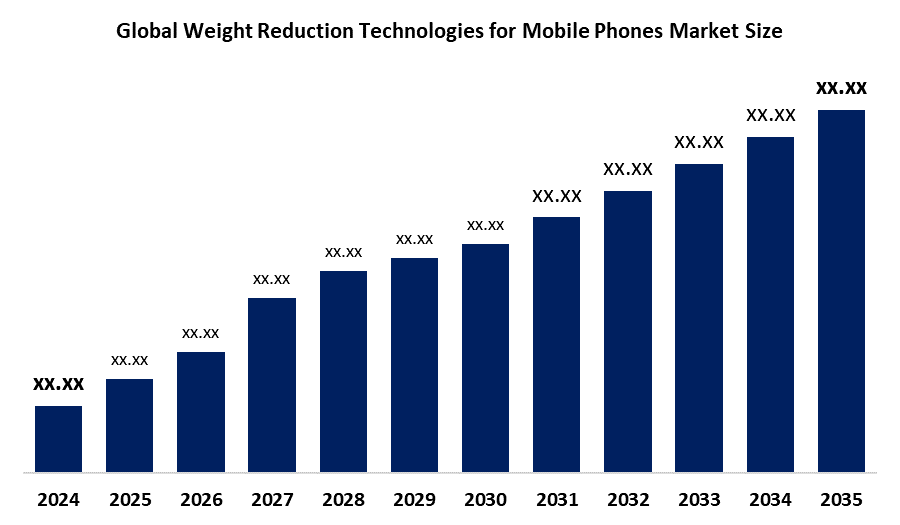
- The Market Size is Expected to Grow at a CAGR of around 7.8% from 2025 to 2035
- The Worldwide Weight Reduction Technologies for Mobile Phones Market Size is expected to hold a significant share by 2035
- North America is expected to Grow the fastest during the forecast period.
Get more details on this report -
According to a Research Report Published by Spherical Insights and Consulting, The Global Weight Reduction Technologies for Mobile Phones Market Size is expected to hold a significant share by 2035, at a CAGR of 7.8% during the forecast period 2025-2035. The demand for weight reduction technology in mobile phones is increasing mainly due to innovations in original equipment manufacturers and their efforts due to strong demand from consumers for light and slim devices that are ergonomic in design and are made possible by sophisticated technology available in CNC Machining services.
Market Overview
The global weight reduction technologies for the mobile phones market are primarily focused on developing materials, designs, and processes to reduce the overall weight of smartphones without compromising their ruggedness, functionality, and design. These technologies are already integrated in mobile phones to make their chassis, cases, screens, batteries, and internal components lighter by developing light alloys, polymers, composites, and compact electronics. Some of the key factors driving the weight reduction technologies market for mobile phones are rising awareness about light mobile phones, growing demand for slim mobile phones, energy efficiency concerns, and sustainability regulations to make mobile phones from optimized materials. Additionally, demands for improved mobile phone functionality by providing extended smartphone usage times and ease of carrying mobile phones further fuel the market.
In June 2025, a requirement within the EU is going to mandate that all smartphones as well as all tablets show a color energy label from A to G with regard to energy efficiency, durability, and repairability. Such regulations on ecodesign are expected to ensure batteries maintain ≥80% even after 800 cycles while also ensuring the availability of components within 7 years with a goal of extending product lives as well as conserving 2.2 TWh of electricity by 2030. Recycled mobile material technologies, carbon composites, thin glass technologies, and future mobile battery technologies are expected to be prominent market opportunities with support from governments for ecological designs of mobile phones. Key players in the weight reduction technologies market for mobile phones are leading smartphone manufacturers in the market, such as Apple, Samsung, Xiaomi, and Huawei, in addition to material manufacturers such as Corning, aluminum alloy manufacturers, and advanced polymers.
Report Coverage
This research report categorizes the weight reduction technologies for mobile phones market based on various segments and regions, forecasts revenue growth, and analyzes trends in each submarket. The report analyses the key growth drivers, opportunities, and challenges influencing the weight reduction technologies for mobile phones market. Recent market developments and competitive strategies, such as expansion, type launch, development, partnership, merger, and acquisition, have been included to draw the competitive landscape in the market. The report strategically identifies and profiles the key market players and analyses their core competencies in each sub-segment of the weight reduction technologies for mobile phones market.
Global Weight Reduction Technologies for Mobile Phones Market Report Coverage
| Report Coverage | Details |
|---|---|
| Base Year: | 2024 |
| Forecast Period: | 2025-2035 |
| Forecast Period CAGR 2025-2035 : | 7.8% |
| Historical Data for: | 2020-2023 |
| No. of Pages: | 145 |
| Tables, Charts & Figures: | 99 |
| Segments covered: | By Materials, By Design & Form Factor and COVID-19 Impact Analysis |
| Companies covered:: | Samsung Electronics Co., Ltd., Apple Inc., Huawei Technologies Co., Ltd., Xiaomi Corporation, Oppo Mobile Telecommunications Corp., Ltd., Vivo Communication Technology Co., Ltd., Sony Corporation, Lenovo Group Ltd. (Motorola), Nokia Corporation, Foxconn Technology Group, Catcher Technology Co., Ltd., BYD Electronics Co., Ltd., Jabil Inc., AAC Technologies Holdings Inc., Lens Technology Co., Ltd., and Others |
| Pitfalls & Challenges: | COVID-19 Empact, Challenges, Future, Growth, & Analysis |
Get more details on this report -
Driving Factors
The increasing use of mobile phones and growing focus on weight reduction to achieve thinner, lighter, and ergonomic design layouts of smartphones are primarily fueling the mobile phones' weight reduction technologies industry on a global scale. The fast growth of high-end and foldable phones and increasing smartphone usage, with continuous product upgrade trends with multiple brands, further enhances weight reduction innovation. Also, battery improvement and enhanced performance of phones are other factors that further boost weight reduction. Sustainable usage and concerns, government initiatives related to energy efficiency, and the use of recyclable and eco-friendly production are other factors that significantly influence this industry’s growth.
Restraining Factors
The worldwide weight reduction technology for mobile phones market is challenged and restricted by various factors, including the high costs involved with the use of advanced materials, the level of complexity involved in their production, and material difficulties regarding balance and overall performance. Unavailability and compatibility with the current infrastructure are some factors that raise the time involved with the development and associated costs.
Market Segmentation
The weight reduction technologies for mobile phones market share is classified into materials, design & form factor, functional components, and device.
- The magnesium alloys segment dominated the market in 2024, approximately 35% and is projected to grow at a substantial CAGR during the forecast period.
Based on the materials, the weight reduction technologies for mobile phones market is divided into carbon fiber, magnesium alloys, polycarbonate, and ultra-thin glass. Among these, the magnesium alloys segment dominated the market in 2024 and is projected to grow at a substantial CAGR during the forecast period. The magnesium alloys market led the growth of mobile phone weight reduction methods due to their high strength-to-weight ratio, corrosion resistance, and versatility. Lighter and stronger smartphone designs made possible by these alloys improve portability while not compromising on stiffness. Its adoption in high-end and mid-range phones, besides being scalable, contributed to its dominance in this market and played a substantial role in its growth.
- The slim bezel segment accounted for the largest share in 2024, approximately 45% and is anticipated to grow at a significant CAGR during the forecast period.
Based on the design & form factor, the weight reduction technologies for mobile phones market is divided into slim bezel, foldable architecture, and modular layouts. Among these, the slim bezel segment accounted for the largest share in 2024 and is anticipated to grow at a significant CAGR during the forecast period. The slim bezel segment led the market because it provides the most screen real estate while also minimizing the overall weight of the smartphone. It was the most economical solution to the problem of reducing the overall weight of the smartphone while also proving to be the leading form factor in the mobile phone market in terms of adoption.
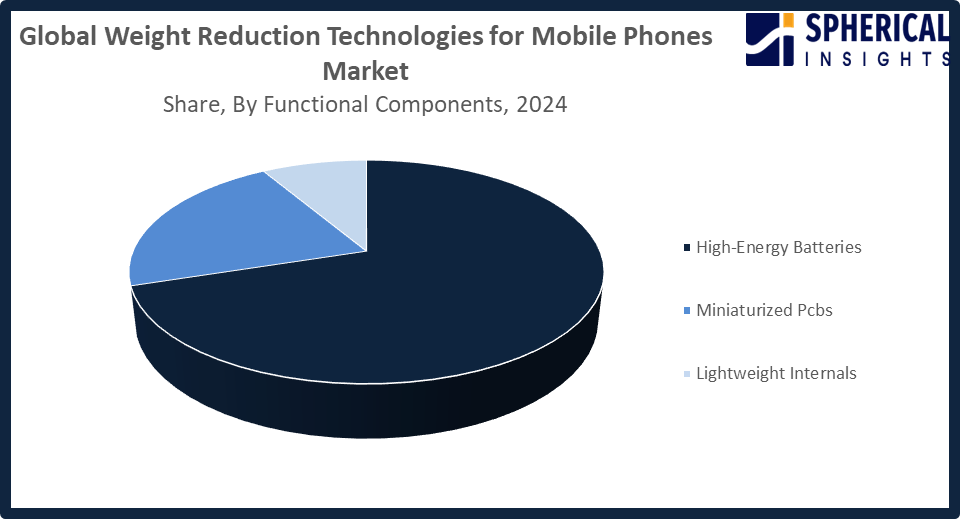
- The high-energy batteries segment accounted for the largest share in 2024, approximately 70% and is anticipated to grow at a significant CAGR during the forecast period.
Based on the functional components, the weight reduction technologies for mobile phones market is divided into high-energy batteries, miniaturized Pcbs, and lightweight internals. Among these, the high-energy batteries segment accounted for the largest share in 2024 and is anticipated to grow at a significant CAGR during the forecast period. The high-energy batteries market dominated the overall market owing to the increasing demand for high-capacity, lightweight, and compact smartphones. The high energy density, efficiency, and compliance of the high energy batteries with the slim design of the smartphones helped meet these demands and created a huge market for the same among the mid and high-end smartphones.
Get more details on this report -
- The premium segment accounted for the highest market revenue in 2024, approximately 30% and is anticipated to grow at a significant CAGR during the forecast period.
Based on the device, the weight reduction technologies for mobile phones market is divided into premium, mid-range, and feature phones. Among these, the premium segment accounted for the highest market revenue in 2024 and is anticipated to grow at a significant CAGR during the forecast period. The premium segment registered the maximum market growth due to a huge demand for advanced technologies, light materials, and innovative designs. The use of highly advanced weight-reducing materials such as magnesium alloys, thin glass, and a foldable design in high-end smartphones registered tremendous growth in the market.
Regional Segment Analysis of the Weight Reduction Technologies for Mobile Phones Market
- North America (U.S., Canada, Mexico)
- Europe (Germany, France, U.K., Italy, Spain, Rest of Europe)
- Asia-Pacific (China, Japan, India, Rest of APAC)
- South America (Brazil and the Rest of South America)
- The Middle East and Africa (UAE, South Africa, Rest of MEA)
Asia Pacific is anticipated to hold the largest share of the weight reduction technologies for mobile phones market over the predicted timeframe.
Asia Pacific is anticipated to hold the largest share of the weight reduction technologies for mobile phones market over the predicted timeframe. The Asia-Pacific region is forecasted to account for the 54% market share of weight reduction technologies for mobile phones due to its pre-existing prominent smartphone production base and increasing acceptance of lightweight materials. Among its regions, China stands at the top as a major production hub and is supported by smartphone makers such as Huawei, Xiaomi, and Oppo, who are constantly working on new magnesium alloy, thin glass, and thin-bezel smartphone design and development. Other regions of India and South Korea are also major because of increasing smartphone production and an increasing number of folding mobile phones being adopted. In July 2024, India lowered the customs duty for mobile phone components to 15% for easier production and the development of weight-reduced mobile phones.
North America is expected to grow at a rapid CAGR in the weight reduction technologies for mobile phones market during the forecast period. The North American market is expected to have a 25% share of the market for weight-reduction technologies for mobile phones, owing to a consumer demand for high-quality light mobile phones, pre-existing technological development capabilities in this region, as well as early acceptance of new materials such as magnesium alloys and ultra-thin glass. The US leads the charge with the involvement of companies such as Apple and Google in integrating thin bezels, flexible designs, and powerful batteries into these devices. In October 2024, the US and California Air Resources Board published the 2025 Draft Mobile Source Strategy, encouraging energy-efficient production and the use of recycled materials in the development of mobile devices that are light and environmentally friendly.
Europe is experiencing an increased adoption rate for weight reduction technology in mobile phones due to increased preference for high-quality, lightweight, and eco-friendly mobile phones. Germany is one of the top countries contributing to the adoption of weight reduction technology for mobile phones because of its high-quality electronic manufacturing industry and research on materials to make high-quality mobile phones, thus facilitating weight reduction technology application and adoption in Europe.
Competitive Analysis:
The report offers the appropriate analysis of the key organizations/companies involved within the weight reduction technologies for mobile phones market, along with a comparative evaluation primarily based on their type of offering, business overviews, geographic presence, enterprise strategies, segment market share, and SWOT analysis. The report also provides an elaborative analysis focusing on the current news and developments of the companies, which includes type development, innovations, joint ventures, partnerships, mergers & acquisitions, strategic alliances, and others. This allows for the evaluation of the overall competition within the market.
List of Key Companies
- Samsung Electronics Co., Ltd.
- Apple Inc.
- Huawei Technologies Co., Ltd.
- Xiaomi Corporation
- Oppo Mobile Telecommunications Corp., Ltd.
- Vivo Communication Technology Co., Ltd.
- Sony Corporation
- Lenovo Group Ltd. (Motorola)
- Nokia Corporation
- Foxconn Technology Group
- Catcher Technology Co., Ltd.
- BYD Electronics Co., Ltd.
- Jabil Inc.
- AAC Technologies Holdings Inc.
- Lens Technology Co., Ltd.
- Others
Key Target Audience
- Market Players
- Investors
- End-users
- Government Authorities
- Consulting and Research Firm
- Venture capitalists
- Value-Added Resellers (VARs)
Recent Development
- In December 2025, Samsung launched the Galaxy Z TriFold, advancing foldable technology for the mobile AI era. Featuring a slim, portable design, it unfolds twice to reveal a 10-inch immersive display, combining premium performance with enhanced productivity and cinematic viewing, marking a groundbreaking innovation in multi-fold smartphone form factors.
- In September 2025, Apple unveiled several new products, highlighting the slimmer iPhone Air with a high-density battery and a new processor. The company also introduced the iPhone 17, its latest flagship upgrade. CEO Tim Cook called the iPhone Air a game-changer at the annual product launch in Cupertino, California.
- In December 2024, Apple is reportedly developing a thinner iPhone and a foldable model. Sources say the ultra-slim device, under 8 mm thick, may feature simpler cameras and is expected in 2025, while the foldable iPhone could arrive the following year, signaling Apple’s expansion into new smartphone designs.
- In July 2024, Samsung unveiled the Galaxy Z Flip6 and Z Fold6 at Unpacked 2024 in Paris. The Z Fold6 impressed with its slim design, measuring 12.1 mm, 1.3 mm thinner than its predecessor, and weighing 239 grams, 14 grams lighter, highlighting Samsung’s focus on portability and sleek foldable technology.
- In July 2024, Xiaomi launched the new MIX lineup at the Lei Jun Annual Speech. The MIX Fold 4 features advanced architecture, hinge, battery, and a slim, strong design. The MIX Flip delivers top-tier performance and a large interactive external display, redefining flip phones without compromising functionality.
Market Segment
This study forecasts revenue at global, regional, and country levels from 2020 to 2035. Spherical Insights has segmented the weight reduction technologies for mobile phones market based on the below-mentioned segments:
Global Weight Reduction Technologies for Mobile Phones Market, By Materials
- Carbon Fiber
- Magnesium Alloys
- Polycarbonate
- Ultra-Thin Glass
Global Weight Reduction Technologies for Mobile Phones Market, By Design & Form Factor
- Slim Bezel
- Foldable Architecture
- Modular Layouts
Global Weight Reduction Technologies for Mobile Phones Market, By Functional Components
- High-Energy Batteries
- Miniaturized Pcbs
- Lightweight Internals
Global Weight Reduction Technologies for Mobile Phones Market, By Device
- Premium
- Mid-Range
- Feature Phones
Global Weight Reduction Technologies for Mobile Phones Market, By Regional Analysis
- North America
- US
- Canada
- Mexico
- Europe
- Germany
- UK
- France
- Italy
- Spain
- Russia
- Rest of Europe
- Asia Pacific
- China
- Japan
- India
- South Korea
- Australia
- Rest of Asia Pacific
- South America
- Brazil
- Argentina
- Rest of South America
- Middle East & Africa
- UAE
- Saudi Arabia
- Qatar
- South Africa
- Rest of the Middle East & Africa
Frequently Asked Questions (FAQ)
-
1. What is the CAGR of the weight reduction technologies for mobile phones market over the forecast period?The global weight reduction technologies for mobile phones market is projected to expand at a CAGR of 7.8%% during the forecast period.
-
2. What are the weight reduction technologies for mobile phones market?The weight reduction technologies for the mobile phones market focus on materials and designs that make smartphones lighter, more durable, and energy-efficient.
-
3. Which region holds the largest share of the weight reduction technologies for mobile phones market?Asia Pacific is anticipated to hold the largest share of the weight reduction technologies for mobile phones market over the predicted timeframe.
-
4. Who are the top 10 companies operating in the global weight reduction technologies for mobile phones market?Samsung Electronics Co., Ltd., Apple Inc., Huawei Technologies Co., Ltd., Xiaomi Corporation, Oppo Mobile Telecommunications Corp., Ltd., Vivo, Communication Technology Co., Ltd., Sony Corporation, Lenovo Group Ltd. (Motorola), Nokia Corporation, Foxconn Technology Group, and Others.
-
5. What factors are driving the growth of the weight reduction technologies for mobile phones market?The growth of weight reduction technologies in the mobile phone market is primarily driven by a combination of strong consumer demand for compact and thin devices, technological advancements in materials and manufacturing processes, and the expansion of digital health applications.
-
6. What are the market trends in the weight reduction technologies for mobile phones market?The primary market trend is the adoption of advanced, lighter materials (like specialized polymers and composites) and miniaturization of components to reduce overall weight.
-
7. What are the main challenges restricting wider adoption of the weight reduction technologies for mobile phones market?The main challenges restricting the wider adoption of weight reduction technologies for mobile phones are technical trade-offs, economic factors, and manufacturing and standardization issues.
Need help to buy this report?