Global Waste Management Software Market Size, Share, and COVID-19 Impact Analysis, By Component (Cloud-based solutions and On-premise), By Application (Municipal, Retail, Manufacturing, Healthcare, and Others), and By Region (North America, Europe, Asia-Pacific, Latin America, Middle East, and Africa), Analysis and Forecast 2025 - 2035
Industry: Information & Technology
Global Waste Management Software Market Insights Forecasts to 2035
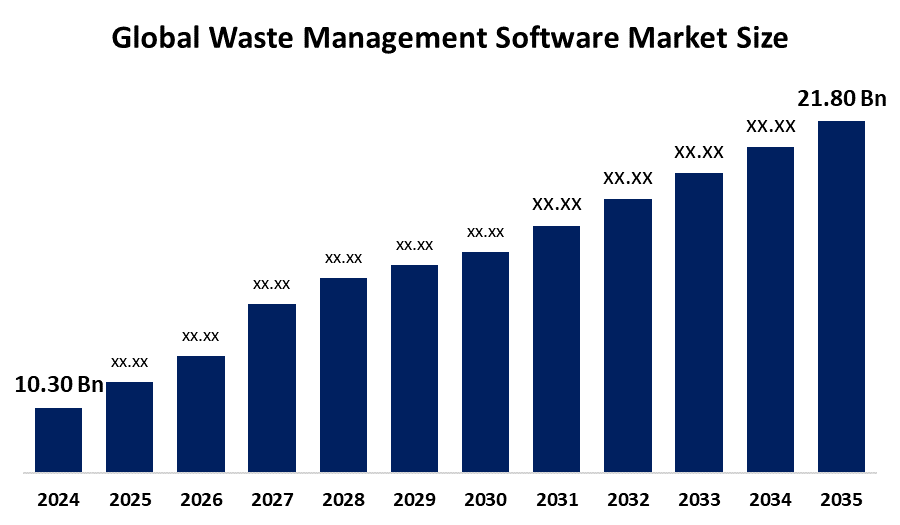
- The Global Waste Management Software Market Size Was Estimated at USD 10.30 Billion in 2024
- The Market Size is Expected to Grow at a CAGR of around 7.05% from 2025 to 2035
- The Worldwide Waste Management Software Market Size is Expected to Reach USD 21.80 Billion by 2035
Get more details on this report -
Market Overview of Waste Management Software
The global waste management software industry is a rapidly expanding sector providing digital platforms for planning, tracking, and optimizing waste collection, recycling, and disposal. Waste management software is a digital tool designed for streamlining, tracking, and optimizing the collection, transportation, disposal, and recycling of waste materials, using technologies such as GPS IoT sensors, and analytics to automate operations, manage compliance, reduce costs, and improve sustainability across industrial, municipal, and hazardous waste sectors. Functionalities, including waste tracking, order management, route optimization, inventory management, and regulatory compliance, enable effective waste management in an environmentally responsible manner.
The role of waste management software extends beyond mere operational management. The scalability and integration capability of this software enable that it can adapt and grow alongside business. Giving waste management firms the tools they need to make wise decisions, streamline ongoing operations, and eventually contribute to more sustainable future when combined with the powerful data management analytics capabilities. This all encompassing strategy makes waste management software an essential investment for any organization hoping to improve its environmental impact and trash handling efficiency.
Innovation and market expansion are anticipated as a result of major players growing R D expenditures and expanding partnerships. For instance, in July 2025, a report on Republic Services AI strategy analysis of dominance in environmental services recycling waste management AI explores how Republic Services AI strategy would dominate in environmental services, recycling & waste management.
Report Coverage
This research report categorizes the waste management software market based on various segments and regions, forecasts revenue growth, and analyzes trends in each submarket. The report analyses the key growth drivers, opportunities, and challenges influencing the waste management software market. Recent market developments and competitive strategies such as expansion, type launch, development, partnership, merger, and acquisition have been included to draw the competitive landscape in the market. The report strategically identifies and profiles the key market players and analyses their core competencies in each sub-segment of the waste management software market.
Global Waste Management Software Market Report Coverage
| Report Coverage | Details |
|---|---|
| Base Year: | 2024 |
| Market Size in 2024: | USD 10.30 Billion |
| Forecast Period: | 2025-2035 |
| Forecast Period CAGR 2025-2035 : | 7.05% |
| 2035 Value Projection: | USD 21.80 Billion |
| Historical Data for: | 2020-2023 |
| No. of Pages: | 210 |
| Tables, Charts & Figures: | 111 |
| Segments covered: | By Component, By Application and By Region |
| Companies covered:: | Waste Management Inc., IBM Corporation, Waste Logics, Wastebits, Samsaras, Enevo, TRUX Route Management Systems, AMCS Group, SmartBin, Others |
| Pitfalls & Challenges: | Covid 19 Impact Challenges, Future, Growth and Analysis |
Get more details on this report -
Driving Factors
High solid waste generation
With the growing urbanization and population, Municipal Solid Waste MSW is reaching critical levels, with Indian cities generating over 160,000 tons per day, which is causing severe environmental degradation and health risks. Municipal authorities and private operators are increasingly adopting these waste management software solutions for managing growing waste volumes with streamlined operations and reduced costs. For instance, in March 2022, Rubicon Technologies, LLC, announced that it had entered into a three year smart city partnership with the City of Houston, Texas to help improve residential waste and recycling services for its more than 2.3 million residents.
Digital transformation in waste management
An increasing investment in cloud-based platforms, IoT integration, and data analytics is supporting the digital transformation in waste management as it aids in reducing manual errors and enhancing customer service. For instance, in august 2025, Waste collection in Kerala is moving to the digital space with the launch of Haritha Mithram 2.0 an upgraded mobile application designed for doorstep collection and fee payment.
Restraining Factors
Increased implementation costs, privacy concerns
The waste management software market is mainly restricted by the resistance to digital technology adoption. Furthermore, increased initial costs, lack of infrastructure, regulatory complexities, and public resistance hinder the transition to more sustainable practices.
Market Segment Insights
By Component: Cloud-based solutions Dominant vs. On premise Emerging
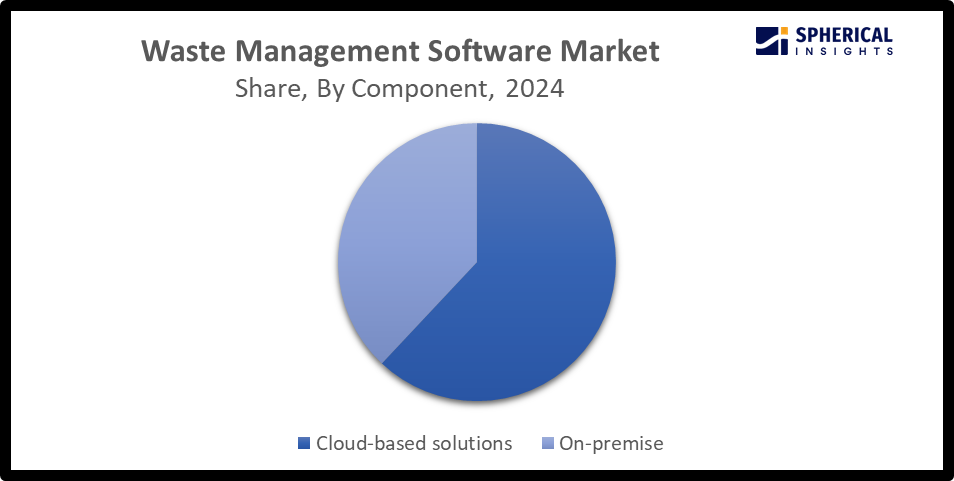
In the waste management software market, the cloud-based solutions segment dominates the market with the largest share of about 62.5% and is anticipated to grow at a significant CAGR during the forecast period. This is due to its scalability, real-time data access, and cost-efficiency. Cloud-based software solutions provide waste tracking, fleet tracking, fleet management, customer service, billing, and compliance reporting. While on-premise solutions are relevant within organization with a stringent data security policy, giving complete control over data and customization options.
Get more details on this report -
By Application: Municipal (Largest) vs. Manufacturing (Emerging)
In the waste management software market, the municipal segment accounted for the largest share of around 40.5% in 2024, driven by the huge adoption of digital platforms in waste management. For instance, AMCS platform for municipalities is a connected municipal waste solution that helps cities automate and manage waste services through a single, modern software platform. Intelex Waste Management, SafetyCulture, and Sensoneo are some of the waste management software used in the manufacturing sector. The growing industrial output, regulatory compliance needs, and inclination towards circular systems are contributing to driving segmental market growth.
Regional Segment Analysis of the Waste Management Software Market
- North America U.S., Canada, Mexico
- Europe Germany, France, UK Italy, Spain, Rest of Europe
- Asia-Pacific China, Japan, India, Rest of APAC
- South America Brazil and the Rest of South America
- The Middle East and Africa UAE, South Africa, Rest of MEA
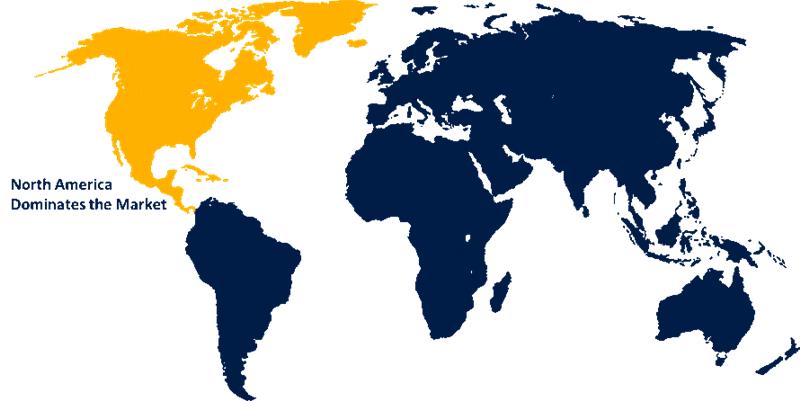
North America is anticipated to hold the largest share of the waste management software market over the predicted timeframe.
Get more details on this report -
North America is anticipated to hold the largest share of about 43.0 in the waste management software market over the predicted timeframe. The market ecosystem in North America is strong, due to strategic acquisitions, increased funding, and technological advancements. The US is the dominant country in the North America waste management software market, holding over 75.0 regional share, due to the increased waste generation, advanced waste management infrastructure, and environmental regulations sustainability programs.
Asia Pacific is expected to grow at a rapid CAGR of around 10.0 in the waste management software market during the forecast period. The Asia Pacific area has a thriving market for waste management software due to a leading international environmental management consultancy, specialising in the solid waste and recycling sector. Furthermore, smart bin technology, IoT, and AI driven platforms also play a major role in the market. China is holding the largest share in the regional market, accounting for about 35.0 share, due to the large urban population, massive waste volumes, and government digitalization initiatives in waste management.
Competitive Analysis:
The report offers the appropriate analysis of the key organizations companies involved within the waste management software market, along with a comparative evaluation primarily based on their type of offering, business overviews, geographic presence, enterprise strategies, segment market share, and SWOT analysis. The report also provides an elaborative analysis focusing on the current news and developments of the companies, which includes type development, innovations, joint ventures, partnerships, mergers & acquisitions, strategic alliances, and others. This allows for the evaluation of the overall competition within the market.
List of Key Companies
- Waste Management Inc.
- IBM Corporation
- Waste Logics
- Wastebits
- Samsaras
- Enevo
- TRUX Route Management Systems
- AMCS Group
- SmartBin
- Others
Key Target Audience
- Market Players
- Investors
- End-users
- Government Authorities
- Consulting And Research Firm
- Venture capitalists
- Value-Added Resellers (VARs)
Industry Development
- In February 2026, Hauler Hero collected 16 for its AI waste management software. Hauler Hero has developed an all in one software platform for waste management companies that covers a variety of functions, including customer relationship management, billing, and routing.
- In October 2025, RapidWorks, the leading software provider for heavy equipment service providers, announced the acquisition of CRO Software, a pioneer and market leader in software for waste management and recycling industries since 2013.
- In October 2025, The Greater Bengaluru Authority GBA would be rolling out a new software application to simplify the disposal of unwanted household items.
- In September 2025, Beeah Group, in partnership with the Ministry of Climate Change and Environment MOCCAE, officially launched Tahweel, the UAE’s first national waste exchange platform.
- In June 2025, Veolia, the world leader in hazardous waste treatment with $5 billion in this activity, patented technologies and a worldwide presence, announced actions to expand its hazardous waste treatment and disposal business in North America through investment, acquisitions and capacity expansion.
Market Segment
This study forecasts revenue at global, regional, and country levels from 2020 to 2035. Spherical Insights has segmented the waste management software market based on the below-mentioned segments:
Global Waste Management Software Market, By Component
- Cloud-based solutions
- On-premise
Global Waste Management Software Market, By Application
- Municipal
- Retail
- Manufacturing
- Healthcare
- Others
Global Waste Management Software Market, By Regional Analysis
- North America
- US
- Canada
- Mexico
- Europe
- Germany
- UK
- France
- Italy
- Spain
- Russia
- Rest of Europe
- Asia Pacific
- China
- Japan
- India
- South Korea
- Australia
- Rest of Asia Pacific
- South America
- Brazil
- Argentina
- Rest of South America
- Middle East & Africa
- UAE
- Saudi Arabia
- Qatar
- South Africa
- Rest of the Middle East & Africa
Frequently Asked Questions (FAQ)
-
1. What is the market size of the waste management software market?The global waste management software market size is expected to grow from USD 10.30 Billion in 2024 to USD 21.80 Billion by 2035, at a CAGR of 7.05% during the forecast period 2025-2035.
-
2. Which region holds the largest share of the waste management software market?North America is anticipated to hold the largest share of the waste management software market over the predicted timeframe.
-
3. What is the forecasted CAGR of the Global Waste Management Software Market from 2024 to 2035?The market is expected to grow at a CAGR of around 7.05% during the period 2024–2035.
-
4. Who are the top companies that are involved in the Global Waste Management Software Market?Key players include Waste Management Inc., IBM Corporation, Waste Logics, Wastebits, Samsaras, Enevo, TRUX Route Management Systems, AMCS Group, and SmartBin.
-
5. What are the main drivers in the waste management software market?An increasing urbanization and population, high solid waste generation, and digitalization in waste management are major market growth drivers of the waste management software market.
-
6. What challenges are limiting the adoption of waste management software treatment?Factors like high implementation costs, as well as privacy & security concerns, remain key restraints in the waste management software market.
-
7. What are the key trends in the waste management software market?The inclination towards smart bin technology, adoption of cloud-based solutions, regulatory compliance requirements, and the need for data analytics in waste management processes are major key trends in the waste management software market.
Need help to buy this report?