Global Waste Heat Boiler Market Size, Share, By Temperature (Medium Temperature, High Temperature, and Ultra-High Temperature), By Source (Oil Engine Exhaust, Gas Engine Exhaust, Gas Turbine, Incinerator Exit Gas, Cement Plant, and Others), By End User (Power Generation Utilities, Oli & Gas, Chemical, and Primary Metals), and By Region (North America, Europe, Asia-Pacific, Latin America, Middle East, and Africa), Analysis and Forecast 2025 - 2035.
Industry: Energy & Power
Global Waste Heat Boiler Market Insights Forecasts to 2035
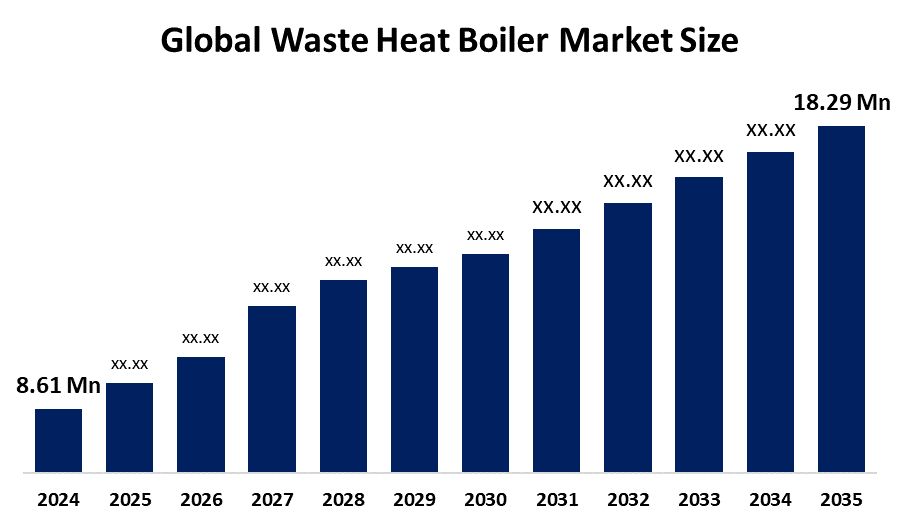
- The Global Waste Heat Boiler Market Size Was Estimated at USD 8.61 billion in 2024
- The Market Size is Expected to Grow at a CAGR of around 7.09 % from 2025 to 2035
- The Worldwide High-Resolution Melting Analysis Market Size is Expected to Reach USD 18.29 billion by 2035
- North America is expected to grow the fastest during the forecast period.
Get more details on this report -
According to a research report published by Spherical Insights, the global waste heat boiler market size was worth around USD 8.61 billion in 2024 and is predicted to grow to around USD 18.29 billion by 2035 with a compound annual growth rate (CAGR) of 7.09% from 2025 to 2035. The global waste heat boiler market is expanding rapidly driven by industrialization & infrastructure growth, technological advancements, strict environmental regulations, and soaring energy costs.
Market Overview
The global market for waste heat boilers consists of systems which utilize industrial waste heat to produce steam and electricity. The market is expanding because industrial facilities must decrease carbon emissions and energy prices are rising and there are emissions regulations in place.
The global waste heat boiler market receives support from government programs which promote industrial carbon reduction and energy efficiency and emission control, which leads to increased adoption across the steel and cement and chemical and power industries. Industrial energy efficiency in the United States is supported by U.S. Department of Energy and U.S. Environmental Protection Agency policies which provide funding and establish regulations. The U.S. Energy Information Administration reports that industrial electricity usage in the United States reached 1,000 billion kWh which created a greater demand for waste heat recovery systems and waste heat boilers.
The waste heat boiler market has received technological progress through the development of high-efficiency waste heat boiler systems which include digital monitoring and modular designs and renewable energy integration to improve industrial energy recovery and operational performance and emission control. The cement plant operated by Heidelberg Materials in Egypt started its waste heat recovery system which cost USD 30 million at a system opening ceremony held in September 2024. The project produces 20 MW of electricity while it decreases CO2 emissions, which helps waste heat boiler technologies to be used in industrial applications. The waste heat boiler market provides growth opportunities through its ability to expand into developing markets and its potential to upgrade current facilities with both energy efficient equipment and renewable energy technologies and its rising demand from the steel and cement and chemical and power industries.
Report Coverage
This research report categorizes the global waste heat boiler market based on various segments and regions, forecasts revenue growth, and analyzes trends in each submarket. The report analyses the key growth drivers, opportunities, and challenges influencing the global waste heat boiler market. Recent market developments and competitive strategies, such as expansion, product launch, development, partnership, merger, and acquisition, have been included to draw the competitive landscape in the market. The report strategically identifies and profiles the key market players and analyzes their core competencies in each sub-segment of the waste heat boiler market.
Global Waste Heat Boiler Market Report Coverage
| Report Coverage | Details |
|---|---|
| Base Year: | 2024 |
| Market Size in 2024: | USD 8.61 billion |
| Forecast Period: | 2025-2035 |
| Forecast Period CAGR 2025-2035 : | CAGR of 7.09% |
| 2035 Value Projection: | USD 18.29 billion |
| Historical Data for: | 2020-2023 |
| No. of Pages: | 189 |
| Tables, Charts & Figures: | 120 |
| Segments covered: | By Temperature,By Source,By End User,By Region |
| Companies covered:: | Siemens AG, General Electric Company, Thermax Limited, Bosch Industriekessel GmbH, Alfa Laval AB, Mitsubishi Heavy Industries Ltd, Foster Wheeler / Amec Foster Wheeler, Babcock & Wilcox Enterprises Inc, Kawasaki Heavy Industries Ltd, Forbes Marshall Pvt Ltd, Cleaver Brooks Inc, Nooter/Eriksen Inc, Zurn Industries, Clyde Bergemann Power Group, Hitachi Zosen Corporation,and Others key players |
| Pitfalls & Challenges: | COVID-19 Empact, Challenge, Future, Growth, & Analysis |
Get more details on this report -
Driving Factors
The global waste heat boiler market experiences growth because industrial facilities need more energy while fuel prices continue to increase, creating a need for energy recovery systems. The implementation of strict environmental regulations, together with government programs supporting industrial decarburization and the demand for sustainable business practices, drives companies to implement these technologies. The steel, cement, chemical, and power sectors experience expansion because waste heat recovery systems enable them to enhance operational efficiency while minimizing their greenhouse gas emissions.
Restraining Factors
Key restraining factors for the global waste heat boiler market include high initial investment, complex installation, maintenance costs, fluctuating energy prices, strict environmental regulations, limited awareness in developing regions, and competition from alternative energy recovery technologies.
Market Segmentation
The global waste heat boiler market share is classified into temperature, source, and end user.
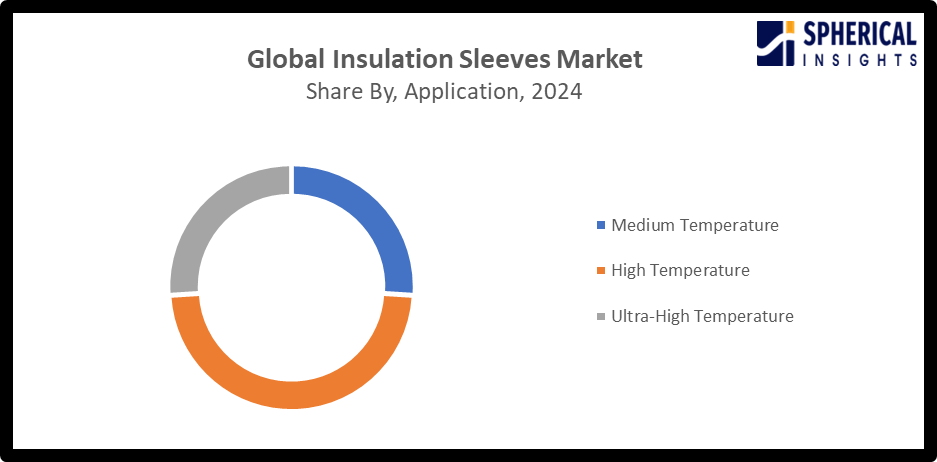
- The high temperature segment accounted for the largest share in 2024, approximately 48.0%, and is anticipated to grow at a significant CAGR during the forecast period.
Based on the temperature, the global waste heat boiler market is divided into medium temperature, high temperature, and ultra-high temperature. Among these, the high temperature segment accounted for the largest share in 2024, approximately 48.0%, and is anticipated to grow at a significant CAGR during the forecast period. The market is segmented by rising industrial energy demand, focus on energy efficiency, stringent emission regulations, and the need for cost-effective steam and power generation solutions.
Get more details on this report -
- The gas turbine segment accounted for the highest market revenue share in 2024, approximately 38.0%, and is anticipated to grow at a significant CAGR during the forecast period.
Based on the source, the global waste heat boiler market is divided into oil engine exhaust, gas engine exhaust, gas turbine, incinerator exit gas, cement plant, and others. Among these, the gas turbine segment accounted for the highest market revenue share in 2024, approximately 38.0%, and is anticipated to grow at a significant CAGR during the forecast period. The market is driven by rising efforts to enhance energy efficiency and implement heat recovery initiatives across various industrial processes, promoting sustainability, reducing costs, and optimizing overall operational performance.
- The power generation utilities segment dominated the market in 2024, approximately 32.0%, and is projected to grow at a substantial CAGR during the forecast period.
Based on the end user, the global waste heat boiler market is divided into power generation utilities, oil & gas, chemical, and primary metals. Among these, the power generation utilities segment dominated the market in 2024, approximately 32.0%, and is projected to grow at a substantial CAGR during the forecast period. The market dominance is driven by increasing global electricity demand, the need for energy-efficient power generation, and government incentives for reducing carbon emissions.
Regional Segment Analysis of the Global Waste Heat Boiler Market
- North America (U.S., Canada, Mexico)
- Europe (Germany, France, U.K., Italy, Spain, Rest of Europe)
- Asia-Pacific (China, Japan, India, Rest of APAC)
- South America (Brazil and the Rest of South America)
- The Middle East and Africa (UAE, South Africa, Rest of MEA)
Asia-Pacific is anticipated to hold the largest share of the global waste heat boiler market over the predicted timeframe.
Asia Pacific is anticipated to hold the largest share of global waste heat boiler market over the predicted timeframe due to rapid industrialization, increasing energy demand, expansion of power generation and manufacturing sectors, and supportive government policies promoting energy efficiency. China is the leading country in the Asia Pacific waste heat boiler market, due to energy efficiency mandates, industrialization, and industries like steel, cement, and chemicals.
The North America region is expected to grow at the fastest rate of about 4.5% CAGR during the forecast period due to modernization of industrial facilities, rising focus on energy efficiency, stringent environmental regulations, and the adoption of advanced waste heat recovery technologies. Further, an increasing investment in digital infrastructure and the adoption of innovative technology are propelling the waste heat boiler market in the region.
Competitive Analysis:
The report offers the appropriate analysis of the key organizations/companies involved within the global waste heat boiler market, along with a comparative evaluation primarily based on their product offering, business overviews, geographic presence, enterprise strategies, segment market share, and SWOT analysis. The report also provides an elaborative analysis focusing on the current news and developments of the companies, which includes product development, innovations, joint ventures, partnerships, mergers & acquisitions, strategic alliances, and others. This allows for the evaluation of the overall competition within the market.
List of Key Companies
- Siemens AG
- General Electric Company
- Thermax Limited
- Bosch Industriekessel GmbH
- Alfa Laval AB
- Mitsubishi Heavy Industries, Ltd.
- Foster Wheeler / Amec Foster Wheeler
- Babcock & Wilcox Enterprises, Inc.
- Kawasaki Heavy Industries, Ltd.
- Forbes Marshall Pvt. Ltd.
- Cleaver-Brooks, Inc.
- Nooter/Eriksen, Inc.
- Zurn Industries, LLC
- Clyde Bergemann Power Group
- Hitachi Zosen Corporation
- Others
Key Target Audience
- Market Players
- Investors
- End-users
- Government Authorities
- Consulting and Research Firm
- Venture capitalists
- Value-Added Resellers (VARs)
Recent Development
• In March 2026, Veolia announced its ambition to lead European district heating by 2030 with the new Eco Thermal Grid solution, decarbonizing existing systems, building new networks, phasing out coal, and targeting USD 350 million in revenue by 2030.
• In October 2025, Mitsubishi Heavy Industries Thermal Systems, Ltd., a member of the MHI Group, announced the newly developed ETI-W, a centrifugal heat pump that effectively uses waste heat for the Japanese market.
• In July 2025, MHI Engine & Turbocharger, part of the MHI Group, launched a 450 kW gas cogeneration system capable of hydrogen co-firing, marketed as “hydrogen ready,” allowing customers to upgrade from natural gas to hydrogen later. This system supports cogeneration (power plus heat) and reduces CO 2 emissions, but it is not a standalone industrial boiler for waste heat recovery in the conventional waste heat boiler market.
Market Segment
This study forecasts revenue at global, regional, and country levels from 2020 to 2035. Spherical Insights has segmented the global waste heat boiler market based on the below-mentioned segments:
Global Waste Heat Boiler Market, By Temperature
- Medium Temperature
- High Temperature
- Ultra-High Temperature
Global Waste Heat Boiler Market, By Source
- Oil Engine Exhaust
- Gas Engine Exhaust
- Gas Turbine
- Incinerator Exit Gas
- Cement Plant
- Others
Global Waste Heat Boiler Market, By End User
- Power Generation Utilities
- Oli & Gas
- Chemical
- Primary Metals
Global Waste Heat Boiler Market, By Regional Analysis
- North America
- US
- Canada
- Mexico
- Europe
- Germany
- UK
- France
- Italy
- Spain
- Russia
- Rest of Europe
- Asia Pacific
- China
- Japan
- India
- South Korea
- Australia
- Rest of Asia Pacific
- South America
- Brazil
- Argentina
- Rest of South America
- Middle East & Africa
- UAE
- Saudi Arabia
- Qatar
- South Africa
- Rest of the Middle East & Africa
Frequently Asked Questions (FAQ)
-
1. What is the CAGR of the waste heat boiler market over the forecast period?A: The Global Waste Heat Boiler Market is projected to expand at a CAGR of 7.09% during the forecast period.
-
2. What are the main technologies used in global waste heat boiler market?A: Key technologies include HRSGs, economizers, heat exchangers, modular designs, digital monitoring, high-efficiency materials, condensing recovery, and integration with renewable systems to enhance energy efficiency and reduce emissions.
-
3. What opportunities exist in the market during the forecast period?A: Opportunities in the global waste heat boiler market include expanding into developing regions, upgrading existing industrial facilities with energy-efficient systems, integrating renewable energy, and rising demand from steel, cement, chemical, and power sectors.
-
4. What are the common challenges in retrofitting existing plants with waste heat boilers?A: Space limitations, high initial costs, integration with existing equipment, and regulatory approvals can pose challenges.
Need help to buy this report?