Global Structured-Based Drug Design Market Size Size, Share, and COVID-19 Impact Analysis, By Drug Type (Small Molecule Drugs, Biologics, Peptides, and Others), By Technology (Molecular Docking, Homology Modelling, Molecular Dynamics, Virtual Screening, and Others), By Application (Oncology, Infectious Diseases, Neurology, Cardiovascular Diseases, and Others), By End-User (Pharmaceutical Companies, Biotechnology Companies, Academic & Research Institutes, and Others), and By Region (North America, Europe, Asia-Pacific, Latin America, Middle East, and Africa), Analysis and Forecast 2025 - 2035
Industry: Healthcare
Global Structured-Based Drug Design Market Size Insights Forecasts to 2035
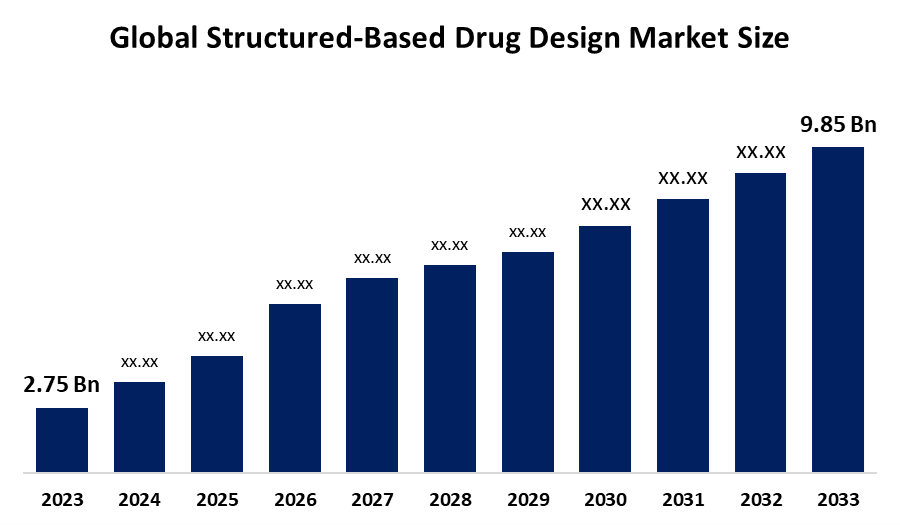
- The Global Structured-Based Drug Design Market Size Was Estimated at USD 2.75 Billion in 2024
- The Market Size is Expected to Grow at a CAGR of around 12.30% from 2025 to 2035
- The Worldwide Structured-Based Drug Design Market Size is Expected to Reach USD 9.85 Billion by 2035
- Asia Pacific is expected to grow the fastest during the forecast period.
Get more details on this report -
According to a Research Report Published by Spherical Insights and Consulting, The Global Structured-Based Drug Design Market Size was worth around USD 2.75 Billion in 2024 and is predicted to grow to around USD 9.85 Billion by 2035 with a compound annual growth rate (CAGR) of 12.30% from 2025 and 2035. The market for structured-based drug design has a number of opportunities to grow, mainly due to emerging innovations in physics and knowledge-based approaches. For increasing the efficiency, speed, and cost-effectiveness of drug discovery, structure-based drug design (SBDD) is needed, that enable rational design of potent, highly specific compounds, and minimizing off-target toxicity.
Market Overview
The global industry for structured-based drug design (SBDD) encompasses the use of 3D structural data of biological targets (proteins, nucleic acids) to design, optimize, and develop new, highly targeted medicines. Structure-based drug design (SBDD) is a powerful approach used in the development of new drugs, involving the use of three-dimensional structures of biological macromolecules, such as proteins or nucleic acids, to guide the design of molecules that can bind to the target protein and modulate its activity. One notable example of the SBDD usage is the development of protease inhibitors for the treatment of HIV, resulting in the development of drugs like saquinavir and ritonavir. Another example is the development of the cancer drug imatinib, which targets the Bcr-Abl protein in chronic myeloid leukemia, and vemurafenib, targeting the BRAF protein in melanoma.
Innovation and market expansion are anticipated as a result of major players' growing R&D expenditures and the expanding partnerships between tech firms. For instance, in July 2021, Sosei Group Corporation, the world leader in GPCR-focused structure-based drug design and development, and InveniAI LLC, a global leader in pioneering the application of artificial intelligence (AI) and machine learning (ML) to transform innovation across drug discovery and development, announced the initiation of a new R&D collaboration.
Report Coverage
This research report categorizes the Structured-Based Drug Design Market Size based on various segments and regions, forecasts revenue growth, and analyzes trends in each submarket. The report analyses the key growth drivers, opportunities, and challenges influencing the Structured-Based Drug Design Market Size. Recent market developments and competitive strategies such as expansion, type launch, development, partnership, merger, and acquisition have been included to draw the competitive landscape in the market. The report strategically identifies and profiles the key market players and analyses their core competencies in each sub-segment of the Structured-Based Drug Design Market Size.
Structured-Based Drug Design Market Report Coverage
| Report Coverage | Details |
|---|---|
| Base Year: | 2024 |
| Market Size in 2024: | USD 2.75 Billion |
| Forecast Period: | 2025-2035 |
| Forecast Period CAGR 2025-2035 : | CAGR of 12.30% |
| 2035 Value Projection: | USD 9.85 Billion |
| Historical Data for: | 2020-2023 |
| No. of Pages: | 240 |
| Tables, Charts & Figures: | 120 |
| Segments covered: | By Drug Type, By Technology |
| Companies covered:: | F. Hoffmann-La Roche Ltd., AstraZeneca PLC, Novartis AG, Pfizer Inc., GlaxoSmithKline plc, Merck & Co., Inc., Sanofi S.A., Bristol-Myers Squibb Company, Eli Lilly and Company, Johnson & Johnson, Schrödinger, Inc., Astex Pharmaceuticals (Otsuka Pharmaceutical Co., Ltd.), Charles River Laboratories International, Inc., Evotec SE, and other key players |
| Pitfalls & Challenges: | COVID-19 Empact, Challenge, Future, Growth, & Analysis |
Get more details on this report -
Driving Factors
The market for structured-based drug design is primarily driven by an increased investment and innovation in drug research & development for highly prevalent chronic diseases. Biotech industries’ delivering innovation in drug discovery is contributing to promoting market growth. Remodeling structure-based drug design using machine learning to keep pace with the rapid discoveries of biomedicine, enabling data analysis and analytical model building with minimal human intervention, leads to propel market growth. Furthermore, a collaborative approach, government funds & grants, focus on patient-centric healthcare solutions, and awareness about the tailored therapies in improving patient outcomes are escalating the market for structured-based drug design.
Restraining Factors
The Structured-Based Drug Design Market Size is restricted by factors like increased cost and the use of complex computational tools. Further, high failure rate in clinical trials, shortage of skilled professionals in computational biology, and increased capital investment for advanced computational infrastructure are challenging the market growth.
Market Segmentation
The Structured-Based Drug Design Market Size share is classified into drug type, technology, application, and end-user.
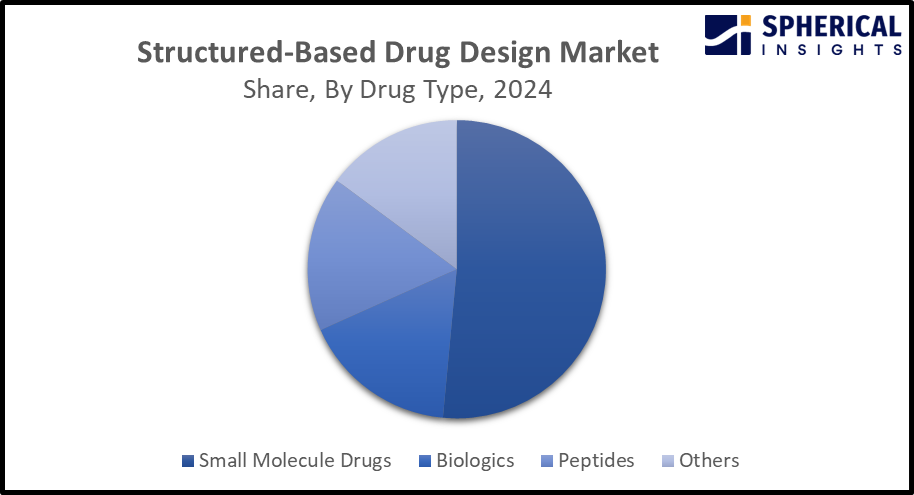
- The small molecule drugs segment dominated the market with nearly 52.0% share in 2024 and is expected to grow at a significant CAGR during the forecast period.
Based on the drug type, the Structured-Based Drug Design Market Size is divided into small molecule drugs, biologics, peptides, and others. Among these, the small molecule drugs segment dominated the market with nearly 52.0% share in 2024 and is expected to grow at a significant CAGR during the forecast period. It involves the development of small-molecule drugs by using the 3D atomic structure of biological targets/enzymes/receptors. Molecular interactions between the designed drug and a target’s binding pocket aid in maximizing affinity and specificity, often using X-ray crystallography, NMR, or modelling.
Get more details on this report -
- The molecular docking segment dominated the market with over 22.5% share in 2024 and is projected to grow at a substantial CAGR during the forecast period.
Based on the technology, the Structured-Based Drug Design Market Size is divided into molecular docking, homology modelling, molecular dynamics, virtual screening, and others. Among these, the molecular docking segment dominated the market with over 22.5% share in 2024 and is projected to grow at a substantial CAGR during the forecast period. Molecular docking is a high-throughput computational technique that predicts the most stable, 3D binding orientation (pose) and affinity of a small-molecule ligand within a target protein’s active site. The technology includes hit identification and lead optimization that aid in enhancing the drug discovery process. It is further adopted because of its versatility, cost-effectiveness, and ability to integrate with other computational methods.
- The oncology segment accounted for the dominant market share of over 38.0% in 2024 and is anticipated to grow at a significant CAGR during the forecast period.
Based on the application, the Structured-Based Drug Design Market Size is divided into oncology, infectious diseases, neurology, cardiovascular diseases, and others. Among these, the oncology segment accounted for the dominant market share of over 38.0% in 2024 and is anticipated to grow at a significant CAGR during the forecast period. By using techniques such as X-ray crystallography, NMR, and AI-driven modelling, SBDD enables the creation of potent, highly selective inhibitors that disrupt cancer signalling, such as kinases, with fewer side effects. An increasing emphasis on personalized oncology and immune-oncology therapies is propelling the market for structured-based drug design.
- The pharmaceutical companies segment held the largest market share of nearly 61.0% in 2024 and is anticipated to grow at a significant CAGR during the projected period.
Based on the end-user, the Structured-Based Drug Design Market Size is divided into pharmaceutical companies, biotechnology companies, academic & research institutes, and others. Among these, the pharmaceutical companies segment held the largest market share of nearly 61.0% in 2024 and is anticipated to grow at a significant CAGR during the projected period. Structure-based drug design in modern pharmaceutical R&D accelerates the drug discovery process by using 3D structural information of biological targets.
Regional Segment Analysis of the Structured-Based Drug Design Market Size
- North America (U.S., Canada, Mexico)
- Europe (Germany, France, U.K., Italy, Spain, Rest of Europe)
- Asia-Pacific (China, Japan, India, Rest of APAC)
- South America (Brazil and the Rest of South America)
- The Middle East and Africa (UAE, South Africa, Rest of MEA)
North America is anticipated to hold the largest share of the Structured-Based Drug Design Market Size over the predicted timeframe.

Get more details on this report -
North America is anticipated to hold the largest share of nearly 44.0% in the Structured-Based Drug Design Market Size over the predicted timeframe. The market ecosystem in North America is strong, with both cutting-edge startups (including Genesis Therapeutics, Recursion Pharmaceuticals, Atomwise) and major industries (including WuXi AppTec, Charles River Laboratories, Evotec, and Curia) specialize in small molecule discovery. The demand for structured-based drug design has been driven by the region's increased R&D investments, rapid adoption of AI/machine learning for reducing discovery time and a heavy burden of chronic diseases. The U.S. is dominating the North America Structured-Based Drug Design Market Size, with about 75.0% share within the region, owing to the integration of genAI and the shift towards “computer-driven” discovery model.
Asia Pacific is expected to grow at a rapid CAGR of about 16.2% in the Structured-Based Drug Design Market Size during the forecast period. The Asia Pacific area has a thriving market for structured-based drug design due to its surging R&D investments by biopharmaceutical companies and increased prevalence of chronic diseases. Implementation of license agreements between pharma industries and international life sciences investment firms for advancing an extensive pipeline is significantly contributing to promoting market growth. China is holding the largest share within the Asia Pacific market, driven by a strategic shift from genetic drug manufacturing to high-value, innovative, and AI-driven drug discovery.
Competitive Analysis:
The report offers the appropriate analysis of the key organizations/companies involved within the Structured-Based Drug Design Market Size, along with a comparative evaluation primarily based on their type of offering, business overviews, geographic presence, enterprise strategies, segment market share, and SWOT analysis. The report also provides an elaborative analysis focusing on the current news and developments of the companies, which includes type development, innovations, joint ventures, partnerships, mergers & acquisitions, strategic alliances, and others. This allows for the evaluation of the overall competition within the market.
List of Key Companies
- F. Hoffmann-La Roche Ltd.
- AstraZeneca PLC
- Novartis AG
- Pfizer Inc.
- GlaxoSmithKline plc
- Merck & Co., Inc.
- Sanofi S.A.
- Bristol-Myers Squibb Company
- Eli Lilly and Company
- Johnson & Johnson
- Schrödinger, Inc.
- Astex Pharmaceuticals (Otsuka Pharmaceutical Co., Ltd.)
- Charles River Laboratories International, Inc.
- Evotec SE
- Others
Key Target Audience
- Market Players
- Investors
- End-users
- Government Authorities
- Consulting And Research Firm
- Venture capitalists
- Value-Added Resellers (VARs)
Recent Development
- In February 2026, Japan-headquartered Nxera Pharma entered into a license agreement with a newly established independent company (NewCo), created by a leading international life sciences investment firm, to advance Nxera’s G protein-coupled receptor (GPCR)-targeted programme.
- In September 2025, Frost & Sullivan announced that Viva Biotech has been given the 2025 APAC Technology Innovation Leadership recognition in the Integrated Intelligent Drug Discovery Industry for its achievements in driving transformative efficiencies in preclinical research and development.
Market Segment
This study forecasts revenue at global, regional, and country levels from 2020 to 2035. Spherical Insights has segmented the Structured-Based Drug Design Market Size based on the below-mentioned segments:
Global Structured-Based Drug Design Market Size, By Drug Type
- Small Molecule Drugs
- Biologics
- Peptides
- Others
Global Structured-Based Drug Design Market Size, By Technology
- Molecular Docking
- Homology Modelling
- Molecular Dynamics
- Virtual Screening
- Others
Global Structured-Based Drug Design Market Size, By Application
- Oncology
- Infectious Diseases
- Neurology
- Cardiovascular Diseases
- Others
Global Structured-Based Drug Design Market Size, By End-User
- Pharmaceutical Companies
- Biotechnology Companies
- Academic & Research Institutes
- Others
Global Structured-Based Drug Design Market Size, By Regional Analysis
- North America
- US
- Canada
- Mexico
- Europe
- Germany
- UK
- France
- Italy
- Spain
- Russia
- Rest of Europe
- Asia Pacific
- China
- Japan
- India
- South Korea
- Australia
- Rest of Asia Pacific
- South America
- Brazil
- Argentina
- Rest of South America
- Middle East & Africa
- UAE
- Saudi Arabia
- Qatar
- South Africa
- Rest of the Middle East & Africa
Frequently Asked Questions (FAQ)
-
1. What is the market size of the Structured-Based Drug Design Market Size?The global Structured-Based Drug Design Market Size is expected to grow from USD 2.75 Billion in 2024 to USD 9.85 Billion by 2035, at a CAGR of 12.30% during the forecast period 2025-2035.
-
2. Which region holds the largest share of the Structured-Based Drug Design Market Size?North America is anticipated to hold the largest share of the Structured-Based Drug Design Market Size over the predicted timeframe.
-
3. What is the forecasted CAGR of the Global Structured-Based Drug Design Market Size from 2024 to 2035?The market is expected to grow at a CAGR of around 12.30% during the period 2024–2035.
-
4. Who are the top companies that are involved in the Global Structured-Based Drug Design Market Size?Key players include F. Hoffmann-La Roche Ltd., AstraZeneca PLC, Novartis AG, Pfizer Inc., GlaxoSmithKline plc, Merck & Co., Inc., Sanofi S.A., Bristol-Myers Squibb Company, Eli Lilly and Company, Johnson & Johnson, Schrödinger, Inc., Astex Pharmaceuticals (Otsuka Pharmaceutical Co., Ltd.), Charles River Laboratories International, Inc., and Evotec SE.
-
5. What are the main drivers in the Structured-Based Drug Design Market Size?An increased investment and innovation in drug research & development, innovation in drug discovery, collaborative approach, and government funding are major market growth drivers of the Structured-Based Drug Design Market Size.
-
6. What challenges are limiting the adoption of structured-based drug design treatment?The increased cost and the use of complex computational tools remain key restraints in the Structured-Based Drug Design Market Size.
-
7. What are the key trends in the Structured-Based Drug Design Market Size?Demand of structured-based drug design for increasing the efficiency, speed, and cost-effectiveness of drug discovery, as well as remodelling structure-based drug design using machine learning to keep pace with the rapid discoveries of biomedicine are key trend in the Structured-Based Drug Design Market Size.
Need help to buy this report?