South Korea Liquefied Natural Gas Market Size, Share, By Infrastructure (Regasification Terminals, Storage Facilities, Distribution Networks, And Shipping & Transport), By Application (Power Generation, Industrial, Residential & Commercial, And Transportation), And South Korea Liquefied Natural Gas Market Insights, Industry Trend, Forecasts to 2035
Industry: Chemicals & Materials
South Korea Liquefied Natural Gas Market Insights Forecasts to 2035
- South Korea Liquefied Natural Gas Market CAGR 2024: 6.3%
- South Korea Liquefied Natural Gas Market Segments: Infrastructure and Application
Get more details on this report -
South Korea liquefied natural gas market consists of energy resources and systems that include, importing, regasifying, distributing; and using LNG. It is a liquid form of highly cooled natural gas and can be used for generating electricity, producing industrial products, and supplying gas to cities throughout the republic of Korea. As one of the world's most reliance on energy, South Korea depends on imported LNG to meet most of its electricity and industrial demand; therefore, it has a large proportion of LNG used for electrical generation and industry.
The liquefied natural gas in South Korea is backed by government support, including the state entities like Korea Gas Corporation (KOGAS), aimed at enhancing energy security by reducing dependence on a narrow set of suppliers and stabilising gas prices for domestic consumption. In July 2025, South Korea imported approximately 3.63 million tonnes of LNG, representing a roughly 19% increase from the previous month as the country responded to peak seasonal demand.
As technology advances, South Korean liquefied natural gas providers are now using LNG carrier, terminal technology and advancements in other infrastructure systems to improve the efficiency, safety, and overall integration of LNG with low-carbon energy systems. The government and industry are committed to developing the next generation of LNG cargo hold technologies, which will reduce dependence on foreign intellectual property and strengthen the competitiveness of the US shipbuilding industry, which is an important milestone towards technological self-sufficiency and the development of exportable technologies.
Market Dynamics of the South Korea Liquefied Natural Gas Market:
The South Korea liquefied natural gas market is driven by the country’s structural reliance on energy import, increasing strategic need to secure stable and diversified supply, replacing coal in power generation to reduce carbon emissions, ensuring grid stability during seasonal demand peaks, rising urbanization, expansion of industrial activity, rising cleaner transitional fuel supports national decarbonization objectives, and strengthening the domestic LNG ecosystem through advanced carrier construction and export competitiveness further propel the market growth.
The South Korea liquefied natural gas market is restrained by the government’s increasing shift toward nuclear and renewable energy, high price volatility in global LNG markets, cost uncertainty challenges, heavy dependence on imports, supply chain risks, concerns about potential overcapacity in LNG infrastructure, and stricter carbon reduction policies challenges.
The future of South Korea liquefied natural gas market is bright and promising, with versatile opportunities emerging from the diverse sources of imports and long-term supply agreements, work together to support a more flexible supply framework, while development of small scale LNG infrastructure and partnerships across the LNG value chain provide pathways for new applications of LNG associated with traditional power generation. Technological leadership in the design of LNG carriers, cargo-handling technologies provides an opportunity for South Korea to take advantage of the export potential as global LNG markets continue their transition.
South Korea Liquefied Natural Gas (LNG) Market Report Coverage
| Report Coverage | Details |
|---|---|
| Base Year: | 2024 |
| Forecast Period: | 2025-2035 |
| Forecast Period CAGR 2025-2035 : | CAGR of 6.3% |
| Historical Data for: | 2020-2023 |
| No. of Pages: | 210 |
| Tables, Charts & Figures: | 95 |
| Segments covered: | By Infrastructure, By Application |
| Companies covered:: | Korea Gas Corporation (KOGAS), SK E&S, POSCO International, GS Energy, HD Hyundai Oilbank, S-Oil Corporation, Korea National Oil Corporation, GS EPS, Hanyang Corporation, SK Gas, Korea Southern Power, Samchully, Seoul City Gas, Korea Line Corporation, Others, and Key Players |
| Pitfalls & Challenges: | COVID-19 Empact, Challenge, Future, Growth, & Analysis |
Get more details on this report -
Market Segmentation
The South Korea Liquefied Natural Gas Market share is classified into infrastructure and application.
By Infrastructure:
The South Korea liquefied natural gas market is divided by infrastructure into regasification terminals, storage facilities, distribution networks, and shipping & transport. Among these, the regasification terminals segment accounted for the largest revenue market share in 2024 and is expected to grow at a significant CAGR during the forecast period. High reliance on imports, heavily investing in expanding LNG receiving terminals, massive infrastructural projects, and rise of private player contributing to the high concentration of capital in South Korea all contribute to the regasification terminals segment's largest share and higher spending on liquefied natural gas when compared to other infrastructure.
By Application:
The South Korea liquefied natural gas market is divided by application into power generation, industrial, residential & commercial, and transportation. Among these, the power generation segment dominated the share in 2024 and is anticipated to grow at a remarkable CAGR during the forecast period. The power generation segment dominates because of the country’s strategic shift from coal to cleaner energy sources to meet environmental goals, highly used for utility-scale electricity production as a primary energy source, and established robust LNG import infrastructure of South Korea.
Competitive Analysis:
The report offers the appropriate analysis of the key organisations/companies involved within the South Korea liquefied natural gas market, along with a comparative evaluation primarily based on their product offering, business overviews, geographic presence, enterprise strategies, segment market share, and SWOT analysis. The report also provides an elaborative analysis focusing on the current news and developments of the companies, which includes product development, innovations, joint ventures, partnerships, mergers & acquisitions, strategic alliances, and others. This allows for the evaluation of the overall competition within the market.
Top Key Companies in South Korea Liquefied Natural Gas Market:
- Korea Gas Corporation (KOGAS)
- SK E&S
- POSCO International
- GS Energy
- HD Hyundai Oilbank
- S-Oil Corporation
- Korea National Oil Corporation
- GS EPS
- Hanyang Corporation
- SK Gas
- Korea Southern Power
- Samchully
- Seoul City Gas
- Korea Line Corporation
- Others
Recent Developments in South Korea Liquefied Natural Gas Market:
In September 2025, Korea Gas Corporation (KOGAS) signed a Heads of Agreement with TotalEnergies for the annual delivery of 1 million tons of liquefied natural gas to South Korea for 10 years starting from late 2027.
In January 2025, SK Gas announced that Ulsan Gas Power Solution began full-fledged commercial operations, having completed trial operations between May 2024 and early January 2025. It was the world’s first LNG-LPG dual-purpose combined power plant (1.2GW).
Key Target Audience
- Market Players
- Investors
- End-users
- Government Authorities
- Consulting and Research Firm
- Venture capitalists
- Value-Added Resellers (VARs)
Market Segment
This study forecasts revenue at the South Korea, regional, and country levels from 2020 to 2035. Spherical Insights has segmented the South Korea liquefied natural gas market based on the below-mentioned segments:
South Korea Liquefied Natural Gas Market, By Infrastructure
- Regasification Terminals
- Storage Facilities
- Distribution Networks
- Shipping & Transport
South Korea Liquefied Natural Gas Market, By Application
- Power Generation
- Industrial
- Residential & Commercial
- Transportation
Frequently Asked Questions (FAQ)
-
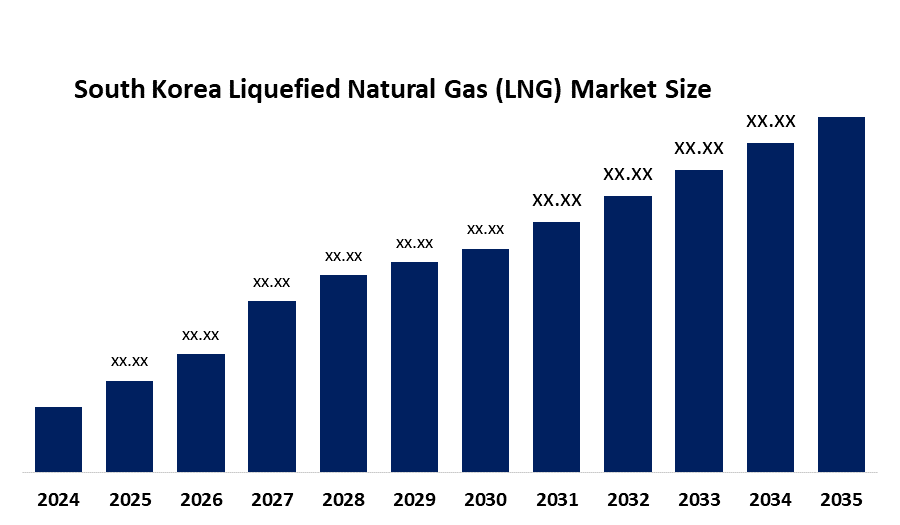
Q: What is the South Korea liquefied natural gas market size?A: South Korea liquefied natural gas market is expected to grow from 575.22 thousand tons in 2024 to 962.93 thousand tons by 2035, growing at a CAGR of 4.8% during the forecast period 2025-2035.
-
Q: What are the key growth drivers of the market?A: Market growth is driven by the country’s structural reliance on energy import, increasing strategic need to secure stable and diversified supply, replacing coal in power generation to reduce carbon emissions, ensuring grid stability during seasonal demand peaks, rising urbanization, expansion of industrial activity, rising cleaner transitional fuel supports national decarbonization objectives, and strengthening the domestic LNG ecosystem through advanced carrier construction and export competitiveness further propel the market growth.
-
Q: What factors restrain the South Korea liquefied natural gas market?A: Constraints include the government’s increasing shift toward nuclear and renewable energy, high price volatility in global LNG markets, cost uncertainty challenges, heavy dependence on imports, supply chain risks, concerns about potential overcapacity in LNG infrastructure, and stricter carbon reduction policies challenges.
-
Q: How is the market segmented by infrastructure?A: The market is segmented into regasification terminals, storage facilities, distribution networks, and shipping & transport.
-
Q: Who are the key players in the South Korea liquefied natural gas market?A: Key companies include Korea Gas Corporation (KOGAS), SK E&S, POSCO International, GS Energy, HD Hyundai Oilbank, S-Oil Corporation, Korea National Oil Corporation, GS EPS, Hanyang Corporation, SK Gas, Korea Southern Power, Samchully, Seoul City Gas, Korea Line Corporation, and Others.
-
Q: Who are the target audiences for this market report?A: The report targets market players, investors, end-users, government authorities, consulting and research firms, venture capitalists, and value-added resellers (VARs).
Need help to buy this report?