Global Small Molecule-Drug Conjugates Market Size, Share, and COVID-19 Impact Analysis, By Indication (Cancer, Inflammatory Diseases, and Kidney Diseases), and By Region (North America, Europe, Asia-Pacific, Latin America, Middle East, and Africa), Analysis and Forecast 2025 - 2035
Industry: Healthcare
Global Small Molecule-Drug Conjugates Market Insights Forecasts to 2035
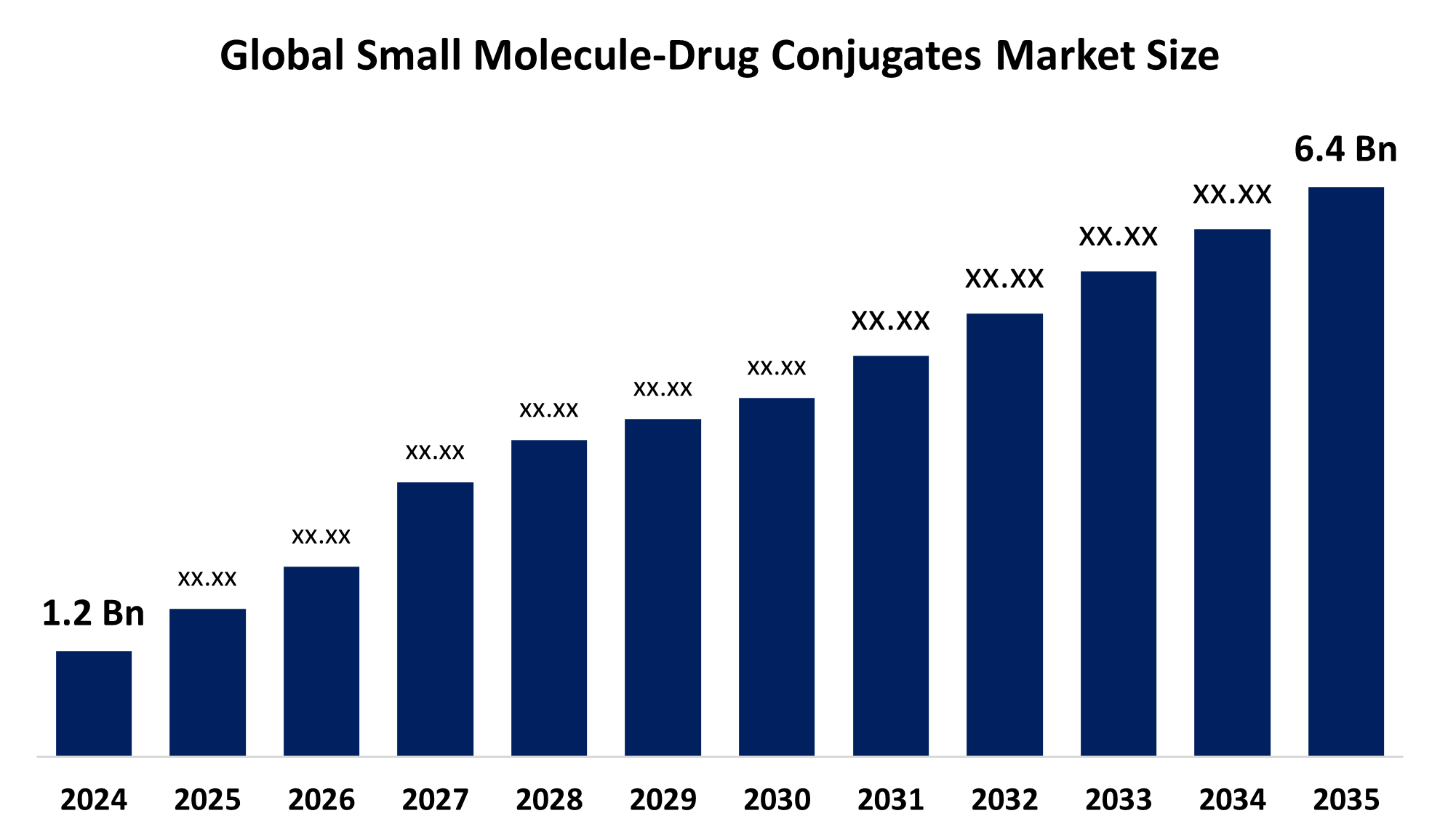
- The Global Small Molecule-Drug Conjugates Market Size Was Estimated at USD 1.2 Billion in 2024
- The Market Size is Expected to Grow at a CAGR of around 16.44% from 2025 to 2035
- The Worldwide Small Molecule-Drug Conjugates Market Size is Expected to Reach USD 6.4 Billion by 2035
Get more details on this report -
Key Takeaways -
- North America dominated the market with the largest share in 2024.
- Asia Pacific is expected to grow the fastest during the forecast period.
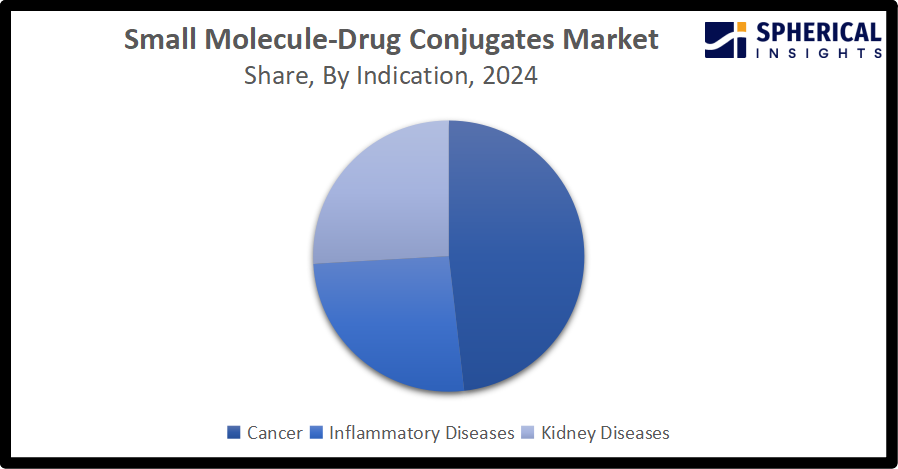
- By indication, the cancer segment dominates the small molecule-drug conjugates market with a major share of about 46.5%, while the inflammatory diseases segment is the rapidly growing segment in the market.
According to a research report published by Spherical Insights and Consulting, the Global Small Molecule-Drug Conjugates Market size was worth around USD 1.2 Billion in 2024 and is predicted to grow to around USD 6.4 Billion by 2035 with a compound annual growth rate (CAGR) of 16.44% from 2025 and 2035. The market for small molecule-drug conjugates has a number of opportunities to grow due to the ongoing development of solid tumor treatments, the use of AI for drug design, and growing strategic partnerships.
Key Trends in Medical Small Molecule-Drug Conjugates Market –
- Increasing research emphasis on developing advanced linker technology
- Integration of fluorescent molecules or radioisotopes for simultaneous diagnostic imaging and targeted therapy
Market Overview
The global small molecule-drug conjugates industry is the market encompassing the targeted therapies linking a therapeutic agent to a targeting ligand via a linker, aimed at delivering drugs directly to diseased cells (primarily cancer) to minimize off-target toxicity. Small molecule-drug conjugates use small molecules as targeting ligands, overcoming limitations of ADC, demonstrating favorable pharmacokinetic properties, enhanced cellular penetration capabilities, and nonimmunogenicity, and exhibiting significant therapeutic potential in solid tumors. They are an emerging class of therapeutics integrating the precision of targeted drug delivery with the potent cytotoxicity of small-molecule drugs.
Recently, At The Wistar Institute, a research team has combined a promising cancer therapy with a molecule targeting tumors for effectively treating cancer. The novel chimeric small molecule, designated NN-01-195, combines an aurora kinase A (AURKA) inhibitor with an HSP90-binding construct that targets the molecule to tumors.
Innovation and market expansion are anticipated as a result of major players' growing R&D expenditures and the expanding partnerships. For instance, in October 2025, Axplora, a global leader in small molecule API manufacturing and a trusted partner to the world’s most innovative pharmaceutical companies, announced that the total investments initiated across its global network in 2025 will exceed €100 million.
Report Coverage
This research report categorizes the small molecule-drug conjugates market based on various segments and regions, forecasts revenue growth, and analyzes trends in each submarket. The report analyses the key growth drivers, opportunities, and challenges influencing the small molecule-drug conjugates market. Recent market developments and competitive strategies such as expansion, type launch, development, partnership, merger, and acquisition have been included to draw the competitive landscape in the market. The report strategically identifies and profiles the key market players and analyses their core competencies in each sub-segment of the small molecule-drug conjugates market.
Global Small Molecule-Drug Conjugates Market Report Coverage
| Report Coverage | Details |
|---|---|
| Base Year: | 2024 |
| Market Size in 2024: | USD 1.2 Billion |
| Forecast Period: | 2025-2035 |
| Forecast Period CAGR 2025-2035 : | 16.44% |
| 2035 Value Projection: | USD 6.4 Billion |
| Historical Data for: | 2020-2023 |
| No. of Pages: | 225 |
| Tables, Charts & Figures: | 102 |
| Segments covered: | By Indication, By Region |
| Companies covered:: | Sinopharm Aeterna Zentaris, Bicycle Therapeutics, Tarveda Therapeutics, Sciclone Pharm Synta Pharmaceuticals, Cybrexa Therapeutics, Endocyte, Esperance Pharmaceutuicals, Theratechnologies, MBC Pharma Osteros Biomedica, Coherent Biopharma, BrightGene Bio, and Other Key Players |
| Pitfalls & Challenges: | and COVID-19 Impact Analysis |
Get more details on this report -
Driving Factors
Demand for effective targeted therapies in oncology
Due to significant side effects associated with traditional chemotherapies, there is an upsurging need for effective targeted therapies in oncology. Use of targeted medicine is a promising approach to precision cancer treatment in which conjugating therapeutic drugs with ligands can bind to tumor cells precisely to deliver targeted therapy.
Increased emphasis on personalized therapy approach
The design strategy of small molecule-drug conjugates helps in overcoming the challenge of off-target toxicity and non-specific distribution, seen with conventional chemotherapy. For instance, SMDCs use small molecule, folate or PSMA-binding ligands that specifically bind to receptors Folate Receptor-alpha or Prostate-specific membrane antigen that are highly expressed in patients’ tumors.
Restraining Factors
Increased R&D costs and a strict regulatory approval process
An increase in R&D costs for developing new small-molecule drugs influenced by clinical failure rates, as well as stringent regulatory approval processes, leads to an overall price, which may hamper their adoption, thereby restricting market demand.
Market Segmentation
The Small Molecule-Drug Conjugates Market share is classified into indication.
1. The cancer segment dominated the market with a major share of about 46.5% in 2024 and is projected to grow at a substantial CAGR during the forecast period.
Based on the indication, the small molecule-drug conjugates market is divided into cancer, inflammatory diseases, and kidney diseases. Among these, the cancer segment dominated the market with a major share of about 46.5% in 2024 and is projected to grow at a substantial CAGR during the forecast period. This is due to its lightweight nature and cost-effectiveness compared to ADC. Further, SMDC considered a promising strategy for precise cancer treatment, targeting tumor cells while attempting to minimize damage to healthy tissue. While the inflammatory diseases segment is growing at a rapid CAGR during the forecast period, owing to the specificity of the drugs delivering high-potency agents to inflamed tissues, bypassing the need for broad immunosuppression.
Get more details on this report -
Regional Segment Analysis of the Small Molecule-Drug Conjugates Market
- North America (U.S., Canada, Mexico)
- Europe (Germany, France, U.K., Italy, Spain, Rest of Europe)
- Asia-Pacific (China, Japan, India, Rest of APAC)
- South America (Brazil and the Rest of South America)
- The Middle East and Africa (UAE, South Africa, Rest of MEA)
North America is anticipated to hold the largest share of the Small Molecule-Drug Conjugates market over the predicted timeframe.

Get more details on this report -
North America is anticipated to hold the largest share of about 45.0% in the Small Molecule-Drug Conjugates market over the predicted timeframe. The market ecosystem in North America is strong, due to the increased R&D investments and the increased number of FDA-approved drugs. The demand for medical small-molecule drug conjugates has been driven by the region's strong presence of pharmaceutical infrastructure and advanced healthcare systems. The U.S. is leading the North America Small Molecule-Drug Conjugates market, holding over 80.0% regional share due to high cancer prevalence. For instance, it was estimated that in the U.S., 2,114,850 new cases and 626,140 cancer deaths projected to occur in 2026, with 5,800 new diagnoses daily. While cancer survivorship is rising, with approximately 18.6 million survivors as of January 2025, the emergence of small molecule-drug conjugates.
Asia Pacific is expected to grow at a rapid CAGR of approximately 25.0% in the Small Molecule-Drug Conjugates market during the forecast period. The Asia Pacific area has a thriving market for small molecule-drug conjugates due to the growing healthcare spending and manufacturing outsourcing. For instance, Astrazeneca makes $5.3B drug R&D pact with CSPC to develop novel preclinical small-molecule candidates using CSPC’s AI-driven drug development platform. Japan is the current market leader in the Asia Pacific region, holding about 48.0% share. Japan is renowned for its technological expertise, especially in the areas of drug discovery, with SMDCs making use of advanced technologies like conjugation methods and drug delivery systems.
Competitive Analysis:
The report offers the appropriate analysis of the key organizations/companies involved within the small molecule-drug conjugates market, along with a comparative evaluation primarily based on their type of offering, business overviews, geographic presence, enterprise strategies, segment market share, and SWOT analysis. The report also provides an elaborative analysis focusing on the current news and developments of the companies, which includes type development, innovations, joint ventures, partnerships, mergers & acquisitions, strategic alliances, and others. This allows for the evaluation of the overall competition within the market.
List of Key Companies
- Sinopharm Aeterna Zentaris
- Bicycle Therapeutics
- Tarveda Therapeutics
- Sciclone Pharm Synta Pharmaceuticals
- Cybrexa Therapeutics
- Endocyte
- Esperance Pharmaceutuicals
- Theratechnologies
- MBC Pharma Osteros Biomedica
- Coherent Biopharma
- BrightGene Bio
- Others
Key Target Audience
- Market Players
- Investors
- End-users
- Government Authorities
- Consulting And Research Firm
- Venture capitalists
- Value-Added Resellers (VARs)
Recent Development
- In January 2026, Lahjavida Bio, a biotechnology company pioneering a new class of tumor-targeted small-molecule cancer therapies, announced that an abstract describing its proprietary Dye-Drug Conjugate (DDC) platform has been accepted for presentation at the American Association for Cancer Research (AACR) Annual Meeting 2026, scheduled to take place April 17–22, 2026, at the San Diego Convention Center in San Diego, California.
- In January 2025, Pfizer is expanding its collaboration with the start-up PostEra, which applies artificial intelligence to medicinal chemistry. The pharmaceutical giant will pay the smaller firm up to $350 million to use software models to design new small molecules as well. The start-up separately has agreements with Amgen, for up to five small molecules, and with the US National Institutes of Health (NIH).
- In March 2023, Bicycle Therapeutics plc, a biotechnology company pioneering a new and differentiated class of therapeutics based on its proprietary bicyclic peptide (Bicycle) technology, announced that it has entered into a strategic collaboration agreement with Novartis to develop, manufacture and commercialize Bicycle radio-conjugates (BRCs) for multiple agreed upon oncology targets.
- In November 2022, Exelixis, Inc. and Cybrexa Therapeutics announced that the companies have entered into an exclusive collaboration agreement providing Exelixis the right to acquire CBX-12 (alphalex exatecan), a clinical-stage, first-in-class peptide-drug conjugate (PDC) that utilizes Cybrexa’s proprietary alphalex technology to enhance delivery of exatecan to tumor cells.
Market Segment
This study forecasts revenue at global, regional, and country levels from 2020 to 2035. Spherical Insights has segmented the Small Molecule-Drug Conjugates Market based on the below-mentioned segments:
Global Small Molecule-Drug Conjugates Market, By Indication
- Cancer
- Inflammatory Diseases
- Kidney Diseases
Global Small Molecule-Drug Conjugates Market, By Regional Analysis
- North America
- US
- Canada
- Mexico
- Europe
- Germany
- UK
- France
- Italy
- Spain
- Russia
- Rest of Europe
- Asia Pacific
- China
- Japan
- India
- South Korea
- Australia
- Rest of Asia Pacific
- South America
- Brazil
- Argentina
- Rest of South America
- Middle East & Africa
- UAE
- Saudi Arabia
- Qatar
- South Africa
- Rest of the Middle East & Africa
Frequently Asked Questions (FAQ)
-
1.What is the market size of the small molecule-drug conjugates market?The global small molecule-drug conjugates market size is expected to grow from USD 1.2 Billion in 2024 to USD 6.4 Billion by 2035, at a CAGR of 16.44% during the forecast period 2025-2035.
-
2.Which region holds the largest share of the small molecule-drug conjugates market?North America is anticipated to hold the largest share of the small molecule-drug conjugates market over the predicted timeframe.
-
3.What is the forecasted CAGR of the Global Small Molecule-Drug Conjugates Market from 2024 to 2035?The market is expected to grow at a CAGR of around 16.44% during the period 2024–2035.
-
4.Who are the top companies that are involved in the Global Small Molecule-Drug Conjugates Market?Key players include Sinopharm Aeterna Zentaris, Bicycle Therapeutics, Tarveda Therapeutics, Sciclone Pharm Synta Pharmaceuticals, Cybrexa Therapeutics, Endocyte, Esperance Pharmaceutuicals, Theratechnologies, MBC Pharma Osteros Biomedica, Coherent Biopharma, and BrightGene Bio.
-
5.What are the main drivers in the small molecule-drug conjugates market?The surging demand for effective targeted therapies in oncology and an increased emphasis on personalized therapy approach, are major market growth drivers of the small molecule-drug conjugates market.
-
6.What challenges are limiting the adoption of Small Molecule-Drug Conjugates?Factors like increased manufacturing and R&D costs, as well as a strict regulatory approval process remain key restraints in the small molecule-drug conjugates market.
-
7.What are the key trends in the small molecule-drug conjugates market?The growing advancement in linker technology, expanding application of SMDC beyond oncology and the emergence of AI-driven drug designing are major key trends in the small molecule-drug conjugates market.
Need help to buy this report?