Global Plasminogen Deficiency Type 1 Market Size, Share, and COVID-19 Impact Analysis, By Treatment (Plasminogen, Surgery, and Others), By Diagnosis (Physical Exam, Laboratory Test, and Others), By Dosage (Tablet, Injection, and Others), By End-Users (Clinic, Hospital, and Others), and By Region (North America, Europe, Asia-Pacific, Latin America, Middle East, and Africa), Analysis and Forecast 2025 - 2035
Industry: Specialty & Fine Chemicals
Global Plasminogen Deficiency Type 1 Market Size Insights Forecasts to 2035
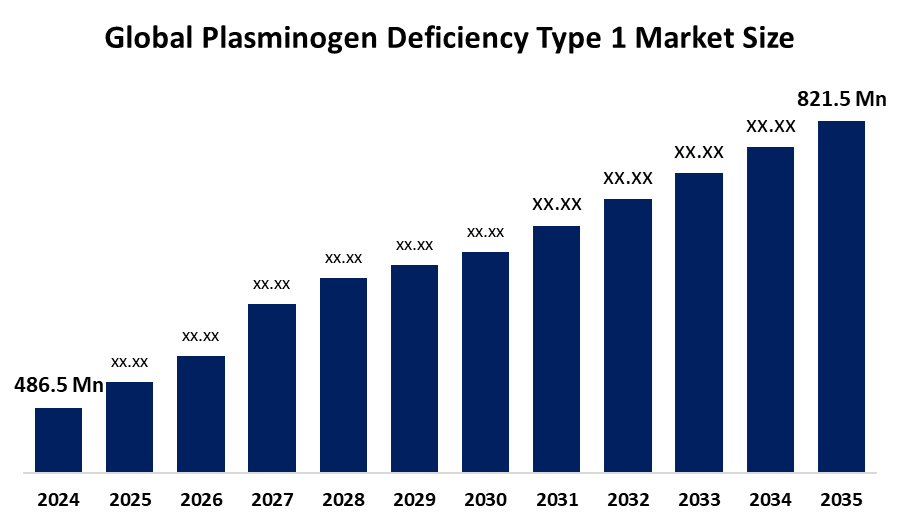
- The Global Plasminogen Deficiency Type 1 Market Size Was Estimated at USD 486.5 Million in 2024
- The Market Size is Expected to Grow at a CAGR of around 4.88% from 2025 to 2035
- The Worldwide Plasminogen Deficiency Type 1 Market Size is Expected to Reach USD 821.5 Million by 2035
- Asia Pacific is expected to grow the fastest during the forecast period.
Get more details on this report -
According to a Research Report Published by Spherical Insights and Consulting, The Global Plasminogen Deficiency Type 1 Market Size was worth around USD 486.5 Million in 2024 and is predicted to grow to around USD 821.5 Million by 2035 with a compound annual growth rate (CAGR) of 4.88% from 2025 and 2035. The market for plasminogen deficiency type 1 has a number of opportunities to grow due to the increased awareness and approval of specialized treatment regimen.
Market Overview
The Global Industry of Plasminogen Deficiency Type 1 is centered on treating an ultra-rare genetic disorder (hypoplasminogenemia), which is characterized by fibrin accumulation and ligneous lesions, with Ryplazim (plasminogen, human-tvmh) being the first FDA-approved, primary therapy. Type 1 plasminogen deficiency is a rare genetic disorder, affecting individuals developing thick growths, sometimes referred to as woody (ligneous) lesions or pseudomembranes, on the mucous membranes of the body.
Furthermore, targeted enzyme replacement therapy, prophylaxis and personalized dosing, shifting away from surgery, a multidisciplinary approach, and ongoing research focus are some key trends in the PLGD-1 treatment, which greatly improve the quality of life by preventing the recurrence of tissue-damaging pseudomembranes and addressing systemic symptoms.
Innovation and market expansion are anticipated as a result of major players' growing R&D expenditures and the expanding partnerships. For instance, in October 2021, Kedrion announced it had completed the acquisition in North America of the Prometic Life Sciences business.
Report Coverage
This research report categorizes the Plasminogen Deficiency Type 1 Market Size based on various segments and regions, forecasts revenue growth, and analyzes trends in each submarket. The report analyses the key growth drivers, opportunities, and challenges influencing the Plasminogen Deficiency Type 1 Market Size. Recent market developments and competitive strategies such as expansion, type launch, development, partnership, merger, and acquisition have been included to draw the competitive landscape in the market. The report strategically identifies and profiles the key market players and analyses their core competencies in each sub-segment of the Plasminogen Deficiency Type 1 Market Size.
Plasminogen Deficiency Type 1 Market Report Coverage
| Report Coverage | Details |
|---|---|
| Base Year: | 2024 |
| Market Size in 2024: | USD 486.5 Million |
| Forecast Period: | 2025-2035 |
| Forecast Period CAGR 2025-2035 : | CAGR of 4.88% |
| 2035 Value Projection: | USD 821.5 Million |
| Historical Data for: | 2020-2023 |
| No. of Pages: | 240 |
| Tables, Charts & Figures: | 120 |
| Segments covered: | By Treatment, By Dosage |
| Companies covered:: | Grifols S.A., Kedrion, Soleo Health, Liminal BioSciences Inc., and other key players |
| Pitfalls & Challenges: | COVID-19 Empact, Challenge, Future, Growth, & Analysis |
Get more details on this report -
Driving Factors
An increasing awareness of plasminogen deficiency, enabling the receipt of timely diagnosis and access to appropriate treatment, is anticipated to drive the market demand. Enhanced research initiatives, along with the rising investment in disease therapeutics is propelling the Plasminogen Deficiency Type 1 Market Size. Specialized health facilities required for treating PLGD-1, like Hemophilia Treatment Centers, which offer multidisciplinary care and expert knowledge, contribute to escalating the market demand. Additionally, advancements in the manufacturing of PLGD-1 disease treating product is promoting the market growth. For instance, in November 2024, the U.S. Food and Drug Administration approved Kendrion Biopharma Inc.’s manufacturing facility in Bolognana, Italy, to produce RYPLAZIM.
Restraining Factors
The Plasminogen Deficiency Type 1 Market Size is restricted by concerns associated with the treatment cost and accessibility, especially in price-sensitive regions and geographic disparities, which lead to uneven availability of therapies.
Market Segmentation
The Plasminogen Deficiency Type 1 Market Size share is classified into treatment, diagnosis, dosage, and end-users.
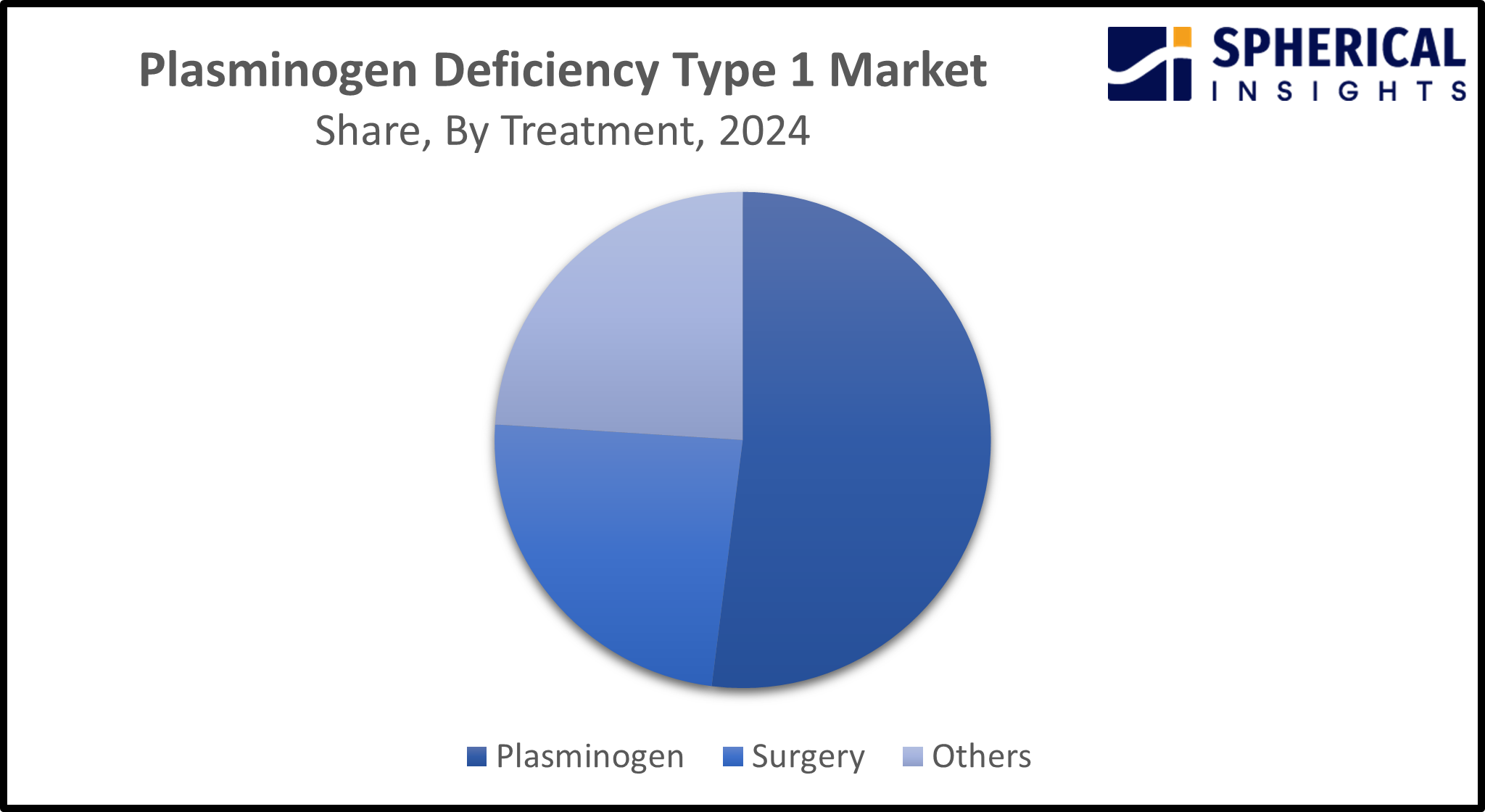
- The plasminogen segment dominated the market with the largest share of about 52.0% in 2024 and is projected to grow at a substantial CAGR during the forecast period.
Based on the treatment, the Plasminogen Deficiency Type 1 Market Size is divided into plasminogen, surgery, and others. Among these, the plasminogen segment dominated the market with the largest share of about 52.0% in 2024 and is projected to grow at a substantial CAGR during the forecast period. Plasminogen-based therapy aids in increasing the plasminogen levels and resolving the fibrin-rich, ligneous lesions. The clinically proven ability of plasminogen for preventing thrombotic events, its targeted mechanism, and established efficacy are responsible for propelling the market.
Get more details on this report -
- The laboratory test segment accounted for the largest share of around 48.0% in 2024 and is anticipated to grow at a significant CAGR during the forecast period.
Based on the diagnosis, the Plasminogen Deficiency Type 1 Market Size is divided into physical exam, laboratory test, and others. Among these, the laboratory test segment accounted for the largest share of around 48.0% in 2024 and is anticipated to grow at a significant CAGR during the forecast period. Specialized laboratory testing, revealing significantly reduced functional plasminogen activity of less than 45% and concordantly low antigenic levels of less than 50%, confirms the diagnosis of plasminogen deficiency type 1.
- The injection segment dominated the market with the largest share of around 60.1% in 2024 and is expected to grow at a significant CAGR during the projected period.
Based on the dosage, the Plasminogen Deficiency Type 1 Market Size is divided into tablet, injection, and others. Among these, the injection segment dominated the market with the largest share of around 60.1% in 2024 and is expected to grow at a significant CAGR during the projected period. PLGD-1 is managed with FDA-approved IV human-derived plasminogen (Rylazim), enabling direct replacement of the deficient enzyme to reverse the underlying cause of disease-related fibrin lesions. Treatment involves regular, long-term intravenous infusions of 6.6 mg/kg (often every 2-4 days) for preventing vision loss, respiratory obstruction, and organ failure.
- The hospital segment dominated the market with the largest share of about 65.0% in 2024 and is projected to grow at a substantial CAGR during the forecast period.
Based on the end-users, the Plasminogen Deficiency Type 1 Market Size is divided into clinic, hospital, and others. Among these, the hospital segment dominated the market with the largest share of about 65.0% in 2024 and is projected to grow at a substantial CAGR during the forecast period. The presence of advanced infrastructure, specialized care units, and highly trained healthcare professionals is responsible for driving the segmental market. Market dominance is further strengthened by the availability of multidisciplinary teams of hematologists, geneticists, and specialists in rare diseases.
Regional Segment Analysis of the Plasminogen Deficiency Type 1 Market Size
- North America (U.S., Canada, Mexico)
- Europe (Germany, France, U.K., Italy, Spain, Rest of Europe)
- Asia-Pacific (China, Japan, India, Rest of APAC)
- South America (Brazil and the Rest of South America)
- The Middle East and Africa (UAE, South Africa, Rest of MEA)
North America is anticipated to hold the largest share of the Plasminogen Deficiency Type 1 Market Size over the predicted timeframe.

Get more details on this report -
North America is anticipated to hold the largest share of around 43.3% in the Plasminogen Deficiency Type 1 Market Size over the predicted timeframe. The market ecosystem in North America is strong, driven by the launch of FDA-approved treatment via growing biopharma industries. For instance, in October 2021, Kedrion Biopharma, which produces and distributes plasma-derived treatments for rare diseases, announced that it had completed the acquisition in North America of the Prometic Life Sciences business. The market demand for plasminogen deficiency type 1 has been driven by the region's increased diagnostic rates for rare genetic diseases and high healthcare expenditure. The United States is leading the regional market, captured largest share in North America in 2024, owing to the rapid adoption of advanced therapeutic options and investment in specialized clinics, and expanding diagnostic and monitoring facilities.
Asia Pacific is expected to grow at a rapid CAGR of about 6.2% in the Plasminogen Deficiency Type 1 Market Size during the forecast period. The Asia Pacific area has a thriving market for plasminogen deficiency type 1 due to widespread adoption of advanced digital technologies and investments in innovation and product development. Further, implementation of programs promoting ophthalmology health contributes to supporting the Plasminogen Deficiency Type 1 Market Size. For instance, in July 2025, the Asia-Pacific Strabismus and Paediatric Ophthalmology Society (APSPOS) Congress, held in Brisbane, demonstrated that despite diverse healthcare systems and cultural backgrounds, clinicians and researchers share a commitment to deliver evidence-based, compassionate, and contemporary care to children with visual disorders. India accounts for the dominant market share in the Asia Pacific region, owing to the expanding healthcare infrastructure and the adoption of genetic testing.
Competitive Analysis:
The report offers the appropriate analysis of the key organizations/companies involved within the Plasminogen Deficiency Type 1 Market Size, along with a comparative evaluation primarily based on their type of offering, business overviews, geographic presence, enterprise strategies, segment market share, and SWOT analysis. The report also provides an elaborative analysis focusing on the current news and developments of the companies, which includes type development, innovations, joint ventures, partnerships, mergers & acquisitions, strategic alliances, and others. This allows for the evaluation of the overall competition within the market.
List of Key Companies
- Grifols S.A.
- Kedrion
- Soleo Health
- Liminal BioSciences Inc.
- Others
Key Target Audience
- Market Players
- Investors
- End-users
- Government Authorities
- Consulting And Research Firm
- Venture capitalists
- Value-Added Resellers (VARs)
Recent Development
- In May 2025, Kedrion Biopharma is raising awareness for Plasminogen Deficiency (PLGD-1) with virtual, digital and in person events throughout the day.
- In May 2024, Soleo Health, an innovative leader and national provider of complex specialty pharmacy services for treating rare and ultra rare diseases, announced it has been named a limited distribution specialty pharmacy partner to dispense RYPLAZIM.
Market Segment
This study forecasts revenue at global, regional, and country levels from 2020 to 2035. Spherical Insights has segmented the Plasminogen Deficiency Type 1 Market Size based on the below-mentioned segments:
Global Plasminogen Deficiency Type 1 Market Size, By Treatment
- Plasminogen
- Surgery
- Others
Global Plasminogen Deficiency Type 1 Market Size, By Diagnosis
- Physical Exam
- Laboratory Test
- Others
Global Plasminogen Deficiency Type 1 Market Size, By Dosage
- Tablet
- Injection
- Others
Global Plasminogen Deficiency Type 1 Market Size, By End-Users
- Clinic
- Hospital
- Others
Global Plasminogen Deficiency Type 1 Market Size, By Regional Analysis
- North America
- US
- Canada
- Mexico
- Europe
- Germany
- UK
- France
- Italy
- Spain
- Russia
- Rest of Europe
- Asia Pacific
- China
- Japan
- India
- South Korea
- Australia
- Rest of Asia Pacific
- South America
- Brazil
- Argentina
- Rest of South America
- Middle East & Africa
- UAE
- Saudi Arabia
- Qatar
- South Africa
- Rest of the Middle East & Africa
Frequently Asked Questions (FAQ)
-
1. What is the market size of the Plasminogen Deficiency Type 1 Market Size?The global Plasminogen Deficiency Type 1 Market Size is expected to grow from USD 486.5 Million in 2024 to USD 821.5 Million by 2035, at a CAGR of 4.88% during the forecast period 2025-2035.
-
2. Which region holds the largest share of the Plasminogen Deficiency Type 1 Market Size?North America is anticipated to hold the largest share of the Plasminogen Deficiency Type 1 Market Size over the predicted timeframe.
-
3. What is the forecasted CAGR of the Global Plasminogen Deficiency Type 1 Market Size from 2024 to 2035?The market is expected to grow at a CAGR of around 4.88% during the period 2024–2035.
-
4. Who are the top companies that are involved in the Global Plasminogen Deficiency Type 1 Market Size?Key players include Grifols S.A., Kedrion, Soleo Health, and Liminal BioSciences Inc.
-
5. What are the main drivers in the Plasminogen Deficiency Type 1 Market Size?The increasing awareness of plasminogen deficiency, enhanced research initiatives, rising investment in disease therapeutics, and technological advancements are major market growth drivers of the Plasminogen Deficiency Type 1 Market Size.
-
6. What challenges are limiting the adoption of plasminogen deficiency type 1 treatment?Concerns associated with the treatment cost and accessibility, especially in price-sensitive regions and geographic disparities, remain key restraints in the Plasminogen Deficiency Type 1 Market Size.
-
7. What are the key trends in the Plasminogen Deficiency Type 1 Market Size?An increased awareness and approval of specialized treatment regimens, including targeted enzyme replacement therapy, along with an ongoing research focus, are key trends in the market.
Need help to buy this report?