North America Hemodynamic Monitoring Market Size, Share, and COVID-19 Impact Analysis, By Product Type (Invasive Systems, Minimally Invasive Systems, and Non-Invasive Systems), By Application (Cardiac Surgery, and Others), and North America Hemodynamic Monitoring Market Insights, Industry Trend, Forecasts to 2035
Industry: Healthcare
North America Hemodynamic Monitoring Market Insights Forecasts to 2035
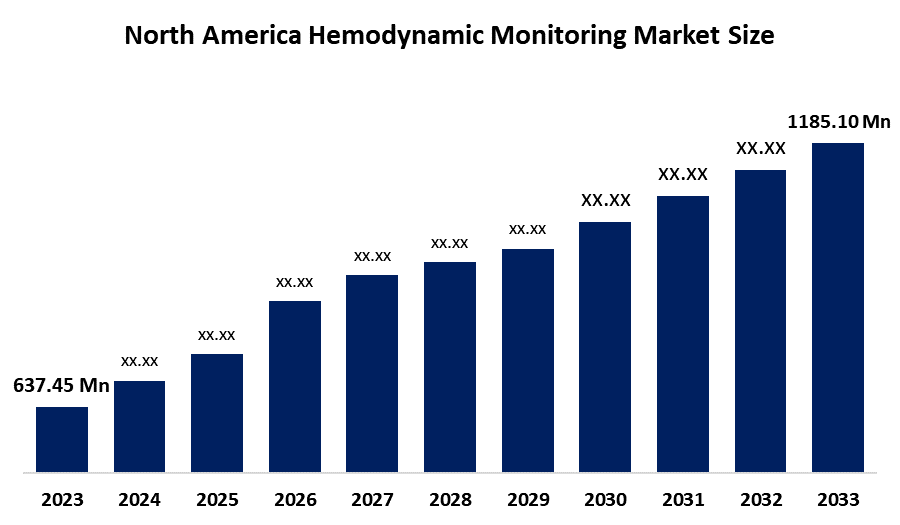
- The North America Hemodynamic Monitoring Market Size Was Estimated at USD 637.45 Million in 2024
- The Market Size is Expected to Grow at a CAGR of Around 5.8% from 2025 to 2035
- The North America Hemodynamic Monitoring Market Size is Expected to Reach USD 1185.10 Million by 2035
Get more details on this report -
According to a research report published by Spherical Insights & Consulting, The North America Hemodynamic Monitoring Market Size Is Anticipated To Reach USD 1185.10 Million By 2035, Growing At A CAGR Of 5.8% From 2025 To 2035. The growing prevalence of cardiovascular disease, the rise in critical care admissions, the development of minimally invasive monitoring systems, the expansion of telehealth integration, and the increasing investments in hospital infrastructure modernization are all driving the North American hemodynamic monitoring market.
Market Overview
The specialized industry involved in the research, development, production, commercialization, and clinical implementation of invasive, minimally invasive, and non-invasive medical devices and systems for the real-time or sporadic measurement of vital cardiovascular parameters, such as cardiac output, blood pressure, stroke volume variation, systemic vascular resistance, and tissue perfusion, is known as the North America hemodynamic monitoring market. In order to maximize patient management in cardiovascular diseases and critical illnesses, this industry supports intensive care units, operating rooms, and emergency settings. The United States leads this market, with major contributions from Canada and Mexico.
In April 2025, BD introduced an advanced hemodynamic monitoring platform with predictive, AI-based algorithms that are intended to proactively manage blood pressure instability and optimize blood flow. The growing incidence of cardiovascular conditions, including heart failure, hypertension, and coronary artery problems, which call for constant and precise patient monitoring, is the main factor propelling the North American hemodynamic monitoring market.
Report Coverage
This research report categorizes the market for the North America hemodynamic monitoring market based on various segments and regions, and forecasts revenue growth and analyses trends in each submarket. The report analyses the key growth drivers, opportunities, and challenges influencing the North America hemodynamic monitoring market. Recent market developments and competitive strategies, such as expansion, product launch, development, partnership, merger, and acquisition, have been included to draw the competitive landscape in the market. The report strategically identifies and profiles the key market players and analyses their core competencies in each sub-segment of the North America hemodynamic monitoring market.
North America Hemodynamic Monitoring Market Report Coverage
| Report Coverage | Details |
|---|---|
| Base Year: | 2024 |
| Market Size in 2024: | USD 637.45 Million |
| Forecast Period: | 2025-2035 |
| Forecast Period CAGR 2025-2035 : | CAGR Of 5.8% |
| 2035 Value Projection: | USD 1185.10 Million |
| Historical Data for: | 2020-2023 |
| No. of Pages: | 240 |
| Tables, Charts & Figures: | 105 |
| Segments covered: | By Product Type, By Application |
| Companies covered:: | ICU Medical, Inc. GE HealthCare Technologies Inc. Nihon Kohden Corporation Mindray Bio-Medical Electronics Co., Ltd. Terumo Corporation Medtronic Masimo Corporation Deltex Medical Group PLC Merit Medical Systems, Inc. Becton, Dickinson and Company Retia Medical LLC Others Key Players |
| Pitfalls & Challenges: | COVID-19 Empact, Challenge, Future, Growth, & Analysis |
Get more details on this report -
Driving Factors
The need for sophisticated monitoring systems in operating rooms and intensive care units is growing due to an increase in the number of surgical procedures, especially high-risk and minimally invasive procedures. Since older people are more prone to hemodynamic instability and chronic heart problems, the expanding geriatric population in the US and Canada further supports market expansion. Technologies for critical care are helping the market expand. Hemodynamic monitoring systems are becoming more widely used and accessible in North America due to the growth of telehealth services and remote monitoring options.
Restraining Factors
High equipment and maintenance costs, strict regulatory approval requirements, restricted reimbursement policies, the possibility of complications from invasive procedures, a lack of qualified personnel, and financial constraints in small and mid-sized healthcare facilities are some of the obstacles facing the North American hemodynamic monitoring market.
Market Segmentation
The North America hemodynamic monitoring market share is classified into product type and application.
- The minimally invasive systems segment accounted for the largest revenue market share in 2024 and is expected to grow at a significant CAGR during the forecast period.
The North America Hemodynamic Monitoring Market Size is segmented by product type into invasive systems, minimally invasive systems, and non-invasive systems. Among these, the minimally invasive systems segment accounted for the largest revenue market share in 2024 and is expected to grow at a significant CAGR during the forecast period. The potential of minimally invasive technologies to deliver precise hemodynamic data while lowering procedural risks, recovery periods, and complication rates is the reason behind this. Technological developments, rising acceptance in surgical and critical care settings, and a growing demand for safer monitoring methods all contributed to the segment's success.
- The cardiac surgery segment dominated the share in 2024 and is anticipated to grow at a remarkable CAGR during the forecast period.
The North America Hemodynamic Monitoring Market Size is segmented by application into cardiac surgery and others. Among these, the cardiac surgery segment dominated the share in 2024 and is anticipated to grow at a remarkable CAGR during the forecast period. The necessity of ongoing hemodynamic monitoring during intricate cardiovascular treatments is the reason for cardiac surgery. Segment domination throughout healthcare institutions was greatly influenced by the high incidence of heart disorders, the rise in cardiac bypass and valve replacement procedures, and the increased focus on perioperative patient safety.
Competitive Analysis:
The report offers the appropriate analysis of the key organizations/companies involved within the North America Hemodynamic Monitoring market, along with a comparative evaluation primarily based on their product offering, business overviews, geographic presence, enterprise strategies, segment market share, and SWOT analysis. The report also provides an elaborate analysis focusing on the current news and developments of the companies, which includes product development, innovations, joint ventures, partnerships, mergers & acquisitions, strategic alliances, and others. This allows for the evaluation of the overall competition within the market.
List of Key Companies
- ICU Medical, Inc.
- GE HealthCare Technologies Inc.
- Nihon Kohden Corporation
- Mindray Bio-Medical Electronics Co., Ltd.
- Terumo Corporation
- Medtronic
- Masimo Corporation
- Deltex Medical Group PLC
- Merit Medical Systems, Inc.
- Becton, Dickinson and Company
- Retia Medical LLC
- Others
Key Target Audience
- Market Players
- Investors
- End-users
- Government Authorities
- Consulting and Research Firm
- Venture capitalists
- Value-Added Resellers (VARs)
Recent Developments:
- In January 2026, eMurmur launched Heart AI following FDA clearance, enabling murmur detection and advanced hemodynamic insights derived from digital stethoscope recordings to support enhanced cardiac assessment and early clinical decision-making.
- In July 2025, Cardiosense launched CardioTag after securing 510(k) clearance, introducing the first wearable device capturing ECG, PPG, and SCG signals simultaneously for comprehensive cardiac function monitoring and assessment.
Market Segment
This study forecasts revenue at the North America, regional, and country levels from 2020 to 2035. Spherical Insights has segmented the North America hemodynamic monitoring market based on the below-mentioned segments:
North America Hemodynamic Monitoring Market, By Product Type
- Invasive Systems
- Minimally Invasive Systems
- Non-Invasive Systems
North America Hemodynamic Monitoring Market, By Application
- Cardiac Surgery
- Others
Frequently Asked Questions (FAQ)
-
What is the North America Hemodynamic Monitoring market size?North America Hemodynamic Monitoring market size is expected to grow from USD 637.45 million in 2024 to USD 1185.10 million by 2035, growing at a CAGR of 5.8% during the forecast period 2025-2035.
-
What are the key growth drivers of the market?Key drivers include rising cardiovascular disease prevalence, increasing surgical procedures, growing geriatric population, technological advancements in minimally invasive monitoring, expanding critical care infrastructure, and higher healthcare expenditure across North America
-
What factors restrain the North America Hemodynamic Monitoring market?Market restraints include high device costs, stringent regulatory requirements, limited reimbursement coverage, risks associated with invasive procedures, shortage of skilled professionals, and budget limitations among small and mid-sized healthcare facilities
-
How is the market segmented by product type?The market is segmented by product type into invasive systems, minimally invasive systems, and non-invasive systems, based on the level of procedural complexity and monitoring approach used for hemodynamic assessment.
-
Who are the key players in the North America Hemodynamic Monitoring market?Key players include Medtronic, GE HealthCare Technologies Inc., Becton, Dickinson and Company, Masimo Corporation, and Nihon Kohden Corporation, among other regional and global medical device manufacturers.
-
Who are the target audiences for this market report?Target audiences include medical device manufacturers, hospital administrators, investors, regulatory authorities, distributors, healthcare consultants, research institutions, and strategic planners seeking data-driven insights for decision-making and market expansion strategies
Need help to buy this report?