Global Municipal Waste Compactors Market Size, Share, and COVID-19 Impact Analysis, By Product Type (Stationary Compactors, Self-Contained Compactors, Vertical Compactors, and Others), By Power Source (Electric, Hydraulic, and Others), By Application (Residential, Commercial, Industrial, and Others), and By Region (North America, Europe, Asia-Pacific, Latin America, Middle East, and Africa), Analysis and Forecast 2025 - 2035
Industry: Specialty & Fine Chemicals
Global Municipal Waste Compactors Market Insights Forecasts to 2035
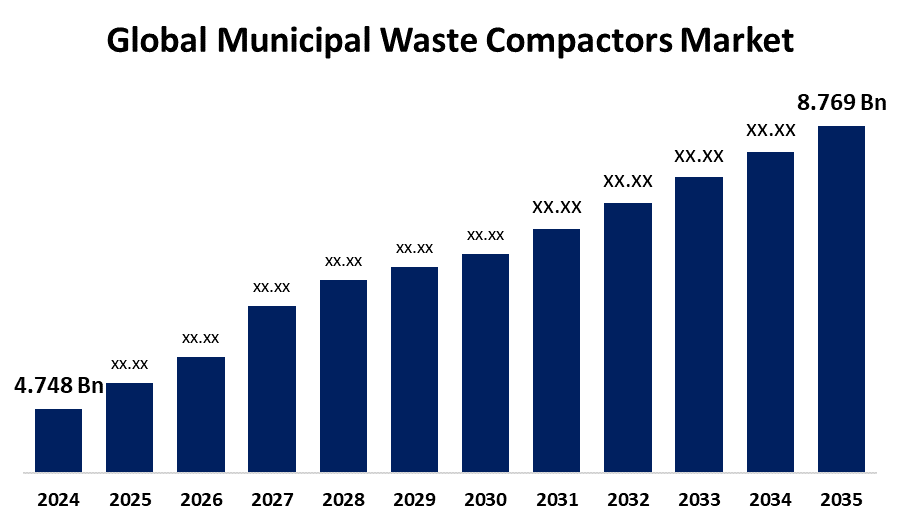
- The Global Municipal Waste Compactors Market Size Was Estimated at USD 4.748 Billion in 2024
- The Market Size is Expected to Grow at a CAGR of around 5.74% from 2025 to 2035
- The Worldwide Municipal Waste Compactors Market Size is Expected to Reach USD 8.769 Billion by 2035
- Asia Pacific is expected to grow the fastest during the forecast period.
Get more details on this report -
According to a research report published by Spherical Insights and Consulting, the global municipal waste compactors market size was worth around USD 4.748 billion in 2024 and is predicted to grow to around USD 8.769 billion by 2035 with a compound annual growth rate (CAGR) of 5.74% from 2025 to 2035. Global rapid urbanization, rising waste generation, adoption of smart and automated technologies, increasing regulatory focus on sustainability, and high investment in eco-friendly compaction solutions are all driving opportunities in the municipal waste compactors market.
Market Overview
The municipal waste compactors market refers to the global industry involved in the manufacture, deployment, and utilization of equipment designed to reduce the volume of municipal solid waste through mechanical compression. These compactors help improve waste handling efficiency by minimizing waste volume before collection, transportation, and disposal. Modern waste compactors also incorporate advanced technologies such as IoT-enabled smart compactors, automation, and real-time monitoring systems, which enhance operational efficiency and improve waste management processes.
Additionally, government support in the form of stringent environmental regulations, waste management policies, and funding for sustainable infrastructure adoption is further driving market growth. For instance, in December 2025, the U.S. Environmental Protection Agency (EPA) reported that the total municipal solid waste (MSW) generated in the United States in 2018 was 292.4 million tons, of which 69 million tons were recycled and 25 million tons were composted, encouraging the adoption of waste compactors to improve waste management efficiency.
Similarly, in March 2023, Japan reported that the total municipal solid waste generation in FY2022 was 40,340,000 tons, with an average waste generation of 880 grams per person per day. Landfill waste amounted to 3,370,000 tons, and the recycling rate showed a decrease of approximately 19.6%, prompting local governments to invest in advanced waste management solutions, including municipal waste compactors, to reduce waste collection volumes and improve overall efficiency.
Report Coverage
This research report categorizes the municipal waste compactors market based on various segments and regions, forecasts revenue growth, and analyzes trends in each submarket. The report analyses the key growth drivers, opportunities, and challenges influencing the municipal waste compactors market. Recent market developments and competitive strategies, such as expansion, product launch, development, partnership, merger, and acquisition, have been included to draw the competitive landscape in the market. The report strategically identifies and profiles the key market players and analyses their core competencies in each sub-segment of the municipal waste compactors market.
Restraining Factors
High development and deployment costs, inconsistent waste segregation, low recycling rates in some regions, competition from alternative waste management solutions, Maintenance and operational complexities, and regulatory delays in approving new waste management infrastructure projects are the main factors restricting the municipal waste compactors market.
Market Segmentation
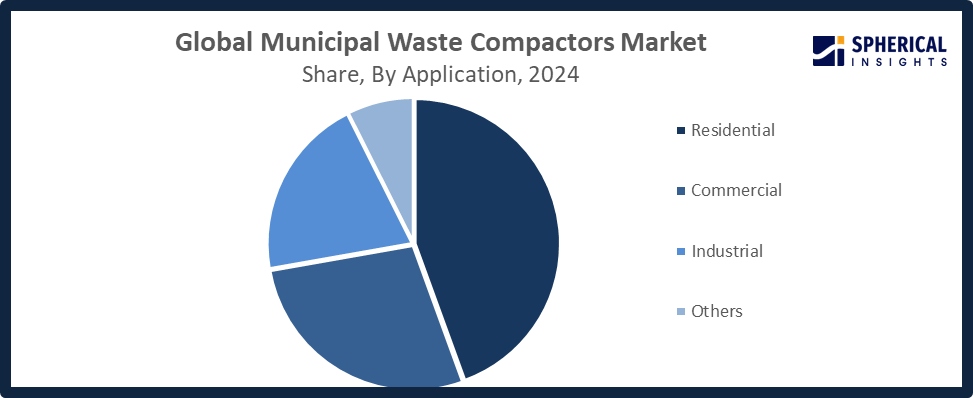
The municipal waste compactors market share is classified into product type, power source, and application.
- The stationary compactors segment dominated the market in 2024, approximately 61%, and is projected to grow at a substantial CAGR during the forecast period.
Based on the product type, the municipal waste compactors market is divided into stationary compactors, self-contained compactors, vertical compactors, and others. Among these, the stationary compactors segment dominated the market in 2024, approximately 61%, and is projected to grow at a substantial CAGR during the forecast period. High-capacity design, ideal for industries with consistent and large-scale waste, has fixed systems for dry waste, and offers long-term cost efficiency, is driving the stationary compactors industry.
- The hydraulic segment accounted for the largest share in 2024, approximately 66%, and is anticipated to grow at a significant CAGR during the forecast period.
Based on the power source, the municipal waste compactors market is divided into electric, hydraulic, and others. Among these, the hydraulic segment accounted for the largest share in 2024, approximately 66%, and is anticipated to grow at a significant CAGR during the forecast period. Global shift towards sustainable, low-emission, and smart urban infrastructure, offers alignment with modern environmental regulations, and increasing technological trends is driving the hydraulic industry.
Get more details on this report -
Regional Segment Analysis of the Municipal Waste Compactors Market
- North America (U.S., Canada, Mexico)
- Europe (Germany, France, U.K., Italy, Spain, Rest of Europe)
- Asia-Pacific (China, Japan, India, Rest of APAC)
- South America (Brazil and the Rest of South America)
- The Middle East and Africa (UAE, South Africa, Rest of MEA)
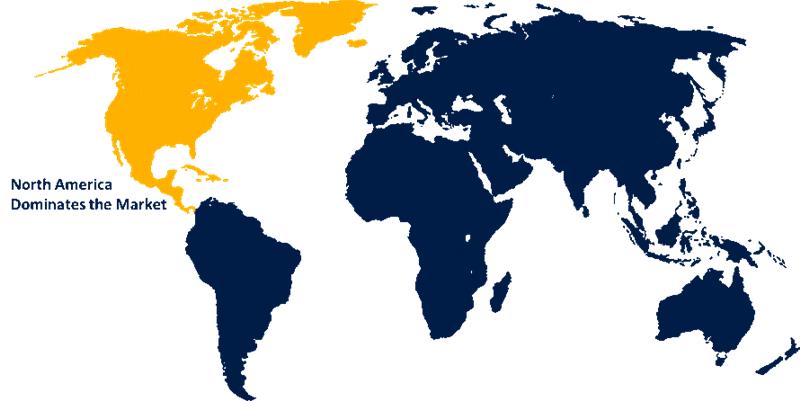
North America is anticipated to hold the largest share of the municipal waste compactors market over the predicted timeframe.
Get more details on this report -
North America is anticipated to hold the largest share of the municipal waste compactors market over the predicted timeframe. Strong government backing for mature waste management infrastructure, high environmental regulation standards, strong investments in municipal systems, and advanced compactor technology are what propel North America. The region's position is further reinforced by government programs promoting funding and incentives for cities and municipalities to upgrade waste infrastructure, support research in sustainable waste solutions, and implement large-scale collection and disposal systems.
Asia Pacific is expected to grow at a rapid CAGR in the municipal waste compactors market during the forecast period. China, Japan, India, and South Korea are among the nations making significant investments in waste management infrastructure, including transfer stations, recycling facilities, and smart collection systems, to cope with rapid urbanization and increasing waste volumes is further accelerated integration of efficient waste compaction technologies into municipal operations.
Government launches include China's implementation of Operation National Sword, January 2018 developing local waste sorting, recycling infrastructure, and waste container systems within municipalities and Japan’s 12th Regional 3R and Circular Economy Forum in Asia-Pacific, March 2025 encourages adoption of recycling facilities and waste collection systems, including waste container and sorting infrastructure across the region.
Competitive Analysis:
The report offers the appropriate analysis of the key organizations/companies involved within the municipal waste compactors market, along with a comparative evaluation primarily based on their product of offering, business overviews, geographic presence, enterprise strategies, segment market share, and SWOT analysis. The report also provides an elaborative analysis focusing on the current news and developments of the companies, which includes product development, innovations, joint ventures, partnerships, mergers & acquisitions, strategic alliances, and others. This allows for the evaluation of the overall competition within the market.
List of Key Companies
- Caterpillar Inc.
- Wastequip LLC
- Marathon Equipment Company
- BOMAG GmbH
- Volvo Construction Equipment
- Hussmann Umwelttechnik GmbH
- JCB
- Tana Oy
- Dover Corporation
- Harmony Enterprises
- SANY Heavy Industry
- XCMG Group
- McNeilus Truck and Manufacturing Inc.
- Capital Compactors Ltd.
- Harden Machinery Ltd.
- Others
Key Target Audience
- Market Players
- Investors
- End-users
- Government Authorities
- Consulting and Research Firm
- Venture capitalists
- Value-Added Resellers (VARs)
Market Segment
This study forecasts revenue at global, regional, and country levels from 2020 to 2035. Spherical Insights has segmented the municipal waste compactors market based on the below-mentioned segments:
Global Municipal Waste Compactors Market, By Product Typ
- Stationary Compactors
- Self-Contained Compactors
- Vertical Compactors
- Others
Global Municipal Waste Compactors Market, By Power Source
- Electric
- Hydraulic
- Others
Global Municipal Waste Compactors Market, By Application
- Residential
- Commercial
- Industrial
- Others
Global Municipal Waste Compactors Market, By Regional Analysis
- North America
- US
- Canada
- Mexico
- Europe
- Germany
- UK
- France
- Italy
- Spain
- Russia
- Rest of Europe
- Asia Pacific
- China
- Japan
- India
- South Korea
- Australia
- Rest of Asia Pacific
- South America
- Brazil
- Argentina
- Rest of South America
- Middle East & Africa
- UAE
- Saudi Arabia
- Qatar
- South Africa
- Rest of the Middle East & Africa
Frequently Asked Questions (FAQ)
-
1. How do municipal waste compactors improve waste management efficiency?Compactors compress waste, reducing its volume significantly. This allows more waste to be stored and transported in fewer trips. It helps reduce operational costs and landfill usage.
-
2. How does technology influence municipal waste compactors?Modern compactors include smart sensors and IoT-based monitoring systems. These technologies help optimize waste collection and reduce fuel consumption. They also enable predictive maintenance and real-time waste level monitoring.
-
3. What materials can municipal waste compactors handle?Municipal waste compactors are designed to compress mixed solid waste. They can handle paper, plastics, food waste, packaging materials, and light metals. This helps reduce waste volume before transportation or landfill disposal.
-
4. What role do environmental regulations play in this market?Strict waste disposal regulations encourage the adoption of compactors. Governments promote equipment that reduces landfill volume and pollution. These regulations drive municipalities to invest in efficient waste solutions.
-
5. How do municipal waste compactors support sustainability goals?Compactors reduce landfill space usage by compressing waste. They also lower transportation emissions by reducing collection frequency. This contributes to more sustainable and cost-effective waste management.
-
6. What trends are shaping the future of the municipal waste compactors market?Smart waste management and IoT integration are growing trends. Cities are adopting automated and sensor-based compaction systems. Increasing investments in circular economy initiatives will further drive demand.
Need help to buy this report?