Global Miniplate for Bone Fixation Market Size, Share, and COVID-19 Impact Analysis, By Plate Type (L-type, T-type, Y-type, and Other), By Application (Craniomaxillofacial Surgery, Neurosurgery, Hand Surgery, and Others), and By Region (North America, Europe, Asia-Pacific, Latin America, Middle East, and Africa), Analysis and Forecast 2025 - 2035
Industry: Healthcare
Global Miniplate for Bone Fixation Market Insights Forecasts to 2035
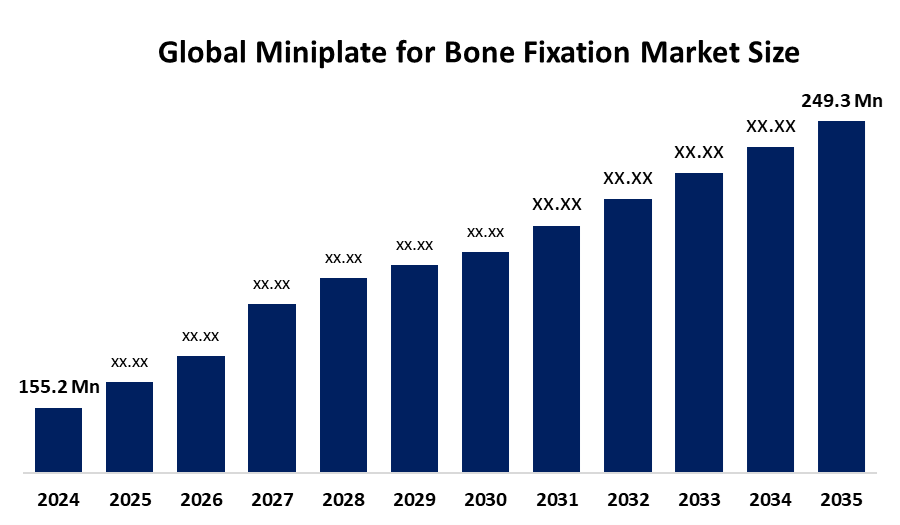
- The Global Miniplate for Bone Fixation Market Size Was Estimated at USD 155.2 Million in 2024
- The Market Size is Expected to Grow at a CAGR of around 4.4% from 2025 to 2035
- The Worldwide Miniplate for Bone Fixation Market Size is Expected to Reach USD 249.3 Million by 2035
- Asia Pacific is expected to grow the fastest during the forecast period.
Get more details on this report -
According to a research report published by Spherical Insights and Consulting, The global miniplate for bone fixation Market size was worth around USD 155.2 Million in 2024 and is predicted to Grow to around USD 249.3 Million by 2035 with a compound annual growth rate (CAGR) of 4.4% from 2025 to 2035. The miniplate for bone fixation market is growing due to the increasing number of bone fractures and traumas, the increasing number of older patients, and the increasing number of procedures favoring minimally invasive surgery. Research and development in biocompatible material technologies, designs, and accessible orthopedic treatments also influence the market.
Market Overview
The international miniplate for bone fixation market is defined as the market involved with small rigid plates, mainly utilized in stabilizing fractured or surgically distorted bones. These plates are commonly named miniplates. They are mandatory in modern surgical practices as they allow correct bone fixation with optimal bone healing. Rising numbers of trauma injuries, facial fractures, orthopedic conditions, as well as additional geriatric populations with probable bone degeneration, are fueling this market. Advancements in biocompatible materials such as titanium alloys and bioresorbable polymers, along with rising acceptance in favor of minimally invasive procedures, are fueling this market.
Emerging markets are expected to provide additional business opportunities as they are characterised by advancements in healthcare accessibility, with additional surgical procedures and acceptance towards modern fixation devices. Principal companies in this miniplate in bone fixation market are Stryker Corporation, Zimmer Biomet, DePuy Synthes (Johnson & Johnson), KLS Martin Group, Medartis AG, and B. Braun. Recently, in March 2024, DPIIT in India invited data on local businesses in response to the public procurement order (Preference to Make in India), thus promoting Make in India in terms of medical devices, including orthopedic devices.
Report Coverage
This research report categorizes the miniplate for bone fixation market based on various segments and regions, forecasts revenue growth, and analyzes trends in each submarket. The report analyses the key growth drivers, opportunities, and challenges influencing the miniplate for bone fixation market. Recent market developments and competitive strategies such as expansion, type launch, development, partnership, merger, and acquisition, have been included to draw the competitive landscape in the market. The report strategically identifies and profiles the key market players and analyses their core competencies in each sub-segment of the miniplate for bone fixation market.
Global Miniplate for Bone Fixation Market Report Coverage
| Report Coverage | Details |
|---|---|
| Base Year: | 2024 |
| Market Size in 2024: | USD 155.2 Million |
| Forecast Period: | 2024-2035 |
| Forecast Period CAGR 2024-2035 : | CAGR of 4.4% |
| 2035 Value Projection: | USD 249.3 Million |
| Historical Data for: | 2020-2023 |
| No. of Pages: | 240 |
| Tables, Charts & Figures: | 90 |
| Segments covered: | By Plate |
| Companies covered:: | Stryker Corporation, KLS Martin Group, Zimmer Biomet, B. Braun, Acumed, Medartis AG, NuVasive, Orthofix, DePuy Synthes (J&J), Smith & Nephew, Kanghui Medical, Arthrex, TriMed, Globus Medical, and Other key players |
| Pitfalls & Challenges: | COVID-19 Empact, Challenge, Future, Growth, & Analysis |
Get more details on this report -
Driving Factors
The global mini-plate market for bone fixation is driven by the rising number of cases of bone fractures, trauma, and craniofacial and orthopedic disorders. The increase in the older generation, which is more liable to have fractures, is an important factor that drives the market. Additionally, development in implant devices, including the use of lightweight and biologically compatible materials that are both lighter and compatible with the body, such as titanium and the use of biorelatable plates, improves the surgical outcome. Favoring the trend of minimally invasive surgical procedures, which result in faster recovery and the increasing availability of healthcare infrastructure and accessibility of orthopedic care in emerging markets, are also factors that contribute to the development of the market
Restraining Factors
The growth of the miniplate for bone fixation market worldwide is restricted by the high costs of implants and surgery. The major objections to the use of this technique are government regulations for approvals, the possibility of complications/post-op infection, the need for skilled professionals for the surgery, and the availability of other fixation procedures.
Market Segmentation
The miniplate for bone fixation market share is classified into plate type and application.
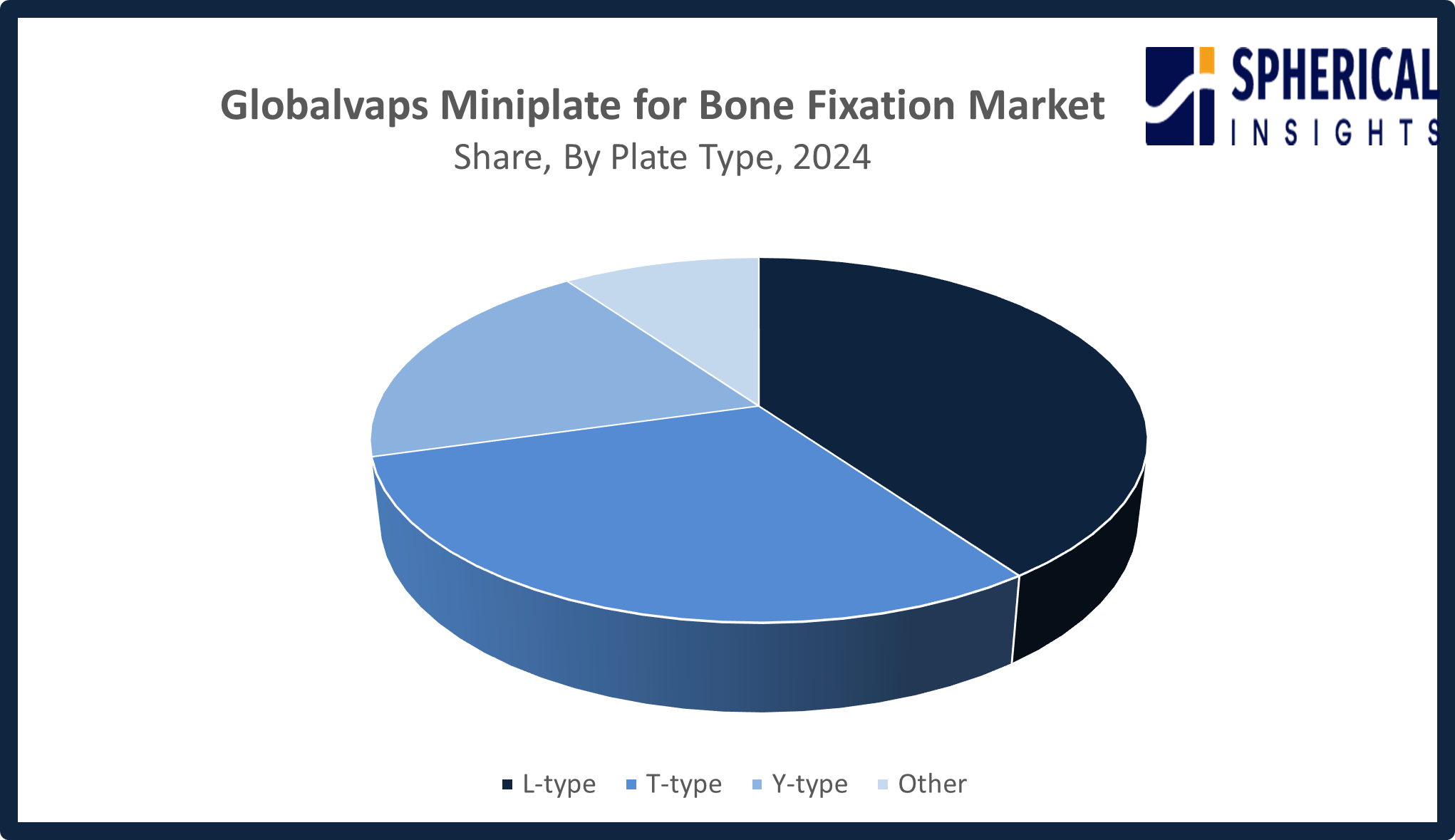
- The L-type segment dominated the market in 2024, approximately 40% and is projected to grow at a substantial CAGR during the forecast period.
Based on the plate type, the miniplate for bone fixation market is divided into L-type, T-type, Y-type, and other. Among these, the L-type segment dominated the market in 2024 and is projected to grow at a substantial CAGR during the forecast period. L-shaped plates are considered better suited for craniomaxillofacial and hand reconstruction surgeries due to their versatility, stable bone positioning, and relative ease of placement. The titanium alloy plates are more rugged and compatible, making them suitable for permanent implantation. An increasing trend towards less invasive surgeries is a key driving factor, as L-shaped plates are better suited for making smaller incisions, resulting in less invasiveness, quicker healing, and preservation of bone strength.
Get more details on this report -
- The craniomaxillofacial surgery segment accounted for the highest market revenue in 2024, approximately 70% and is anticipated to grow at a significant CAGR during the forecast period.
Based on the application, the miniplate for bone fixation market is divided into craniomaxillofacial surgery, neurosurgery, hand surgery, and others. Among these, the craniomaxillofacial surgery segment accounted for the highest market revenue in 2024 and is anticipated to grow at a significant CAGR during the forecast period. Rising cases of facial trauma, accidents, and reconstructive surgery are propelling the demand for miniplates in craniomaxillofacial surgery with respect to providing rigidity, strength, and flexibility for facial bone fractures. Minimally invasive procedures, customized implants, and the increasing need for aesthetic restoration are further fueling the demand and making craniomaxillofacial surgery a prominent driver for the miniplates market.
Regional Segment Analysis of the Miniplate for Bone Fixation Market
- North America (U.S., Canada, Mexico)
- Europe (Germany, France, U.K., Italy, Spain, Rest of Europe)
- Asia-Pacific (China, Japan, India, Rest of APAC)
- South America (Brazil and the Rest of South America)
- The Middle East and Africa (UAE, South Africa, Rest of MEA)
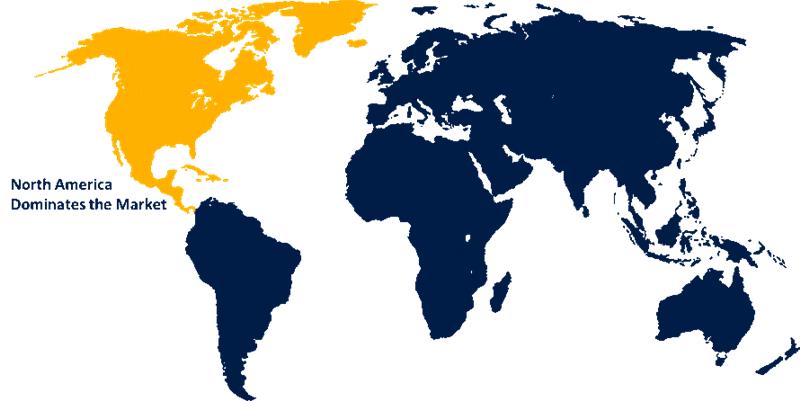
North America is anticipated to hold the largest share of the miniplate for bone fixation market over the predicted timeframe.
North America is anticipated to hold the largest share of the miniplate for bone fixation market over the predicted timeframe. North America is expected to have a 38% market share for the miniplate used in the fixation of bones due to its stronger healthcare infrastructure, high rate of trauma and orthopedic disorders, and acceptance of new technologies associated with implants. The United States leads North America in having established operating theaters, quite beneficial regulatory support, and strong R&D expenditure on fixation devices. Greater familiarity with less invasive forms of surgery and patient preference for faster discharge from hospitals are other factors that help boost this market. In November 2024, final FDA guidance on 510(k) premarket notifications for non-spinal bone plates, screws, and washers has been approved.
Get more details on this report -
Asia Pacific is expected to grow at a rapid CAGR in the miniplate for bone fixation market during the forecast period. The Asia Pacific market is estimated to have a 23% market share of the miniplate for bone fixation market, with China and India emerging as major contributors to this market’s growth, owing to increased awareness and an increased ability to pay for better care. In November 2024, the Indian government initiated an Indian MedTech initiative with an allocation of INR 500 crores (approximately USD 60 million) to enhance the manufacture and export of bone fixation products in the country, thereby fueling this market’s progression.
Miniplate for bone fixation in the European market is expanding, driven by highly advanced health care systems, high acceptance rates for innovative treatment methods, and increasing incidences of orthopedic and facial trauma cases. Germany and the UK are the prime markets for the product due to the presence of highly advanced health care systems, substantial R&D spending, and high acceptance rates for minimally invasive surgeries. Additionally, rising patient acceptance for quick recovery options further boosts the demand for miniplates in the region
.
Competitive Analysis:
The report offers the appropriate analysis of the key organizations/companies involved within the miniplate for bone fixation market, along with a comparative evaluation primarily based on their type of offering, business overviews, geographic presence, enterprise strategies, segment market share, and SWOT analysis. The report also provides an elaborative analysis focusing on the current news and developments of the companies, which includes type development, innovations, joint ventures, partnerships, mergers & acquisitions, strategic alliances, and others. This allows for the evaluation of the overall competition within the market.
List of Key Companies
- Stryker Corporation
- KLS Martin Group
- Zimmer Biomet
- B. Braun
- Acumed
- Medartis AG
- NuVasive
- Orthofix
- DePuy Synthes (J&J)
- Smith & Nephew
- Kanghui Medical
- Arthrex
- TriMed
- Globus Medical
- Others
Key Target Audience
- Market Players
- Investors
- End-users
- Government Authorities
- Consulting and Research Firm
- Venture capitalists
- Value-Added Resellers (VARs)
Recent Development
- In October 2025, Globus Medical launched the Anthem Elbow Fracture System, offering simplified workflow and versatile fixation for various elbow fractures. The system features 14 plate families, 2.7 mm and 3.5 mm screws, anatomy-specific instruments, and polyaxial locking technology, enabling flexible screw placement and optimized fracture management.
- In February 2025, TriMed launched its Wrist Fixation System 3 for treating distal radius fractures. The system features volar plating, fragment-specific implants, a bridge plate, and the innovative “Magic Screwdriver” tool, enabling surgeons to restore radial length and correct coronal malalignment with a user-friendly, intuitive tray design.
- In October 2024, Johnson & Johnson MedTech launched the first phase of the VOLT Variable Angle Optimized Locking Technology Plating System. The system enhances fracture management by improving stability, performance, and surgical efficiency, marking a significant advancement in orthopedic fixation solutions.
- In August 2024, Globus Medical commercially launched the ADIRA XLIF Plate System, its first product compatible across the expanded lateral interbody portfolio, enhancing surgical options and integration within its musculoskeletal solutions for spine procedures.
- In August 2024, Stryker launched its FDA-cleared Pangea Plating System, offering a versatile portfolio with variable-angle plating to treat diverse patient populations, enhancing surgical flexibility and outcomes in bone fixation procedures.
Market Segment
This study forecasts revenue at global, regional, and country levels from 2020 to 2035. Spherical Insights has segmented the miniplate for bone fixation market based on the below-mentioned segments:
Global Miniplate for Bone Fixation Market, By Plate Type
- L-type
- T-type
- Y-type
- Other
Global Miniplate for Bone Fixation Market, By Application
- Craniomaxillofacial Surgery
- Neurosurgery
- Hand Surgery
- Others
Global Miniplate for Bone Fixation Market, By Regional Analysis
- North America
- US
- Canada
- Mexico
- Europe
- Germany
- UK
- France
- Italy
- Spain
- Russia
- Rest of Europe
- Asia Pacific
- China
- Japan
- India
- South Korea
- Australia
- Rest of Asia Pacific
- South America
- Brazil
- Argentina
- Rest of South America
- Middle East & Africa
- UAE
- Saudi Arabia
- Qatar
- South Africa
- Rest of the Middle East & Africa
Frequently Asked Questions (FAQ)
-
1. What is the CAGR of the miniplate for bone fixation market over the forecast period?The global miniplate for bone fixation market is projected to expand at a CAGR of 4.4% during the forecast period
-
2. What is the miniplate for bone fixation market?The miniplate for bone fixation market involves small, rigid plates used in surgeries to stabilize fractured bones and support proper healing
-
3. What is the market size of the miniplate for bone fixation market?The global miniplate for bone fixation market size is expected to grow from USD 155.2 million in 2024 to USD 249.3 million by 2035, at a CAGR of 4.4% during the forecast period 2025-2035
-
4. Which region holds the largest share of the miniplate for bone fixation market?North America is anticipated to hold the largest share of the miniplate for bone fixation market over the predicted timeframe
-
5. Who are the top 10 companies operating in the global miniplate for bone fixation market?Stryker Corporation, KLS Martin Group, Zimmer Biomet, B. Braun, Acumed, Medartis AG, NuVasive, Orthofix, DePuy Synthes (J&J), Smith & Nephew, and Others
-
6. What factors are driving the growth of the miniplate for bone fixation market?The growth of the miniplate for bone fixation market is driven by several key factors, primarily the rising incidence of bone fractures and the global increase in the geriatric population
-
7. What are the market trends in the miniplate for bone fixation market?Key trends include minimally invasive surgeries, customized 3D‑printed implants, biocompatible materials, and growing demand in emerging healthcare markets
-
8. What are the main challenges restricting wider adoption of the miniplate for bone fixation market?The main challenges restricting the wider adoption of miniplates for bone fixation are high costs, the risk of complications requiring removal surgery, and the need for specialized surgical expertise
Need help to buy this report?