Global Meal Kit Delivery Services Market Size, Share, and COVID-19 Impact Analysis, By Meal (Vegan, Vegetarian, and Non-Vegetarian), By Offering (Heat & Eat and Cook & Heat), By End User (Individual Consumers, Corporate Clients, Healthcare Institutions, and Others), and By Region (North America, Europe, Asia-Pacific, Latin America, Middle East, and Africa), Analysis and Forecast 2025 - 2035
Industry: Food & Beverages
Global Meal Kit Delivery Services Market Insights Forecasts to 2035
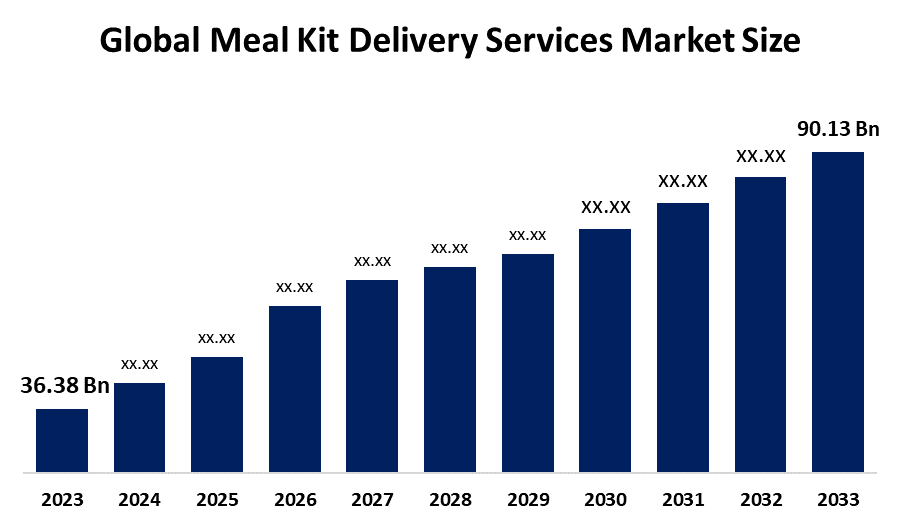
- The Global Meal Kit Delivery Services Market Size Was Estimated at USD 36.38 Billion in 2024
- The Market Size is Expected to Grow at a CAGR of around 8.6% from 2025 to 2035
- The Worldwide Meal Kit Delivery Services Market Size is Expected to Reach USD 90.13 Billion by 2035
- Asia Pacific is expected to grow the fastest during the forecast period.
Get more details on this report -
According to a research report published by Spherical Insights and Consulting, The Global Meal Kit Delivery Services Market Size Was Worth Around USD 36.38 Billion In 2024 And Is Predicted To Grow To Around USD 90.13 Billion By 2035 With A Compound Annual Growth Rate (CAGR) Of 8.6% From 2025 to 2035. Global demand for convenience among urbanized consumers, offers time saving option, healthy home-cooking solutions, rapid digitalisation, AI-driven personalization, and increased investment in sustainable packaging are all driving opportunities in the meal kit delivery services market.
Market Overview
The global industry segment devoted to providing pre-portioned ingredients and recipes directly to consumers’ homes—enabling them to prepare meals conveniently without the need for grocery shopping or meal planning—is known as the meal kit delivery services market. This market includes subscription-based meal kits, ready-to-cook and ready-to-eat meal options, a variety of cuisines, dietary-specific offerings, and associated logistics, packaging, and digital platforms for ordering. Governments play a role in this market by regulating food safety standards, labeling requirements, packaging and environmental guidelines, and occasionally providing incentives for local food sourcing, e-commerce growth, or sustainability initiatives that impact operational practices and consumer trust. For example, in 2025, Japan identified food tech—which includes innovations in food distribution, processing, and digital services related to food systems—as a priority sector under its national economic strategy, aimed at strengthening food security and expanding food tech industries domestically and internationally.
In March 2024, India implemented the Production Linked Incentive Scheme for Food Processing Industry (PLISFPI) and the Pradhan Mantri Formalisation of Micro Food Processing Enterprises (PM-FME) scheme, which provide financial incentives and capital subsidies to food processors, supporting supply chain elements crucial for meal kits and delivery services. The rapid pace of technological advancement is one of the main drivers of the meal kit delivery services market's expansion.
Report Coverage
This research report categorizes the meal kit delivery services market based on various segments and regions, forecasts revenue growth, and analyzes trends in each submarket. The report analyzes the key growth drivers, opportunities, and challenges influencing the meal kit delivery services market. Recent market developments and competitive strategies, such as expansion, product launches, developments, partnerships, mergers, and acquisitions, have been included to outline the competitive landscape of the market. The report strategically identifies and profiles key market players and analyzes their core competencies in each sub-segment of the meal kit delivery services market.
Global Meal Kit Delivery Services Market Report Coverage
| Report Coverage | Details |
|---|---|
| Base Year: | 2024 |
| Market Size in 2024: | USD 36.38 Billion |
| Forecast Period: | 2025-2035 |
| Forecast Period CAGR 2025-2035 : | CAGR Of 8.6% |
| 2035 Value Projection: | USD 90.13 Billion |
| Historical Data for: | 2020-2023 |
| No. of Pages: | 210 |
| Tables, Charts & Figures: | 90 |
| Segments covered: | By Meal, By Offering |
| Companies covered:: | HelloFresh SE Blue Apron Holdings Home Chef Marley Spoon AG Sunbasket Gousto Purple Carrot EveryPlate Gobble Hungryroot Freshly Inc. Daily Harvest Green Chef Oisix ra daichi Inc. Chefmarket Others Key Players |
| Pitfalls & Challenges: | COVID-19 Empact, Challenge, Future, Growth, & Analysis |
Get more details on this report -
Driving Factors
Rapid technological innovation is one of the main drivers of the meal kit delivery services market's growth. Rising consumer demand for convenience and time-saving solutions, along with increasing health consciousness and evolving dietary preferences, as well as urbanization and expanding internet penetration, are key factors driving the market for meal kit delivery services. In this field, innovation and investment are fueled by advancements in e-commerce platforms, mobile applications, delivery logistics, data-driven personalization, and subscription models, which increase customer retention. Government sustainability and eco-friendly packaging initiatives appeal to environmentally conscious consumers, further supporting market growth.
In March 2026, the Department for Environment, Food & Rural Affairs announced the alignment of UK food safety rules with EU Sanitary & Phytosanitary legislation. This includes standards for food safety, labeling, and handling that apply to all food sold or delivered in the UK, including meal kits and online food orders.
Restraining Factors
High delivery and subscription costs, last-mile delivery challenges, competition from restaurant delivery platforms, cold-chain logistics complexities, consumer preference for in-person shopping, and the environmental impact of packaging waste are the main factors restricting the growth of the meal kit delivery services market.
Market Segmentation
The meal kit delivery services market share is classified into meal, offering, and end user.
- The non-vegetarian segment dominated the market in 2024, approximately 63%, and is projected to grow at a substantial CAGR during the forecast period.
Based on meal type, the meal kit delivery services market is divided into vegan, vegetarian, and non-vegetarian. Among these, the non-vegetarian segment dominated the market in 2024, accounting for approximately 63%, and is projected to grow at a substantial CAGR during the forecast period. The growing demand for protein-rich diets, diverse recipe options, and strong consumer preference for traditional meat-centric meals, along with the availability of premium-quality, easy-to-cook options at home, is driving the growth of the non-vegetarian segment
- The cook & eat segment accounted for the largest share in 2024, approximately 60%, and is anticipated to grow at a significant CAGR during the forecast period.
Based on offering, the meal kit delivery services market is divided into heat & eat and cook & eat. Among these, the cook & eat segment accounted for the largest share in 2024, approximately 60%, and is anticipated to grow at a significant CAGR during the forecast period. The rising demand for fresh, gourmet-style home cooking without the hassle of grocery shopping and meal planning, along with the availability of healthier alternatives catering to the strong interests of younger demographics, is driving the growth of the cook & eat segment.
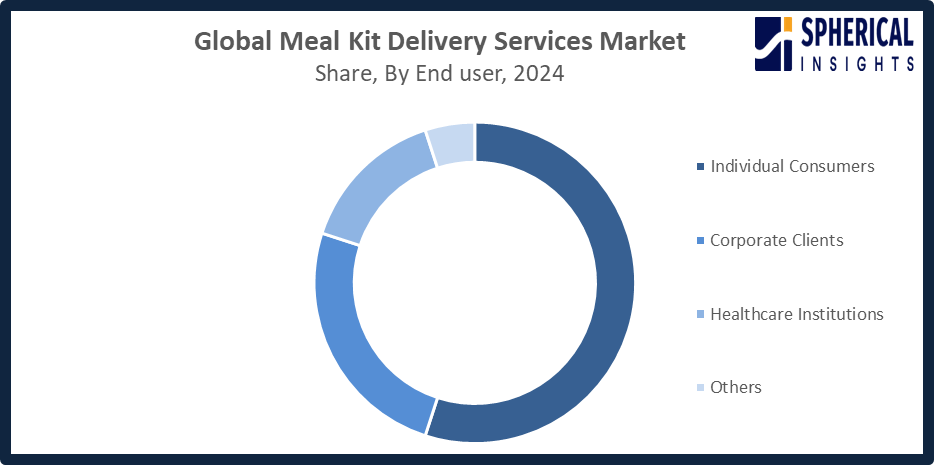
- The individual consumers segment accounted for the highest market revenue in 2024, approximately 55%, and is anticipated to grow at a significant CAGR during the forecast period.
Based on end user, the meal kit delivery services market is divided into individual consumers, corporate clients, healthcare institutions, and others. Among these, the individual consumers segment accounted for the highest market revenue in 2024, approximately 55%, and is anticipated to grow at a significant CAGR during the forecast period. Busy lifestyles among working-class households, the need for time-saving convenience, and the increasing consumer desire for healthy, portion-controlled meals without the effort of meal planning and grocery shopping are bolstering the individual consumers segment
Get more details on this report -
Regional Segment Analysis of the Meal Kit Delivery Services Market
- North America (U.S., Canada, Mexico)
- Europe (Germany, France, U.K., Italy, Spain, Rest of Europe)
- Asia-Pacific (China, Japan, India, Rest of APAC)
- South America (Brazil and the Rest of South America)
- The Middle East and Africa (UAE, South Africa, Rest of MEA)
North America is anticipated to hold the largest share of the meal kit delivery services market over the predicted timeframe.

Get more details on this report -
North America is anticipated to hold the largest share of the meal kit delivery services market over the predicted timeframe. Strong government backing for digital infrastructure, widespread e-commerce penetration, and advanced logistics networks enable efficient ordering, delivery, and tracking of meal kits, which propel North America. The region's position is further reinforced by government programs promoting online food purchasing channels, indirectly supporting meal kit adoption. High consumer adoption of convenient and time-saving food solutions, driven by busy urban lifestyles and dual-income households, has contributed to brand awareness and market maturity.
Government initiatives include Canada’s March 2026 investment of up to 30 million through LFIF to strengthen community food systems, enhancing regional food supply chains; Mexico’s Food for Well-Being Initiative (January 2025), which strengthens food security by expanding affordable food stores and ensuring staple food supply chains; and the USDA’s SNAP April 2019 Online Purchasing Pilot, expanding digital food ordering and delivery infrastructure that meal kit services can leverage.
Asia Pacific is expected to grow at a rapid CAGR in the meal kit delivery services market during the forecast period. China, Japan, and India are among the nations making significant investments. Rapid digital adoption and widespread smartphone penetration facilitate online ordering and delivery platforms, while expanding e-commerce and logistics infrastructure enable efficient last-mile delivery even in densely populated cities. The demand for sophisticated meal kit delivery services is further accelerated by the region's major centers for food safety regulations, digital commerce, and cold-chain infrastructure, which strengthen the ecosystem and allow meal kit companies to scale operations efficiently.
Government launches include Japan's MAFF (August 2024) public support tools for food industry overseas projects, strengthening food value chains and distribution networks used by food delivery enterprises; India’s ONDC launched by DPIIT (April 2022) to create a digital commerce network for buyers, lowering entry barriers and enabling local providers, including meal kit services, to connect with customers digitally; and Thailand’s NFI support, which long-term strengthens the supply base for food delivery and meal kit services
Competitive Analysis:
The report provides an appropriate analysis of the key organizations/companies involved in the meal kit delivery services market, along with a comparative evaluation primarily based on their product offerings, business overviews, geographic presence, enterprise strategies, segment market share, and SWOT analysis. The report also offers an elaborative analysis focusing on current news and developments of the companies, including product development, innovations, joint ventures, partnerships, mergers and acquisitions, strategic alliances, and others. This enables the evaluation of the overall competition within the market
List of Key Companies
- HelloFresh SE
- Blue Apron Holdings
- Home Chef
- Marley Spoon AG
- Sunbasket
- Gousto
- Purple Carrot
- EveryPlate
- Gobble
- Hungryroot
- Freshly Inc
- Daily Harvest
- Green Chef
- Oisix ra daichi Inc
- Chefmarket
- Others
Key Target Audience
- Market Players
- Investors
- End-users
- Government Authorities
- Consulting and Research Firm
- Venture capitalists
- Value-Added Resellers (VARs)
Recent Development
- In February 2026, HelloFresh announced the launch of HelloFresh Unboxed: 100+ Recipes for Real Life, set for release on September 1, 2026, expanding its brand beyond delivery into content and consumer engagement, and blending delicious, flavorful, easy-to-follow recipes.
- In August 2025, Blue Apron officially announced a major brand relaunch, introducing an expanded menu, a subscription-free purchasing model, and new product categories such as ready-to-eat meals and quick assemble & bake kits.
- In September 2025, HelloFresh reported accelerated product investment strategies alongside operational efficiency improvements to strengthen its meal kit and ready-to-eat offerings and enhance profitability.
Market Segment
This study forecasts revenue at global, regional, and country levels from 2020 to 2035. Spherical Insights has segmented the meal kit delivery services market based on the below-mentioned segments:
Global Meal Kit Delivery Services Market, By Meal
- Vegan
- Vegetarian
- Non-Vegetarian
Global Meal Kit Delivery Services Market, By Offering
- Heat & Eat
- Cook & Eat
Global Meal Kit Delivery Services Market, By End User
- Individual Consumers
- Corporate Clients
- Healthcare Institution
- Others
Global Meal Kit Delivery Services Market, By Regional Analysis
- North America
- US
- Canada
- Mexico
- Europe
- Germany
- UK
- France
- Italy
- Spain
- Russia
- Rest of Europe
- Asia Pacific
- China
- Japan
- India
- South Korea
- Australia
- Rest of Asia Pacific
- South America
- Brazil
- Argentina
- Rest of South America
- Middle East & Africa
- UAE
- Saudi Arabia
- Qatar
- South Africa
- Rest of the Middle East & Africa
Frequently Asked Questions (FAQ)
-
What is the role of technology in this meal kit delivery services market?Technology enables seamless ordering through apps and websites. AI helps personalize meal recommendations based on preferences. Data analytics improves supply chain and inventory management. Delivery tracking enhances customer experience. Automation supports efficient packaging and distribution
-
How does subscription-based pricing work?Customers subscribe to weekly or monthly meal plans. They can choose the number of meals and servings. Payments are recurring and often offer discounts. Some companies allow skipping or modifying deliveries. Flexible models are emerging to reduce subscription fatigue.
-
How does customization benefit consumers?Customization allows users to select meals based on preferences. It caters to dietary restrictions and allergies. Consumers can control portion sizes and ingredients. Personalized options improve satisfaction. This increases customer retention
-
What role does sustainability play?Sustainability is becoming increasingly important. Companies are reducing packaging waste. Local sourcing minimizes carbon footprint. Eco-friendly practices attract conscious consumers. Sustainability initiatives enhance brand reputation
-
How do meal kits support healthy eating?Meal kits offer balanced and portion-controlled meals. They include nutritional information for each recipe. Many provide organic and clean-label ingredients. Diet-specific options cater to health goals. This promotes healthier lifestyles
-
What are emerging trends in the market?Key trends include AI-based personalization and faster delivery. Ready-to-eat meals are gaining traction. Sustainability initiatives are increasing. Subscription flexibility is improving. Global cuisine options are expanding
Need help to buy this report?