Global Marine Waste-Derived PCR Plastics Market Size, Share, and COVID-19 Impact Analysis, Product Type (Rigid & Flexible Plastics, Injection-Moulded Parts, Bottles & Containers, and Specialty Plastics) By End User (Packaging & Consumer Goods, Apparel & Durable Goods, Consumer Packaging, Premium Consumer Products, FMCG & Textiles, and Regional Packaging), and By Region (North America, Europe, Asia-Pacific, Latin America, Middle East, and Africa), Analysis and Forecast 2025 - 2035
Industry: Chemicals & Materials
Global Marine Waste-Derived PCR Plastics Market Size Insights Forecasts to 2035
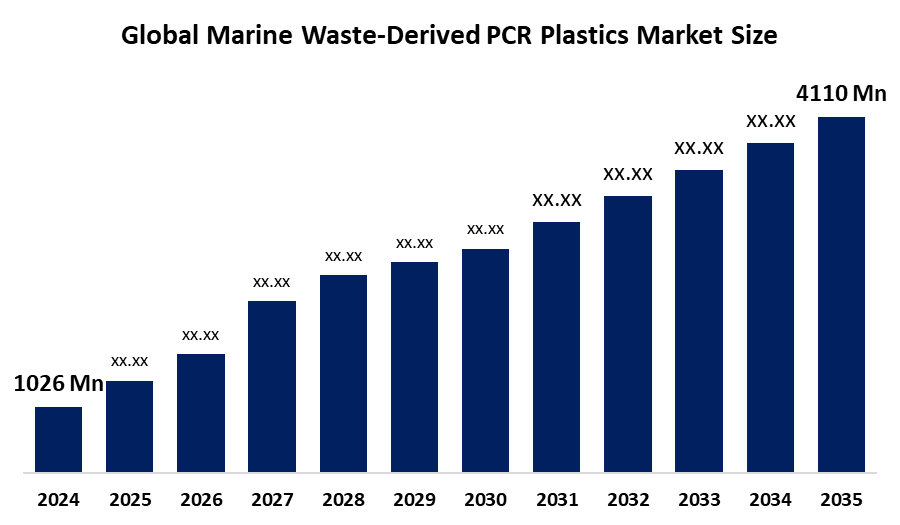
- The Global Marine Waste-Derived PCR Plastics Market Size Was Estimated at USD 1026 Million in 2024
- The Market Size is Expected to Grow at a CAGR of around 13.45 % from 2025 to 2035
- The Worldwide Marine Waste-Derived PCR Plastics Market Size is Expected to Reach USD 4110 Million by 2035
- North America is expected to grow the fastest during the forecast period.
Get more details on this report -
According to a Research Report Published by Spherical Insights and Consulting, The Global Marine Waste-Derived PCR Plastics Market Size was valued at around USD 1026 Million in 2024 and is Predicted to Grow to around USD 4110 Million by 2035 with a Compound Annual Growth Rate (CAGR) of 13.45 % from 2025 to 2035. Opportunities in sustainable packaging, circular economy adoption, regulatory compliance, eco-friendly product creation, cost reduction through recycling, and satisfying consumer demand for ecologically acceptable materials are all offered by the marine waste-derived PCR plastics market.
Market Overview
The manufacturing, distribution, and marketing of recycled plastic resins derived only from ocean-bound and marine trash, such as abandoned fishing nets, bottles, and microplastics, are all represented in the marine waste-derived PCR plastics market. In order to produce high-quality PCR resins appropriate for packaging, consumer goods, and industrial applications, thereby reducing marine pollution and promoting a circular economy, these materials go through sophisticated sorting, cleaning, and reprocessing. For Instance, in May 2025, India and the European Union launched major initiatives investing INR 391 crore to tackle marine plastic pollution, promoting marine waste-derived PCR plastics and advancing sustainable waste-to-hydrogen technologies, protecting ecosystems and human health. Due to these considerations, this market has taken a special place among recycled plastics, driven more by brand uniqueness, trustworthiness, and traceability than by volume substitution. The expanding consumer desire for sustainable products, strict laws on plastic waste, technological developments in recycling, and expanding industry adoption of circular economy techniques are the factors driving the marine waste-derived PCR plastics market.
Report Coverage
This research report categorizes the marine waste-derived PCR plastics market based on various segments and regions, forecasts revenue growth, and analyzes trends in each submarket. The report analyses the key growth drivers, opportunities, and challenges influencing the marine waste-derived PCR plastics market. Recent market developments and competitive strategies, such as expansion, product launch, development, partnership, merger, and acquisition, have been included to draw the competitive landscape in the market. The report strategically identifies and profiles the key market players and analyzes their core competencies in each sub-segment of the marine waste-derived PCR plastics market.
Marine Waste-Derived PCR Plastics Market Report Coverage
| Report Coverage | Details |
|---|---|
| Base Year: | 2024 |
| Market Size in 2024: | 1026 Million |
| Forecast Period: | 2025-2035 |
| Forecast Period CAGR 2025-2035 : | CAGR of 13.45% |
| 2035 Value Projection: | 4110 Million |
| Historical Data for: | 2020-2023 |
| No. of Pages: | 240 |
| Tables, Charts & Figures: | 110 |
| Segments covered: | By End User, By Region |
| Companies covered:: | BASF SE, Covestro AG, Envision Plastics Industries, LLC, Far Eastern New Century Corporation, GEM Co., Ltd., JEPLAN, Inc., Oceanworks, Inc., PureCycle Technologies, SUEZ, Toray Industries, Inc., and other key players |
| Pitfalls & Challenges: | COVID-19 Empact, Challenge, Future, Growth, & Analysis |
Get more details on this report -
Driving Factors
The market for marine waste-derived PCR plastics is primarily driven by a combination of technological, economic, regulatory, and environmental reasons that collectively promote the active, sustainable manufacturing and use of plastics. The primary issue is the growing environmental concern, particularly with regard to marine contamination. The expansion of the marine waste-derived PCR plastics market is further supported by public policies and regulations. Numerous governments and international organizations are enacting strict legislation to limit plastic waste, encourage recycling, and compel the use of sustainable materials. The expansion of the market is further supported by public policies and regulations.
Restraining Factors
Large-scale adoption and industrial integration of the marine waste-derived PCR plastics market is restricted by a number of factors, including high collection and processing costs, a lack of marine waste, inconsistent quality in recycled plastics, and technological difficulties in purification.
Market Segmentation
The marine waste-derived PCR plastics market share is classified into product type and end user.
- The rigid & flexible plastics segment accounted for the largest share in 2024 and is anticipated to grow at a significant CAGR during the forecast period.
Based on the product type, the marine waste-derived PCR plastics market is divided into rigid & flexible plastics, injection-moulded parts, bottles & containers, and specialty plastics. Among these, the rigid & flexible plastics segment accounted for the largest share in 2024 and is anticipated to grow at a significant CAGR during the forecast period. The segment for rigid and flexible plastics is linked to their extensive use in a variety of industries, such as consumer products, construction, automotive, and packaging. Additionally, the use of rigid and flexible recycled plastics is fueled by growing consumer demand for environmentally friendly and sustainable packaging options.
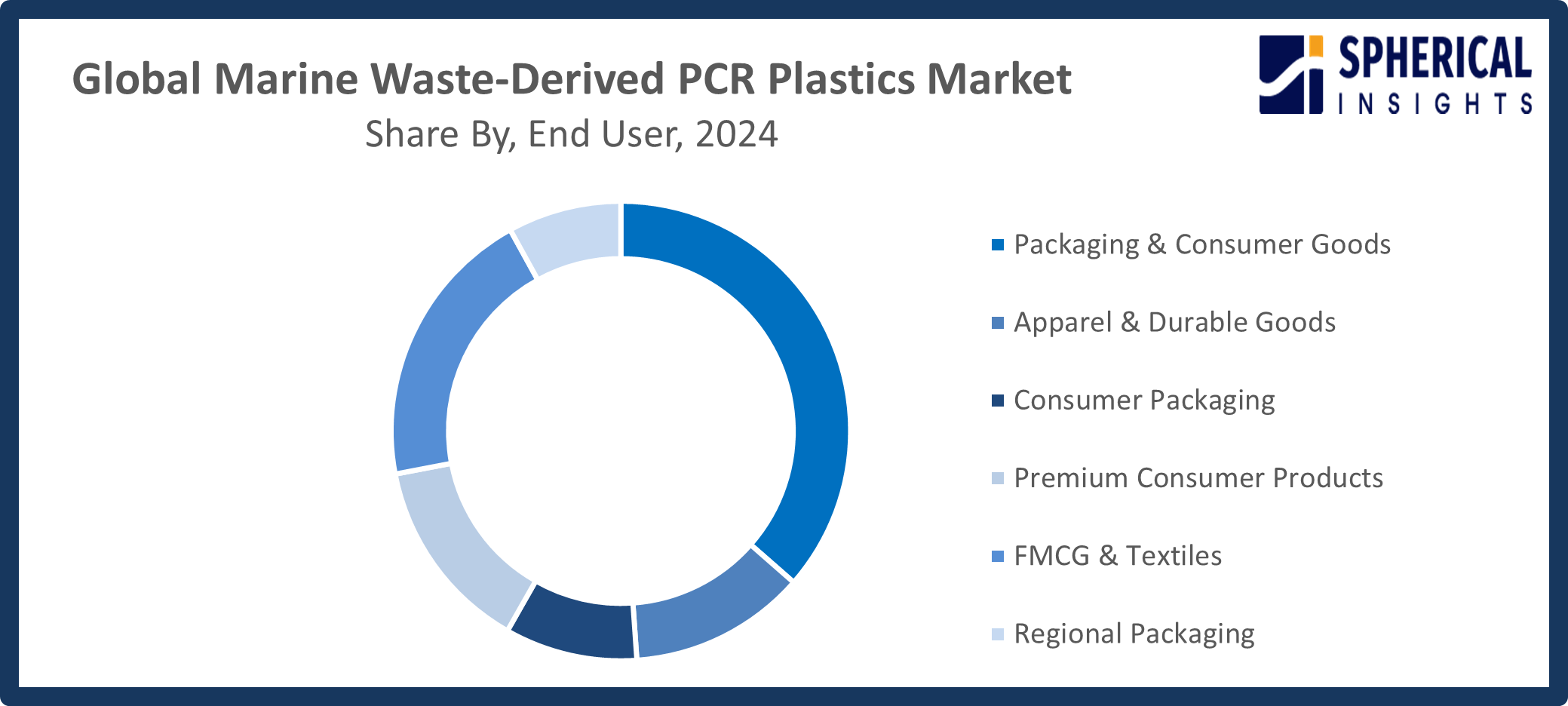
- The packaging & consumer goods segment accounted for the highest market revenue in 2024 and is anticipated to grow at a significant CAGR during the forecast period.
Based on the end user, the marine waste-derived PCR plastics market is divided into packaging & consumer goods, apparel & durable goods, consumer packaging, premium consumer products, FMCG & textiles, and regional packaging. Among these, the packaging & consumer goods segment accounted for the highest market revenue in 2024 and is anticipated to grow at a significant CAGR during the forecast period. The strong demand for eco-friendly consumer goods and sustainable packaging solutions in international markets is the main factor driving the packaging and consumer goods market. In order to comply with environmental rules, lower carbon footprints, and support circular economy initiatives, industries are increasingly using recycled plastics made from marine garbage.
Get more details on this report -
Regional Segment Analysis of the Marine Waste-Derived PCR Plastics Market
- North America (U.S., Canada, Mexico)
- Europe (Germany, France, U.K., Italy, Spain, Rest of Europe)
- Asia-Pacific (China, Japan, India, Rest of APAC)
- South America (Brazil and the Rest of South America)
- The Middle East and Africa (UAE, South Africa, Rest of MEA)
Asia Pacific is anticipated to hold the largest share of the marine waste-derived PCR plastics market over the predicted timeframe.

Get more details on this report -
Asia Pacific is anticipated to hold the largest share of the marine waste-derived PCR plastics market over the predicted timeframe. Asia Pacific is propelled by the region's vast manufacturing base, quickly growing industrial sector, and high consumption of plastic products in a variety of end-use industries, such as consumer goods, packaging, and automobiles. In order to efficiently convert marine plastics into high-quality PCR materials, nations like China, India, and Japan are investing in sophisticated recycling infrastructure and marine garbage collection systems. Public development banks will begin the Clean Oceans Initiative 2.0 in June 2025, which aims to provide USD 10 million in funding for the reduction of plastic pollution in Asia. The UNDP's multi-country circular plastics initiative, which emphasizes waste-to-PCR conversion technologies, was introduced in 2025 throughout South and Southeast Asia.
North America is expected to grow at a rapid CAGR in the marine waste-derived PCR plastics market during the forecast period. Strict environmental laws, such as prohibitions on single-use plastics, recycling requirements, and extended producer responsibility policies that encourage the use of recycled and sustainable plastic materials, are what propel the expansion of the North American area. Important government initiatives include the US senators' November 2025 reauthorization of the Save Our Seas 2.0 Act, which allots USD 100 million for improvements to recycling and marine trash avoidance. The EPA's 2025 announcement of USD 58 million in recycling infrastructure awards, which prioritize ocean plastic recovery activities, is one of the recent advances.
Competitive Analysis:
The report offers the appropriate analysis of the key organizations/companies involved within the marine waste-derived PCR plastics market, along with a comparative evaluation primarily based on their product offering, business overviews, geographic presence, enterprise strategies, segment market share, and SWOT analysis. The report also provides an elaborative analysis focusing on the current news and developments of the companies, which includes product development, innovations, joint ventures, partnerships, mergers & acquisitions, strategic alliances, and others. This allows for the evaluation of the overall competition within the market.
List of Key Companies
- BASF SE
- Covestro AG
- Envision Plastics Industries, LLC
- Far Eastern New Century Corporation
- GEM Co., Ltd.
- JEPLAN, Inc.
- Oceanworks, Inc.
- PureCycle Technologies
- SUEZ
- Toray Industries, Inc.
- Others
Key Target Audience
- Market Players
- Investors
- End-users
- Government Authorities
- Consulting and Research Firm
- Venture capitalists
- Value-Added Resellers (VARs)
Recent Development
- In September 2025, the India-EU Ideathon on “Combating Marine Plastic Litter” was launched, promoting Marine Waste-Derived PCR Plastics through collaboration between India’s PSA office and the EU, advancing sustainable recycling and green technology initiatives.
- In December 2023, LyondellBasell launched a groundbreaking collaboration to convert maritime waste into Marine Waste-Derived PCR Plastics, partnering with a German OEM and recycling experts to advance sustainable, mechanically recycled plastic solutions.
Market Segment
This study forecasts revenue at global, regional, and country levels from 2020 to 2035. Spherical Insights has segmented the marine waste-derived PCR plastics market based on the below-mentioned segments:
Global Marine Waste-Derived PCR Plastics Market Size, By Product Type
- Rigid & Flexible Plastics
- Injection-Moulded Parts
- Bottles & Containers
- Specialty Plastics
Global Marine Waste-Derived PCR Plastics Market Size, By End User
- Packaging & Consumer Goods
- Apparel & Durable Goods
- Consumer Packaging
- Premium Consumer Products
- FMCG & Textiles
- Regional Packaging
Global Marine Waste-Derived PCR Plastics Market Size, By Regional Analysis
- North America
- US
- Canada
- Mexico
- Europe
- Germany
- UK
- France
- Italy
- Spain
- Russia
- Rest of Europe
- Asia Pacific
- China
- Japan
- India
- South Korea
- Australia
- Rest of Asia Pacific
- South America
- Brazil
- Argentina
- Rest of South America
- Middle East & Africa
- UAE
- Saudi Arabia
- Qatar
- South Africa
- Rest of the Middle East & Africa
Frequently Asked Questions (FAQ)
-
1. What is the CAGR of the marine waste-derived PCR plastics market over the forecast period?The Global Marine Waste-Derived PCR Plastics Market Size is projected to expand at a CAGR of 13.45% during the forecast period.
-
2. What is the market size of the marine waste-derived PCR plastics market?The Global Marine Waste-Derived PCR Plastics Market Size is expected to grow from USD 1026 million in 2024 to USD 4110 million by 2035, at a CAGR of 13.45 % during the forecast period 2025-2035.
-
3. Which region holds the largest share of the marine waste-derived PCR plastics market?Asia Pacific is anticipated to hold the largest share of the marine waste-derived PCR plastics market over the predicted timeframe.
-
4. Who are the top companies operating in the Global Marine Waste-Derived PCR Plastics Market Size?BASF SE, Covestro AG, Envision Plastics Industries, LLC, Far Eastern New Century Corporation, GEM Co., Ltd., JEPLAN, Inc., Oceanworks, Inc., PureCycle Technologies, SUEZ, Toray Industries, Inc., and Others.
-
5. What factors are driving the growth of the marine waste-derived PCR plastics market?Growing consumer desire for sustainable products, stricter laws, technological developments in recycling, and an increasing focus on circular economy activities are the factors driving the marine waste-derived PCR plastics market.
-
6. What are the market trends in the marine waste-derived PCR plastics market?Marine trash incorporation into premium PCR plastics, partnerships for sustainable supply chains, usage in consumer goods and packaging, advancements in polymer recovery, and expanding corporate sustainability programs are some of the major trends.
-
7. What are the main challenges restricting the wider adoption of the marine waste-derived PCR plastics market?High collecting and processing expenses, a lack of marine debris, inconsistent quality in recycled plastics, technological challenges in purification, and challenges attaining widespread industry adoption all restrict market expansion.
Need help to buy this report?