Japan Saffron Market Size, Share, By Type (Organic and Traditional), By Product (Food Supplements, Cosmetics, Personal Care Products, Food & Beverage, and Others), Japan Saffron Market Insights, Industry Trend, Forecasts to 2035
Industry: Food & Beverages
Japan Saffron Market Insights Forecasts to 2035
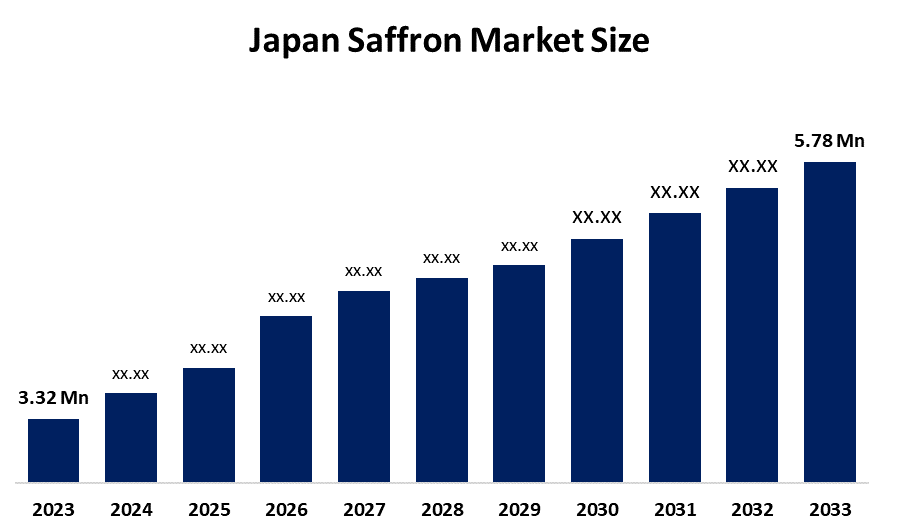
- Japan Saffron Market Size 2024: USD 3.32 Mn
- Japan Saffron Market Size 2035: USD 5.78 Mn
- Japan Saffron Market CAGR 2024: 5.17%
- Japan Saffron Market Segments: Type and Product.
Get more details on this report -
The Japanese saffron market is a lucrative business that is focused on growing, importing, and using the dried stigmas of the Crocus sativus flower for commercial purposes. Saffron is a spice that is bright red in color and aromatic. It has a very distinct chemical composition, and it contains bioactive substances such as crocin and safranal. Some of the current trends in the Japanese saffron industry include a growing interest in organic saffron and greater use of natural, high-purity food colorants. Increasingly, organic saffron is being used in premium tea blends and beverages with a focus on health. In addition to the trend toward organic or high-quality saffron, there is also an increasing number of consumers who purchase gourmet-grade saffron for their home cooking or for gifting to someone else as part of high-end culinary gifts.
Initiatives by both governments and private entities have been instrumental in building the future of Japan's saffron industry. There are numerous government-sponsored initiatives meant to promote regional revitalization via producing high-end traditional crops, which incorporate the benefits of historical agricultural practices and advancing agricultural technology. Private initiatives are frequently partnerships between agrotechnology startups and established electrical manufacturers that are developing systems to ensure quality and transparency throughout the entire supply chain through the application of the Internet of Things (IoT) and robotics.
Japan's saffron industry is facing significant challenges due to declining labor forces and environmental issues, however, new technologies have emerged to help resolve these problems. Advanced drying systems that utilize proprietary technology enable growers to maximize the flavor and color of their saffron while increasing its shelf life. Additionally, the saffron industry is increasingly using blockchain-based systems and advanced methods of spectroscopy testing to protect against fraudulent practices, providing consumers with high-quality, authentic saffron products.
Market Dynamics of the Japan Saffron Market:
The Japanese saffron market is driven by the increase in awareness about health and wellness, coupled with the presence of a large luxury-goods culture. In Japan, life expectancy is high, resulting in a strong demand for saffron because of its powerful antioxidant properties as well as its known medicinal properties, including mood enhancement, memory improvement, and supporting eye health. Additionally, due to the increasing influence of international culinary trends, along with a strong tea culture, there are many opportunities for saffron to be used in a variety of foods and beverages. The demand in the pharmaceutical and cosmetic industries for high-end, premium skincare products also plays a major role in the growth of the saffron market.
The Japanese saffron market is restrained due to the labour-intensive harvesting process and the associated cost of production. The saffron market faces obstacles in terms of cost and mass-market penetration. Moreover, the climate sensitivity of saffron and the presence of counterfeit and/or diluted saffron in the supply chain create a lack of trust among consumers, further limiting the saffron market.
There are significant opportunities included in the Japanese saffron market, such as multiple avenues for significant growth through the creation of saffron-infused functional foods and aesthetics, while advancements in indoor precision farming may also reduce Japan's reliance on imported saffron and help enhance the country's luxury spice market share of premium quality saffron.
Japan Saffron Market Report Coverage
| Report Coverage | Details |
|---|---|
| Base Year: | 2024 |
| Market Size in 2024: | USD 3.32 Million |
| Forecast Period: | 2025-2035 |
| Forecast Period CAGR 2025-2035 : | CAGR of 5.17% |
| 2035 Value Projection: | USD 5.78 Million |
| Historical Data for: | 2020-2023 |
| No. of Pages: | 210 |
| Tables, Charts & Figures: | 90 |
| Segments covered: | By Type, By Product |
| Companies covered:: | Akaito, Limited,Saffron Co., Ltd,Hanwa Co., Ltd,Sumitomo Forestry Co., Ltd,Daiken Corporation,Mori Kougei,Seihoku Corporation,Marubeni Corporation, And Others Players |
| Pitfalls & Challenges: | COVID-19 Empact, Challenge, Future, Growth, & Analysis |
Get more details on this report -
Market Segmentation
The Japan saffron market share is classified into type and product.
By Type:
The Japanese saffron market is divided by type into organic and traditional. Among these, the traditional segment dominated the market in 2024 and is anticipated to grow at a significant CAGR during the forecast period. This is due to its distinct flavour, scent, and appearance, making it a treasured member of the spice cabinet for cooking, cosmetic creations, and herbal remedies. Additionally, saffron has also been used in traditional medicine to treat several conditions, including depression, anxiety, and menstrual cramps.
By Product:
The Japanese saffron market is divided by product into food supplements, cosmetics, personal care products, food & beverage, and others. Among these, the food supplements segment held the largest market share in 2024 and is anticipated to grow at a remarkable CAGR during the forecast period. As a premium spice, saffron improves the taste, colour, and aroma of food products. Increasing consumer interest in saffron among restaurateurs and home cooks, as well as an increase in consumer demand for high-quality and organic cooking ingredients, has led to strong growth within this category.
Competitive Analysis:
The report offers the appropriate analysis of the key organisations/companies involved within the Japan saffron market, along with a comparative evaluation primarily based on their product offering, business overviews, geographic presence, enterprise strategies, segment market share, and SWOT analysis. The report also provides an elaborative analysis focusing on the current news and developments of the companies, which includes product development, innovations, joint ventures, partnerships, mergers & acquisitions, strategic alliances, and others. This allows for the evaluation of the overall competition within the market.
Top Key Companies in Japan Saffron Market:
- Akaito, Limited
- Saffron Co., Ltd.
- Hanwa Co., Ltd.
- Sumitomo Forestry Co., Ltd.
- Daiken Corporation
- Mori Kougei
- Seihoku Corporation
- Marubeni Corporation
- Others
Key Target Audience
- Market Players
- Investors
- End-users
- Government Authorities
- Consulting and Research Firm
- Venture capitalists
- Value-Added Resellers (VARs)
Market Segment
This study forecasts revenue at the Japan, regional, and country levels from 2020 to 2035. Spherical Insights has segmented the Japan saffron market based on the below-mentioned segments:
Japan Saffron Market, By Type
- Organic
- Traditional
Japan Saffron Market, By Product
- Food supplements
- Cosmetics
- Personal care products
- Food & beverage
- Others
Frequently Asked Questions (FAQ)
-
Q: What is the market size and growth outlook of the Japanese saffron market?A: The Japanese saffron market was valued at USD 3.32 million in 2024 and is projected to reach USD 5.78 million by 2035, growing at a CAGR of 5.17% during 2025–2035.
-
Q: What are the key factors driving the growth of the Japanese saffron market?A: Major growth drivers include increasing consumer awareness of health and wellness benefits, high life expectancy, strong demand for luxury and gourmet products, growing use of saffron in functional foods, premium teas, cosmetics, and pharmaceuticals, and rising influence of culinary trends in Japan.
-
Q: What are the major challenges faced by the Japanese saffron market?A: The market faces challenges such as labor-intensive harvesting, high production costs, climate sensitivity of saffron cultivation, and the presence of counterfeit or adulterated saffron in supply chains, which can reduce consumer trust and limit mass-market adoption.
-
Q: Who are the target audiences for the Japan saffron market report?A: The report targets market players, investors, end-users, government authorities, consulting and research firms, venture capitalists, and value-added resellers (VARs).
-
Q: Which saffron type dominates the Japan saffron market?A: The traditional saffron segment dominated the market in 2024 and is expected to grow at a significant CAGR through 2035. This dominance is attributed to its rich flavor, aroma, color, and long-standing use in cooking, cosmetics, and traditional medicine.
-
Q: Which product segment holds the largest share in the Japan saffron market?A: The food & beverage segment held the largest market share in 2024. Growth is supported by increasing use of saffron in gourmet cooking, premium food products, beverages, and rising demand from both restaurants and home consumers for high-quality and organic ingredients.
-
Q: Who are the key players operating in the Japan saffron market?A: Key companies in the Japanese saffron market include Akaito, Limited; Saffron Co., Ltd.; Hanwa Co., Ltd., Sumitomo Forestry Co., Ltd., Daiken Corporation; Mori Kougei, Seihoku Corporation, Marubeni Corporation, along with other regional and niche players.
Need help to buy this report?