Japan Pediatric Hospitals Market Size, Share, By Type (Publicly/Government-Owned, Not-For-Profit Privately Owned, and For-profit Privately Owned), By Therapeutic Area (Endocrinology, Gastroenterology, Cardiology, Nephrology, Neurology, Allergy & Immunology, and Others), Japan Pediatric Hospitals Market Insights, Industry Trend, Forecasts to 2035.
Industry: Healthcare
Japan Pediatric Hospitals Market Insights Forecasts to 2035
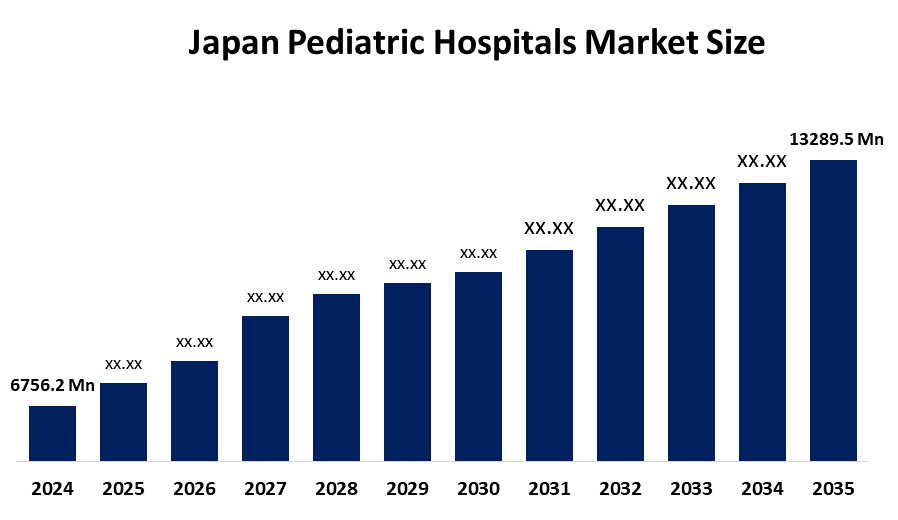
- Japan Pediatric Hospitals Market Size 2024: USD 6756.2 Mn
- Japan Pediatric Hospitals Market Size 2035: USD 13289.5 Mn
- Japan Pediatric Hospitals Market CAGR 2024: 6.34%
- Japan Pediatric Hospitals Market Segments: Type and Therapeutic Area.
Get more details on this report -
The Japanese Pediatric Hospital Market Size is a specific segment within the healthcare field that focuses on providing comprehensive health care services to patients less than twenty-one years old, as well as providing services to their families. In Japan, pediatric patients receive a significant amount of their health care from a highly concentrated group of advanced tertiary care centres, as well as many specialized pediatric departments in general hospitals that use child-specific medical protocols and equipment to treat their pediatric patients. The key trends within the Japanese pediatric hospital market include an increasing emphasis on integrated care models that combine physical and mental health services, a shift towards a family-centred approach to health care, and an increased demand for specialized treatment of chronic conditions such as pediatric asthma and diabetes, rare genetic disorders, etc.
In Japan, the quality and availability of pediatric health care are primarily dependent on government and private efforts. The Japanese government has introduced some significant strategies to improve pediatric health care, including the child medical expense subsidy that eliminates many out-of-pocket expenses for families and the basic law for child and maternal health and child development, which guarantees all families access to health care.
Innovation in Japanese pediatric hospitals have started to employ advanced AI and deep learning algorithms to assist with pediatric diagnostic tests and early identification of diseases or disorders such as genetic disorders, autism and pediatric cancer through genomic data analysis. Non-invasive pediatric diagnostic tools and pediatric-specific medical devices are being widely used within Japanese hospitals to reduce further discomfort and radiation exposure to children through advanced low-dose CT protocols and smartphone-enabled anemia screening. The rising popularity of digital therapeutics and telemedicine platforms has improved remote patient monitoring and management of chronic diseases or disorders such as ADHD, allowing for improved Precision and Individualized Treatment options away from standard clinical environments.
Market Dynamics of the Japan Pediatric Hospitals Market:
The Japanese pediatric hospitals market is driven by the rise in childhood chronic diseases that are diagnosed and treated by way of the super-specialist pediatric subspecialists. As parents become increasingly aware of the importance of early diagnosis of these conditions, many parents will be willing to pay for premium services offered by these specialists. Furthermore, the market will benefit from the ongoing development of pediatric-specific technologies such as AI-enabled diagnostics and minimally invasive surgical tools, as well as continued government support in the form of subsidies for pediatric medical expenses, all of which will contribute significantly to the growth of the pediatric hospital market through the year 2035.
The Japanese pediatric hospitals market is restrained by the high costs of pediatric specialty medical equipment, and the specialized R&D efforts have created barriers to entry for the regional development and distribution of pediatric services. The regulatory environment surrounding the approval processes for new pediatric medications is also likely to impede the speed at which innovative therapy options become available to families.
Telemedicine and digital health services provide a great opportunity for the development and establishment of outreach clinics to provide basic care for those in rural communities, as well as enhance at-home care for pediatric patients, which historically has been underutilized in practice. Personalized medicine that meets the unique physiological requirements and pediatric-specific characteristics is also a growing area for specialty care practitioners.
Japan Pediatric Hospitals Market Report Coverage
| Report Coverage | Details |
|---|---|
| Base Year: | 2024 |
| Market Size in 2024: | USD 6756.2 Million |
| Forecast Period: | 2025-2035 |
| Forecast Period CAGR 2025-2035 : | CAGR of 6.34% |
| 2035 Value Projection: | USD 13289.5 Million |
| Historical Data for: | 2020-2023 |
| No. of Pages: | 210 |
| Tables, Charts & Figures: | 95 |
| Segments covered: | By Type, By Therapeutic Area |
| Companies covered:: | Nihon Kohden, Fukuda Denshi, Takeda, Miyagi Children’s Hospital, Shizuoka Children’s Hospital, Astellas, Keio University Hospital, Others, and Key Players. |
| Pitfalls & Challenges: | COVID-19 Empact, Challenge, Future, Growth, & Analysis |
Get more details on this report -
Market Segmentation
The Japan pediatric hospitals market share is classified into type and therapeutic area.
By Type:
The Japanese pediatric hospitals market is divided by type into publicly/government-owned, not-for-profit privately owned, and for-profit privately owned. Among these, the for-profit privately owned segment dominated the market in 2024 and is anticipated to grow at a significant CAGR during the forecast period. This is due to the expanding popularity of for-profit, privately operated hospitals, which increases the requirement for efficient services to serve the growing number of pediatric patients. Furthermore, access to favorable reimbursement schemes and incentives from public healthcare payors may help to the rise of for-profit hospitals.
By Therapeutic Area:
The Japanese pediatric hospitals market is divided by therapeutic area into endocrinology, gastroenterology, cardiology, nephrology, neurology, allergy & immunology, and others. Among these, the endocrinology segment is expected to grow at the fastest CAGR during the forecast period. Endocrinology services are in high demand in pediatric hospitals due to the increasing prevalence of endocrine problems in children. To meet the demand for pediatric endocrinology professionals, hospitals are implementing fellowship and research programs.
Competitive Analysis:
The report offers the appropriate analysis of the key organisations/companies involved within the Japan Pediatric Hospitals market, along with a comparative evaluation primarily based on their product offering, business overviews, geographic presence, enterprise strategies, segment market share, and SWOT analysis. The report also provides an elaborate analysis focusing on the current news and developments of the companies, which includes product development, innovations, joint ventures, partnerships, mergers & acquisitions, strategic alliances, and others. This allows for the evaluation of the overall competition within the market.
Top Key Companies in Japan Pediatric Hospitals Market:
- Nihon Kohden
- Fukuda Denshi
- Takeda
- Miyagi Children's Hospital
- Shizuoka Children's Hospital
- Astellas
- Keio University Hospital
- Others
Key Target Audience
- Market Players
- Investors
- End-users
- Government Authorities
- Consulting and Research Firm
- Venture capitalists
- Value-Added Resellers (VARs)
Market Segment
This study forecasts revenue at the Japan, regional, and country levels from 2020 to 2035. Decisions Advisors has segmented the Japan pediatric hospitals market based on the below-mentioned segments:
Japan Pediatric Hospitals Market, By Type
- Publicly/Government-Owned
- Not-For-Profit Privately Owned
- For-profit Privately Owned
Japan Pediatric Hospitals Market, By Therapeutic Area
- Endocrinology
- Gastroenterology
- Cardiology
- Nephrology
- Neurology
- Allergy & Immunology
- Others
Frequently Asked Questions (FAQ)
-
Q:What is the projected growth of the Japan pediatric hospitals market?A:The market is expected to grow from USD 6,756.2 million in 2024 to USD 13,289.5 million by 2035. This represents a CAGR of 6.34% during the forecast period 2025–2035.
-
Q:What services do pediatric hospitals in Japan primarily provide?A:Japanese pediatric hospitals offer comprehensive healthcare services for patients under 21 years of age. They focus on child-specific protocols, advanced tertiary care, and family-centred treatment models.
-
Q:Which type of pediatric hospital dominates the market in Japan?A:For-profit privately owned pediatric hospitals dominated the market in 2024. This is due to their growth being supported by efficient service delivery and favorable reimbursement policies.
-
Q:Which therapeutic area is expected to grow the fastest in the Japanese pediatric hospitals market?A:The endocrinology segment is projected to grow at the fastest CAGR. This is driven by the rising incidence of pediatric endocrine disorders and specialized care demand.
-
Q:What challenges restrain the growth of the Japanese pediatric hospitals market?A:High costs of specialized pediatric equipment and R&D create barriers to market entry. Also, strict regulatory approval processes for pediatric drugs slow innovation adoption.
-
Q:Who are the target audiences for the Japan pediatric hospitals market report?A:The report targets market players, investors, end-users, government authorities, consulting and research firms, venture capitalists, and value-added resellers (VARs).
Need help to buy this report?