Japan Organic Cotton Market Size, Share, By Type (Long Staple Cotton, Short Staple Cotton, Middle Staple Cotton, Extra Long Staple Cotton, And Others), By Quality Type (Supima, Upland, Giza, And Others), By Application (Apparel, Packaging, And Others), And Japan Organic Cotton Market Insights, Industry Trend, Forecasts to 2035.
Industry: Consumer Goods
Japan Organic Cotton Market Insights Forecasts to 2035
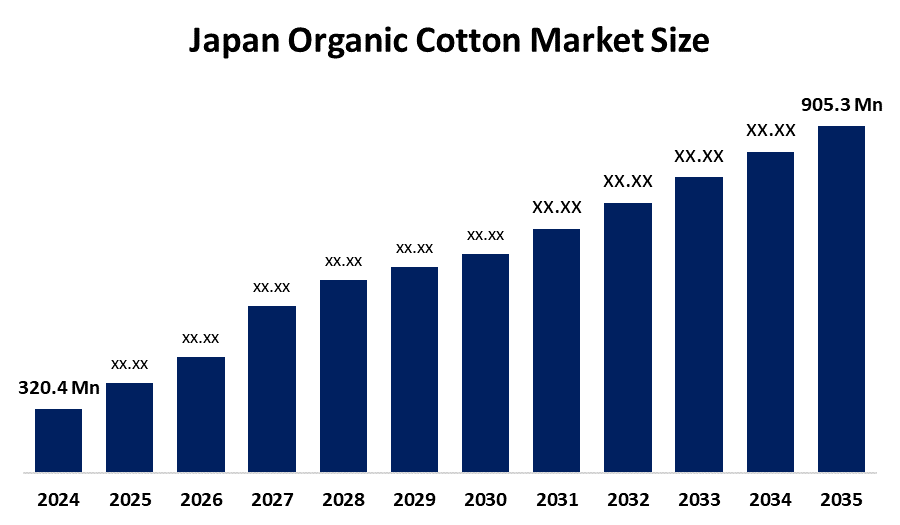
- Japan Organic Cotton Market Size 2024: USD 320.4 Mn
- Japan Organic Cotton Market Size 2035: USD 905.3 Mn
- Japan Organic Cotton Market CAGR 2024: 9.9%
- Japan Organic Cotton Market Segments: Type, Quality Type, and Application
Get more details on this report -
The Japan organic cotton market is a sector of organic cotton produced without any synthetic herbicides and fungicides, chemical fertilizers, or genetically modified organisms (GMOs), and which meets the established criteria for organic certification for textiles. The organic cotton market is emerging as a component of Japan’s trend toward sustainable and environmentally sustainable consumer goods. The Japanese market prices and demand are expected to grow as more consumers learn about the environmental impact of consumerism, more consumers shop online, and more consumer desire to purchase clothing, bedding, and baby goods that are viewed as sustainable alternatives.
The organic cotton in Japan are backed by government support, including the "Promotion of Organic Agriculture Act" to promote organic farming by providing a framework at the national and local levels to support organic production to improve access to organic farming practices and support increased production and distribution of organic products. Through its "MIDORI" Strategy (Green Food System), the Ministry of Agriculture, Forestry and Fisheries intends to significantly decrease chemical pesticide use and increase acreage used to grow organic crops; these initiatives demonstrate an environmentally-sustainable policy framework and will continue to encourage organic cotton through bolstered organic supply chains and greater environmental credentials.
As technology advances, Japanese organic cotton providers are now utilizing digital supply-chain transparency information tools, online retailers see consumer interest in certified organic cotton products with traceable sources and expect to see increased purchases through improved textile processing, improved textile supply-chain transparency, increased agricultural yield increases with new agricultural technologies, and overall reductions in natural resources needed to produce cotton through sustainable practices and the ability to use smart farming technologies.
Japan Organic Cotton Market Report Coverage
| Report Coverage | Details |
|---|---|
| Base Year: | 2024 |
| Market Size in 2024: | USD 320.4 Million |
| Forecast Period: | 2025-2035 |
| Forecast Period CAGR 2025-2035 : | CAGR Of 9.9% |
| 2035 Value Projection: | USD 905.3 Million |
| Historical Data for: | 2020-2023 |
| No. of Pages: | 250 |
| Tables, Charts & Figures: | 120 |
| Segments covered: | By Type, By Quality Type, By Application |
| Companies covered:: | Daiwabo Co., Ltd., TAL Apparel Ltd., Takihyo Co., Ltd., Kurabo Industries Ltd., Hashima Company Ltd., Yagi & Co Ltd., Aeon Topvalu Co Ltd., Stylem Takisada Osaka Co Ltd., Trade Works Co Ltd., Muji, Nike Japan CSC, KUME, Gunze Ltd., Ikeuchi Organic Inc., Prairie Dog Co Ltd.,and Others key players |
| Pitfalls & Challenges: | COVID-19 Empact, Challenge, Future, Growth, & Analysis |
Get more details on this report -
Market Dynamics of the Japan Organic Cotton Market:
The Japan organic cotton market is driven by the consumers have become more conscious about our environment, higher younger consumers preference for clothing and accessories, urbanization and lifestyle changes, government-supported programs like organic farming and expanding online shopping opportunities are helping the market expand even faster.
The Japan organic cotton market is restrained by the higher production and certification costs of organic cotton, limited domestic cultivation leading to heavy reliance on imports, and relatively higher retail prices that restrict mass-market adoption.
The future of Japan organic cotton market is bright and promising, with versatile opportunities emerging from the increasing collaboration of fashion brands with sustainable suppliers, the technology used to improve traceability and how textiles are processed sustainably, and the increase in export opportunities for Japanese eco-textiles are all significant catalysts for the growing demand marketplace. Companies are being forced to be much more sustainable due to a combination of multiple factors, including corporate sustainability commitments, advances in organic agriculture practices, and innovations in agriculture.
Market Segmentation
The Japan Organic Cotton Market share is classified into type, quality type, and application.
By Type:
The Japan organic cotton market is divided by type into long staple cotton, short staple cotton, middle staple cotton, extra-long staple cotton, and others. Among these, the middle staple cotton segment held the largest revenue market share in 2024 and is anticipated to grow at a remarkable CAGR during the forecast period. Offering a balance of quality and cost, versatile for everyday apparel, demand for sustainable, affordable,eco-friendly clothing and products like bags, shoes, and basic wear with lower quality all contribute to the middle staple cotton segment's largest share and higher spending on organic cotton when compared to other type.
By Quality Type:
The Japan organic cotton market is divided by quality type into supima, upland, giza, and others. Among these, the upland segment dominated the share in 2024 and is anticipated to grow at a remarkable CAGR during the forecast period. The upland segment dominates because of its versatility and cost effectiveness for everyday apparel making it the workhorse of the textile industry, and meeting broad consumer demand for affordable, eco-friendly fashion for sustainable basics
By Application:
The Japan organic cotton market is divided by application into apparel, packaging, and others. Among these, the apparel segment held the largest market share in 2024 and is anticipated to grow at a significant CAGR during the forecast period. Growing consumer environmental awareness, cultural shift towards sustainable, high quality fashion choices, and proactive government policies and organizations that supports market environment all contribute to the apparel segment's largest share and higher spending on organic cotton when compared to other application.
Competitive Analysis:
The report offers the appropriate analysis of the key organisations/companies involved within the Japan organic cotton market, along with a comparative evaluation primarily based on their product offering, business overviews, geographic presence, enterprise strategies, segment market share, and SWOT analysis. The report also provides an elaborative analysis focusing on the current news and developments of the companies, which includes product development, innovations, joint ventures, partnerships, mergers & acquisitions, strategic alliances, and others. This allows for the evaluation of the overall competition within the market.
Top Key Companies in Japan Organic Cotton Market:
- Daiwabo Co., Ltd.
- TAL Apparel Ltd.
- Takihyo Co., Ltd.
- Kurabo Industries Ltd.
- Hashima Company Ltd.
- Yagi & Co Ltd.
- Aeon Topvalu Co Ltd.
- Stylem Takisada Osaka Co Ltd.
- Trade Works Co Ltd.
- Muji
- Nike Japan CSC
- KUME
- Gunze Ltd.
- Ikeuchi Organic Inc.
- Prairie Dog Co Ltd.
- Others
Recent Developments in Japan Organic Cotton Market:
In December 2025, The Japanese organic cotton market is moving towards localized production to increase transparency and reduce reliance on International sources. This was being supported by technologies such as blockchain for traceability, IoT and sensors for monitoring cultivation, and AI for demand forecasting.
In October 2023, Toray Industries introduced new sustainable fabrics that include bio-based, materials to address the rising demand for environmentally friendly items.
Key Target Audience
- Market Players
- Investors
- End-users
- Government Authorities
- Consulting and Research Firm
- Venture capitalists
- Value-Added Resellers (VARs)
Market Segment
This study forecasts revenue at the Japan, regional, and country levels from 2020 to 2035.Spherical Insights has segmented the Japan organic cotton market based on the below-mentioned segments:
Japan Organic Cotton Market, By Type
- Long Staple Cotton
- Short Staple Cotton
- Middle Staple Cotton
- Extra Long Staple Cotton
- Others
Japan Organic Cotton Market, By Quality Type
- Supima
- Upland
- Giza
- Others
Japan Organic Cotton Market, By Application
- Apparel
- Packaging
- Others
Frequently Asked Questions (FAQ)
-
Q: What is the Japan organic cotton market size?A: Japan organic cotton market is expected to grow from USD 320.4 million in 2024 to USD 905.3 million by 2035, growing at a CAGR of 9.9% during the forecast period 2025-2035.
-
Q: What are the key growth drivers of the market?A: Market growth is driven by the rising consumer awareness of environmental sustainability, growing demand for eco-friendly and skin-safe textiles, and increasing preference for ethically sourced fashion among younger consumers. Additionally, supportive government policies promoting organic agriculture and the expansion of e-commerce platforms are accelerating market penetration.
-
Q: What factors restrain the Japan organic cotton market?A: Constraints include the higher production and certification costs of organic cotton compared to conventional cotton, limited domestic cultivation leading to heavy reliance on imports, and relatively higher retail prices that restrict mass-market adoption. Furthermore, complex certification processes and limited farmer participation slow supply growth.
-
Q: How is the market segmented by quality type?A: The market is segmented into supima, upland, giza, and others.
-
Q: Who are the key players in the Japan organic cotton market?A: Key companies include Daiwabo Co., Ltd., TAL Apparel Ltd., Takihyo Co., Ltd., Kurabo Industries Ltd., Hashima Company Ltd., Yagi & Co Ltd., Aeon Topvalu Co Ltd., Stylem Takisada Osaka Co Ltd., Trade Works Co Ltd., Muji, Nike Japan CSC, KUME, Gunze Ltd., Ikeuchi Organic Inc., Prairie Dog Co Ltd., and Others.
-
Q: Who are the target audiences for this market report?A: The report targets market players, investors, end-users, government authorities, consulting and research firms, venture capitalists, and value-added resellers (VARs).
Need help to buy this report?