Japan Ophthalmic Drug Devices Market Size, Share, By Device Type (Surgical Instruments, Diagnostic Equipment, Contact Lenses, Intraocular Lenses, And Ophthalmic Solutions), By Application (Glaucoma, Cataract, Retinal Disorders, Dry Eye, And Infection), And Japan Ophthalmic Drug Devices Market Insights, Industry Trend, Forecasts to 2035.
Industry: Healthcare
Japan Ophthalmic Drug Devices Market Insights Forecasts to 2035
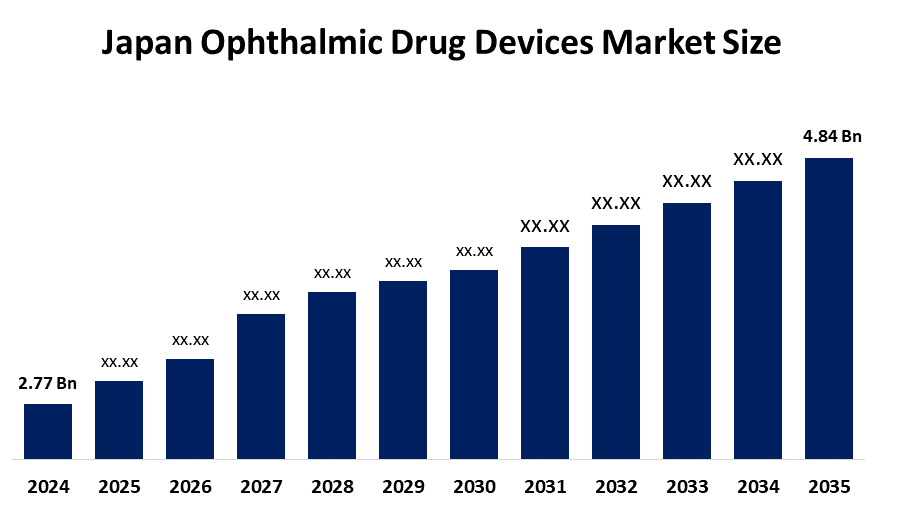
- Japan Ophthalmic Drug Devices Market Size 2024: USD 2.77 Bn
- Japan Ophthalmic Drug Devices Market Size 2035: USD 4.84 Bn
- Japan Ophthalmic Drug Devices Market CAGR 2024: 5.2%
- Japan Ophthalmic Drug Devices Market Segments: Device Type and Application
Get more details on this report -
The Japan Ophthalmic Drug Devices Market Size covers the combined spectrum of pharmaceutical treatments and medical devices utilized in diagnosing, treating, and managing eye diseases and disorders of the vision system. Pharmaceuticals include medications for treating diseases such as glaucoma, dry eye syndrome, retinal diseases, etc., while ophthalmic device types include optical coherence tomography systems (OCT), surgical instruments, diagnostic equipment, advanced therapeutic delivery systems and so on. There is a forecast of moderate growth due to the increasing incidence of aging populations and an increase in the prevalence of ocular diseases in this region.
The ophthalmic drug devices in Japan are backed by government support, including the Ministry of Health, Labour and Welfare to favour the ongoing growth, evolution and development of new treatment modalities. Providing regulatory support through changes in Pricing Structures creates opportunities for developing new medicines and increasing investment into developing new clinical and pharmaceutical products. Although this support is provided, it will be through an additional increase in regulatory guidance in developing ophthalmic therapeutic products, thus further facilitating the development of innovative ophthalmic drugs and increasing the volume of medicine surgery.
As technology advances, Japanese ophthalmic drug devices providers are now using high-definition imaging systems with AI-based diagnosis, less invasive surgical instruments, and improved drug administration methods like punctal plugs and slower releasing products, these advancements are allowing for earlier detection of vision-related medical conditions and increasing adherence to treatment by the patient as well as delivered treatment effectiveness, which are the leading factors driving product utilization in both clinical settings and hospitals.
Market Dynamics of the Japan Ophthalmic Drug Devices Market:
The Japan ophthalmic drug devices market is driven by the growing elderly population, increasing age-related eye conditions such as glaucoma, cataracts and macular degeneration, increasing public awareness about the importance of eye health and vision care, the rise in healthcare spending has yet again increased investment in new therapies and technology, and strong government support which further stimulates demand in the marketplace.
The Japan ophthalmic drug devices market is restrained by stringent regulatory approval high development and manufacturing costs, Japan’s universal healthcare reimbursement system, and slow adoption rates and affects profitability for new entrants.
The future of Japan ophthalmic drug devices market is bright and promising, with versatile opportunities emerging from the expansion of advanced drug delivery systems, gene and cell treatments for retinal disorders, and tele-ophthalmology products that aid in the remote diagnosis of patients and the monitoring of their condition presents a significant opportunity because there is less competition in these areas than there are unmet needs related to chronic eye diseases, and due to the changing demographic towards older ages. There is a growing need for patient-specific treatment plans, improved diagnostics for chronic eye disease, and integrated digital health support for improved patient care and outcome.
Japan Ophthalmic Drug Devices Market Report Coverage
| Report Coverage | Details |
|---|---|
| Base Year: | 2024 |
| Market Size in 2024: | USD 2.77 Billion |
| Forecast Period: | 2025-2035 |
| Forecast Period CAGR 2025-2035 : | CAGR of 5.2% |
| 2035 Value Projection: | USD 4.84 Billion |
| Historical Data for: | 2020-2023 |
| No. of Pages: | 210 |
| Tables, Charts & Figures: | 95 |
| Segments covered: | By Device Type, By Application |
| Companies covered:: | Santen Pharmaceuticals Co. Ltd., HOYA Corporation, Topcon Corporation, Nidek Co., Ltd., Alcon Inc., Johnson & Johnson Vision Care, Bausch + Lomb Corp, Carl Zeiss Meditec AG, EssilorLuxottica SA, Takagi Seiko Co., Ltd., Canon Medical Systems Corp, Heidelberg Engineering GmbH, STAAR Surgical Company, Ellex Medical Lasers Ltd., Novartis AG, Others, and Key Players |
| Pitfalls & Challenges: | COVID-19 Empact, Challenge, Future, Growth, & Analysis |
Get more details on this report -
Market Segmentation
The Japan Ophthalmic Drug Devices Market share is classified into device type and application.
By Device Type:
The Japan ophthalmic drug devices market is divided by device type into surgical instruments, diagnostic equipment, contact lenses, intraocular lenses, and ophthalmic solutions. Among these, the contact lenses segment held the largest revenue market share in 2024 and is predicted to grow at a remarkable CAGR during the forecast period. Aging population, high prevalence of cataracts, rising awareness, and technological advancements in diagnostics for prevalent diseases all contribute to the contact lenses segment's largest share and higher spending on ophthalmic drug devices when compared to other device type
By Application:
The Japan ophthalmic drug devices market is divided by application into glaucoma, cataract, retinal disorders, dry eye, and infection. Among these, the cataract segment dominated the share in 2024 and is anticipated to grow at a remarkable CAGR during the forecast period. The cataract segment dominates because of its high prevalence of blindness with elderly population, increase in surgical volume, technological advancements, and favourable healthcare systems boosting market demand in Japan.
Competitive Analysis:
The report offers the appropriate analysis of the key organisations/companies involved within the Japan ophthalmic drug devices market, along with a comparative evaluation primarily based on their product offering, business overviews, geographic presence, enterprise strategies, segment market share, and SWOT analysis. The report also provides an elaborative analysis focusing on the current news and developments of the companies, which includes product development, innovations, joint ventures, partnerships, mergers & acquisitions, strategic alliances, and others. This allows for the evaluation of the overall competition within the market.
Top Key Companies in Japan Ophthalmic Drug Devices Market:
- Santen Pharmaceuticals Co. Ltd.
- HOYA Corporation
- Topcon Corporation
- Nidek Co., Ltd.
- Alcon Inc.
- Johnson & Johnson Vision Care
- Bausch + Lomb Corp
- Carl Zeiss Meditec AG
- EssilorLuxottica SA
- Takagi Seiko Co., Ltd.
- Canon Medical Systems Corp
- Heidelberg Engineering GmbH
- STAAR Surgical Company
- Ellex Medical Lasers Ltd.
- Novartis AG
- Others
Recent Developments in Japan Ophthalmic Drug Devices Market:
In October 2025, Santen Pharmaceutical launched SETANEO Ophthalmic Solutions 0.002%, for the treatment of glaucoma and ocular hypertension. Approval was granted in August 2025.
In October 2025, Otsuka Pharmaceutical entered into a licensing agreement with 4DMT for an ophthalmic gene therapy drug candidate, 4D-150, acquiring exclusive development and commercialization rights for the Asia-Oceania region including Japan.
Key Target Audience
- Market Players
- Investors
- End-users
- Government Authorities
- Consulting and Research Firm
- Venture capitalists
- Value-Added Resellers (VARs)
Market Segment
This study forecasts revenue at the Japan, regional, and country levels from 2020 to 2035. Decisions Advisors has segmented the Japan ophthalmic drug devices market based on the below-mentioned segments:
Japan Ophthalmic Drug Devices Market, By Device Type
- Surgical Instruments
- Diagnostic Equipment
- Contact Lenses
- Intraocular Lenses
- Ophthalmic Solutions
Japan Ophthalmic Drug Devices Market, By Application
- Glaucoma
- Cataract
- Retinal Disorders
- Dry Eye
- Infection
Frequently Asked Questions (FAQ)
-
Q:What is the Japan ophthalmic drug devices market size?A:Japan ophthalmic drug devices market is expected to grow from USD 2.77 billion in 2024 to USD 4.84 billion by 2035, growing at a CAGR of 5.2% during the forecast period 2025-2035.
-
Q:What are the key growth drivers of the market?A:Market growth is driven by the rapidly aging population, which elevates the incidence of age-related eye conditions such as glaucoma, cataracts, and macular degeneration, alongside growing public awareness of eye health and vision care. Rising healthcare expenditure and the concentration of both global and domestic ophthalmic companies investing in new therapies and device technologies further stimulate market demand.
-
Q:What factors restrain the Japan ophthalmic drug devices market?A:Constraints include the stringent regulatory approval requirements that can prolong time-to-market for new drugs and devices, high development and manufacturing costs, and pricing pressures within Japan’s universal healthcare reimbursement system. These factors can slow adoption rates and affect profitability for new entrants.
-
Q:How is the market segmented by application?A:The market is segmented into glaucoma, cataract, retinal disorders, dry eye, and infection.
-
Q:Who are the key players in the Japan ophthalmic drug devices market?A:Key companies include Santen Pharmaceuticals Co. Ltd., HOYA Corporation, Topcon Corporation, Nidek Co., Ltd., Alcon Inc., Johnson & Johnson Vision Care, Bausch + Lomb Corp, Carl Zeiss Meditec AG, EssilorLuxottica SA, Takagi Seiko Co., Ltd., Canon Medical Systems Corp, Heidelberg Engineering GmbH, STAAR Surgical Company, Ellex Medical Lasers Ltd., Novartis AG, and Others.
-
Q:Who are the target audiences for this market report?A:The report targets market players, investors, end-users, government authorities, consulting and research firms, venture capitalists, and value-added resellers (VARs).
Need help to buy this report?