Japan Non-Opioid Pain Treatment Market Size, Share, By Products (Medical Cannabis, Menthol- Containing, Omega 3 Fatty Acid Containing, Botulinum Toxins, Capsaicin Derived), By Therapeutic Applications (Orthopaedic and Musculoskeletal Pain, Neuropathic Pain, Cancer Pain, Other Pain), By Distribution Channel (Hospitals Pharmacies, Retail Pharmacies, Drug Stores, Mail Order Pharmacies), Japan Non-Opioid Pain Treatment Market Industry Trend, Forecasts to 2035
Industry: Healthcare
Japan Non-Opioid Pain Treatment Market Insights Forecasts to 2035
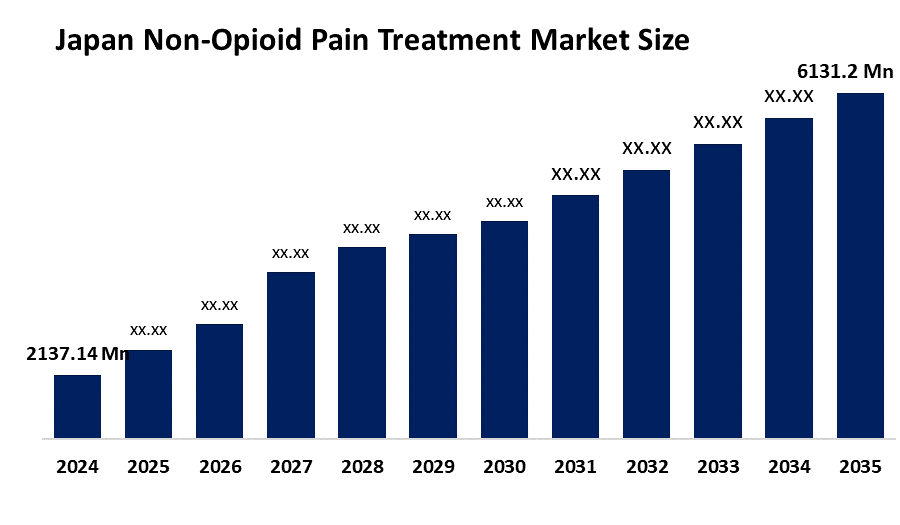
- Japan Non-Opioid Pain Treatment Market Size 2024: USD 2137.14 million
- Japan Non-Opioid Pain Treatment Market Size 2035: USD 6131.2 million
- Japan Non-Opioid Pain Treatment Market CAGR 2024: 10.05%
- Japan Non-Opioid Pain Treatment Market Segments: Products, Therapeutic Applications, and Distribution Channel.
Get more details on this report -
The Japan non-opioid pain treatment market includes drugs and products that relieve pain without opioids, such as NSAIDs, acetaminophen, topical analgesics, and patches. These treatments target conditions like arthritis, musculoskeletal pain, headaches, and neuropathic pain. The market is growing in Japan due to rising chronic pain cases, an ageing population, and demand for safer, non-addictive alternatives. Furthermore, the Japan non opioid pain treatment market is growing, fueled by the increasing prevalence of chronic pain, arthritis, and musculoskeletal disorders among Japans ageing population. Rising awareness of opioid risks drives demand for safer alternatives. Expansion of OTC products, new drug formulations, and easy access through pharmacies and online platforms also support growth.
The Japan government enforces strict regulations on non-opioid pain medications to ensure safety, efficacy, and quality. Prescription analgesics are partially covered under health insurance, improving accessibility. Policies encourage research into safer pain management alternatives to reduce opioid dependence. Guidelines for OTC and prescription drug approvals create a structured market environment, promoting responsible use and innovation.
Japan non opioid pain treatment market trends include growing use of topical analgesics and patches, preference for OTC non opioid drugs, and combination therapies. Digital health tools, telemedicine, and personalised pain management plans are emerging. Pharmaceutical companies focus on safer, fast-acting, and long-lasting formulations. Ageing demographics drive demand for chronic pain management solutions, while e-commerce and online pharmacies expand accessibility.
Market Dynamics of the Japan Non-Opioid Pain Treatment Market:
The Japan non opioid pain treatment market is drivers include rising chronic pain prevalence, arthritis, musculoskeletal conditions, and an ageing population. Growing awareness of opioid risks boosts non opioid adoption. Technological advancements in drug formulation and delivery methods improve efficacy. Expansion of OTC options, better access through retail and online pharmacies, and increased healthcare spending all contribute to the growth of Japans non opioid pain treatment market.
The Japan non opioid pain treatment market is restrained by high prescription drug costs and limited insurance coverage. Side effects and strict regulatory approvals slow new product launches. Competition from alternative therapies such as physiotherapy, herbal remedies, and lifestyle interventions reduces adoption. Market saturation in common pain segments and fluctuating raw material prices also challenge steady growth.
Opportunities exist in developing fast-acting, long-lasting, and combination non-opioid formulations. Topical analgesics, patches, and personalised treatment solutions offer growth potential. Online pharmacies and e-commerce channels allow a wider market reach. Collaboration between pharmaceutical companies, research institutes, and healthcare providers can drive innovation. Rising demand for safe, effective pain management solutions creates favourable conditions for market growth in Japan.
Japan Non-Opioid Pain Treatment Market Report Coverage
| Report Coverage | Details |
|---|---|
| Base Year: | 2024 |
| Market Size in 2024: | USD 2137.14 Million |
| Forecast Period: | 2025-2035 |
| Forecast Period CAGR 2025-2035 : | CAGR of 10.05 % |
| 2035 Value Projection: | USD 6131.2 Million |
| Historical Data for: | 2020-2023 |
| No. of Pages: | 210 |
| Tables, Charts & Figures: | 90 |
| Segments covered: | By Distribution Channel. |
| Companies covered:: | Hisamitsu,Takeda,Teikoku,Pfizer,Sanofi And Others Players |
| Pitfalls & Challenges: | COVID-19 Empact, Challenges, Future, Growth, & Analysis |
Get more details on this report -
Market Segmentation
The Japan non-opioid pain treatment market share is classified into products, therapeutic applications, and distribution channels.
By Products:
The Japan non opioid pain treatment market is divided by products into medical cannabis, menthol- containing, omega fatty acid containing, botulinum toxins, and capsaicin derived. Among these, the menthol containing segment dominated the share in 2024 and is anticipated to grow at a remarkable CAGR during the forecast period. The menthol containing segment dominates because it is widely available, affordable, and commonly used for muscle and joint pain. They are popular as OTC topical patches and creams, offering quick localised relief with minimal side effects. Strong consumer trust and frequent daily use increase their overall market share.
By Therapeutic Applications:
The Japan non-opioid pain treatment market is divided by therapeutic applications into orthopaedic and musculoskeletal pain, neuropathic pain, cancer pain, and other pain. Among these, the orthopaedic and musculoskeletal pain segment dominated the share in 2024 and is anticipated to grow at a remarkable CAGR during the forecast period. The orthopaedic and musculoskeletal pain segment dominates because Japan has a large ageing population suffering from arthritis, back pain, and joint disorders. These conditions require long-term and regular pain management. Non-opioid treatments such as patches, NSAIDs, and topical analgesics are widely used for these issues, leading to higher demand compared to neuropathic or cancer pain treatments.
By Distribution Channel:
The Japan non-opioid pain treatment market is divided by distribution channel into hospitals, pharmacies, retail pharmacies, drug stores, and mail order pharmacies. Among these, the retail pharmacies segment dominated the share in 2024 and is anticipated to grow at a remarkable CAGR during the forecast period. The retail pharmacies segment dominates because most non-opioid pain treatments are available over the counter and do not require prescriptions. Consumers prefer these outlets for convenience, easy accessibility, and immediate purchase. Wide product variety, strong distribution networks, and high consumer footfall increase sales compared to hospitals and mail-order pharmacies.
Competitive Analysis:
The report offers the appropriate analysis of the key organisations/companies involved within the Japan non-opioid pain treatment market, along with a comparative evaluation primarily based on their product offering, business overviews, geographic presence, enterprise strategies, segment market share, and SWOT analysis. The report also provides an elaborate analysis focusing on the current news and developments of the companies, which includes product development, innovations, joint ventures, partnerships, mergers & acquisitions, strategic alliances, and others. This allows for the evaluation of the overall competition within the market.
Top Key Companies in Japan Non-Opioid Pain Treatment Market:
- Hisamitsu
- Takeda
- Pfizer Inc.
- Glaxo
- Sanofi
- Bayer
- Endo
- Teva
- Johnson
- Other
Key Target Audience
- Market Players
- Investors
- End-users
- Government Authorities
- Consulting and Research Firm
- Venture capitalists
- Value-Added Resellers (VARs)
Market Segment
This study forecasts revenue at the Japan, regional, and country levels from 2020 to 2035. Spherical Insights has segmented the Japan non-opioid pain treatment market based on the below-mentioned segments:
Japan Non-Opioid Pain Treatment Market, By Products.
- Medical Cannabis
- Menthol- Containing
- Omega Fatty Acid Containing
- Botulinum Toxins
- Capsaicin-Derived
Japan Non-Opioid Pain Treatment Market, By Therapeutic Applications
- Orthopaedic and Musculoskeletal Pain
- Neuropathic Pain
- Cancer Pain
- Other Pain
Japan Non-Opioid Pain Treatment Market, by Distribution Channel.
- Hospitals
- Pharmacies
- Retail Pharmacies
- Drug Stores
- Mail Order Pharmacies
Frequently Asked Questions (FAQ)
-
Q 1: What is the Japan non-opioid pain treatment market size?japan non-opioid pain treatment market is expected to grow from USD 2137.14 million in 2024 to USD 6131.2 million by 2035, growing at a CAGR of 10.05 % during the forecast period 2025-2035.
-
Q 2: What are the key growth drivers of the Japan non-opioid pain treatment market?The Japan non-opioid pain treatment market includes growing, rising chronic pain cases, an ageing population, opioid risk awareness, OTC availability, improved formulations, and increased healthcare access.
-
Q 3: What factors restrain the Japan non-opioid pain treatment market?The Japan non-opioid pain treatment market is restrained by high drug costs, strict regulations, side effects, competition from alternative therapies, and limited insurance coverage.
-
Q 4: How is the Japan non-opioid pain treatment market segmented by therapeutic applications?The Japan non-opioid pain treatment market is segmented into orthopaedic and musculoskeletal pain, neuropathic pain, cancer pain, and other pain
-
Q 5: Who are the key players in the Japan non-opioid pain treatment market?Key companies operating in the Japan non-opioid pain treatment market include Intuitive, Mitsubishi Chemical Group Corporation, Nippon Shokubai Co., Ltd., Tosoh Corporation, Mitsui Chemicals, Inc., NOF Corporation, Kawasaki Kasei Chemicals Ltd., Honshu Chemical Industry Co., Ltd., Sumitomo Chemical Co., Ltd., DIC Corporation, UBE Corporation, and others
Need help to buy this report?