Japan Life Science Analytical Instruments Market Size, Share, By Type (Microscopy, Chromatography, Cell Counting, Spectroscopy, PCR, Electrophoresis, Flow cytometry, Centrifuges, Next-Generation Sequencing, and Others), By Application (Clinical and Diagnostics Applications, Research Applications, and Others), Japan Life Science Analytical Instruments Market Insights, Industry Trend, Forecasts to 2035
Industry: Healthcare
Japan Life Science Analytical Instruments Market Insights Forecasts to 2035
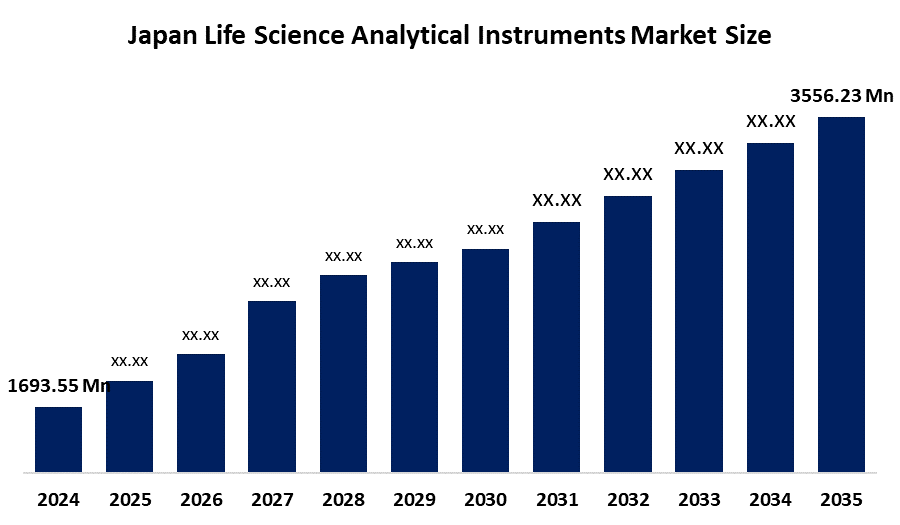
- Japan Life Science Analytical Instruments Market Size 2024: USD 1693.55 Million
- Japan Life Science Analytical Instruments Market Size 2035: USD 3556.23 Million
- Japan Life Science Analytical Instruments Market CAGR 2024: 6.98%
- Japan Life Science Analytical Instruments Market Segments: Application and End User.
Get more details on this report -
The Japan life science analytical instruments market comprises advanced laboratory instruments used to analyse biological samples, including chromatography systems, mass spectrometers, microscopes, PCR machines, and sequencing tools for research, diagnostics, and quality control in life sciences. These instruments help scientists measure, identify, and quantify molecules and cells with precision, supporting drug discovery, clinical studies, and biotech innovations in Japan. Furthermore, the Japan life science analytical instruments market is expected to grow due to expanding biotechnology and pharmaceutical research, heightened need for precise diagnostic and analytical data, and increased funding for life science research. Japan's ageing population drives demand for diagnostic tools and innovative therapies. Adoption of high-performance instruments like mass spectrometry, chromatography, and next-generation sequencing expands as labs seek faster, accurate results for drug development and personalised medicine applications.
The Japan government has adopted several policies that support innovation in the field of life sciences and analytical technologies, with funding and support programs provided by the government through agencies like METI and AMED. The government is encouraging biopharmaceutical and regenerative medicine research, which in turn will help in the adoption of advanced analytical instruments. In addition, the regulations are also changing in favor of the adoption of advanced analytical instruments.
Trends in the field of analytical instruments include the incorporation of artificial intelligence and automation in analytical instruments for the efficient analysis of complex data, the development of precise analytical instruments, high-throughput analytical instruments, and the ability of analytical instruments to perform multi-omics research. The development of portable analytical instruments is also a significant trend in the field of analytical instruments, including miniaturized analytical instruments for research conducted at the field level, and the collaboration between analytical instrument manufacturers and research institutions is also driving the development of innovations in the field of analytical instruments in Japan.
Japan Life Science Analytical Instruments Market Report Coverage
| Report Coverage | Details |
|---|---|
| Base Year: | 2024 |
| Market Size in 2024: | USD 1693.55 Million |
| Forecast Period: | 2024-2035 |
| Forecast Period CAGR 2024-2035 : | 6.98 % |
| 2035 Value Projection: | USD 3556.23 Million |
| Historical Data for: | 2020-2023 |
| No. of Pages: | 259 |
| Tables, Charts & Figures: | 102 |
| Segments covered: | By Type, By Application |
| Companies covered:: | Shimadzu Corporation, JEOL Ltd., Hitachi High-Tech Corporation, Horiba, Ltd., Hamamatsu Photonics K.K., Sysmex Corporation, Rigaku Corporation, and Other Key Players |
| Pitfalls & Challenges: | COVID-19 Empact, Challenges, Future, Growth, & Analysis |
Get more details on this report -
Market Dynamics of the Japan Life Science Analytical Instruments Market:
The driving forces behind the growth of the Japan life science analytical instruments market include increased investments in R&D activities in the field of life sciences, the need for precision medicine, and the adoption of high-end analytical instruments for the development of drugs and diagnostics. The need for quality control is also driving the growth of the analytical instruments market in the country, especially in the field of biopharmaceuticals and industrial processes.
The restraining factors for the growth of the Japan life science analytical instruments market include the high cost of high-end analytical instruments, the complexities involved in the approval process, and the lack of skilled personnel to operate the analytical instruments and interpret the results, budget constraints in research institutions, and the high cost of maintenance of the instruments.
The opportunities exist in developing Al-enabled analytical systems for real-time data interpretation, portable high-precision instruments, and modular automated lab workflows. Expansion into environmental monitoring, bioprocess quality control, and point-of-care diagnostics offers new market segments. Rising adoption of personalised medicine increases demand for targeted analytical tools. Collaborations between instrument makers and research institutions also create openings for innovation and specialised product offerings.
Market Segmentation
The Japan life science analytical instruments market share is classified into applications and end user.
By Application:
The Japan life science analytical instruments market is divided by application into clinical and diagnostic applications, research applications, and others. Among these, the research applications segment dominated the share in 2024 and is anticipated to grow at a remarkable CAGR during the forecast period. The research applications segment dominates due to pharmaceutical, biotechnology, and academic institutions that heavily use advanced instruments for drug discovery, molecular analysis, genomics, and proteomics. High R&D investments, focus on innovation, and demand for precision medicine drive extensive adoption of analytical tools in research laboratories.
By End User:
The Japan life science analytical instruments market is divided by end user into pharmaceutical and biotechnology companies, hospitals and diagnostic laboratories, and others. Among these, the pharmaceutical and biotechnology companies segment dominated the share in 2024 and is anticipated to grow at a remarkable CAGR during the forecast period. The pharmaceutical and biotechnology companies segment dominates because these companies invest significantly in advanced instruments for drug discovery, development, quality control, and molecular research. High R&D spending, focus on innovation, and demand for precision medicine drive extensive adoption compared to hospitals, diagnostic labs, or others.
Competitive Analysis:
The report offers the appropriate analysis of the key organisations/companies involved within the Japan life science analytical instruments market, along with a comparative evaluation primarily based on their product offering, business overviews, geographic presence, enterprise strategies, segment market share, and SWOT analysis. The report also provides an elaborate analysis focusing on the current news and developments of the companies, which includes product development, innovations, joint ventures, partnerships, mergers & acquisitions, strategic alliances, and others. This allows for the evaluation of the overall competition within the market.
Top Key Companies in Japan Life Science Analytical Instruments Market:
- Shimadzu Corporation
- JEOL Ltd.
- Hitachi High-Tech Corporation
- Horiba, Ltd.
- Hamamatsu Photonics K.Κ.
- Sysmex Corporation
- Rigaku Corporation
- Other
Key Target Audience
- Market Players
- Investors
- End-users
- Government Authorities
- Consulting and Research Firm
- Venture capitalists
- Value-Added Resellers (VARs)
Market Segment
This study forecasts revenue at the Japan, regional, and country levels from 2020 to 2035. Spherical Insights has segmented the Japan life science analytical instruments market based on the below-mentioned segments:
Japan Life Science Analytical Instruments Market, By Application
- Clinical and Diagnostics Applications
- Research Applications
- Others
Japan Life Science Analytical Instruments Market, By End Use.
- Pharmaceutical and Biotechnology Companies
- Hospitals and Diagnostic Laboratories
- Others
Frequently Asked Questions (FAQ)
-
What is the Japan life science analytical instruments market?The Japan life science analytical instruments market comprises advanced laboratory tools such as chromatography systems, microscopes, spectrometers, PCR instruments, and sequencing platforms used to analyze biological and chemical samples in research and clinical settings.
-
What is the current market size and growth outlook?The market was valued at USD 1,722.7 million in 2024 and is projected to reach USD 3,534.9 million by 2035, growing at a CAGR of 6.75% during the forecast period.
-
What are the major factors driving market growth in Japan?Key growth drivers include Japan’s aging population, increasing prevalence of chronic diseases, rising demand for advanced diagnostics, and growing focus on personalized medicine and genomics.
-
Which application segment dominates the market?The clinical and diagnostics applications segment dominated the market in 2024, supported by the need for accurate disease detection, monitoring, and improved patient outcomes.
-
What are the key challenges faced by the Japan life science analytical instruments market?High acquisition and maintenance costs of advanced systems, budget constraints in public institutions, and shortages of skilled professionals limit broader adoption.
-
Who are the leading companies in the Japan life science analytical instruments market?Major players include Shimadzu Corporation, JEOL Ltd., Hitachi High-Tech Corporation, Horiba, Ltd., Hamamatsu Photonics K.K., Sysmex Corporation, Rigaku Corporation, and other regional and global manufacturers.
-
Q 1: What is the Japan life science analytical instruments market size? Japan life science analytical instruments market is expected to grow from USD 1693.55 million in 2024 to USD 3556.23 million by 2035, growing at a CAGR of 6.98 % during the forecast period 2025-2035.
-
Q 2: What are the key growth drivers of the Japan life science analytical instruments market? The Japan life science analytical instruments market includes drivers of increasing R&D investments, growing pharmaceutical and biotechnology research, rising demand for precise diagnostics, advanced analytical technologies, and a focus on personalised medicine.
-
Q 3: What factors restrain the Japan life science analytical instruments market? The Japan life science analytical instruments market is restrained by high instrument costs, complex regulatory approvals, limited skilled professionals, maintenance expenses, and budget constraints in research institutions and laboratories.
-
Q 4: How is the Japan life science analytical instruments market segmented by application? The Japan life science analytical instruments market is segmented into clinical and diagnostics applications, research applications, and others
-
Q 5: Who are the key players in the Japan life science analytical instruments market? Key companies operating in the Japan life science analytical instruments market include Shimadzu Corporation, JEOL Ltd., Hitachi High‑Tech Corporation, Horiba, Ltd., Hamamatsu Photonics K.K., Sysmex Corporation, Rigaku Corporation, and other leading players.
Need help to buy this report?