Japan Healthcare Interoperability Solutions Market Size, Share, By Level (Foundational, Structural, and Semantic), By Type (Solutions and Services) Japan Healthcare Interoperability Solutions Market Industry Trend, Forecasts to 2035
Industry: Healthcare
Japan Healthcare Interoperability Solutions Market Insights Forecasts to 2035
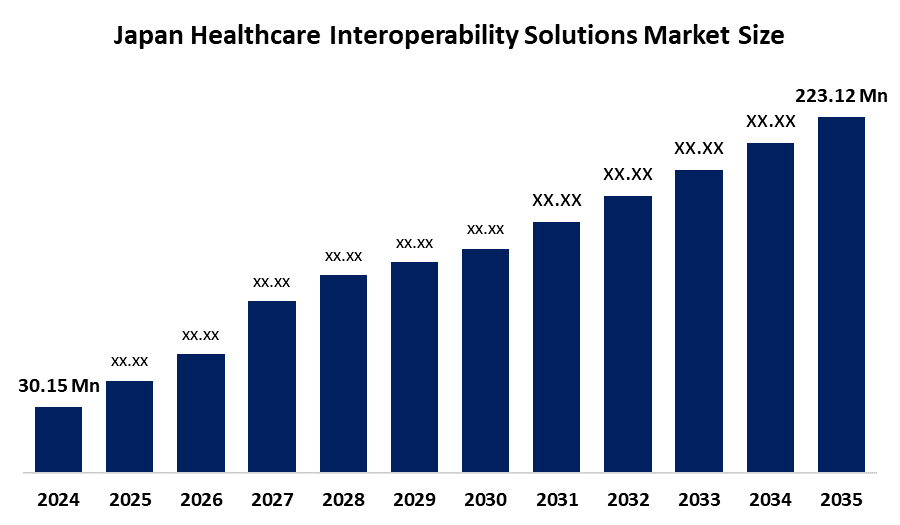
- Japan Healthcare Interoperability Solutions Market Size 2024: USD 30.15 Million
- Japan Healthcare Interoperability Solutions Market Size 2035: USD 223.12 Million
- Japan Healthcare Interoperability Solutions Market CAGR 2024: 19.96%
- Japan Healthcare Interoperability Solutions Market Segments: Level and Types.
Get more details on this report -
Japan Healthcare Interoperability Solutions Market Size includes systems and technologies that let different healthcare IT platforms, such as hospitals, clinics, labs, and pharmacies, exchange and use patient health data seamlessly. These solutions help clinicians access accurate records, improve care coordination, avoid duplicate tests, and speed up clinical decisions by enabling secure data sharing and connections across multiple healthcare providers. Furthermore, the Japan healthcare interoperability solutions market is growing because Japan is increasing digital healthcare adoption. More hospitals are using electronic health records and cloud systems. The ageing population requires better data sharing between providers. Government digital transformation plans also support growth. Rising chronic diseases and demand for efficient healthcare services further push hospitals to adopt connected and interoperable IT solutions.
The Japan government promotes healthcare digitalisation through the medical DX strategy led by the Ministry of Health, Labour and Welfare. Policies encourage electronic medical record standardisation and secure nationwide data sharing. The government supports common data standards, cloud adoption, and information exchange platforms to improve care quality, efficiency, and patient access across healthcare institutions nationwide.
Japan Healthcare Interoperability Solutions Market Size trends include cloud-based interoperability platforms, integration of artificial intelligence, and real-time patient data exchange. Hospitals are adopting standardised data formats like FHIR. Telemedicine and remote monitoring systems are increasing the demand for connected healthcare systems. There is also a growing focus on cybersecurity, mobile health applications, and patient-centred data access solutions.
Japan Healthcare Interoperability Solutions Market Report Coverage
| Report Coverage | Details |
|---|---|
| Base Year: | 2024 |
| Market Size in 2024: | USD 30.15 Million |
| Forecast Period: | 2024-2035 |
| Forecast Period CAGR 2024-2035 : | 19.96 % |
| 2035 Value Projection: | USD 223.12 Million |
| Historical Data for: | 2020-2023 |
| No. of Pages: | 240 |
| Tables, Charts & Figures: | 100 |
| Segments covered: | By Level ,By Type |
| Companies covered:: | Fujitsu Limited, MEDLEY, Inc., Inter Systems Japan, Infor, ViSolve, Inc., iNTERFACEWARE Inc., Epic Systems Corporation, Cerner Corporation, and Other Key Players |
| Pitfalls & Challenges: | COVID-19 Empact, Challenges, Future, Growth, & Analysis |
Get more details on this report -
Market Dynamics of the Japan Healthcare Interoperability Solutions Market:
The Japan Healthcare Interoperability Solutions Market Size is drivers include Japan’s rapidly ageing population, rising healthcare costs, and increasing chronic diseases. Healthcare providers need accurate and fast data sharing to improve treatment outcomes. Demand for better care coordination and efficiency pushes hospitals toward interoperable systems. Technological advancements and stronger digital infrastructure also encourage organisations to upgrade and integrate healthcare IT systems.
The Japan Healthcare Interoperability Solutions Market Size faces restraints such as high implementation and maintenance costs, especially for small hospitals. Integration with outdated legacy systems is complex and time-consuming. Strict data privacy regulations increase compliance burden. Cybersecurity risks create hesitation among providers. Limited IT workforce and resistance to change among healthcare staff also slow down adoption and system upgrades.
The opportunities in cloud-based platforms, AI-powered data exchange, and remote patient monitoring integration. Rural healthcare facilities need better connectivity solutions. Startups can develop innovative interoperability tools. Expansion of telehealth services creates demand for seamless data flow. Long-term opportunities exist in predictive analytics and nationwide health information exchange systems, improving healthcare quality.
Market Segmentation
The Japan Healthcare Interoperability Solutions Market share is classified into levels and types.
By Raw Material:
The Japan Healthcare Interoperability Solutions Market Size is divided by raw material into foundational, structural and semantic. Among these, the structural segment dominated the share in 2024 and is anticipated to grow at a remarkable CAGR during the forecast period. The structural segment dominates because Japan hospitals mainly focus on standardising data formats to connect existing electronic medical record systems. It is easier to implement than semantic interoperability and provides immediate benefits like organised data exchange and improved workflow. Government support for standardised data frameworks also accelerates adoption across healthcare institutions nationwide.
By Types:
The Japan Healthcare Interoperability Solutions Market Size is divided by type into solutions and services. Among these, the solutions segment dominated the share in 2024 and is anticipated to grow at a remarkable CAGR during the forecast period. The solutions dominate because hospitals and healthcare organisations primarily invest in software platforms to enable direct data exchange and system integration. These solutions provide long-term operational benefits and scalability. While services are essential for support and maintenance, the main spending focus remains on purchasing and upgrading interoperability software systems.
Competitive Analysis:
The report offers the appropriate analysis of the key organisations/companies involved within the Japan Healthcare Interoperability Solutions Market Size, along with a comparative evaluation primarily based on their product offering, business overviews, geographic presence, enterprise strategies, segment market share, and SWOT analysis. The report also provides an elaborate analysis focusing on the current news and developments of the companies, which includes product development, innovations, joint ventures, partnerships, mergers & acquisitions, strategic alliances, and others. This allows for the evaluation of the overall competition within the market.
Top Key Companies in Japan Healthcare Interoperability Solutions Market:
- Fujitsu Limited
- MEDLEY, Inc.
- Inter Systems Japan
- Infor
- ViSolve, Inc.
- iNTERFACEWARE Inc.
- Epic Systems Corporation
- Cerner Corporation
- Other
Key Target Audience
- Market Players
- Investors
- End-users
- Government Authorities
- Consulting and Research Firm
- Venture capitalists
- Value-Added Resellers (VARs)
Market Segment
This study forecasts revenue at the Japan, regional, and country levels from 2020 to 2035. Spherical Insights has segmented the Japan Healthcare Interoperability Solutions Market Size based on the below-mentioned segments:
Japan Healthcare Interoperability Solutions Market, By Level
- Foundational
- Structural
- Semantic
Japan Healthcare Interoperability Solutions Market, by Types.
- Solutions
- Services
Frequently Asked Questions (FAQ)
-
Q 1: What is the Japan healthcare interoperability solutions market size? Japan healthcare interoperability solutions market is expected to grow from USD 30.15 million in 2024 to USD 223.12 million by 2035, growing at a CAGR of 19.96 % during the forecast period 2025-2035.
-
Q 2: What are the key growth drivers of the Japan healthcare interoperability solutions market? Key growth drivers of Japan’s healthcare interoperability market include an ageing population, increasing chronic diseases, demand for efficient care, digital health adoption, government support, advanced IT infrastructure, and the need for seamless data sharing.
-
Q 3: What factors restrain the Japan healthcare interoperability solutions market? The Japan healthcare interoperability solutions market is restrained by High implementation costs, legacy system integration challenges, strict data privacy regulations, cybersecurity risks, limited IT expertise, and resistance to change.
-
Q 4: How is the Japan healthcare interoperability solutions market segmented by level? The Japan healthcare interoperability solutions market is segmented into foundational, structural and semantic
-
Q 5: Who are the key players in the Japan Healthcare Interoperability Solutions Market? Key companies in the Japan Healthcare Interoperability Solutions Market include Fujitsu Limited, MEDLEY, Inc., InterSystems Japan, Infor, ViSolve, Inc., iNTERFACEWARE Inc., Epic Systems Corporation, Cerner Corporation, and other major players.
Need help to buy this report?