Japan Handbags Market Size, Share, By Product (Tote Bag, Clutch, and Satchel), By Material (Leather, Fabric, and Others), By Distribution Channel (Online and Offline), Japan Handbags Market Insights, Industry Trend, Forecasts to 2035
Industry: Consumer Goods
Japan Handbags Market Insights Forecasts to 2035
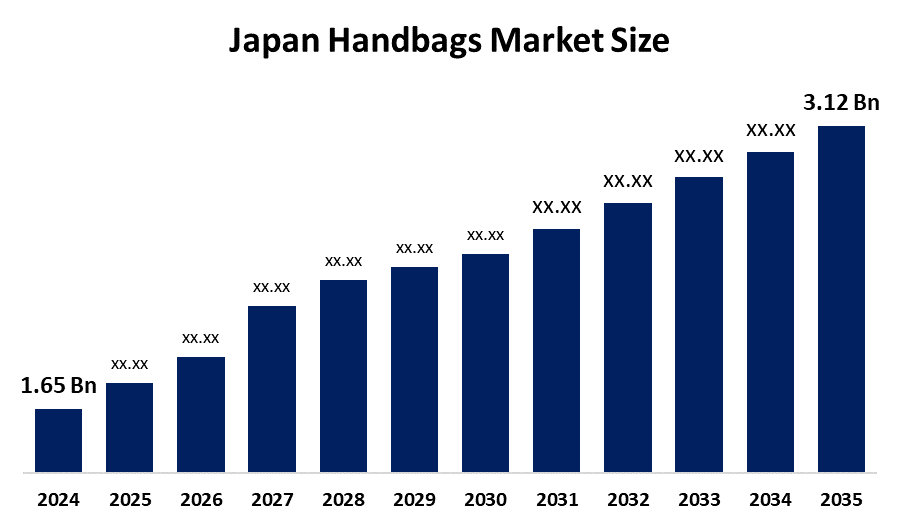
- Japan Handbags Market Size 2024: USD 1.65 Bn
- Japan Handbags Market Size 2035: USD 3.12 Bn
- Japan Handbags Market CAGR 2024: 5.96%
- Japan Handbags Market Segments: Product, Material, and Distribution Channel.
Get more details on this report -
Handbags sold in Japan fall under the category of hand-held containers that provide a means for individuals to carry their personal items, such as wallets, mobile devices, and cosmetics, along with allowing an opportunity to accessorize. Japanese handbag consumers have a culture of monozukuri, which means the way of making, and therefore place a great deal of importance on how long the product lasts, the quality of the stitching, and the quality of the materials used. Minimalism and multifunctionality are becoming very popular among Japanese handbag consumers.
In Japan, the government has taken an active role in promoting the fashion industry by creating initiatives like the "Cool Japan" strategy that promotes Japanese design and craftsmanship to the audience. In recent years, Japanese environmental regulations have led to a growing number of private enterprises launching their own efforts to produce eco-friendly handbags. Increasingly, Japanese companies have begun forming alliances with traditional craftsmen in regions such as Kyoto and Okayama to revive local industries while meeting current standards of sustainability. Furthermore, many free trade agreements have made it possible for luxury raw materials to be imported into Japan, enabling Japanese brands to better compete with their foreign counterparts in the fashion industry.
Japan is changing its handbag industry with advances in technology, especially as smart features are added to handbags and advancements in material science. Today's handbags also have RFID-blocking pockets, built-in wireless charging, and GPS tracking to help reduce the risk of losing handbags. On the manufacturing side, the use of 3D knitting technology and AI-enhanced supply chain development is allowing companies to produce less waste and provide personalized, made-to-order products. Additionally, innovations in synthetic leather and lab-grown materials are offering vegan options that mimic the feel of quality leather.
Market Dynamics of the Japan Handbags Market:
The Japanese Handbags Market Size is driven by the rising disposable income, coupled with the increasing fashion consciousness of Japanese people, which means that many consumers view handbags not only as status symbols but as a form of investment, prioritizing quality over quantity. There is a trend among women who are starting to enter the workforce and have more demands placed on them to look professional, so there is a need for multifunctional bags that are able to fit laptops and other work-related accessories. Also, the increase in e-commerce and the growth of international tourism in cities such as Tokyo and Osaka will have a positive impact on this market.
The main challenges of the handbag market in Japan are the high prices of the premium raw materials needed to produce handbags and a decline in the number of skilled artisans available to produce handbags in Japan. Price-sensitive consumers have shifted to buying from the second-hand market and purchasing lower-priced alternatives due to inflation and volatility in the economy, which has affected the profit margins of mid-tier brands in this market.
Significant opportunities are involved in the Japanese handbags market, such as the rising demand for eco-friendly and sustainable handbags made from recycled or vegan materials. The expansion of e-commerce platforms and luxury resale markets offers new growth avenues. Additionally, integrating smart technologies like RFID and GPS into functional, minimalist designs caters to Japan's tech-savvy, urban demographic.
Japan Handbags Market Report Coverage
| Report Coverage | Details |
|---|---|
| Base Year: | 2024 |
| Market Size in 2024: | USD 1.65 Billion |
| Forecast Period: | 2024-2035 |
| Forecast Period CAGR 2024-2035 : | CAGR Of 5.96% |
| 2035 Value Projection: | USD 3.12 Billion |
| Historical Data for: | 2020-2023 |
| No. of Pages: | 240 |
| Tables, Charts & Figures: | 110 |
| Segments covered: | By Product, By Material |
| Companies covered:: | Yoshida & Co., Ltd. Issey Miyake Tsuchiya Kaban Samantha Thavasa Japan Limited Hamano Leather Crafts Kitamura Co., Ltd. Kiyomoto Co., Ltd. Herz Co., Ltd. Others Key players |
| Pitfalls & Challenges: | COVID-19 Empact, Challenge, Future, Growth, & Analysis |
Get more details on this report -
Market Segmentation
The Japan handbags market share is classified into product, material, and distribution channel.
By Product:
The Japanese Handbags Market is divided by product into tote bags, clutches, and satchels. Among these, the tote bag segment dominated the market in 2024 and is anticipated to grow at a significant CAGR during the forecast period. Tote bags are versatile bags that can be utilized for numerous purposes. Additionally, because they are bigger than other kinds of purses, customers can carry their necessities to workplaces, colleges, and other locations more easily.
By Material:
The Japanese Handbags Market Size is divided by material into leather, fabric, and others. Among these, the leather segment accounted for the largest market share in 2024 and is anticipated to grow at a remarkable CAGR during the forecast period. Fashion-conscious buyers highly value leather handbags since they are seen as a statement of refinement. Since leather bags are regarded as long-term investments, the material's strength and superior quality further add to their appeal. In addition, demand has also been boosted by an increase in disposable income and a growing desire for high-end goods.
By Distribution Channel:
The Japanese handbags market is divided by distribution channel into online and offline. Among these, the online segment is anticipated to grow at the fastest CAGR during the predicted timeframe. This is because more consumers are exploring online platforms due to convenience-driven shopping preferences and increased internet accessibility.
Competitive Analysis:
The report offers the appropriate analysis of the key organisations/companies involved within the Japan Handbags Market, along with a comparative evaluation primarily based on their product offering, business overviews, geographic presence, enterprise strategies, segment market share, and SWOT analysis. The report also provides an elaborative analysis focusing on the current news and developments of the companies, which includes product development, innovations, joint ventures, partnerships, mergers & acquisitions, strategic alliances, and others. This allows for the evaluation of the overall competition within the market.
Top Key Companies in Japan Handbags Market:
- Yoshida & Co., Ltd.
- Issey Miyake
- Tsuchiya Kaban
- Samantha Thavasa Japan Limited
- Hamano Leather Crafts
- Kitamura Co., Ltd.
- Kiyomoto Co., Ltd.
- Herz Co., Ltd.
- Others
Key Target Audience
- Market Players
- Investors
- End-users
- Government Authorities
- Consulting and Research Firm
- Venture capitalists
- Value-Added Resellers (VARs)
Market Segment
This study forecasts revenue at the Japan, regional, and country levels from 2020 to 2035. Spherical Insights has segmented the Japan Handbags Market Size based on the below-mentioned segments:
Japan Handbags Market, By Product
- Tote Bag
- Clutch
- Satchel
Japan Handbags Market, By Material
- Leather
- Fabric
- Others
Japan Handbags Market, By Distribution Channel
- Online
- Offline
Frequently Asked Questions (FAQ)
-
What is the projected market size of the Japanese handbags market by 2035?The Japan handbags market is projected to grow from USD 1.65 billion in 2024 to USD 3.12 billion by 2035
-
What is the expected CAGR of the Japan handbags market during the forecast period?The market is expected to grow at a CAGR of 5.96% during the forecast period from 2025 to 2035.
-
Which product segment dominated the Japan handbags market in 2024?The tote bag segment dominated the market in 2024 due to its versatility and suitability for work, travel, and daily use.
-
Which material segment holds the largest share in the Japan handbags market?The leather segment holds the largest market share, driven by consumer preference for durability, premium quality, and long-term value.
-
Which distribution channel is expected to grow the fastest in the forecast period?The online distribution channel is expected to grow at the fastest CAGR due to increasing e-commerce adoption and convenience-driven shopping.
-
Who are the key players in the Japan handbags market?Key players include Yoshida & Co., Ltd., Issey Miyake, Tsuchiya Kaban, Samantha Thavasa Japan Limited, Hamano Leather Crafts, and Kitamura Co., Ltd.
Need help to buy this report?