Japan GM2 Gangliosidosis Market Size, Share, By Therapeutic Modality (Gene Therapy, Enzyme Replacement Therapy, Substrate-Reduction Therapy, Pharmacological Chaperone Therapy, Stem-Cell Transplant), By Disease Type (Tay-Sachs Disease, Sandhoff Disease, AB Variant GM2), By Delivery Route (Intrathecal, Intravenous, Intracerebral, Oral), By End User (Hospitals, Specialty Clinics, Research & Academic Institutes, Home-Care Settings), Japan GM2 Gangliosidosis Market Insights, Industry Trend, Forecasts to 2035
Industry: Healthcare
Japan GM2 Gangliosidosis Market Insights Forecasts to 2035
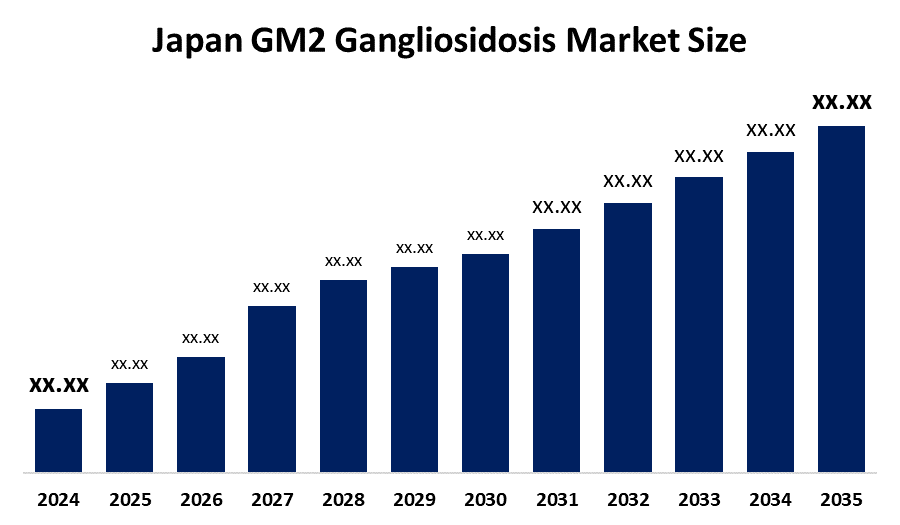
- Japan GM2 Gangliosidosis Market CAGR 2024: 7.3%
- Japan GM2 Gangliosidosis Market Segments: Therapeutic Modality, Disease Type, Delivery Route, and End User
Get more details on this report -
GM2 gangliosidosis represents a collection of uncommon genetic disorders which result from a complete lack of beta-hexosaminidase enzymatic activity, leading to GM2 ganglioside accumulation within the central nervous system. The disorder includes Tay-Sachs disease, Sandhoff disease, and the AB variant. The disorder primarily impacts infants and children through progressive neurodegeneration and motor dysfunction and cognitive decline. The medical condition requires complicated treatment procedures which aim to slow down disease progression while treating existing symptoms and creating new treatment methods. Diagnostic confirmation typically involves enzyme assays, genetic testing, and clinical assessment. The disease’s rarity and its severe impact together with its requirement for lifelong treatment create significant clinical and financial challenges which affect patients and their families and the healthcare system throughout Japan.
The market development results from new treatment methods which include gene therapy and substrate-reduction therapy and enzyme replacement trials and pharmacological chaperones that target primary disease mechanisms. The development of intrathecal and intracerebral treatment methods enables medical professionals to treat blood-brain barrier difficulties. The regulatory system supports local clinical studies and new treatment implementation through its focus on rare disease treatment routes and orphan drug designation. The future provides opportunities for scalable gene-editing platforms and AI diagnostics and academic hospital research partnerships which will accelerate development of new therapies while enhancing patient life quality.
Japan GM2 Gangliosidosis Market Report Coverage
| Report Coverage | Details |
|---|---|
| Base Year: | 2024 |
| Forecast Period: | 2024-2035 |
| Forecast Period CAGR 2024-2035 : | 7.3% |
| Historical Data for: | 2020-2023 |
| No. of Pages: | 140 |
| Tables, Charts & Figures: | 100 |
| Segments covered: | By Therapeutic Modality ,By Disease Type |
| Companies covered:: | JCR Pharmaceuticals Co., Ltd., MEDIPAL Holdings Corporation, Sanofi K.K., BioMarin Pharmaceutical Japan K.K., and Other Key Players |
| Pitfalls & Challenges: | Covid 19 Impact Challanges, Future, Growth and Analysis |
Get more details on this report -
Market Dynamics of the Japan GM2 Gangliosidosis Market:
The Japan GM2 Gangliosidosis Market Size is driven by the increasing focus on rare disease management and the rising development of innovative therapies such as gene therapy, enzyme replacement therapy, and substrate-reduction therapy. Expansion of newborn screening programs and early diagnosis initiatives enables timely intervention, while hospitals and specialty clinics are investing in advanced therapeutic administration. Growing awareness among caregivers, improved funding for clinical research, and collaborations between academic institutes and biotechnology companies further accelerate adoption of novel treatment approaches in Japan.
The Japan GM2 Gangliosidosis Market Size is restrained by the high costs associated with advanced therapies and complex delivery methods such as intrathecal and intracerebral administration. Limited patient populations for this ultra-rare disorder reduce clinical trial feasibility and therapy scalability. Regulatory complexities, strict safety protocols, and a shortage of specialized healthcare professionals skilled in rare disease treatment slow down market penetration, especially in smaller outpatient and home-care settings.
The Japan GM2 Gangliosidosis Market Size presents significant opportunities through AI-assisted diagnostics, modular therapy systems for outpatient and home-care facilities, and improved intrathecal and gene-editing delivery platforms. Increased collaboration between hospitals, research institutes, and biotech firms can accelerate translational research, enhance early intervention, and expand access to next-generation therapies. Growing interest in personalized medicine and rare disease frameworks in Japan further supports long-term market potential and investment opportunities.
Market Segmentation
The Japan GM2 Gangliosidosis Market share is classified into therapeutic modality, disease type, delivery route, end user.
By Therapeutic Modality:
The Japan GM2 Gangliosidosis Market Size is divided by therapeutic modality into gene therapy, enzyme replacement therapy, substrate-reduction therapy, pharmacological chaperone therapy, and stem-cell transplant. Among these, the gene therapy segment dominated the share in 2024 and is anticipated to grow at a remarkable CAGR during the forecast period. Gene therapy dominates due to its potential for long-term disease correction, targeting the underlying genetic defect, increasing clinical trial activity in rare GM2 disorders, and strong interest from hospitals and research institutes for innovative curative approaches.
By Disease Type:
The Japan GM2 Gangliosidosis Market Size is divided by disease type into Tay-Sachs disease, Sandhoff disease, and AB variant GM2. Among these, the Tay-Sachs disease segment dominated the share in 2024 and is anticipated to grow at a remarkable CAGR during the forecast period. Tay-Sachs dominates because of higher patient prevalence, increasing newborn screening programs, specialized clinical trial focus, and concentrated efforts by research centers and hospitals to develop targeted therapies.
By Delivery Route:
The Japan GM2 Gangliosidosis Market Size is divided by delivery route into intrathecal, intravenous, intracerebral, and oral. Among these, the intrathecal segment dominated the share in 2024 and is anticipated to grow at a remarkable CAGR during the forecast period. Intrathecal delivery dominates due to its ability to bypass the blood-brain barrier, deliver therapeutics directly to the CNS, reduce systemic exposure, and enhance efficacy in neurological GM2 treatment trials.
By End Use:
The Japan GM2 Gangliosidosis Market Size is divided by end use into hospitals, specialty clinics, research & academic institutes, and home-care settings. Among these, the hospitals segment dominated the share in 2024 and is anticipated to grow at a remarkable CAGR during the forecast period. Hospitals dominate because they provide centralized facilities for advanced therapy administration, access to specialized physicians, infrastructure for gene and enzyme treatments, and integration with ongoing clinical trials for rare GM2 disorders.
Competitive Analysis:
The report offers the appropriate analysis of the key organisations/companies involved within the Japan GM2 Gangliosidosis Market Size, along with a comparative evaluation primarily based on their product offering, business overviews, geographic presence, enterprise strategies, segment market share, and SWOT analysis. The report also provides an elaborative analysis focusing on the current news and developments of the companies, which includes product development, innovations, joint ventures, partnerships, mergers & acquisitions, strategic alliances, and others. This allows for the evaluation of the overall competition within the market.
Top Key Companies in Japan GM2 Gangliosidosis Market:
- JCR Pharmaceuticals Co., Ltd.
- MEDIPAL Holdings Corporation
- Sanofi K.K.
- BioMarin Pharmaceutical Japan K.K.
- Others
Key Target Audience
- Market Players
- Investors
- End-users
- Government Authorities
- Consulting and Research Firm
- Venture capitalists
- Value-Added Resellers (VARs)
Market Segment
This study forecasts revenue at the Japan, regional, and country levels from 2020 to 2035. Spherical Insights has segmented the Japan GM2 Gangliosidosis Market Size based on the below-mentioned segments:
Japan GM2 Gangliosidosis Market, By Therapeutic Modality
- Gene Therapy
- Enzyme Replacement Therapy
- Substrate-Reduction Therapy
- Pharmacological Chaperone Therapy
- Stem-Cell Transplant
Japan GM2 Gangliosidosis Market, By Disease Type
- Tay-Sachs Disease
- Sandhoff Disease
- AB Variant GM2
Japan GM2 Gangliosidosis Market, By Delivery Route
- Intrathecal
- Intravenous
- Intracerebral
- Oral
Japan GM2 Gangliosidosis Market, By End User
- Hospitals
- Specialty Clinics
- Research & Academic Institutes
- Home-Care Settings
Frequently Asked Questions (FAQ)
-
Q:What is the Japan GM2 gangliosidosis market size?A: Japan GM2 gangliosidosis market is expected to grow at a CAGR of 7.3% during the forecast period 2025-2035.
-
Q: What are the key growth drivers of the market?A: Market growth is driven by the rise in pharmaceutical and biotechnology R&D activities, increasing chronic and rare disease cases, demand for faster drug development, digital and decentralized trial models, AI and data analytics adoption, and government support for clinical research.
-
Q: What factors restrain the Japan GM2 gangliosidosis market?A: Market restraints include high operational and compliance costs, long regulatory approval periods, limited patient populations, communication and cultural barriers, and lack of experienced clinical research professionals, which slow trial execution and increase development costs.
-
Q: Who are the key players in the Japan GM2 gangliosidosis market?A: Key companies include JCR Pharmaceuticals Co., Ltd., MEDIPAL Holdings Corporation, Sanofi K.K., BioMarin Pharmaceutical Japan K.K., and others.
-
Q: Who are the target audiences for this market report?A: The report targets market players, investors, end-users, government authorities, consulting and research firms, venture capitalists, and value-added resellers (VARs).
Need help to buy this report?