Japan Food Allergy Market Size, Share, By Allergen Type (Dairy Products, Peanuts, Poultry Products, Wheat, Soy, and Other), By Drug Type (Immunotherapy, Antihistamines, and Epinephrine), By End-use (Hospital Pharmacies, Retail Pharmacies, and Others), Japan Food Allergy Market Insights, Industry Trend, Forecasts to 2035.
Industry: Healthcare
Japan Food Allergy Market Insights & Forecast to 2035
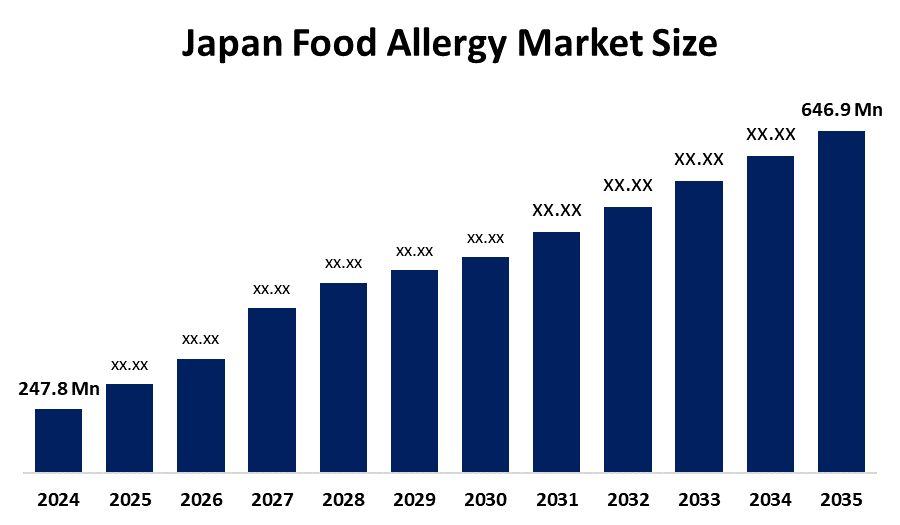
- Japan Food Allergy Market Size (2024): USD 247.8 Mn
- Japan Food Allergy Market Size (2035): USD 646.9 Mn
- Japan Food Allergy Market CAGR (2024–2035): 9.12%
- Market Segmentation: By Allergen Type, Drug Type, and End Use
Get more details on this report -
Japan’s food allergy market encompasses products and services related to the prevention, diagnosis, and treatment of food allergies. This includes allergen-free and hypoallergenic food products, allergen labeling solutions, diagnostic tests, oral immunotherapy, and emergency treatments. The market is supported by Japan’s highly developed food processing industry, robust healthcare infrastructure, and growing consumer demand for clean-label and functional food products.Government initiatives in Japan play a significant role in supporting the food allergy market. To protect consumers, the Ministry of Health, Labour and Welfare (MHLW) mandates the declaration of specified food allergens on product packaging under Japan’s food safety regulations. In addition, the Japanese government provides funding to support food allergy research, public awareness campaigns, and school-based allergy management programs aimed at reducing allergy-related risks among children. Guidelines for allergen management in food service and educational settings further contribute to the sustained growth of products and services within the market.Technological advancements among Japan’s food allergy producers are also driving market growth. Manufacturers are adopting innovative processes to meet the needs of food-allergic consumers, influenced by the rising prevalence of food allergies among children and increasing awareness of allergen-related health risks. Advanced allergen control technologies such as segregated production lines, precision cleaning systems, and rapid allergen detection methods have been implemented to minimize cross-contamination and improve product safety.
Japan Food Allergy Market Report Coverage
| Report Coverage | Details |
|---|---|
| Base Year: | 2024 |
| Market Size in 2024: | USD 247.8 Million |
| Forecast Period: | 2025-2035 |
| Forecast Period CAGR 2025-2035 : | CAGR Of 9.12% |
| 2035 Value Projection: | USD 646.9 Million |
| Historical Data for: | 2020-2023 |
| No. of Pages: | 188 |
| Tables, Charts & Figures: | 120 |
| Segments covered: | By Allergen Type, By Drug Type, By End-use |
| Companies covered:: | Nippon Ham Co., Ltd., House Foods Group Inc., Otafuku Sauce Co., Ltd., Nagatanien Co., Ltd., Kenmin Foods Co., Ltd., and Others |
| Pitfalls & Challenges: | COVID-19 Empact, Challenge, Future, Growth, & Analysis |
Get more details on this report -
Market Dynamics of the Japan Food Allergy Market
Market Drivers:
The Japan food allergy market is driven by the rising prevalence of food allergies, particularly among children, along with increasing consumer awareness of allergen-related health risks. Strict government regulations mandating allergen labeling enhance consumer trust and encourage the development of allergy-safe food products. Additionally, growing demand for clean-label, hypoallergenic, and plant-based foods further supports market growth.
Market Restraints:
The market is restrained by high production costs associated with allergen-free manufacturing, including the need for dedicated facilities and stringent cross-contamination controls, which limit market expansion. The limited availability of treatment options beyond avoidance strategies and emergency care, combined with the higher prices of allergy-safe food products, can restrict adoption among price-sensitive consumers.
Market Opportunities:
Japan’s food allergy market presents significant opportunities, including innovation in allergen-free and functional food products, advancements in diagnostic and immunotherapy solutions, expansion of digital allergen information platforms, and increasing demand from schools, hospitals, and food service establishments for certified allergy-safe offerings.
Market Segmentation
The Japan food allergy market is segmented by allergen type, drug type, and end use.
By Allergen Type
The Japan food allergy market is divided by allergen type into dairy products, peanuts, poultry products, wheat, soy, and others. Among these, the peanuts segment held the largest market share in 2024 and is expected to grow at the fastest CAGR during the forecast period. Peanut allergies are becoming increasingly common, driving higher demand for advanced treatments. Growing research and development activities, along with increased adoption of innovative biological therapies and higher clinical visits for peanut allergy management, are expected to support segment growth throughout the forecast period.
By Drug Type
The Japan food allergy market is segmented by drug type into immunotherapy, antihistamines, and epinephrine. Among these, the epinephrine segment accounted for the largest revenue share in 2024 and is projected to grow at a remarkable CAGR during the forecast period. Epinephrine remains the first-line treatment for severe allergic reactions, including anaphylaxis. Growth in this segment is primarily driven by the increasing prevalence of food allergies and greater awareness of emergency preparedness.
By End Use
The Japan food allergy market is segmented by end use into hospital pharmacies, retail pharmacies, and others. Among these, the hospital pharmacies segment accounted for the largest revenue share in 2024 and is anticipated to grow at a notable CAGR during the forecast period. This growth is attributed to the establishment of specialized hospital pharmacies and improved access to treatments such as antihistamines, epinephrine auto-injectors, and emerging immunotherapy options.
Competitive Analysis
The report provides a comprehensive analysis of key organizations operating in the Japan food allergy market, along with a comparative evaluation based on product offerings, business overviews, geographic presence, corporate strategies, segment-wise market share, and SWOT analysis. Furthermore, the report includes an in-depth review of recent developments, including product launches, technological innovations, joint ventures, partnerships, mergers and acquisitions, and strategic alliances. This enables a thorough assessment of the competitive landscape within the market.
Top Key Companies in the Japan Food Allergy Market
- Nippon Ham Co., Ltd.
- House Foods Group Inc.
- Otafuku Sauce Co., Ltd.
- Nagatanien Co., Ltd.
- Kenmin Foods Co., Ltd.
- Others
Key Target Audience
- Market Players
- Investors
- End Users
- Government Authorities
- Consulting and Research Firms
- Venture Capitalists
- Value-Added Resellers (VARs)
Market Segmentation
This study forecasts revenue at the Japan, regional, and country levels from 2020 to 2035. Spherical Insights has segmented the Japan Food Allergy Market based on the following criteria:
Japan Food Allergy Market, By Allergen Type
- Dairy Products
- Peanuts
- Poultry Products
- Wheat
- Soy
- Others
Japan Food Allergy Market, By Drug Type
- Immunotherapy
- Antihistamines
- Epinephrine
Japan Food Allergy Market, By End Use
- Hospital Pharmacies
- Retail Pharmacies
- Others
Frequently Asked Questions (FAQ)
-
Q: What is the Japan Food Allergy market?A: The Japan Food Allergy market includes products and services used to prevent, diagnose, and treat food allergies, such as allergen-free and hypoallergenic foods, allergen labeling solutions, diagnostic tests, immunotherapy, antihistamines, and emergency treatments like epinephrine auto-injectors.
-
Q: What is the current size and future outlook of the Japan Food Allergy market?A: The market was valued at USD 247.8 million in 2024 and is expected to reach USD 646.9 million by 2035, growing at a CAGR of 9.12% during the forecast period from 2025 to 2035.
-
Q: What factors are driving growth in the Japan Food Allergy market?A: Key drivers include the rising prevalence of food allergies, especially among children, increasing consumer awareness of allergen-related health risks, strict government regulations on allergen labeling, and growing demand for clean-label, hypoallergenic, and plant-based food products.
-
Q: What are the major challenges faced by the Japan Food Allergy market?A: The market faces challenges such as high production costs for allergen-free foods, limited treatment options beyond avoidance and emergency care, and higher prices of allergy-safe products, which may restrict adoption among price-sensitive consumers.
-
Q: Which allergen type dominates the Japan Food Allergy market?A: The peanuts segment held the largest market share in 2024 and is expected to grow at the fastest CAGR, driven by the increasing prevalence of peanut allergies and rising research and development activities for advanced treatments.
-
Q: Which drug type holds the largest share in the market?A: The epinephrine segment accounted for the largest revenue share in 2024, as epinephrine is the first- line treatment for severe allergic reactions and anaphylaxis, with growing usage due to rising allergy incidence.
-
Q: Who are the target audiences for this market report?A: The report targets market players, investors, end-users, government authorities, consulting and research firms, venture capitalists, and value-added resellers (VARs).
Need help to buy this report?