Japan Flooring Market Size, Share, By Type (Resilient, Non-Resilient, and Others), By End User (Residential, Non-Residential), Japan Flooring Market Insights, Industry Trend, Forecasts to 2035.
Industry: Construction & Manufacturing
Japan Flooring Market Insights Forecasts to 2035
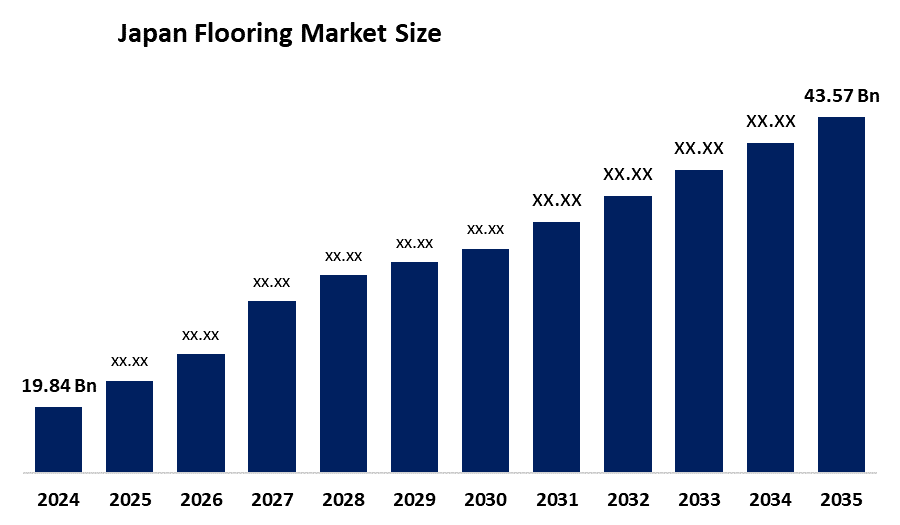
- Japan Flooring Market Size 2024: USD 19.84 Bn
- Japan Flooring Market Size 2035: USD 43.57 Bn
- Japan Flooring Market CAGR 2024: 7.41%
- Japan Flooring Market Segments: Type and End User
Get more details on this report -
The Japan flooring market represents the range of materials and solutions used for floors in residential, commercial, and industrial buildings to make surfaces that are durable, functional, and attractive. The market includes wood, engineered wood, tiles, luxury vinyl tiles (LVT), bamboo, cork, laminate, carpet, and traditional tatami, thus providing a variety of consumer needs and building applications. Flooring is used in new construction projects, renovations, and commercial infrastructure developments and is thus a partner of comfort, safety, and interior design necessities in homes, offices, retail spaces, and public facilities at the same time.
Technological innovations and design trends are thus influencing the market and include smart flooring, low, VOC, and eco, friendly materials, customizable designs, advanced installation systems, and surface finishes that improve durability, hygiene, and aesthetics. Urbanization, increasing residential remodelling, the expansion of commercial infrastructure, and the growing demand for premium, sustainable, low, maintenance, and versatile flooring solutions are the sources of the next generation of opportunities. Manufacturers who specialize in hybrid materials and modular designs will be able to take advantage of the changing consumer preferences and interior design trends in Japan.
Market Dynamics of the Japan Flooring Market:
The market for flooring in Japan is fueled by the rising trends of urbanization, residential and commercial construction activities, and a growing demand for high-quality flooring which is durable and aesthetically versatile. Customers have increasingly preferred green low-VOC flooring products with technological advancements, while renovation activities have fueled the demand for premium flooring products such as engineered woods, LVTs, and bamboo.
Market restraining factors include higher prices of higher-end and technologically advanced floorings, limited availability of certain eco-friendly floorings, and complex installation procedures associated with hybrid and modular floorings. Moreover, traditional preferences associated with tatami and traditional floorings in certain regions act as factors that reduce the adoption of modern and innovative floorings. Variables such as changing prices of raw materials also impact floorings.
Future opportunities in sustainable and smart flooring solutions include modular, customizable, and digitally enhanced designs for modern interiors and green building initiatives. Expansion into the commercial infrastructure, an increase in renovation projects, and consumer interest in low-maintenance, high-quality, and eco-friendly merchandise provide ample scope for innovation, market development, and market segmentation capture of new sections for Japanese flooring manufacturers.
Japan Flooring Market Report Coverage
| Report Coverage | Details |
|---|---|
| Base Year: | 2024 |
| Market Size in 2024: | USD 19.84 Billion |
| Forecast Period: | 2024-2035 |
| Forecast Period CAGR 2024-2035 : | 7.41% |
| 2035 Value Projection: | USD 43.57 Billion |
| Historical Data for: | 2020-2023 |
| No. of Pages: | 240 |
| Tables, Charts & Figures: | 105 |
| Segments covered: | By Type, By Application |
| Companies covered:: | Takashimaya Co., Ltd., TOTO Ltd., Daiken Corporation, Nishikawa Co., Ltd., Asahi Kasei Corporation, Sumitomo Forestry Co., Ltd., Sangetsu Corporation, Toli Corporation, Konica Minolta, Inc., Kubota Corporation, Kuraray Co., Ltd., Kawamura Sangyo Co., Ltd., Kenzai Corporation, Kaneka Corporation, Kyocera Corporation, Others, and Key Players. |
| Pitfalls & Challenges: | COVID-19 Empact, Challenge, Future, Growth, & Analysis |
Get more details on this report -
Market Segmentation
The Japan flooring market share is classified into type and end user.
By Type:
The Japan flooring market is divided by type into resilient, non-resilient, and others. Among these, the resilient segment dominated the share in 2024 and is anticipated to grow at a remarkable CAGR during the forecast period. The resilient segment is at the forefront primarily because of its durability, being a low maintenance product, versatility in both residential and commercial sectors, increasing usage in renovation and construction, and the customers preference for eco, friendly and technically advanced materials like LVT and vinyl composites.
By End User:
The Japan flooring market is divided by end user into residential and non-residential. Among these, the residential segment dominated the share in 2024 and is anticipated to grow at a remarkable CAGR during the forecast period. Residential sector holds the largest share which is mainly due to rapid urbanization, increased home renovation work, demand for high, end and environmentally friendly materials, and homeowners growing interest in interior design, comfort and aligning their living spaces with the modern lifestyle choices.
Competitive Analysis:
The report offers the appropriate analysis of the key organisations/companies involved within the Japan flooring market, along with a comparative evaluation primarily based on their product offering, business overviews, geographic presence, enterprise strategies, segment market share, and SWOT analysis. The report also provides an elaborative analysis focusing on the current news and developments of the companies, which includes product development, innovations, joint ventures, partnerships, mergers & acquisitions, strategic alliances, and others. This allows for the evaluation of the overall competition within the market.
Top Key Companies in Japan Flooring Market:
- Takashimaya Co., Ltd.
- TOTO Ltd.
- Daiken Corporation
- Nishikawa Co., Ltd.
- Asahi Kasei Corporation
- Sumitomo Forestry Co., Ltd.
- Sangetsu Corporation
- Toli Corporation
- Konica Minolta, Inc.
- Kubota Corporation
- Kuraray Co., Ltd.
- Kawamura Sangyo Co., Ltd.
- Kenzai Corporation
- Kaneka Corporation
- Kyocera Corporation
- Others
Key Target Audience
- Market Players
- Investors
- End-users
- Government Authorities
- Consulting and Research Firm
- Venture capitalists
- Value-Added Resellers (VARs)
Market Segment
This study forecasts revenue at the Japan, regional, and country levels from 2020 to 2035. Decisions Advisors has segmented the Japan flooring market based on the below-mentioned segments:
Japan Flooring Market, By Type
- Resilient
- Non-Resilient
- Others
Japan Flooring Market, By End User
- Residential
- Non-Residential
Frequently Asked Questions (FAQ)
-
Q: What is the Japan flooring market size?A: Japan flooring market is expected to grow from USD 19.84 billion in 2024 to USD 43.57 billion by 2035, growing at a CAGR of 7.41% during the forecast period 2025-2035.
-
Q: What are the key growth drivers of the market?A: Market growth is driven by the rising trends of urbanization, residential and commercial construction activities, and a growing demand for high-quality flooring which is durable and aesthetically versatile. Customers have increasingly preferred green low-VOC flooring products with technological advancements, while renovation activities have fueled the demand for premium flooring products such as engineered woods, LVTs, and bamboo.
-
Q: What factors restrain the Japan flooring market?A: Market restraining factors include higher prices of higher-end and technologically advanced floorings, limited availability of certain eco-friendly floorings, and complex installation procedures associated with hybrid and modular floorings. Moreover, traditional preferences associated with tatami and traditional floorings in certain regions act as factors that reduce the adoption of modern and innovative floorings. Variables such as changing prices of raw materials also impact floorings.
-
Q: How is the market segmented by type?A: The market is segmented into resilient, non-resilient, and others.
-
Q: Who are the target audiences for this market report?A: The report targets market players, investors, end-users, government authorities, consulting and research firms, venture capitalists, and value-added resellers (VARs).
Need help to buy this report?