Japan Fertility Services Market Size, Share, By Cause of Infertility (Male Infertility and Female Infertility), By Service (Fresh non-donor, Frozen non-donor, Egg and Embryo Banking, Fresh Donor, Frozen Donor), By Provider (Fertility Clinics, Hospitals, Others), Japan Fertility Services Market Industry Trend, Forecasts to 2035.
Industry: Healthcare
Japan Fertility Services Market Insights Forecasts to 2035
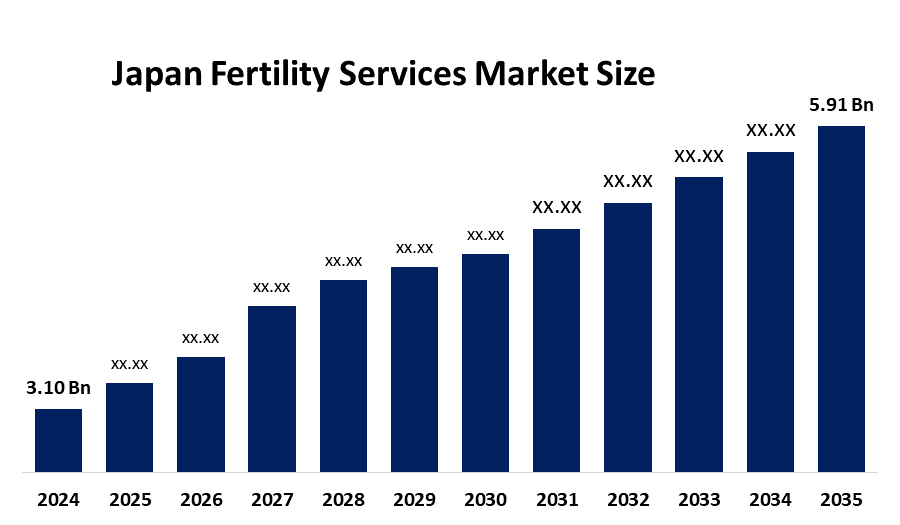
- Japan Fertility Services Market Size 2024: USD 3.10 Billion
- Japan Fertility Services Market Size 2035: USD 5.91 Billion
- Japan Fertility Services Market CAGR 2024: 6.04%
- Japan Fertility Services Market Segments, Cause of Infertility, Service and Provider.
Get more details on this report -
The Japan fertility services market offers medical treatments and support to help people conceive, including infertility diagnosis, assisted reproductive technologies like IVF, intracytoplasmic sperm injection (ICSI), egg and embryo banking, and counselling services. Demand rises as the average age at childbirth increases and more couples face fertility challenges, making specialised fertility care an important healthcare segment. Furthermore, the Japan fertility services market is growing due to rising infertility rates, delayed childbearing and ageing populations, increasing awareness about fertility care, and better access to advanced treatments. Technological progress in IVF and fertility preservation increases treatment success, while public and private clinics expand services. Government subsidies and insurance support reduce costs and encourage more couples to seek care, fueling market expansion.
Japan’s government supports fertility services through public health campaigns and financial assistance for treatments like IVF to lower economic barriers. Policies aim to enhance access to fertility care across regions and reduce urban-rural disparities. Recent inclusion of ART in national health insurance coverage further eases treatment costs. These initiatives are part of broader demographic support strategies amid low birth rates.
Japan fertility services market trends include the adoption of advanced technology such as AI-assisted embryo evaluation, personalised treatment plans, and digital fertility tracking. Telemedicine and remote counselling improve patient access. Clinics increasingly combine reproductive care with wellness support. Couples seek fertility preservation options like egg freezing, and services expand beyond major cities to meet unmet demand.
Market Dynamics of the Japan Fertility Services Market:
The Japan fertility services market is drivers include higher infertility incidence, later age at first childbirth, and greater patient awareness. Financial support from insurance and subsidies encourages treatment uptake. Technological improvements increase ART success rates. Rising disposable income and social acceptance of fertility treatments also make advanced services more accessible. Expanded service offerings and fertility education continue to boost demand.
The Japan fertility services market restraints from high treatment costs, which remain a barrier despite government subsidies. Social stigma and cultural hesitations around infertility reduce treatment adoption. Strict regulations and ethical concerns can slow the introduction of new technologies. Additionally, age-related fertility decline and limited insurance coverage for certain procedures restrict overall market growth.
The Opportunities include growth in remote fertility consultations, AI-driven personalised treatments, expansion of egg and sperm freezing services, and fertility education marketing. Demand outside major cities presents room for clinic expansion. Enhanced insurance coverage and new financing models can attract more patients. Integration of digital health tools and support services further strengthens patient engagement and market reach.
Japan Fertility Services Market Report Coverage
| Report Coverage | Details |
|---|---|
| Base Year: | 2024 |
| Market Size in 2024: | USD 3.10 Billion |
| Forecast Period: | 2025-2035 |
| Forecast Period CAGR 2025-2035 : | CAGR of 6.04 % |
| 2035 Value Projection: | USD 5.91 Billion |
| Historical Data for: | 2020-2023 |
| No. of Pages: | 210 |
| Tables, Charts & Figures: | 95 |
| Segments covered: | By Cause of Infertility, By Service |
| Companies covered:: | Kato Ladies Clinic, Fertility Clinic Tokyo, Oak Clinic Group, Tokyo Women’s Medical University Hospital, Yokohama City University Hospital, Kyono ART Clinic, IVF Japan/Namba Clinic, Horac Grand Front Osaka Clinic, Juntendo University Hospital, Other, and Key Players |
| Pitfalls & Challenges: | COVID-19 Empact, Challenge, Future, Growth, & Analysis |
Get more details on this report -
Market Segmentation
The Japan fertility services market share is classified into cause of infertility, services, and providers.
By Cause of Infertility:
The Japan fertility services market is divided by cause of infertility into male infertility and female infertility. Among these, the female infertility segment dominated the share in 2024 and is anticipated to grow at a remarkable CAGR during the forecast period. The female infertility segment dominates due to most fertility treatments targeting age-related decline, ovulation disorders, and reproductive health issues in women. Women are the primary recipients of services like IVF, egg freezing, and hormonal therapies, driving higher demand and revenue, making this segment the largest in Japan’s fertility services market.
By Service:
The Japan fertility services market is divided by service into fresh non-donor, frozen non-donor, egg and embryo banking, fresh donor, and frozen donor. Among these, the fresh non-donor segment dominated the share in 2024 and is anticipated to grow at a remarkable CAGR during the forecast period. The fresh non-donor segment dominates due it uses the patient’s own eggs and sperm, offering higher success rates, lower costs, and greater accessibility. As the first-line treatment for most couples, it is more frequently performed than donor or banking services, making it the largest revenue-generating segment in Japan’s fertility services market.
By Provider:
The Japan fertility services market is divided by provider into fertility clinics, hospitals, and others. Among these, the fertility clinics segment dominated the share in 2024 and is anticipated to grow at a remarkable CAGR during the forecast period. The fertility clinics segment dominates because they specialise in reproductive treatments, offering advanced facilities, experienced specialists, and personalised care. Patients prefer clinics for higher success rates, comprehensive services like IVF and egg/embryo freezing, and focused support. Hospitals and other providers offer fewer specialised services, making clinics the largest revenue-generating segment in Japan’s fertility services market.
Competitive Analysis:
The report offers the appropriate analysis of the key organisations/companies involved within the Japan fertility services market, along with a comparative evaluation primarily based on their product offering, business overviews, geographic presence, enterprise strategies, segment market share, and SWOT analysis. The report also provides an elaborate analysis focusing on the current news and developments of the companies, which includes product development, innovations, joint ventures, partnerships, mergers & acquisitions, strategic alliances, and others. This allows for the evaluation of the overall competition within the market.
Top Key Companies in Japan Fertility Services Market:
- Kato Ladies Clinic
- Fertility Clinic Tokyo
- Oak Clinic Group
- Tokyo Women’s Medical University Hospital
- Yokohama City University Hospital
- Kyono ART Clinic
- IVF Japan/Namba Clinic
- Horac Grand Front Osaka Clinic
- Juntendo University Hospital
- Other
Key Target Audience
- Market Players
- Investors
- End-users
- Government Authorities
- Consulting and Research Firm
- Venture capitalists
- Value-Added Resellers (VARs)
Market Segment
This study forecasts revenue at the Japan, regional, and country levels from 2020 to 2035. Spherical Insights has segmented the Japan fertility services market based on the below-mentioned segments:
Japan Fertility Services Market, By Cause of Infertility.
- Male Infertility
- Female Infertility
Japan Fertility Services Market, By Service
- Fresh non-donor
- Frozen non-donor
- Egg and Embryo Banking
- Fresh Donor
- Frozen Donor
- Others
Japan Fertility Services Market, by Provider.
- Fertility Clinics
- Hospitals
- Others
Frequently Asked Questions (FAQ)
-
Q 1: What is the Japan fertility services market size?Japan fertility services market is expected to grow from USD 3.10 billion in 2024 to USD 5.91 billion by 2035, growing at a CAGR of 6.04 % during the forecast period 2025-2035.
-
Q 2: What are the key growth drivers of the Japan fertility services market?The Japan fertility services market includes growth drivers such as rising infertility rates, delayed childbirth, technological advancements in ART, increasing awareness, and supportive government subsidies and policies.
-
Q 3: What factors restrain the Japan fertility services market?The Japan fertility services market is restraints include high treatment costs, social stigma, limited insurance coverage, strict regulations, and age-related fertility decline among couples.
-
Q 4: How is the Japan fertility services market segmented by service?The Japan fertility services market is segmented into fresh non-donor, frozen non-donor, egg and embryo banking, fresh donor, and frozen donor
-
Q 5: Who are the key players in the Japan fertility services market?The Japan fertility services market is served by Kato Ladies Clinic, Fertility Clinic Tokyo, Oak Clinic Group, Tokyo Women’s Medical University Hospital, Yokohama City University Hospital, Kyono ART Clinic, IVF Japan/Namba Clinic, Horac Grand Front Osaka Clinic, Juntendo University Hospital, and other
Need help to buy this report?