Japan Feed Mycotoxin Detoxifiers Market Size, Share, By Product (Mycotoxin Binders and Mycotoxin Modifiers), By Application (Poultry, Swine, Cattle, Aquaculture, and Others), Japan Feed Mycotoxin Detoxifiers Market Insights, Industry Trend, Forecasts to 2035.
Industry: Healthcare
Japan Feed Mycotoxin Detoxifiers Market Insights Forecasts to 2035
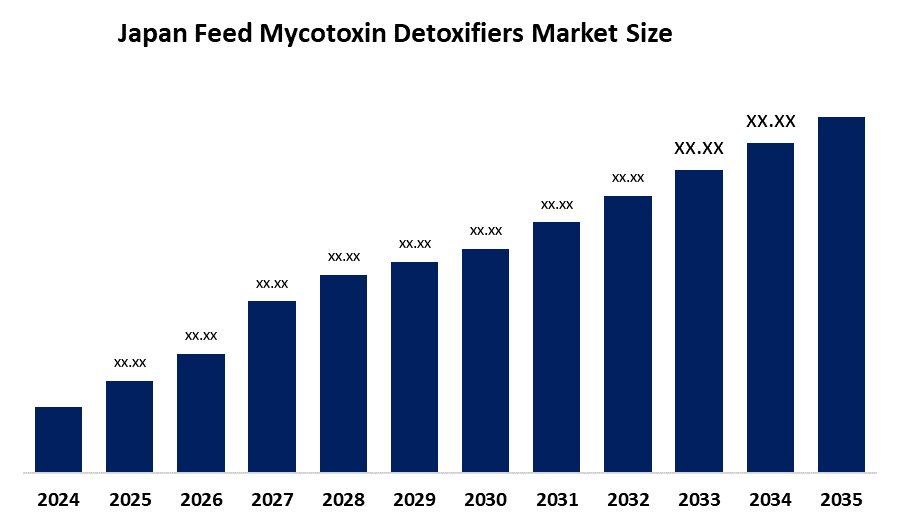
- Japan Feed Mycotoxin Detoxifiers Market CAGR 2024: 3.8%
- Japan Feed Mycotoxin Detoxifiers Market Segments: Product and Application.
Get more details on this report -
The Japanese mycotoxin detoxifiers are feed additives specifically developed to limit the impact of mycotoxins on livestock and other animals. The primary function of these products is to protect animals from illness and harm from eating contaminated animal feeds, and to protect the health of consumers from the consumption of contaminated foods produced from animals. One of the key trends within the Japanese market for mycotoxin detoxifiers is a change in the types of binders used, from traditional clay-based types to modern, science-based technologies that incorporate many mycotoxin modifications at once, targeting specific chemical structures without hindering the absorption of nutrients by the animal.
The Japanese government and private companies are both making efforts towards the use of high-quality detoxifiers in order to promote the use of natural products within the agricultural sector. The Ministry of Agriculture, Forestry, and Fisheries (MAFF) has established very high feed safety regulations that require a comprehensive testing process for mycotoxins in order to provide safe food for customers around the country. In addition to government regulations, there are growing trends in the private sector for food producers to be more sustainable through using organic and natural detoxification methods.
Technology is advancing at a rapid speed; there are now companies in Japan developing biotransformers. These biotransformers, such as enzymes and microorganisms, will allow for the ability to transform toxic mycotoxins into non-toxic metabolites. Moreover, there are many examples of digital technology being integrated in the agricultural arena in Japan; for instance, AI-driven predictive analytics and machine learning are now being used for monitoring raw material contaminants within the feed supply chain.
Market Dynamics of the Japan Feed Mycotoxin Detoxifiers Market:
The Japanese feed mycotoxin detoxifiers market is driven by the growing incidence of mycotoxin outbreaks caused by changes in climate, which means that the demand for the mycotoxin management market will continue to grow, with more food being produced at an increasing rate. In addition, increased intensification and commercialization of livestock farming in Japan have led to increased stocking density and have caused the livestock in Japan to be susceptible to health challenges, which will require the routine use of mycotoxin detoxifiers.
The Japanese feed mycotoxin detoxifiers market is restrained because manufacturers are concerned that some mycotoxin binders also bind to important, or essential, nutrients and minerals indiscriminately. This has the potential to disrupt the normal growth of the livestock produced by manufacturers. Evolving and increasing regulatory requirements can also impose high costs to manufacturers due to the extensive compliance burden, and increasing availability of raw materials with fluctuating prices may reduce profit margins.
The growing trend toward the use of natural growth promoters or organic detoxifiers creates a substantial market opportunity, as the use of antibiotic growth promoters is being phased out in Japan. The expansion of the aquaculture industry provides a unique opportunity for specialty detoxifiers specifically designed for marine animals. Additionally, the continued upgrade and integration of AI-based systems into feed mills to allow for precision dosing of mycotoxin binders could help further improve how mycotoxins are managed.
Japan Feed Mycotoxin Detoxifiers Market Report Coverage
| Report Coverage | Details |
|---|---|
| Base Year: | 2024 |
| Forecast Period: | 2024-2035 |
| Forecast Period CAGR 2024-2035 : | 3.8% |
| Historical Data for: | 2020-2023 |
| No. of Pages: | 240 |
| Tables, Charts & Figures: | 105 |
| Segments covered: | By Type, By Application |
| Companies covered:: | Yokogawa Electric Corporation, Shimadzu Corporation, Horiba, Ltd., Azbil Corporation, Hitachi High-Tech Corporation, Fuji Electric Co., Ltd., NEC Corporation, Tsurumi Manufacturing Co., Ltd., Others, and Key Players. |
| Pitfalls & Challenges: | COVID-19 Empact, Challenge, Future, Growth, & Analysis |
Get more details on this report -
Market Segmentation
The Japan feed mycotoxin detoxifiers market share is classified into product and application.
By Product:
The Japanese feed mycotoxin detoxifiers market is divided by product into mycotoxin binders and mycotoxin modifiers. Among these, the mycotoxin binders segment dominated the market in 2024 and is anticipated to grow at a significant CAGR during the forecast period. Binders, primarily clay, activated carbon, and yeast-based solutions, continue to dominate the market, owing to their capacity to physically absorb a wide spectrum of mycotoxins in the gut. They are inexpensive and frequently used in poultry and livestock production, while their efficacy varies with toxin type.
By Application:
The Japan feed mycotoxin detoxifiers market is divided by application into poultry, swine, cattle, aquaculture, and others. Among these, the Animal feed segment dominated the market in 2024 and is anticipated to grow at a remarkable CAGR during the forecast period. Poultry is the most common application segment, as broilers and layers are especially vulnerable to mycotoxins, which affect growth, immunity, and egg production. Rising global poultry meat and egg consumption fuels the need for detoxifiers in this area.
Competitive Analysis:
The report offers the appropriate analysis of the key organisations/companies involved within the Japan Feed Mycotoxin Detoxifiers market, along with a comparative evaluation primarily based on their product offering, business overviews, geographic presence, enterprise strategies, segment market share, and SWOT analysis. The report also provides an elaborative analysis focusing on the current news and developments of the companies, which includes product development, innovations, joint ventures, partnerships, mergers & acquisitions, strategic alliances, and others. This allows for the evaluation of the overall competition within the market.
Top Key Companies in Japan Feed Mycotoxin Detoxifiers Market:
- Yokogawa Electric Corporation
- Shimadzu Corporation
- Horiba, Ltd.
- Azbil Corporation
- Hitachi High-Tech Corporation
- Fuji Electric Co., Ltd.
- NEC Corporation
- Tsurumi Manufacturing Co., Ltd.
- Others
Key Target Audience
- Market Players
- Investors
- End-users
- Government Authorities
- Consulting and Research Firm
- Venture capitalists
- Value-Added Resellers (VARs)
Market Segment
This study forecasts revenue at the Japan, regional, and country levels from 2020 to 2035. Decisions Advisors has segmented the Japan feed mycotoxin detoxifiers market based on the below-mentioned segments:
Japan Feed Mycotoxin Detoxifiers Market, By Product
- Mycotoxin Binders
- Mycotoxin Modifiers
Japan Feed Mycotoxin Detoxifiers Market, By Application
- Poultry
- Swine
- Cattle
- Aquaculture
- Others
Frequently Asked Questions (FAQ)
-
Q: What is the growth outlook for the Japan feed mycotoxin detoxifiers market?A: The market is expected to grow at a CAGR of 3.8% during the forecast period 2025–2035, supported by increasing awareness of feed safety and rising mycotoxin contamination risks.
-
Q: Which product segment dominates the Japan feed mycotoxin detoxifiers market?A: The mycotoxin binders segment dominated the market in 2024 due to their cost-effectiveness, wide availability, and ability to absorb multiple mycotoxins in livestock digestive systems.
-
Q: Which application segment leads the Japan feed mycotoxin detoxifiers market?A: The poultry segment held the largest market share in 2024, as poultry species are highly sensitive to mycotoxins, which can significantly impact growth, immunity, and egg production.
-
Q: What are the main drivers of the Japan feed mycotoxin detoxifiers market?A: Key drivers include increasing mycotoxin outbreaks linked to climate change, intensification of livestock farming, strict feed safety regulations, and growing demand for high-quality animal protein.
-
Q: What challenges restrain the Japan feed mycotoxin detoxifiers market?A: Market growth is restrained by concerns over nutrient binding by some detoxifiers, rising compliance costs due to stringent regulations, fluctuating raw material prices, and efficacy variability across mycotoxin types.
-
Q: What future opportunities exist in the Japan feed mycotoxin detoxifiers market?A: Opportunities include the rising adoption of natural and organic detoxifiers, expansion of the aquaculture sector, development of enzyme- and microorganism-based biotransformers, and integration of AI-driven precision dosing systems in feed production.
-
Q: Who are the target audiences for the Japan feed mycotoxin detoxifiers market report?A: The report targets market players, investors, end-users, government authorities, consulting and research firms, venture capitalists, and value-added resellers (VARs).
Need help to buy this report?