Japan Electric Trucks Market Size, Share, By Vehicle Type (Light-Duty Trucks, Medium-Duty Trucks, and Heavy-Duty Trucks), By Application (Logistics & Delivery, Construction, Waste Management, and Others), Japan Electric Trucks Market Insights, Industry Trend, Forecasts to 2035.
Industry: Automotive & Transportation
Japan Electric Trucks Market Insights Forecasts to 2035
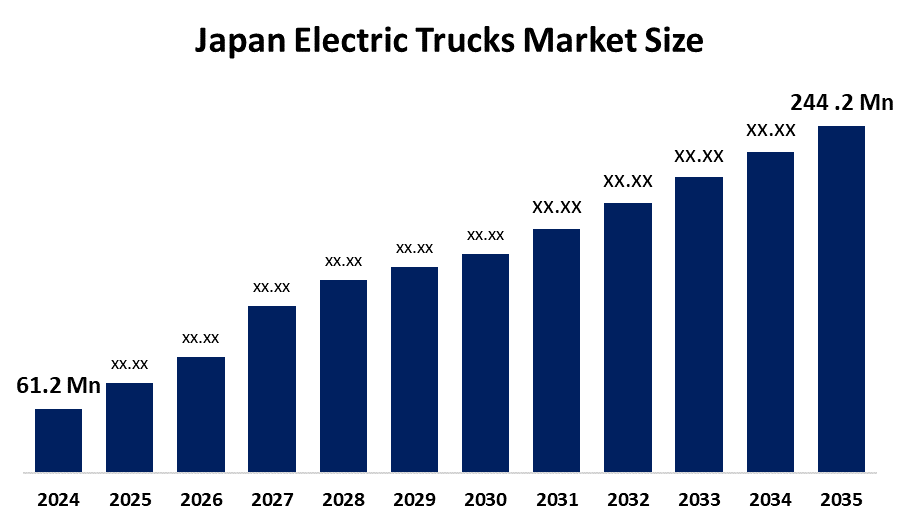
- Japan Electric Trucks Market Size 2024: USD 61.2 Mn
- Japan Electric Trucks Market Size 2035: USD 244.2 Mn
- Japan Electric Trucks Market CAGR 2024: 13.41%
- Japan Electric Trucks Market Segments: Vehicle Type and Application
Get more details on this report -
The Japanese Electric Truck Market Size is a growing industry that is focused on developing, creating, and using electric-powered commercial vehicles as an alternative to conventional gasoline or diesel-powered trucks. These vehicles are defined by several characteristics, including zero emissions from their tailpipes, less noise pollution, and better energy efficiency, especially when used for urban logistics, where vehicles often stop and start. Current trends indicate that there is a major movement to use light-duty electric trucks for last-mile delivery and a greater use of sophisticated battery management systems.
The Japanese government has set an ambitious goal of 100% electrification of vehicle sales by 2035 through its "Green Growth Strategy," which aims to achieve net-zero carbon emissions by 2050. To support this initiative, the Japanese government offers various types of financial assistance to encourage fleet operators to invest in clean energy vehicles, including the clean energy vehicle (CEV) subsidy program and the eco-car tax reduction. Through partnerships with private sector companies, Japanese government funds are being used to build the necessary charging infrastructure and create standardized battery swap systems that will enable fleet operators to have a reliable source of supply for their electric trucks.
Technological advancements regarding electric trucks produced in Japan continue to focus on improving both the energy density of batteries and the speed at which these batteries can charge. Companies are increasingly utilizing lithium-ion battery technology and regenerative braking systems to provide longer driving ranges for their vehicles and to recover more of the energy consumed during operation. Furthermore, significant research is being conducted into the use of solid-state batteries and hydrogen fuel cells for heavy-duty trucks, which will ultimately increase their driving ranges and reduce the amount of time required for fuel refills, thus allowing electric trucks to compete with diesel vehicles in terms of performance.
Market Dynamics of the Japan Electric Trucks Market:
The Japanese electric trucks market has been driven mainly by the government emission regulations aimed at achieving zero carbon emissions by 2050, as well as financial incentives to help offset the high upfront costs of electric trucks and bus purchases, which remain the driving forces for electric truck acceptance in Japan. Furthermore, the explosion of e-commerce is driving a demand for sustainable last-mile delivery solutions. Additionally, long-term savings associated with both maintenance and fuel costs, relative to diesel trucks, are making electric trucks very appealing to many logistics companies as they look for ways to optimize supply chain efficiency and enhance their sustainability profile
.
The Japanese Electric Trucks Market Size is restrained by its high operational costs associated with electric trucks management, as well as the large upfront investment in advanced technologies that will allow for efficient and effective electric trucks management. Additionally, much of the electric trucks infrastructure currently in place is old, and the country has a critical shortage of skilled labor, drivers, and other logistical resources required to adequately implement the electric trucks logistics needed to support cold storage facilities across the country.
Market opportunities, the continued development of fast-charging stations throughout Japan offers commercial fleets tremendous growth opportunities. Battery-swapping technology also represents a viable solution to the challenges posed by the high cost of battery packs and limited charging stations. charging-as-a-service partnerships between OEMs and energy providers could assist small business owners in converting their fleets to electric trucks. Finally, advances in developing autonomous vehicle technology and vehicle-to-grid (V2G) will create new revenue streams for commercial fleets.
Japan Electric Trucks Market Report Coverage
| Report Coverage | Details |
|---|---|
| Base Year: | 2024 |
| Market Size in 2024: | USD 61.2 Million |
| Forecast Period: | 2024-2035 |
| Forecast Period CAGR 2024-2035 : | CAGR Of 13.41% |
| 2035 Value Projection: | USD 244.2 Million |
| Historical Data for: | 2020-2023 |
| No. of Pages: | 240 |
| Tables, Charts & Figures: | 110 |
| Segments covered: | By Application, By Vehicle Type |
| Companies covered:: | Mitsubishi Fuso Truck and Bus Corporation Hino Motors, Ltd. Isuzu Motors Limited Toyota Motor Corporation Nissan Motor Co., Ltd. UD Trucks Corporation Mazda Motor Corporation Mitsubishi Motors Corporation Others Key Players |
| Pitfalls & Challenges: | COVID-19 Empact, Challenge, Future, Growth, & Analysis |
Get more details on this report -
Market Segmentation
The Japan electric trucks market share is classified into vehicle type and application.
By Vehicle Type:
The Japanese Electric Trucks Market Size is divided by vehicle type into light-duty trucks, medium-duty trucks, and heavy-duty trucks. Among these, the light-duty trucks segment dominated the market in 2024 and is anticipated to grow at a significant CAGR during the forecast period. This is due to extensive use in urban delivery and logistics applications, where the benefits of electric cars are most evident. Light-duty electric trucks are well-suited for short- to medium-haul routes, offering decreased operating costs, low to zero emissions, and increased performance.
By Application:
The Japanese Electric Trucks Market Size is divided by application into logistics & delivery, construction, waste management, and others. Among these, the logistics & delivery segment held the largest market share in 2024 and is expected to grow at the fastest CAGR during the forecasted period. Electric trucks are particularly useful for city logistics and delivery applications, where routes are often shorter and more predictable, making it easier to integrate EVs into existing fleets. Furthermore, logistics and delivery companies are under increasing pressure to reduce their environmental impact, making electric vehicles a viable choice for meeting sustainability targets.
Competitive Analysis:
The report offers the appropriate analysis of the key organisations/companies involved within the Japan Electric Trucks Market Size, along with a comparative evaluation primarily based on their product offering, business overviews, geographic presence, enterprise strategies, segment market share, and SWOT analysis. The report also provides an elaborative analysis focusing on the current news and developments of the companies, which includes product development, innovations, joint ventures, partnerships, mergers & acquisitions, strategic alliances, and others. This allows for the evaluation of the overall competition within the market.
Top Key Companies in Japan Electric Trucks Market:
- Mitsubishi Fuso Truck and Bus Corporation
- Hino Motors, Ltd.
- Isuzu Motors Limited
- Toyota Motor Corporation
- Nissan Motor Co., Ltd.
- UD Trucks Corporation
- Mazda Motor Corporation
- Mitsubishi Motors Corporation
- Others
Key Target Audience
- Market Players
- Investors
- End-users
- Government Authorities
- Consulting and Research Firm
- Venture capitalists
- Value-Added Resellers (VARs)
Market Segment
This study forecasts revenue at the Japan, regional, and country levels from 2020 to 2035. Spherical Insights has segmented the Japan electric trucks market based on the below-mentioned segments:
Japan Electric Trucks Market, By Vehicle Type
- Light Duty Trucks
- Medium Duty Trucks
- Heavy Duty Trucks
Japan Electric Trucks Market, By Application
- Logistics & Delivery
- Construction
- Waste Management
- Others
Frequently Asked Questions (FAQ)
-
What is the projected market size of the Japan electric trucks market by 2035?The Japan electric trucks market is expected to grow from USD 61.2 million in 2024 to USD 244.2 million by 2035.
-
What is the expected CAGR of the Japan electric trucks market during the forecast period?The market is projected to grow at a CAGR of 13.41% during the forecast period from 2025 to 2035.
-
Which vehicle type segment dominated the Japan electric trucks market in 2024?The light-duty trucks segment dominated the market in 2024 due to their widespread use in urban logistics and last-mile delivery applications
-
Which application segment held the largest market share in 2024?The logistics & delivery segment held the largest market share in 2024, driven by rapid growth in e-commerce and demand for sustainable urban transportation
-
What are the key drivers of growth in the Japan electric trucks market?Key drivers include strict emission regulations, government subsidies, rising e-commerce activity, lower operating costs compared to diesel trucks, and expansion of charging infrastructure
-
Who are the major players operating in the Japan electric trucks market?Major players include Mitsubishi Fuso Truck and Bus Corporation, Hino Motors, Ltd., Isuzu Motors Limited, Toyota Motor Corporation, Nissan Motor Co., Ltd., and UD Trucks Corporation.
Need help to buy this report?