Japan Combine Harvester Market Size, Share, By Type (Self-Propelled Combine Harvester and Tractor-Powered Combine Harvester), By Power Rating (Below 150 HP, 150 To 300 HP, and Above 300 HP), By Crop Type (Rice, Wheat, Corn, and Other), By Drive Mechanism (Wheel Drive and Track Drive), Japan Combine Harvester Market Insights, Industry Trend, Forecasts to 2035
Industry: Agriculture
Japan Combine Harvester Market Insights Forecasts to 2035
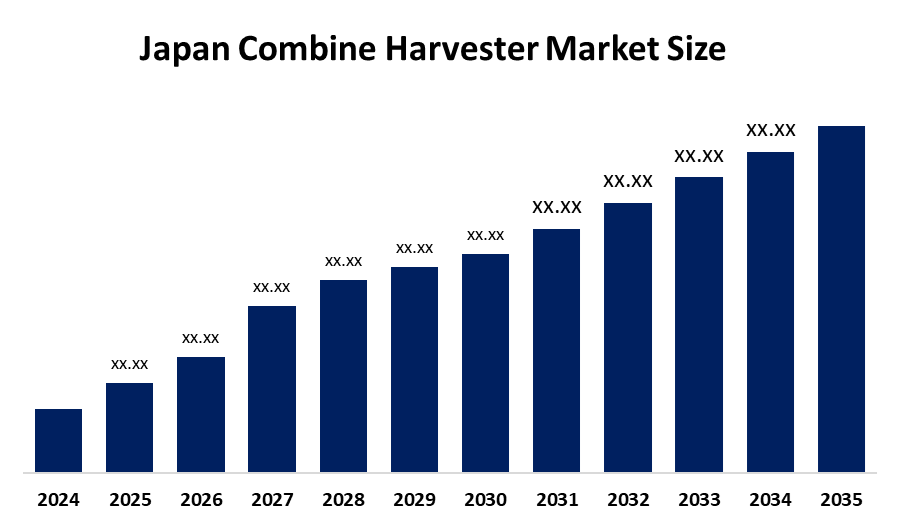
- Japan Combine Harvester Market CAGR 2024: 5.26%
- Japan Combine Harvester Market Segments: Type, Power Rating, Crop Type, and Drive Mechanism
Get more details on this report -
Japan combine harvester is sophisticated farming equipment used to harvest, thresh, as well as clean crops such as rice, wheat, corn, as well as other grains in one process. These have found extensive applications across paddy fields, small fragmented farms, and cooperative farming systems to raise harvesting efficiency and reduce the labor input in Japanese agriculture. The demand will be greatly influenced by increasing farm mechanization needs and persistent shortages of agricultural labourers in the country. Demand includes compact crawler models for wet fields and medium-power machines for mixed cropping, helping improve productivity, precision harvesting, and minimize post-harvest losses across Japan's mechanized farming landscape.
As part of technological developments, GPS guidance, autonomous navigation, telematics monitoring, fuel-efficient engines, and smart yield sensors have been transforming combine harvester performance and operational efficiency. Lightweight design, electric-assisted drivetrain, and AI-based crop detection technologies suitable for narrow Japanese fields are developed by manufacturers. The growing adoption of precision agriculture tools and smart farming equipment will drive demand for high-performance compact harvesters. Robotics integration, automation-driven harvesting solutions, data-enabled machinery that will help enhance farm productivity and aid in better decision-making regarding farm operations are some of the future opportunities.
Market Dynamics of the Japan Combine Harvester Market:
The Japan combine harvester market is driven by rising agricultural labor shortages, the mechanization trend in rice-growing farming areas, and growing need for compact and efficient combine harvesters. Technological improvements, including automation, navigation using GPS systems, telematics, and precision farming, are all driving equipment modernization and efficiency improvements in combine harvesters.
The Japan combine harvester market is hindered by factors such as high costs associated with equipment acquisition and maintenance, scattered farm holdings, an aging working population, and restrained market potential among smaller-scale farmers. Operating difficulties in small fields and demand for a cooperative ownership model are other deterrents for using modern technology in combined harvesters.
The future of the Japan combine harvester market appears promising due to the increasing demand for automated harvesting equipment, smart farming solutions, and AI-based crop monitoring solutions. Introduction of lightweight crawlers for paddy fields, precision agriculture, and connected machines solutions is likely to improve the efficiency of the machine sector in the long run.
Japan Combine Harvester Market Report Coverage
| Report Coverage | Details |
|---|---|
| Base Year: | 2024 |
| Forecast Period: | 2024-2035 |
| Forecast Period CAGR 2024-2035 : | CAGR of 5.26% |
| Historical Data for: | 2020-2023 |
| No. of Pages: | 210 |
| Tables, Charts & Figures: | 90 |
| Segments covered: | By Type |
| Companies covered:: | Sumitomo Chemical Co., Ltd., Mitsui Chemicals Agro, Inc., Bayer AG, BASF SE, Syngenta Crop Protection AG, Nihon Nohyaku Co., Ltd., Kumiai Chemical Industry Co., Ltd., OAT Agrio Co., Ltd., Koppert B.V., and and Other key players |
| Pitfalls & Challenges: | COVID-19 Empact, Challenge, Future, Growth, & Analysis |
Get more details on this report -
Market Segmentation
The Japan combine harvester market share is classified into type, power rating, crop type, and drive mechanism.
By Type:
The Japan combine harvester market is divided by type into self-propelled combine harvester and tractor-powered combine harvester. Among these, the self-propelled combine harvester segment dominated the share in 2024 and is anticipated to grow at a remarkable CAGR during the forecast period. The segment dominates due to compact farm structures, the availability of labor, the demand for mechanization, the integration of automated technologies with machines, the efficiency of fuels, and the adoption rate of technologically advanced self-driving harvesting equipment in rice production.
By Power Rating:
The Japan combine harvester market is divided by power rating into below 150 HP, 150 to 300 HP, and above 300 HP. Among these, the 150 to 300 HP segment dominated the share in 2024 and is anticipated to grow at a remarkable CAGR during the forecast period. The segment leads in balanced power suitability for medium-scale farms, efficient performance in narrow fields, optimized fuel consumption, versatility in various crop harvesting activities, and popularity among Japanese farmers due to the absence of enhanced operating expenses.
By Crop Type:
The Japan combine harvester market is divided by crop type into rice, wheat, corn, and other crops. Among these, the rice segment dominated the share in 2024 and is anticipated to grow at a remarkable CAGR during the forecast period. Dominance factors include Japan’s large rice cultivation regions, its high mechanized paddy harvesting needs, government support for rice cultivation, its domestic consumption rate, its need for labor during peak picking seasons, and its steady need for specialized combine rice harvesting equipment due to its wet conditions.
By Drive Mechanism:
The Japan combine harvester market is divided by drive mechanism into wheel drive and track drive. Among these, the track drive segment dominated the share in 2024 and is anticipated to grow at a remarkable CAGR during the forecast period. The segment dominates due to its superior traction ability in wet muddy paddy fields, stability on rough terrains, minimum soil compaction, greater maneuverability in small fields, and the large usage of these machines in areas of rice cultivation in Japan.
Competitive Analysis:
The report offers the appropriate analysis of the key organisations/companies involved within the Japan combine harvester market, along with a comparative evaluation primarily based on their product offering, business overviews, geographic presence, enterprise strategies, segment market share, and SWOT analysis. The report also provides an elaborative analysis focusing on the current news and developments of the companies, which includes product development, innovations, joint ventures, partnerships, mergers & acquisitions, strategic alliances, and others. This allows for the evaluation of the overall competition within the market.
Top Key Companies in Japan Combine Harvester Market:
- Kubota Corporation
- Yanmar Co., Ltd.
- Iseki & Co., Ltd.
- Mitsubishi Mahindra Agricultural Machinery Co., Ltd.
- Deere & Company
- CNH Industrial N.V.
- Others
Recent Developments in Japan Combine Harvester Market:
In September 2025, Escorts Kubota Limited introduced the PRO588i-G combine harvester with lightweight features, crawling technology, and Japanese engineered technology to deliver threshing, with the launch aimed at service provision in the Indian agricultural sector.
Key Target Audience
- Market Players
- Investors
- End-users
- Government Authorities
- Consulting and Research Firm
- Venture capitalists
- Value-Added Resellers (VARs)
Market Segment
This study forecasts revenue at the Japan, regional, and country levels from 2020 to 2035. Spherical Insights has segmented the Japan combine harvester market based on the below-mentioned segments:
Japan Combine Harvester Market, By Type
- Self-Propelled Combine Harvester
- Tractor-Powered Combine Harvester
Japan Combine Harvester Market, By Power Rating
- Below 150 HP
- 150 To 300 HP
- Above 300 HP
Japan Combine Harvester Market, By Crop Type
- Rice
- Wheat
- Corn
- Other
Japan Combine Harvester Market, By Drive Mechanism
- Wheel Drive
- Track Drive
Frequently Asked Questions (FAQ)
-
What is the Japan combine harvester market size?Japan Combine Harvester Market is expected to grow at a CAGR of 5.26% during the forecast period 2025-2035.
-
What are the key growth drivers of the market?Market growth is driven by rising agricultural labor shortages, mechanization trends in rice-growing areas, and increasing demand for efficient, automated harvesting equipment. Adoption of GPS, telematics, precision farming, and AI-based technologies further supports market expansion
-
What factors restrain the Japan combine harvester market?High equipment acquisition and maintenance costs, fragmented farm holdings, aging farmers, operational challenges in small fields, and cooperative ownership requirements limit wider adoption of modern combine harvesters
-
Who are the key players in the Japan combine harvester market?Key companies include Kubota Corporation, Yanmar Co., Ltd., Iseki & Co., Ltd., Mitsubishi Mahindra Agricultural Machinery Co., Ltd., Deere & Company, CNH Industrial N.V., and others.
-
Who are the target audiences for this market report?Market players, investors, end-users, government authorities, consulting and research firms, venture capitalists, and value-added resellers (VARs).
Need help to buy this report?