Japan Automotive Ball Joint Market Size, Share, By Product Type (Lower Ball Joints and Upper Ball Joints), By Vehicle Type (Passenger Vehicles, Light Commercial Vehicles (LCVs), Heavy Commercial Vehicles (HCVs), and Electric Vehicles (EVs)), By Material (Steel, Aluminum, and Plastic/Composite), By Sales Channel (OEM and Aftermarket), Japan Automotive Ball Joint Market Insights, Industry Trends, and Forecasts to 2035
Industry: Automotive & Transportation
Japan Automotive Ball Joint Market Insights Forecasts to 2035
- Japan Automotive Ball Joint Market CAGR 2024: 4.2%
- Japan Automotive Ball Joint Market Segments: Product Type, Vehicle Type, Material, and Sales Channel
Get more details on this report -
The Japan Automotive Ball Joint Market Functions Through Its Manufacturing Process Which Produces Suspension Components That Provide Precise Control Of Wheel Movement While Keeping Vehicle Stability And Steering Control Intact Through Their Use In Ball Joints. Ball joints serve as vital mechanical components which enable passenger vehicles commercial vehicles and electric vehicles to transfer loads while allowing steering movement and suspension system operation during different driving situations. Ball joints find extensive use in front and rear suspension systems associated with steering assemblies and chassis systems because their demand matches vehicle production needs and suspension system durability standards and aftermarket replacement requirements. The market experiences growth because vehicle manufacturing rates increase while the vehicle parc expands and suspension system upgrades continue.
The development of high-strength steel alloys together with lightweight aluminum components and advanced sealing technologies and precision forging processes enables organizations to create products which demonstrate improved durability and longer lifespan. The METI government initiatives support automotive manufacturing competitiveness together with vehicle safety standards and electric vehicle adoption which indirectly increases demand for suspension components. The market will experience expansion through electric vehicle growth and lightweight material use and increasing aftermarket needs and ongoing funding for advanced suspension research according to market analysis which shows these trends will drive market development.
Japan Automotive Ball Joint Market Report Coverage
| Report Coverage | Details |
|---|---|
| Base Year: | 2024 |
| Forecast Period: | 2025-2035 |
| Forecast Period CAGR 2025-2035 : | 4.2% |
| Historical Data for: | 2020-2023 |
| No. of Pages: | 210 |
| Tables, Charts & Figures: | 108 |
| Segments covered: | By Product Type, By Vehicle Type |
| Companies covered:: | Somic Ishikawa Inc., Musashi Seimitsu Industry Co., Ltd., NSK Ltd., NTN Corporation, KYB Corporation, GMB Corporation, Others |
| Pitfalls & Challenges: | COVID-19 Empact, Challenges, Future, Growth, & Analysis |
Get more details on this report -
Market Dynamics of the Japan Automotive Ball Joint Market:
The Japan automotive ball joint market experiences growth because of ongoing vehicle production together with increasing need for dependable suspension and steering systems and the higher demand for electric vehicles which need new high-durability chassis parts. The market maintains continuous demand throughout passenger and commercial vehicle segments because vehicle safety rules become stricter while consumers choose vehicles with better ride comfort and original equipment manufacturers (OEMs) produce their products through exact engineering methods.
The market encounters obstacles because of cost pressures experienced by OEM suppliers together with fluctuating raw material costs for steel and aluminum and the requirement to meet rigorous quality and durability standards on an ongoing basis. The automotive market experiences limited growth because new vehicles require longer replacement times and their advanced suspension systems enter the market.
Japan's growing electric vehicle market together with its shift toward lightweight materials and its need for advanced suspension systems creates emerging business opportunities. The market will experience continuous growth throughout the forecast period because material engineering advancements together with precision forging and surface treatment technology innovations will drive aftermarket replacement demands from Japan's aging vehicle fleet.
Market Segmentation
The Japan automotive ball joint market share is classified into product type, vehicle type, material, and sales channel.
By Product Type:
The Japan automotive ball joint market is divided by product type into lower ball joints and upper ball joints. Among these, the lower ball joints segment dominated the share in 2024 and is anticipated to grow at a remarkable CAGR during the forecast period. Lower ball joints' vital role in load bearing, greater stress exposure than upper joints, frequent replacement requirements, widespread use across vehicle types, suspension durability requirements, and increasing vehicle production in Japan are the main factors driving their growth.
By Vehicle Type:
The Japan automotive ball joint market is divided by vehicle type into passenger vehicles, light commercial vehicles, heavy commercial vehicles, and electric vehicles. Among these, the passenger vehicles segment dominated the share in 2024 and is anticipated to grow at a remarkable CAGR during the forecast period. High ownership rates, the ongoing need for suspension replacements, high production volumes, urban mobility trends, the need for ride comfort, and regular model upgrades all contribute to the growth of passenger vehicles in Japan.
By Material:
The Japan automotive ball joint market is divided by material into steel, aluminum, and plastic/composite. Among these, the steel segment dominated the share in 2024 and is anticipated to grow at a remarkable CAGR during the forecast period. Superior strength, durability, high load tolerance, cost-effectiveness, established manufacturing processes, dependability under a variety of driving conditions, and widespread OEM preference for suspension components are the factors driving the growth of the steel segment.
By Sales Channel:
The Japan automotive ball joint market is divided by sales channel into OEM and aftermarket. Among these, the OEM segment dominated the share in 2024 and is anticipated to grow at a remarkable CAGR during the forecast period. Increased vehicle production, long-term supply contracts, stringent quality standards, integrated suspension sourcing, growing electric vehicle assembly, and solid automaker-supplier relationships in Japan all contribute to the growth of the OEM segment.
Competitive Analysis:
The report offers the appropriate analysis of the key organisations/companies involved within the Japan automotive ball joint market, along with a comparative evaluation primarily based on their product offering, business overviews, geographic presence, enterprise strategies, segment market share, and SWOT analysis. The report also provides an elaborative analysis focusing on the current news and developments of the companies, which includes product development, innovations, joint ventures, partnerships, mergers & acquisitions, strategic alliances, and others. This allows for the evaluation of the overall competition within the market.
Top Key Companies in Japan Automotive Ball Joint Market:
- Somic Ishikawa Inc.
- Musashi Seimitsu Industry Co., Ltd.
- NSK Ltd.
- NTN Corporation
- KYB Corporation
- GMB Corporation
- Others
Key Target Audience
- Market Players
- Investors
- End-users
- Government Authorities
- Consulting and Research Firm
- Venture capitalists
- Value-Added Resellers (VARs)
Market Segment
This study forecasts revenue at the Japan, regional, and country levels from 2020 to 2035. Spherical Insights has segmented the Japan automotive ball joint market based on the below-mentioned segments:
Japan Automotive Ball Joint Market, By Product Type
- Lower Ball Joints
- Upper Ball Joints
Japan Automotive Ball Joint Market, By Vehicle Type
- Passenger Vehicles
- Light Commercial Vehicles (LCVs)
- Heavy Commercial Vehicles (HCVs)
- Electric Vehicles (EVs)
Japan Automotive Ball Joint Market, By Material
- Steel
- Aluminum
- Plastic / Composite
Japan Automotive Ball Joint Market, By Sales Channel
- OEM
- Aftermarket
Frequently Asked Questions (FAQ)
-
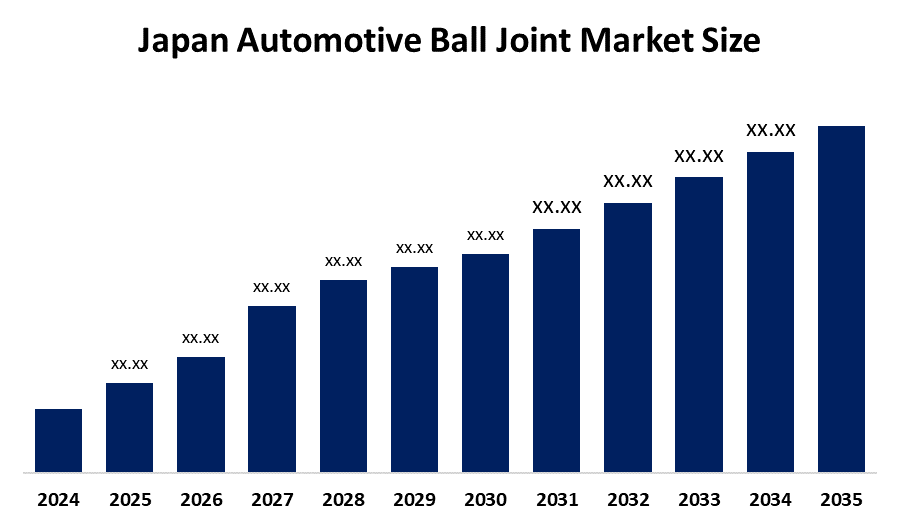
Q: What is the Japan automotive ball joint market size?A: Japan automotive ball joint market is expected to grow from USD 1104.7 million in 2024 to USD 2985.8 million by 2035, growing at a CAGR of 4.2% during the forecast period 2025-2035.
-
Q: What factors are driving the growth of the Japan automotive ball joint market?A: Market growth is driven by steady vehicle production, increasing demand for reliable suspension and steering systems, rising electric vehicle adoption, stricter safety regulations, suspension upgrades, and continuous replacement demand from Japan’s expanding vehicle parc.
-
Q: Which product type segment dominates the Japan automotive ball joint market?A: The lower ball joints segment dominated the market share in 2024 and is expected to grow at a remarkable CAGR due to higher load-bearing responsibility, greater wear exposure, frequent replacement needs, and widespread use across passenger and commercial vehicles.
-
Q: Which vehicle type holds the largest share in the Japan automotive ball joint market?A: Passenger vehicles accounted for the largest market share in 2024, supported by high vehicle ownership levels, strong production volumes, frequent suspension replacements, urban mobility demand, and consistent model upgrades in Japan.
-
Q: Which sales channel dominates the Japan automotive ball joint market?A: The OEM segment held the dominant share in 2024, driven by rising vehicle production, long-term supplier contracts, stringent quality standards, integrated sourcing practices, and growing electric vehicle assembly in Japan.
-
Q: What opportunities exist in the Japan automotive ball joint market?A: Opportunities arise from electric vehicle growth, increasing use of lightweight materials, advanced suspension system demand, precision forging innovations, surface treatment technologies, and rising aftermarket replacement needs from Japan’s aging vehicle fleet.
Need help to buy this report?