Japan AI in Patient Scheduling Software Market Size, Share, By Scheduling Type (Outpatient Scheduling, Inpatient Scheduling, Specialty Care Scheduling, Emergency & Urgent Care Scheduling, and Others), By Deployment Mode (Cloud-Based and On-Premises), By End Use (Hospitals, Clinics, Diagnostic & Imaging Centers, Ambulatory Surgical Centers, and Others), Japan AI in Patient Scheduling Software Market Insights, Industry Trends, Forecasts to 2035.
Industry: Healthcare
Japan AI in Patient Scheduling Software Market Insights Forecasts to 2035
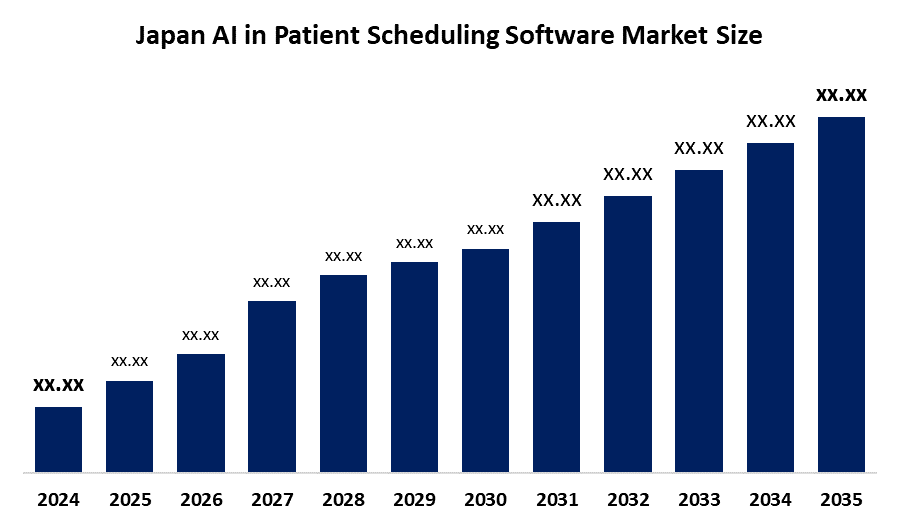
- Japan AI in Patient Scheduling Software Market CAGR 2024: 21.4%
- Japan AI in Patient Scheduling Software Market Segments: Scheduling Type, Deployment Mode, and End Use.
Get more details on this report -
Artificial intelligence patient scheduling software is software used in healthcare management to offer artificial intelligence and machine learning solutions aimed at improving appointment scheduling and optimizing resource management. It is mostly used in hospitals, clinics, testing centers, and ambulatory surgical centers as it is important in the management of outpatients, inpatients, in emergency situations, and specialty care situations. This is due to increased demand for healthcare services, lack of doctors, and its importance in improving efficiency while providing patients with improved service quality.
Technological innovation is still an important theme with an increase in the utilization of AI-optimized demand forecasts, real-time slot optimizations, cloud deployments, and integrations with electronic healthcare records. Indications of government initiatives in digital healthcare transformation, digital healthcare in hospitals, and AI utilization in national healthcare digital transformation programs have a positive impact on the market. In the coming years, developments in the application of value-based healthcare delivery, the need to automate clinical workflows, and cloud healthcare solutions are opportunities for AI patient scheduling solution vendors.
Japan AI in Patient Scheduling Software Market Report Coverage
| Report Coverage | Details |
|---|---|
| Base Year: | 2024 |
| Forecast Period: | 2025-2035 |
| Forecast Period CAGR 2025-2035 : | CAGR Of 21.4% |
| Historical Data for: | 2020-2023 |
| No. of Pages: | 189 |
| Tables, Charts & Figures: | 176 |
| Segments covered: | By Scheduling Type,By Deployment Mode |
| Companies covered:: | Market Players Investors End-users Government Authorities Consulting and Research Firm Venture capitalists Value-Added Resellers (VARs) |
| Pitfalls & Challenges: | COVID-19 Empact, Challenge, Future, Growth, & Analysis |
Get more details on this report -
Market Dynamics of the Japan AI in Patient Scheduling Software Market:
The driving factors in the Japan AI in patient scheduling software market are an increase in the volume of patients, an increase in the prevalence of chronic diseases, and the need to improve the efficiency of healthcare operations. Also, there is an increase in the volume of digital health technologies. There is also an increase in the trend to integrate scheduling solutions with EHR and hospital information systems.
The key factors that restrain the growth of the Japan AI in patient scheduling software market are associated with relatively higher setup costs for artificial intelligence solutions, difficulties that can emerge while integrating an artificial intelligence platform with traditional hospital information technology infrastructure, data privacy, and cybersecurity. Lack of information technology infrastructure, resistance to change, and lack of skilled professionals can limit artificial intelligence health information technology system acceptance among various end-user organizations.
The future of the Japan AI in patient scheduling software market looks bright and offers significant prospects with strong growth prospects for cloud deployments, predictive analytics, and real-time capacity management. Increase in demand for this software among ambulatory surgical centers, specialty clinics, diagnostics and government initiatives towards the digitalization of Japanese healthcare are expected to create considerable growth prospects for this market.
Market Segmentation
The Japan AI in patient scheduling software market share is classified into scheduling type, deployment mode, and end use.
By Scheduling Type:
The Japan AI in patient scheduling software market is divided by scheduling type into outpatient scheduling, inpatient scheduling, specialty care scheduling, emergency & urgent care scheduling, and others. Among these, the outpatient scheduling segment dominated the share in 2024 and is anticipated to grow at a remarkable rate during the forecast period. Outpatient scheduling was most prominent due to the high volume of appointments, the practice of following up visits regularly, the rise of chronic disease cases, the increased emphasis on reducing waiting times, as well as the widespread use of AI tools to optimize slot utilization, reduce no, shows, and enhance patient experience across healthcare facilities.
By Deployment Mode:
The Japan AI in patient scheduling software market is divided by deployment mode into cloud-based and on-premises. Among these, the cloud-based segment dominated the share in 2024 and is anticipated to grow at a remarkable rate during the forecast period. A majority of the cloud, based solutions were chosen because of the lower initial cost, quicker deployment, scalability, ability to work from anywhere, no hassle software updating, easy integration with hospital information systems, better data analytics capabilities, and the providers' growing inclination towards digital healthcare platforms on a subscription basis.
By End Use:
The Japan AI in patient scheduling software market is divided by end use into hospitals, clinics, diagnostic & imaging centers, ambulatory surgical centers, and others. Among these, hospitals dominated the share in 2024 and are anticipated to grow at a remarkable rate during the forecast period. On a hospital level, the complexity of multi, department scheduling, large patient inflow, the need to reduce waiting times, optimally use staff and infrastructure, comply with regulatory standards, and the increasing investments in AI, driven automation to improve operational efficiency and patient throughput have pushed these institutions to dominate.
Competitive Analysis:
The report offers the appropriate analysis of the key organisations/companies involved within the Japan AI in patient scheduling software market, along with a comparative evaluation primarily based on their product offering, business overviews, geographic presence, enterprise strategies, segment market share, and SWOT analysis. The report also provides an elaborative analysis focusing on the current news and developments of the companies, which includes product development, innovations, joint ventures, partnerships, mergers & acquisitions, strategic alliances, and others. This allows for the evaluation of the overall competition within the market.
Top Key Companies in Japan AI in Patient Scheduling Software Market:
- moCal
- Cabot Solutions Japan
- Needswell Co., Ltd.
- EUCALIA Inc.
- Omi Japan Co., Ltd.
Recent Developments in Japan AI in Patient Scheduling Software Market:
In August 2025, Fujitsu Limited introduced an AI agent platform to the healthcare sector, using NVIDIA technology to orchestrate and automate patients' scheduling and operational workflows across multiple hospital-specific agents.
Key Target Audience
- Market Players
- Investors
- End-users
- Government Authorities
- Consulting and Research Firm
- Venture capitalists
- Value-Added Resellers (VARs)
Market Segment
This study forecasts revenue at the Japan, regional, and country levels from 2020 to 2035.Spherical Insights has segmented the Japan AI in patient scheduling software market based on the below-mentioned segments:
AI In Patient Scheduling Software Market, By Scheduling Type
- Outpatient Scheduling
- Inpatient Scheduling
- Specialty Care Scheduling
- Emergency & Urgent Care Scheduling
- Others
AI In Patient Scheduling Software Market, By Deployment Mode
- Cloud-based
- On-Premises
AI In Patient Scheduling Software Market, By End Use
- Hospitals
- Clinics
- Diagnostic & Imaging Centers
- Ambulatory Surgical Centers
- Others
Frequently Asked Questions (FAQ)
-
Q: What is the Japan AI in patient scheduling software market size?A: Japan AI in patient scheduling software market is expected to grow at a CAGR of 21.4% during the forecast period 2025-2035, with 2024 as the base year for analysis.
-
Q: What are the key growth drivers of the Japan AI in patient scheduling software market?A: Market growth is driven by rising patient volumes, increasing prevalence of chronic diseases, growing demand for efficient healthcare operations, expanding adoption of digital health technologies, and increased integration of AI-based scheduling solutions with electronic health records and hospital information systems.
-
Q: What factors restrain the Japan AI in patient scheduling software market?A: Market growth is restrained by high initial setup costs of AI solutions, integration challenges with legacy hospital IT infrastructure, data privacy and cybersecurity concerns, resistance to technology adoption, limited IT infrastructure in some facilities, and shortage of skilled professionals.
-
Q: What are the deployment mode segments in the market?A: The market is segmented into cloud-based and on-premises deployment modes.
-
Q: What are the end-use segments in the market?A: The market is segmented into hospitals, clinics, diagnostic & imaging centers, ambulatory surgical centers, and others.
-
Q: Who are the key players in the Japan AI in patient scheduling software market?A: Key companies operating in the market include moCal, Cabot Solutions Japan, Needswell Co., Ltd., EUCALIA Inc., and Omi Japan Co., Ltd.
-
Q: Who are the target audiences for this market report?A: The report targets market players, investors, end-users, government authorities, consulting and research firms, venture capitalists, and value-added resellers (VARs).
Need help to buy this report?