Italy Anti-Caking Market Size, Share, and COVID-19 Impact Analysis, By Type (Calcium Compounds, Sodium Compounds, Magnesium Compounds, and Other) By Application (Bakery Products, Dairy Products, Soups and Sauces, and Other), and Italy Anti-Caking Market Insights, Industry Trend, Forecasts to 2035
Industry: Chemicals & Materials
Italy Anti-Caking Market Insights Forecasts to 2035
- The Market Size is Expected to Grow at a CAGR of Around 5.7% from 2025 to 2035
- Italy Anti-Caking Market Size is Expected to Hold a Significant Share by 2035.
Get more details on this report -
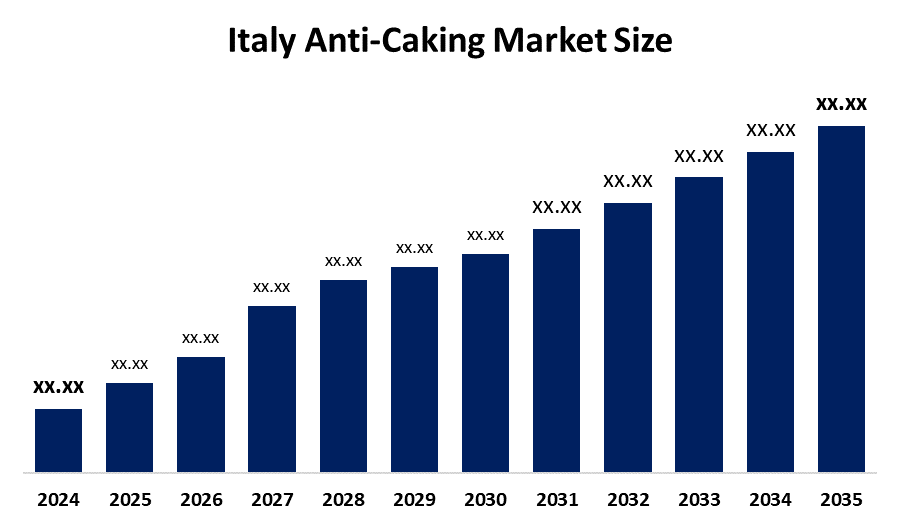
According to a research report published by Spherical Insights & Consulting, the Italy anti-caking market size is anticipated to reach USD 4.05 billion by 2035, growing at a CAGR of 5.7% from 2025 to 2035. The Italy anti-caking market is driven by increasing demand for powdered and granulated food products, rising food processing activities, growing convenience food consumption, stringent quality standards, and the need to enhance product shelf life and flowability.
Market Overview
The Italy anti-caking market refers to the sector focused on the production, distribution, and application of anti-caking agents used in powdered and granulated products. These additives help prevent clumping, improve flowability, and maintain product quality in food, feed, fertilizer, and industrial applications across Italy. Furthermore, the market is growing due to rising demand for processed and convenience foods, expansion of the food processing industry, increasing use of powdered ingredients, growing focus on product quality and shelf life, and strict food safety and quality standards.
One of the key market trends in Italy is the increasing preference for clean-label and natural ingredients. Italian consumers are becoming more health-conscious and carefully reading product labels, which is encouraging food manufacturers to reduce the use of synthetic additives. As a result, there is a growing shift toward natural anti-caking agents such as rice flour, cornstarch, calcium carbonate, and plant-based cellulose. This trend is especially strong in premium, organic, and specialty food segments, where transparency, simplicity of ingredients, and natural positioning play a major role in purchasing decisions.
the technology perspective, continuous advancements in food processing and additive formulation are improving the effectiveness of anti-caking agents. Techniques such as microencapsulation help protect active ingredients from moisture, while advanced moisture-control solutions and improved particle-size engineering enhance flowability and product stability. These innovations allow manufacturers to achieve better performance with lower additive quantities. In addition, automation and precision dosing systems are increasingly used in production facilities to ensure consistent application, reduce material waste, and support sustainability initiatives.
In terms of government policies, Italy strictly adheres to European Union food safety regulations, particularly Regulation (EC) No. 1333/2008, which governs approved food additives, permitted usage levels, and labeling requirements. The Italian Ministry of Health actively monitors compliance through inspections and quality controls, ensuring consumer safety. Together, evolving consumer preferences, technological progress, and strong regulatory oversight continue to shape the Italy anti-caking market.
Report Coverage
This research report categorizes the market for the Italy anti-caking market based on various segments and regions, and forecasts revenue growth and analyses trends in each submarket. The report analyses the key growth drivers, opportunities, and challenges influencing the Italy anti-caking market. Recent market developments and competitive strategies, such as expansion, product launch, development, partnership, merger, and acquisition have been included to draw the competitive landscape in the market. The report strategically identifies and profiles the key market players and analyses their core competencies in each sub-segment of the Italy anti-caking market.
Italy Anti-Caking Market Report Coverage
| Report Coverage | Details |
|---|---|
| Base Year: | 2024 |
| Forecast Period: | 2025-2035 |
| Forecast Period CAGR 2025-2035 : | CAGR Of 5.7% |
| Historical Data for: | 2020-2023 |
| No. of Pages: | 200 |
| Segments covered: | By Type, By Application |
| Companies covered:: | Evonik Industries AG Huber Engineered Materials Kao Corporation Cargill Inc. Corbion Purac BASF SE IMAC Inc. PPG Industries, Inc. Brenntag AG Others |
| Pitfalls & Challenges: | COVID-19 Empact, Challenge, Future, Growth, & Analysis |
Get more details on this report -
Driving Factors
The Italy anti-caking market is driven by the growing consumption of processed and packaged foods, increased use of powdered and granulated ingredients, and the expansion of the food and beverage industry. Rising consumer demand for product quality, longer shelf life, and easy handling supports market growth. In addition, strict food safety regulations, the shift toward clean-label and natural additives, and technological advancements in food processing further drive the adoption of anti-caking agents across Italy.
Restraining Factors
The Italy anti-caking market faces restraints due to strict regulatory approvals for food additives, which can delay product launches and increase compliance costs. Growing consumer concerns over synthetic additives limit their usage, while natural alternatives often have higher costs and lower efficiency, impacting price-sensitive manufacturers and small food producers.
Market Segmentation
The Italy anti-caking market share is classified into type and application.
- The calcium compounds segment accounted for the largest revenue market share in 2024 and is expected to grow at a significant CAGR during the forecast period.
The Italy anti-caking market is segmented by type into calcium compounds, sodium compounds, magnesium compounds, and others. Among these, the calcium compounds segment accounted for the largest revenue market share in 2024 and is expected to grow at a significant CAGR during the forecast period. Calcium compounds dominate the market because they are highly effective in preventing moisture absorption and clumping in a wide range of powdered and granulated foods. They are widely approved under EU food regulations, making them safe and easy to use for manufacturers. In addition, calcium-based anti-caking agents are cost-effective, stable during processing, and suitable for clean-label and natural product positioning, which aligns well with changing consumer preferences in Italy.
- The bakery products segment accounted for the largest revenue share in 2024 and is expected to grow at a significant CAGR during the forecast period.
The Italy anti-caking market is segmented by application into bakery products, dairy products, soups and sauces, and other. Among these, the bakery products segment accounted for the largest revenue share in 2024 and is expected to grow at a significant CAGR during the forecast period. Bakery products dominate the market because bakery mixes, flour blends, and powdered ingredients require consistent flowability and moisture control during processing and storage. Italy has a strong bakery culture with high consumption of bread, pizza, and baked goods, increasing demand for high-quality ingredients. Anti-caking agents help maintain texture, prevent lump formation, and ensure uniform mixing, making them essential in both industrial and artisanal bakery production across the country.
Competitive Analysis:
The report offers the appropriate analysis of the key organizations/companies involved within the Italy anti-caking market, along with a comparative evaluation primarily based on their product offering, business overviews, geographic presence, enterprise strategies, segment market share, and SWOT analysis. The report also provides an elaborate analysis focusing on the current news and developments of the companies, which includes product development, innovations, joint ventures, partnerships, mergers & acquisitions, strategic alliances, and others. This allows for the evaluation of the overall competition within the market.
List of Key Companies
- Evonik Industries AG
- Huber Engineered Materials
- Kao Corporation
- Cargill Inc.
- Corbion Purac
- BASF SE
- IMAC Inc.
- PPG Industries, Inc.
- Brenntag AG
- Others
Key Target Audience
- Market Players
- Investors
- End-users
- Government Authorities
- Consulting and Research Firm
- Venture capitalists
- Value-Added Resellers (VARs)
Recent Developments:
In 2025, Kao launched NERASOFT S10, a new generation of sustainable fabric softener technology aimed at reducing environmental impact without compromising performance.
Market Segment
This study forecasts revenue at the Italy, regional, and country levels from 2020 to 2035. Spherical Insights has segmented the Italy anti-caking market based on the below-mentioned segments:
Italy Anti-Caking Market, By Type
- Calcium Compounds
- Sodium Compounds
- Magnesium Compounds
- Other
Italy Anti-Caking Market, By Application
- Bakery Products
- Dairy Products
- Soups and Sauces
- Other
Frequently Asked Questions (FAQ)
-
Q1: What is the Italy alfalfa hay market?It involves the cultivation, harvesting, processing, and sale of alfalfa hay in Italy, primarily used as nutritious feed for livestock, poultry, and horses.
-
Q2: What are the main product types in this market?Alfalfa hay is sold as bales, pellets, and cubes, each offering different storage, handling, and feeding advantages.
-
Q3: Which application segment is the largest in Italy?Meat and dairy animal feed dominate, as alfalfa improves milk yield, animal growth, and overall livestock health.
-
Q4: What factors drive market growth?Increasing livestock and dairy production, demand for high-quality feed, government incentives, favorable climate, and export opportunities drive growth.
-
Q5: What challenges does the market face?High cultivation costs, limited farmland, pests, diseases, and unpredictable weather can restrict production and affect supply consistency.
-
Q6: Are there technological innovations in the market?Yes, precision farming, automated harvesting, advanced irrigation, moisture monitoring, pelleting, and biodegradable packaging are improving efficiency and quality.
Need help to buy this report?