Global Intraoperative Fluorescence Imaging Market Size, Share, and COVID-19 Impact Analysis, By Product Type (Devices, Imaging Agents, Fluorescein Sodium, and Others), By Light Source (Laser Diodes, Light Emitting Diodes, and Filtered Lamp Source), By End User (Hospitals, Clinics, and Ambulatory Surgical Centers), and By Region (North America, Europe, Asia-Pacific, Latin America, Middle East, and Africa), Analysis and Forecast 2025 - 2035.
Industry: Healthcare
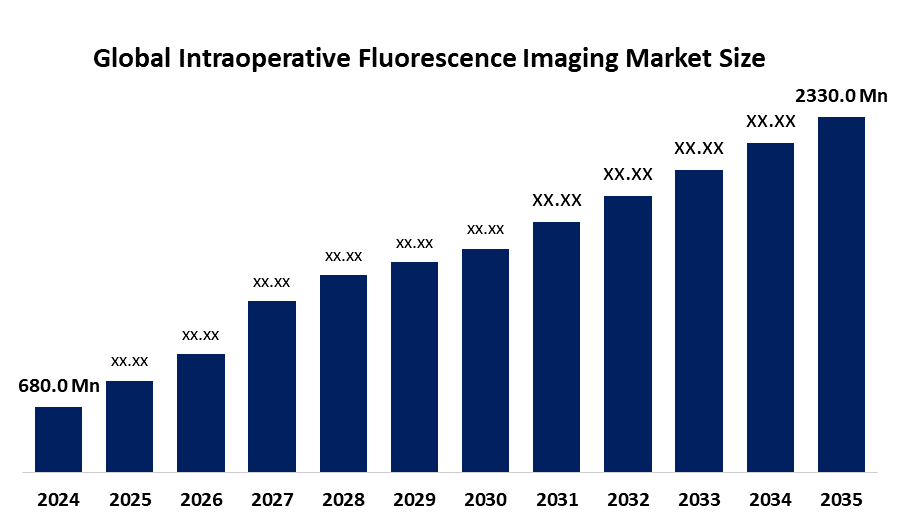
According to Spherical Insights, The Global Intraoperative Fluorescence Imaging Market Size is Expected to Grow from USD 680.0 Million in 2024 to USD 2330.0 Million by 2035, at a CAGR of 11.85% during the forecast period 2025-2035.
Global Intraoperative Fluorescence Imaging Market Insights Forecasts to 2035
- The Global Intraoperative Fluorescence Imaging Market Size Was Estimated at USD 680.0 Million in 2024
- The Market Size is Expected to Grow at a CAGR of around 11.85% from 2025 to 2035
- The Worldwide Intraoperative Fluorescence Imaging Market Size is Expected to Reach USD 2330.0 Million by 2035
Get more details on this report -
Key Takeaways -
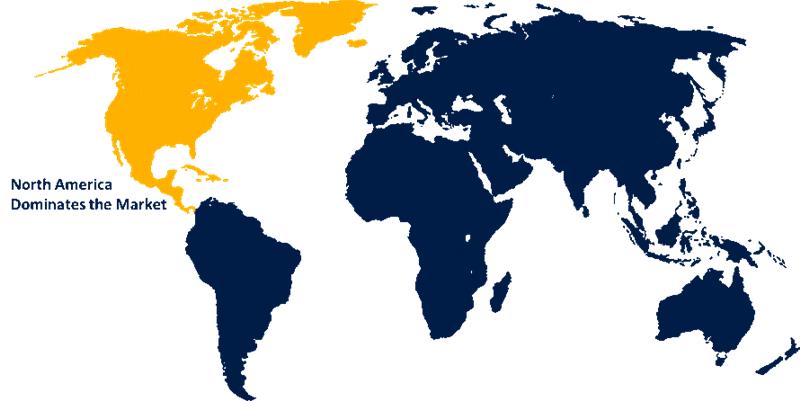
- North America dominated the market with the largest share in 2024.
- Asia Pacific is expected to grow the fastest during the forecast period.
- By product type, the devices segment dominates the intraoperative fluorescence imaging market, while the imaging agents segment is the emerging segment in the market.
- By light source, the laser diodes segment dominated the market with a significant share, on the other hand, the LEDs segment is emerging in the Intraoperative Fluorescence Imaging market.
- By end user, the hospitals segment dominated the intraoperative fluorescence imaging market, on the other hand, the ambulatory surgical centers segment is steadily emerging in the market.
According to a research report published by Spherical Insights and Consulting, The Global Intraoperative Fluorescence Imaging Market size was worth around USD 680.0 Million in 2024 and is predicted to Grow to around USD 2330.0 Million by 2035 with a compound annual growth rate (CAGR) of 11.85% from 2025 and 2035. The market for intraoperative fluorescence imaging has a number of opportunities to grow due to the development of cancer-targeted molecular probes, AI and AR integration, robotic compatible systems, and strategic collaborations with hospitals and biotechnology firms.
Key Trends in Medical Intraoperative Fluorescence Imaging Market –
- Inclination towards near infrared (NIR-II) imaging
- Integration with robotics
- Development of cancer-specific molecular tracers
- Adoption of hybrid imaging techniques
- Expanding applications in non-oncological surgeries
- Healthcare infrastructure development
Market Overview
The global intraoperative fluorescence imaging industry refers to the market encompassing specialized surgical imaging devices that use light-activated dyes (commonly ICG) to provide real-time visualization of tissues, blood vessels, and tumors during surgery. Intraoperative fluorescence imaging is an intraoperative angiography-like imaging modality using fluorescent indocyanine green excited with laser light. Fluorescence imaging is gaining traction across multiple surgical specialties as an invaluable intraoperative tool. Its use in clinical practice and research seems destined to increase. There is an increasing technological advancement, especially the combination of near infrared fluorescence (NIRF) imaging and artificial intelligence (AI), which has improved real-time visualization during surgery and accuracy. As more medical professionals learned about the benefits of fluorescence imaging, it became more widely used in a variety of surgical specialities.
Innovation and market expansion are anticipated as a result of major players' growing R&D expenditures and expanding partnerships. For instance, in November 2024, Lumicell, Inc., a privately held company focused on developing innovative fluorescence-guided imaging technologies for cancerous tissue detection during surgery, announced LUMISIGHT (pegulicianine) was granted a permanent Healthcare Common Procedure Coding System (HCPCS) code for Hospital Outpatient Prospective Payment System (OPPS) by the Centers for Medicare & Medicaid Services (CMS).
Report Coverage
This research report categorizes the intraoperative fluorescence imaging market based on various segments and regions, forecasts revenue growth, and analyzes trends in each submarket. The report analyses the key growth drivers, opportunities, and challenges influencing the intraoperative fluorescence imaging market. Recent market developments and competitive strategies such as expansion, type launch, development, partnership, merger, and acquisition have been included to draw the competitive landscape in the market. The report strategically identifies and profiles the key market players and analyses their core competencies in each sub-segment of the intraoperative fluorescence imaging market.
Global Intraoperative Fluorescence Imaging Market Report Coverage
| Report Coverage | Details |
|---|---|
| Base Year: | 2024 |
| Market Size in 2024: | USD 680.0 Million |
| Forecast Period: | 2025-2035 |
| Forecast Period CAGR 2025-2035 : | CAGR of 11.85% |
| 2035 Value Projection: | USD 2330.0 Million |
| Historical Data for: | 2020-2023 |
| No. of Pages: | 240 |
| Tables, Charts & Figures: | 95 |
| Segments covered: | By Product Type, By Light Source |
| Companies covered:: | Stryker Corporation, KARL STORZ SE & Co. KG, Hamamatsu Photonics K.K., Olympus Corporation, Getinge AB, Leica Microsystems (Danaher Corporation), Quest Medical Imaging B.V., Medtronic plc, Shimadzu Corporation, PerkinElmer Inc., Fluoptics, OnLume Inc., VisionSense, Carl Zeiss Meditec AG, Novadaq Technologies, Others, and Key Players |
| Pitfalls & Challenges: | COVID-19 Empact, Challenge, Future, Growth, & Analysis |
Get more details on this report -
Driving Factors
Increasing prevalence of complex diseases requiring surgical intervention
As per an estimation, the Global Surgery 2030 report established that up to 30% of the global disease burden may require surgery, and in fact, 16.9 million lives, nearly one-third of all deaths worldwide, may be lost annually from conditions that need surgical care. More than 320 million surgical procedures are needed to address the burden of surgical disease. Thus, an increasing number of surgical interventions due to complex diseases is contributing to driving the market demand for intraoperative fluorescence imaging.
Research & Development in Fluorophores
There is a surging advancement in fluorescence microscopy that is unlocking the details of biological systems with high spatiotemporal precision. An increasing R&D activity emphasizing the creation of small-molecule organic fluorophores is contributing to propel the intraoperative fluorescence imaging market.
Restraining Factors
Increased cost and limited availability of skilled professionals
An increased cost of equipment due to specialized fluorophores and imaging agents hindering its adoption in smaller healthcare facilities is challenging the market growth. Further, the limited accessibility as well as regulatory challenges are restraining the intraoperative fluorescence imaging market.
Market Segmentation
The Intraoperative Fluorescence Imaging Market share is classified into product type, light source, and end user.
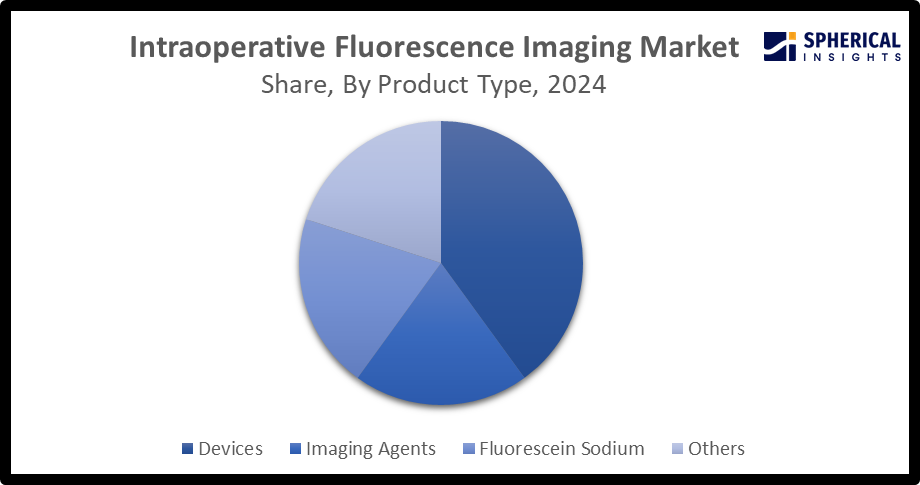
- The devices segment dominated the market with the largest share of about 62.5% in 2024 and is projected to grow at a substantial CAGR during the forecast period.
Based on the product type, the intraoperative fluorescence imaging market is divided into devices, imaging agents, fluorescein sodium, and others. Among these, the devices segment dominated the market with the largest share of about 62.5% in 2024 and is projected to grow at a substantial CAGR during the forecast period.This is due to its advanced visualization capability and widespread adoption in surgical procedures. Intraoperative fluorescence imaging devices like KARL STORZ IMAGE1 S Rubina or Fluobeam-800 provide real-time, image-guided surgery using near-infrared (NIR) fluorescence, especially for visualizing tissue perfusion, tumors, and anatomical structures like bile ducts. While the imaging agents segment is the emerging segment in the intraoperative fluorescence imaging market, due to its critical role in enhancing image quality, with ICG being the most commonly used agent.
Get more details on this report -
- The laser diodes segment dominated the market with a significant market share of nearly 45.0% in 2024 and is projected to grow at a substantial CAGR during the forecast period.
Based on the light source, the intraoperative fluorescence imaging market is divided into laser diodes, light emitting diodes, and filtered lamp source. Among these, the laser diodes segment dominated the market with a significant market share of nearly 45.0% in 2024 and is projected to grow at a substantial CAGR during the forecast period. Laser diodes are highly effective light sources for intraoperative fluorescence imaging, providing a strong, precise, and narrow bandwidth excitation. The high excitation efficiency, narrow wavelength specificity, and higher signal-to-noise ratio in near-infrared imaging are driving the market. Further, the LEDs segment is a growing segment driven by its affordability and versatility across various surgical applications.
- The hospitals segment dominated the market with a significant market share of over 50.0% in 2024 and is projected to grow at a substantial CAGR during the forecast period.
Based on the end user, the intraoperative fluorescence imaging market is divided into hospitals, clinics, and ambulatory surgical centers. Among these, the hospitals segment dominated the market with a significant market share of over 50.0% in 2024 and is projected to grow at a substantial CAGR during the forecast period. An increased accessibility of advanced infrastructure and skilled professionals is propelling the segmental market growth. While the ambulatory surgical centers segment is emerging steadily in the market, driven by the presence of safe and effective technology.
Regional Segment Analysis of the Intraoperative Fluorescence Imaging Market
- North America (U.S., Canada, Mexico)
- Europe (Germany, France, U.K., Italy, Spain, Rest of Europe)
- Asia-Pacific (China, Japan, India, Rest of APAC)
- South America (Brazil and the Rest of South America)
- The Middle East and Africa (UAE, South Africa, Rest of MEA)
Get more details on this report -
North America is anticipated to hold the largest share of the intraoperative fluorescence imaging market over the predicted timeframe.
North America is anticipated to hold the largest share of about 35.0% in the intraoperative fluorescence imaging market over the predicted timeframe. The market ecosystem in North America is strong, due to the upsurging demand for enhanced surgical precision in oncology and cardiovascular procedures. Further, the presence of key players like Stryker, Medtronic, and KARL STORZ contributes to the market growth. The U.S. is leading the North America intraoperative fluorescence imaging market, due to increased demand for precision in minimally invasive surgeries and rising cancer prevalence.
Asia Pacific is expected to grow at a rapid CAGR of approximately 8.0% in the intraoperative fluorescence imaging market during the forecast period. The Asia Pacific area has a thriving market for intraoperative fluorescence imaging due to the rising adoption of advanced imaging technologies like C-arms, iMRI, and iCT, which enhance surgical precision and patient outcomes. Japan is the leading country in the region’s market, owing to the presence of advanced healthcare infrastructure and significant investment in medical devices.
Competitive Analysis:
The report offers the appropriate analysis of the key organizations/companies involved within the intraoperative fluorescence imaging market, along with a comparative evaluation primarily based on their type of offering, business overviews, geographic presence, enterprise strategies, segment market share, and SWOT analysis. The report also provides an elaborative analysis focusing on the current news and developments of the companies, which includes type development, innovations, joint ventures, partnerships, mergers & acquisitions, strategic alliances, and others. This allows for the evaluation of the overall competition within the market.
List of Key Companies
- Stryker Corporation
- KARL STORZ SE & Co. KG
- Hamamatsu Photonics K.K.
- Olympus Corporation
- Getinge AB
- Leica Microsystems (Danaher Corporation)
- Quest Medical Imaging B.V.
- Medtronic plc
- Shimadzu Corporation
- PerkinElmer Inc.
- Fluoptics
- OnLume Inc.
- VisionSense
- Carl Zeiss Meditec AG
- Novadaq Technologies
- Others
Key Target Audience
- Market Players
- Investors
- End-users
- Government Authorities
- Consulting And Research Firm
- Venture capitalists
- Value-Added Resellers (VARs)
Recent Development
- In March 2026, Vergent Bioscience, a clinical-stage biotechnology company advancing molecularly targeted intraoperative imaging, announced the initiation of VISUALIZE 2, a Phase 3, multi-center, pivotal study to confirm the safety and efficacy of abenacianine to visualize tumors during lung cancer surgery.
- In December 2025, PNAS published a research article entitled ‘Guiding esophagectomy with intraoperative NIR-II fluorescence video imaging and rapid computation’.
- In November 2024, Lumicell, Inc., a privately held company focused on developing innovative fluorescence-guided imaging technologies for cancerous tissue detection during surgery, announced LUMISIGHT (pegulicianine) was granted a permanent Healthcare Common Procedure Coding System (HCPCS) code for Hospital Outpatient Prospective Payment System (OPPS) by the Centers for Medicare & Medicaid Services (CMS).
- In March 2024, Lumicell Inc., a privately held company focused on innovative fluorescence-guided imaging technologies for cancer detection during surgery, highlights presentations from clinical studies examining the use of investigational LUMISIGHT (pegulicianine) in combination with Lumicell Direct Visualization System (DVS) at the Society of Surgical Oncology Annual Meeting in Atlanta, Georgia.
Market Segment
This study forecasts revenue at global, regional, and country levels from 2020 to 2035. Spherical Insights has segmented the Intraoperative Fluorescence Imaging Market based on the below-mentioned segments:
Global Intraoperative Fluorescence Imaging Market, By Product Type
- Devices
- Imaging Agents
- Fluorescein Sodium
- Others
Global Intraoperative Fluorescence Imaging Market, By Light Source
- Laser Diodes
- Light Emitting Diodes
- Filtered Lamp Source
Global Intraoperative Fluorescence Imaging Market, By End User
- Hospitals
- Clinics
- Ambulatory Surgical Centers
Global Intraoperative Fluorescence Imaging Market, By Regional Analysis
- North America
- US
- Canada
- Mexico
- Europe
- Germany
- UK
- France
- Italy
- Spain
- Russia
- Rest of Europe
- Asia Pacific
- China
- Japan
- India
- South Korea
- Australia
- Rest of Asia Pacific
- South America
- Brazil
- Argentina
- Rest of South America
- Middle East & Africa
- UAE
- Saudi Arabia
- Qatar
- South Africa
- Rest of the Middle East & Africa
Frequently Asked Questions (FAQ)
-
1.What is the market size of the intraoperative fluorescence imaging market?The global Intraoperative Fluorescence Imaging market size is expected to grow from USD 680.0 Million in 2024 to USD 2330.0 Million by 2035, at a CAGR of 11.85% during the forecast period 2025-2035.
-
2.Which region holds the largest share of the Intraoperative Fluorescence Imaging market?North America is anticipated to hold the largest share of the Intraoperative Fluorescence Imaging market over the predicted timeframe.
-
3.What is the forecasted CAGR of the Global Intraoperative Fluorescence Imaging Market from 2024 to 2035?The market is expected to grow at a CAGR of around 11.85% during the period 2024–2035.
-
4.Who are the top companies that are involved in the Global Intraoperative Fluorescence Imaging Market?Key players include Stryker Corporation, KARL STORZ SE & Co. KG, Hamamatsu Photonics K.K., Olympus Corporation, Getinge AB, Leica Microsystems (Danaher Corporation), Quest Medical Imaging B.V., Medtronic plc, Shimadzu Corporation, PerkinElmer Inc., Fluoptics, OnLume Inc., VisionSense, Carl Zeiss Meditec AG, and Novadaq Technologies.
-
5.What are the main drivers in the Intraoperative Fluorescence Imaging market?An increasing prevalence of complex diseases requiring surgical intervention along with an increasing research and development activities, are major market growth drivers of the Intraoperative Fluorescence Imaging market.
-
6.What challenges are limiting the adoption of Intraoperative Fluorescence Imaging?Factors like the increased cost and limited availability of skilled professionals remain key restraints in the Intraoperative Fluorescence Imaging market.
-
7.What are the key trends in the intraoperative fluorescence imaging market?The inclination towards near infrared imaging, integration with robotics, development of cancer-specific molecular tracers, hybrid imaging techniques, and healthcare infrastructure development are major key trends in the intraoperative fluorescence imaging market.
Need help to buy this report?