Global Hypercoagulability Market Size, Share, By Type (Factor V Leiden, Prothrombin 20210, Antiphospholipid Syndrome, and Others), By Drug Class (Heparin, Vitamin K Antagonists, Direct Thrombin Inhibitors, Factor Xa Inhibitors, and Others), By Route of Administration (Oral and Injectable), By End User (Hospitals, Specialty Clinics, Homecare, and Others), and By Region (North America, Europe, Asia-Pacific, Latin America, Middle East, and Africa), Analysis and Forecast 2025 - 2035
Industry: Healthcare
Global Hypercoagulability Market Insights Forecasts to 2035
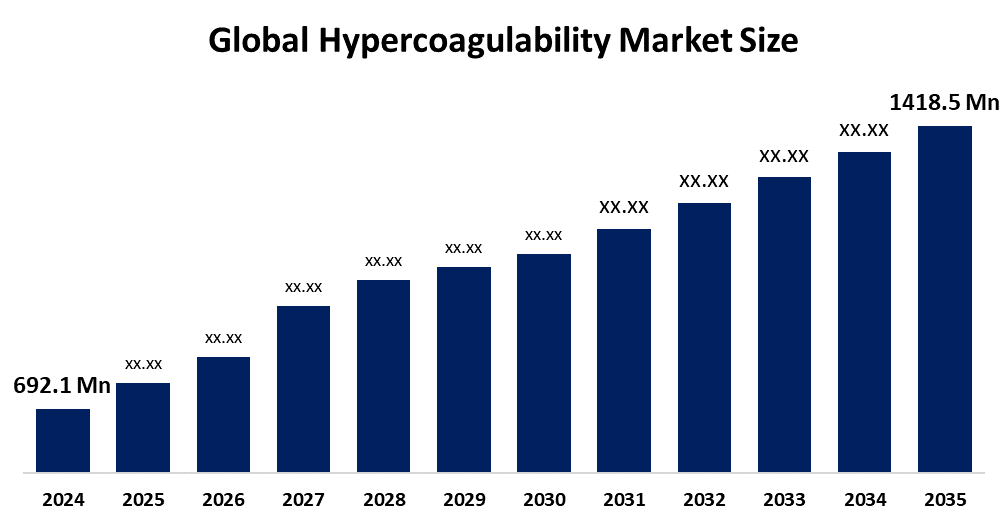
- The Global Hypercoagulability Market Size Was Estimated at USD 692.1 Million in 2024
- The Market Size is Expected to Grow at a CAGR of around 6.74% from 2025 to 2035
- The Worldwide Hypercoagulability Market Size is Expected to Reach USD 1418.5 Million by 2035
- Asia Pacific is expected to grow the fastest during the forecast period.
Get more details on this report -
According to a research report published by Spherical Insights and Consulting, The Global Hypercoagulability Market Size Was Worth Around USD 692.1 Million In 2024 And Is Predicted To Grow To Around USD 1418.5 Million By 2035 With A Compound Annual Growth Rate (CAGR) Of 6.74% From 2025 To 2035. The global hypercoagulability market is driven by the rising prevalence of thrombotic disorders, increasing geriatric population, growing awareness and early diagnosis, advancements in anticoagulant therapies, and expanding healthcare infrastructure, supporting higher treatment adoption and improved patient management outcomes worldwide.
Market Overview
The global hypercoagulability market refers to the diagnosis, prevention, and treatment of conditions where blood has an increased tendency to clot, which can result in severe medical problems like deep vein thrombosis, pulmonary embolism and stroke. Hypercoagulability is a medical condition also known as thrombophilia, which leads to abnormal blood clotting through genetic disorders, chronic illnesses and environmental factors, requiring patients to receive anticoagulant treatment with regular medical assessments. The market operates in hospitals and speciality clinics and home care settings, where healthcare professionals utilize anticoagulants and coagulation diagnostic tools and monitoring systems to treat patients with both acute and chronic thrombotic conditions. The market expansion receives support from two factors, which include the development of healthcare facilities and the growing public understanding of the importance of early health assessments. The market receives government support through initiatives like India's "75/25" program, which aims to deliver standard medical services to 75 million patients who have diabetes and hypertension by December 2025, and the testing regulations for blood products, which will achieve international testing standards by March 2026. The adoption of new oral anticoagulants and the creation of reversal agents, together with AI-based diagnostic systems and digital patient monitoring solutions will generate worldwide market growth through improved patient care.
Report Coverage
This research report categorizes the hypercoagulability market based on various segments and regions, forecasts revenue growth, and analyzes trends in each submarket. The report analyses the key growth drivers, opportunities, and challenges influencing the global hypercoagulability market. Recent market developments and competitive strategies, such as expansion, product launch, development, partnership, merger, and acquisition, have been included to draw the competitive landscape in the market. The report strategically identifies and profiles the key market players and analyses their core competencies in each sub-segment of the hypercoagulability market.
Global Hypercoagulability Market Report Coverage
| Report Coverage | Details |
|---|---|
| Base Year: | 2024 |
| Market Size in 2024: | USD 692.1 Million |
| Forecast Period: | 2025-2035 |
| Forecast Period CAGR 2025-2035 : | 6.74% |
| 2035 Value Projection: | USD 1418.5 Million |
| Historical Data for: | 2020-2023 |
| No. of Pages: | 268 |
| Tables, Charts & Figures: | 112 |
| Segments covered: | By Type, By Drug Class, By Route of Administration, By End User |
| Companies covered:: | Pfizer Inc., F. Hoffmann-La Roche Ltd., Novartis AG, Sanofi, Bayer AG, Bristol-Myers Squibb, Johnson & Johnson, Teva Pharmaceutical Industries Ltd., Fresenius Kabi AG, Hikma Pharmaceuticals PLC, Eisai Co., Ltd., Daiichi Sankyo, Boehringer Ingelheim GmbH, Others |
| Pitfalls & Challenges: | Covid 19 Impact Challenges, Future, Growth and Analysis |
Get more details on this report -
Driving Factors
The global hypercoagulability market is driven by the rising prevalence of thrombotic disorders, increasing geriatric population, and growing awareness regarding early diagnosis and treatment. Expanding healthcare infrastructure and improved access to advanced diagnostic technologies are enhancing detection rates globally. The increasing adoption of novel oral anticoagulants due to their safety, efficacy, and convenience is further supporting market growth. Additionally, government initiatives are contributing to expansion, such as regulatory alignment efforts in March 2026 to standardize blood product testing. These developments are improving treatment accessibility, quality standards, and overall patient outcomes across emerging markets.
Restraining Factors
The global hypercoagulability market faces restraints due to high treatment costs, increased risk of bleeding complications associated with anticoagulant therapies, limited awareness in developing regions, and strict regulatory requirements that delay drug approvals and market entry.
Market Segmentation
The hypercoagulability market share is classified into type, drug class, route of administration, and end user.
- The factor V Leiden segment dominated the market in 2024, approximately 42.7%, and is anticipated to grow at a remarkable CAGR during the forecast period.
Based on the type, the global hypercoagulability market is divided into factor V leiden, prothrombin 20210, antiphospholipid syndrome, and others. Among these, the factor V leiden segment dominated the market in 2024, approximately 42.7%, and is anticipated to grow at a remarkable CAGR during the forecast period. Growth is driven by its strong genetic inheritance pattern, higher detection rates in developed regions, increased screening in family history cases, and integration of molecular diagnostics, improving identification accuracy and targeted patient monitoring.
Get more details on this report -
- The Heparin segment dominated the market in 2024, approximately 49.4%, and is anticipated to grow at a remarkable CAGR during the forecast period.
Based on the drug class, the global hypercoagulability market is divided into heparin, vitamin K antagonists, direct thrombin inhibitors, factor Xa inhibitors, and others. Among these, the heparin segment dominated the market in 2024, approximately 49.4%, and is anticipated to grow at a remarkable CAGR during the forecast period. Growth is supported by its critical role in perioperative care, extensive use in dialysis and intensive care units, established dosing protocols, and continued reliance in managing high-risk thrombotic emergencies.
- The Oral segment dominated the market in 2024, approximately 54.3%, and is anticipated to grow at a remarkable CAGR during the forecast period.
Based on the route of administration, the global hypercoagulability market is divided into oral and injectable. Among these, the oral segment dominated the market in 2024, approximately 54.3%, and is anticipated to grow at a remarkable CAGR during the forecast period. Growth is fueled by increasing preference for outpatient treatment models, reduced dependency on clinical monitoring, availability of fixed-dose regimens, and expanding use of direct oral anticoagulants in long-term thrombosis prevention strategies.
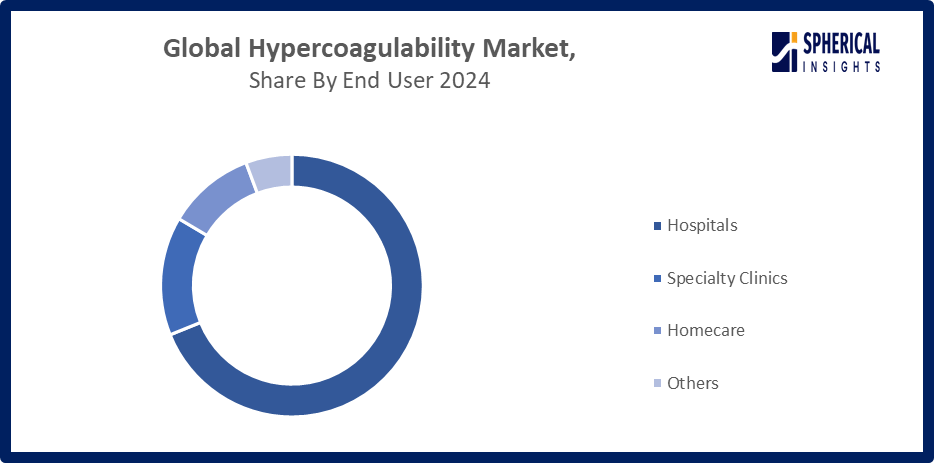
- The Hospitals segment dominated the market in 2024, approximately 68.9%, and is anticipated to grow at a remarkable CAGR during the forecast period.
Based on the end user, the global hypercoagulability market is divided into hospitals, specialty clinics, homecare, and others. Among these, the hospitals segment dominated the market in 2024, approximately 68.9%, and is anticipated to grow at a remarkable CAGR during the forecast period. Growth is driven by concentration of critical care infrastructure, higher surgical volumes requiring thromboprophylaxis, availability of multidisciplinary expertise, and integration of advanced coagulation testing within hospital-based treatment pathways.
Regional Segment Analysis of the Hypercoagulability Market
- North America (U.S., Canada, Mexico)
- Europe (Germany, France, U.K., Italy, Spain, Rest of Europe)
- Asia-Pacific (China, Japan, India, Rest of APAC)
- South America (Brazil and the Rest of South America)
- The Middle East and Africa (UAE, South Africa, Rest of MEA)
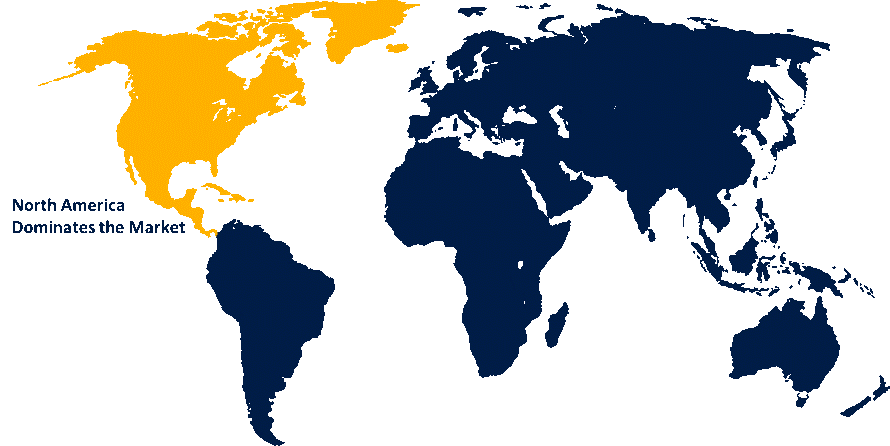
North America is anticipated to hold the largest share of the global hypercoagulability market over the predicted timeframe.
Get more details on this report -
North America is anticipated to hold the largest share of the global hypercoagulability market over the predicted timeframe. The region’s dominance is driven by advanced healthcare infrastructure, high diagnosis rates, strong adoption of anticoagulant therapies, and a significant presence of key pharmaceutical players. The growing burden of thrombotic disorders, particularly among aging populations, further strengthens demand for effective treatment solutions. North America market growth is supported by strong government and regulatory initiatives, including FDA approvals for generic anticoagulants such as rivaroxaban, Medicaid pricing agreements for apixaban, CDC-backed research programs, and Health Canada approvals for advanced hemostasis diagnostic systems, improving treatment accessibility. Additionally, continuous advancements in diagnostic technologies, increasing use of genetic testing, and well-established reimbursement frameworks support early detection and long-term disease management across the United States and Canada.
Asia Pacific is expected to grow at a rapid CAGR in the global hypercoagulability market during the forecast period. The growth is fueled by rising patient population, improving healthcare access, and increasing awareness regarding thrombotic disorders across emerging economies such as China and India. Expanding healthcare infrastructure, growing investments in medical technologies, and increasing availability of advanced anticoagulant therapies are accelerating market expansion. Asia Pacific market growth is supported by initiatives such as China’s Healthy China 2030 program, India’s expanding healthcare coverage, AI-enabled coagulation diagnostics adoption, Roche’s advanced Factor Xa testing launches, and increasing regional manufacturing and regulatory approvals, enhancing treatment accessibility. Furthermore, rising screening initiatives, urbanization, and strengthening healthcare policies are enhancing early diagnosis and treatment adoption across the region.
Competitive Analysis:
The report offers the appropriate analysis of the key organizations/companies involved within the global hypercoagulability market, along with a comparative evaluation primarily based on their product of offering, business overviews, geographic presence, enterprise strategies, segment market share, and SWOT analysis. The report also provides an elaborative analysis focusing on the current news and developments of the companies, which includes product development, innovations, joint ventures, partnerships, mergers & acquisitions, strategic alliances, and others. This allows for the evaluation of the overall competition within the market.
List of Key Companies
- Pfizer Inc.
- F. Hoffmann-La Roche Ltd.
- Novartis AG
- Sanofi
- Bayer AG
- Bristol-Myers Squibb
- Johnson & Johnson
- Teva Pharmaceutical Industries Ltd.
- Fresenius Kabi AG
- Hikma Pharmaceuticals PLC
- Eisai Co., Ltd.
- Daiichi Sankyo
- Boehringer Ingelheim GmbH
- Others
Key Target Audience
- Market Players
- Investors
- End-users
- Government Authorities
- Consulting and Research Firm
- Venture capitalists
- Value-Added Resellers (VARs)
Recent Development
- In September 2025, CSL Limited’s collaboration with VarmX for VMX-C001 improved reversal solutions for Factor Xa inhibitors during surgical emergencies.
- In March 2025, Sanofi received FDA approval for Qfitlia (fitusiran) for treating hemophilia A or B, marking a significant advancement in managing coagulation-related disorders and expanding therapeutic options for patients with high bleeding risks.
- In March 2025, Taiwan’s NARLabs developed a laser-induced thrombosis-on-chip system to enhance drug efficacy testing, enabling more accurate evaluation of anticoagulant therapies using human vascular cell-based models.
Market Segment
This study forecasts revenue at global, regional, and country levels from 2020 to 2035. Spherical Insights has segmented the global hypercoagulability market based on the below-mentioned segments:
Global Hypercoagulability Market, By Type
- Factor V Leiden
- Prothrombin 20210
- Antiphospholipid Syndrome
- Others
Global Hypercoagulability Market, By Drug Class
- Heparin
- Vitamin K Antagonists
- Direct Thrombin Inhibitors
- Factor Xa Inhibitors
- Others
Global Hypercoagulability Market, By Route of Administration
- Oral
- Injectable
Global Hypercoagulability Market, By End User
- Hospitals
- Specialty Clinics
- Homecare
- Others
Global Hypercoagulability Market, By Regional Analysis
- North America
- US
- Canada
- Mexico
- Europe
- Germany
- UK
- France
- Italy
- Spain
- Russia
- Rest of Europe
- Asia Pacific
- China
- Japan
- India
- South Korea
- Australia
- Rest of Asia Pacific
- South America
- Brazil
- Argentina
- Rest of South America
- Middle East & Africa
- UAE
- Saudi Arabia
- Qatar
- South Africa
- Rest of the Middle East & Africa
Frequently Asked Questions (FAQ)
-
1. How is emerging telemedicine integration influencing hypercoagulability patient monitoring?Telemedicine enables remote coagulation tracking, virtual consultations, and AI-assisted dosage management, potentially improving patient adherence and early detection of thrombotic events across geographically dispersed populations.
-
2. What role do wearable devices play in managing hypercoagulability disorders?Wearable sensors can continuously monitor vital signs, detect early clotting risk patterns, and sync data to healthcare providers, allowing proactive adjustments to therapy and reducing complications.
-
3. How might pharmacogenomics impact anticoagulant therapy selection in the future?Genetic profiling can guide personalized anticoagulant dosing, minimize adverse effects, and improve treatment efficacy, particularly for patients with hereditary thrombophilia or complex comorbidities.
-
4. What are the potential environmental factors affecting hypercoagulability incidence globally?Lifestyle habits, pollution exposure, diet patterns, and sedentary behavior contribute to increased thrombotic risk, influencing demand for diagnostics and preventive anticoagulant therapies.
-
5. How could regional healthcare insurance reforms affect hypercoagulability treatment accessibility?Expanded reimbursement schemes and coverage for anticoagulants and diagnostic procedures could increase patient access, support early intervention, and enhance adherence to therapy.
-
6. What technological innovations might enhance laboratory coagulation testing accuracy?AI-driven analyzers, microfluidic platforms, and high-throughput point-of-care devices are expected to improve precision, speed, and reproducibility of clotting assessments.
Need help to buy this report?