Germany Sulfuric Acid Market Size, Share, and COVID-19 Impact Analysis, By Raw Material (Elemental Sulfur, Base Metal Smelters, Pyrite Ore, Others), By Applications (Fertilizers, Chemical Manufacturing, Metal Processing, Petroleum Refining, Textile Industry, Automotive, Paper & Pulp, Others), and Germany Sulfuric Acid Market Insights, Industry Trend, Forecasts to 2035
Industry: Chemicals & Materials
Germany Sulfuric Acid Market Insights Forecasts to 2035
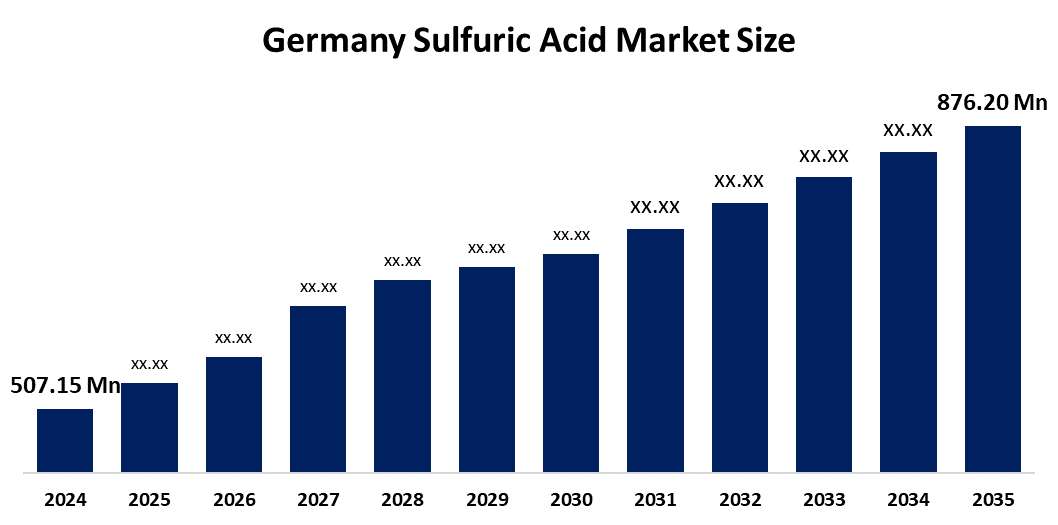
- The Germany Sulfuric Acid Market Size Was Estimated at USD 507.15 Million in 2024
- The Market Size is Expected to Grow at a CAGR of Around 5.1% from 2025 to 2035
- The Germany Sulfuric Acid Market Size is Expected to Reach USD 876.20 Million by 2035
Get more details on this report -
According To A Research Report Published By Spherical Insights & Consulting, The Germany Sulfuric Acid Market Size Is Anticipated To Reach USD 876.20 Million By 2035, Growing At A CAGR Of 5.1% From 2025 To 2035. The Germany sulfuric acid market is driven by strong demand from fertilizer production, chemical manufacturing, and petroleum refining, supported by industrial expansion, rising battery manufacturing for electric vehicles, environmental regulations, and continuous investments in chemical processing infrastructure.
Market Overview
The Germany sulfuric acid market is basically the whole business of sulfuric acid, making it, selling it, and everybody using it in their products, in a number of key industries, including fertilizer, chemicals, petroleum refining, metals processing, and batteries. The market keeps on growing as the chemical manufacturing industry expands, the demand for fertilizers remains steady, and the use of the product in the batteries of electric vehicles increases. Besides, the country's robust industrial base, its commitment to the energy transition, the ramping up of industrial by-products recycling, and the move towards green chemical processes are some of the factors that help maintain a steady level of demand and capacity utilization across Germany.
Various government policies targeting emission regulation and promoting environmental sustainability are some of the factors that determine the Sulphuric Acid Market in Germany. The country has set very high standards in the production and disposal of sulphuric acid so as to minimize the pollution of air and water. The government of Germany has enforced a number of measures whereby sulfuric acid manufacturers are required to comply with emission standards and use environmentally friendly technologies. Moreover, some laws encourage the use of cleaner and alternative production methods so as to reduce the overall carbon footprint of the industry. These regulations intend to allow for the economic significance of the sulphuric acid market to continue while still ensuring the protection of the environment and public health in Germany.
A significant trend is the increasing usage of sulfuric acid in electric vehicle batteries that leads to higher demand. Another trend is the recovery of sulfuric acid from industrial waste, which not only saves costs for businesses but also helps the environment. Also, people are renovating and upgrading their production facilities, which leads to more efficient manufacturing and less pollution. Furthermore, there is a growing chemical and pharmaceutical industries' demand for good, quality sulfuric acid from the chemical and pharmaceutical industries. All these trends indicate that the German sulfuric acid market is growing on two fronts: first, cleaner and more intelligent production, and second, the expanding use in modern industries such as batteries and chemicals.
Report Coverage
This research report categorizes the market for the Germany sulfuric acid market based on various segments and regions, and forecasts revenue growth and analyses trends in each submarket. The report analyses the key growth drivers, opportunities, and challenges influencing the Germany sulfuric acid market. Recent market developments and competitive strategies, such as expansion, product launch, development, partnership, merger, and acquisition have been included to draw the competitive landscape in the market. The report strategically identifies and profiles the key market players and analyses their core competencies in each sub-segment of the Germany sulfuric acid market.
Germany Sulfuric Acid Market Report Coverage
| Report Coverage | Details |
|---|---|
| Base Year: | 2023 |
| Market Size in 2023: | USD 507.15 Million |
| Forecast Period: | 2025-2035 |
| Forecast Period CAGR 2025-2035 : | 5.1% |
| 2035 Value Projection: | USD 876.20 Million |
| Historical Data for: | 2020-2023 |
| No. of Pages: | 210 |
| Tables, Charts & Figures: | 111 |
| Segments covered: | By Raw Material, By Applications |
| Companies covered:: | BASF SE, LANXESS AG, Aurubis AG, Brenntag GmbH, Merck KGaA, Nouryon, Akzo Nobel N.V., Solvay S.A., INEOS Group, Others |
| Pitfalls & Challenges: | COVID-19 Empact, Challenge, Future, Growth, & Analysis |
Get more details on this report -
Driving Factors
The Germany sulfuric acid market is primarily driven by strong demand from the fertilizer industry, where it is used in producing phosphatic fertilizers. Growing chemical manufacturing and pharmaceutical sectors further boost consumption. Additionally, the rising production of lead-acid and lithium-ion batteries for electric vehicles increases sulfuric acid requirements. Industrial expansion, modernization of chemical plants, and stricter environmental regulations encouraging efficient acid recovery also support market growth. Continuous investments in sustainable manufacturing processes and Germany’s well-established industrial base further enhance production capacity, ensuring steady market expansion and reliable supply.
Restraining Factors
The Germany sulfuric acid market faces restraints from stringent environmental regulations limiting emissions and waste disposal. High production costs, energy-intensive manufacturing processes, and fluctuating raw material prices also challenge profitability. Additionally, the availability of alternative acids and chemical substitutes in certain industries can reduce demand, slowing market growth despite rising industrial applications.
Market Segmentation
The Germany sulfuric acid market share is classified into raw material and application.
- The elemental sulfur segment accounted for the largest revenue market share in 2024 and is expected to grow at a significant CAGR during the forecast period.
The Germany sulfuric acid market is segmented by raw material into elemental sulfur, base metal smelters, pyrite ore, and others. Among these, the elemental sulfur segment accounted for the largest revenue market share in 2024 and is expected to grow at a significant CAGR during the forecast period. The dominance of elemental sulfur in the market is due to its wide availability from petroleum refining and chemical industries, ensuring a steady and reliable supply. It allows production of high-purity sulfuric acid, meeting strict industrial standards for fertilizers, chemicals, and batteries. Compared to base metal smelters and pyrite ore, elemental sulfur is more cost-effective, easier to handle, and produces fewer impurities. These advantages make it the preferred raw material, supporting consistent production and stable market growth across multiple sectors.
- The fertilizers segment accounted for the largest revenue share in 2024 and is expected to grow at a significant CAGR during the forecast period.
The Germany sulfuric acid market is segmented by application into fertilizers, chemical manufacturing, metal processing, petroleum refining, textile industry, automotive, paper & pulp, and others. Among these, the fertilizers segment accounted for the largest revenue share in 2024 and is expected to grow at a significant CAGR during the forecast period. The fertilizers segment dominates the market because sulfuric acid is essential for producing phosphoric acid, a key input for phosphatic fertilizers. Germany’s well-developed agricultural sector requires a consistent fertilizer supply to maintain crop productivity and soil quality. Fertilizer manufacturing consumes sulfuric acid in large volumes, much higher than other applications. Stable domestic demand, limited substitution options, and continuous fertilizer production throughout the year make this segment the largest and most reliable consumer of sulfuric acid in the market.
Competitive Analysis:
The report offers the appropriate analysis of the key organizations/companies involved within the Germany sulfuric acid market, along with a comparative evaluation primarily based on their product offering, business overviews, geographic presence, enterprise strategies, segment market share, and SWOT analysis. The report also provides an elaborate analysis focusing on the current news and developments of the companies, which includes product development, innovations, joint ventures, partnerships, mergers & acquisitions, strategic alliances, and others. This allows for the evaluation of the overall competition within the market.
List of Key Companies
- BASF SE
- LANXESS AG
- Aurubis AG
- Brenntag GmbH
- Merck KGaA
- Nouryon
- Akzo Nobel N.V.
- Solvay S.A.
- INEOS Group
- Others
Key Target Audience
- Market Players
- Investors
- End-users
- Government Authorities
- Consulting and Research Firm
- Venture capitalists
- Value-Added Resellers (VARs
Market Segment
This study forecasts revenue at the Germany, regional, and country levels from 2020 to 2035. Spherical Insights has segmented the Germany sulfuric acid market based on the below-mentioned segments:
Germany Sulfuric Acid Market, By Raw Material
- Elemental Sulfur
- Base Metal Smelters
- Pyrite Ore
- Others
Germany Sulfuric Acid Market, By Application
- Fertilizers, Chemical Manufacturing
- Metal Processing
- Petroleum Refining
- Textile Industry
- Automotive
- Paper & Pulp
- Others
Frequently Asked Questions (FAQ)
-
1. How does Germany’s energy transition influence sulfuric acid production?It encourages energy-efficient plants, lower emissions, sulfur recovery, and sustainable production practices across Germany’s chemical industry.
-
2. Why is high-purity sulfuric acid important in Germany?High purity is required for pharmaceuticals, electronics, and specialty chemicals to meet strict quality and safety standards.
-
3. How does industrial recycling support this market?Recycling sulfur from refineries and smelters ensures a stable supply, reduces costs, and supports environmental sustainability goals.
-
4. Does infrastructure development affect sulfuric acid demand?infrastructure growth increases metal processing and construction material production, boosting sulfuric acid consumption.
-
5. How do logistics shape the German sulfuric acid market?Strong transport networks and industrial clusters reduce delivery costs and ensure reliable supply to end-use industries.
-
6. Is digitalization impacting sulfuric acid manufacturing?Automation improves process efficiency, safety, monitoring accuracy, and consistent output quality in production facilities.
Need help to buy this report?