Germany Plant-Based Meat Market Size, Share, and COVID-19 Impact Analysis, By Source (Soy, Pea, Wheat, and Others), By End User (Retail and hotel/restaurant/cafe), and Germany Plant-Based Meat Market Insights, Industry Trend, Forecasts to 2035.
Industry: Food & Beverages
Germany Plant-Based Meat Market Insights Forecasts to 2035
- The Germany Plant-Based Meat Market Size Was Estimated at USD 847.67 Million in 2024
- The Market Size is Expected to Grow at a CAGR of around 22.13% from 2025 to 2035
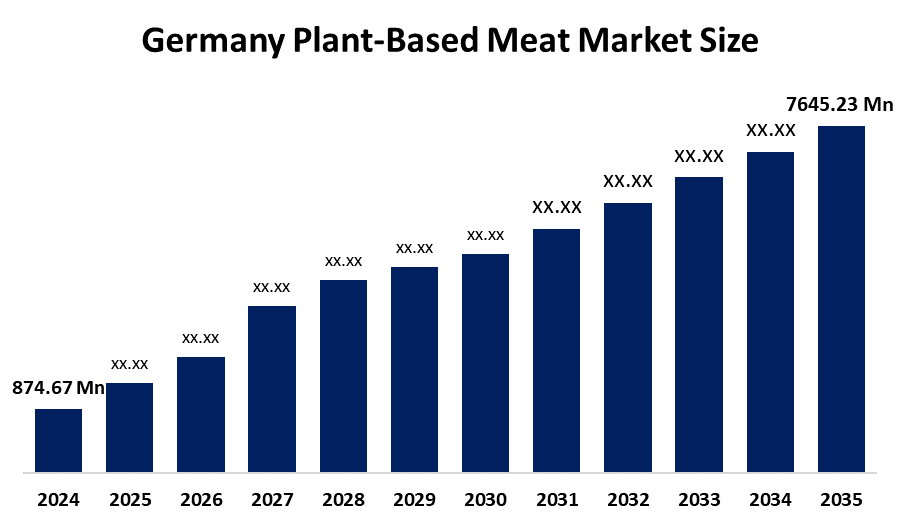
- The Germany Plant-Based Meat Market Size is Expected to Reach USD 7645.23 Million by 2035
Get more details on this report -
According to a research report published by Spherical Insights & Consulting, the Germany plant-based meat market size is anticipated to reach USD 7,645.23 million by 2035, growing at a CAGR of 22.13% from 2025 to 2035. The Germany plant-based meat market is driven by increasing consumer awareness, as more people actively seek healthier alternatives due to growing concerns about the health risks associated with excessive consumption of red and processed meats.
Market Overview
Germany's plant-based meat sector represents a substantial growth opportunity, as consumers increasingly favour plant-based food due to concerns about health, sustainability, and environmental impact. Germany's plant-based meat industry consists of products that replicate the flavour and consistency of traditional meat items such as burgers, sausages, and nuggets, which are distributed through retail and foodservice outlets. Soy has been widely used in the production of plant-based meats in Germany for a long time due to its nutritional value and availability, although the food industry also produces plant-based meats made from wheat, peas, and various other plant proteins. As the demand for plant-based protein continues to increase in Germany and around the world, so does the opportunity for plant-based protein producers in Germany to expand into new markets.
The strong growth of Germany's plant-based meat sector will be aided by innovative product development, increased adoption by restaurants, and the growing demand for plant-based protein from vegans and vegetarians, as well as the influence of local cultural preferences and an increasing focus on health and environmental sustainability. In addition, due to the establishment of clear regulations by the Germany government regarding the appropriate labelling of plant-based meat alternatives, producers will have less regulatory uncertainty when they launch their products into the market. By establishing guidelines for how to label their products appropriately, regulators can help to minimize confusion among consumers, which will encourage manufacturers to continue to innovate and confidently bring their products to market.
Report Coverage
This research report categorizes the Germany plant-based meat market size based on various segments and regions, and forecasts revenue growth and analyses trends in each submarket. The report analyses the key growth drivers, opportunities, and challenges influencing the Germany plant-based meat market. Recent market developments and competitive strategies, such as expansion, product launch, development, partnership, merger, and acquisition, have been included to draw the competitive landscape in the market. The report strategically identifies and profiles the key market players and analyses their core competencies in each sub-segment of the Germany plant-based meat market.
Germany Plant-Based Meat Market Report Coverage
| Report Coverage | Details |
|---|---|
| Base Year: | 2024 |
| Market Size in 2024: | USD 847.67 Million |
| Forecast Period: | 2020-2023 |
| Forecast Period CAGR 2020-2023 : | 22.13% |
| 2023 Value Projection: | USD 7645.23 Million |
| Historical Data for: | 2020-2023 |
| No. of Pages: | 180 |
| Tables, Charts & Figures: | 121 |
| Segments covered: | By Source, By End User |
| Companies covered:: | Rügenwalder Mühle, Beyond Meat, Impossible Foods, Unilever (Vegetarian Butcher), Lidl (Next Level), REWE, and Others, key players |
| Pitfalls & Challenges: | COVID-19 Empact, Challenge, Future, Growth, & Analysis |
Get more details on this report -
Driving Factor
The Germany plant-based meat market size is driven by the rising health consciousness, increasing preference for low-fat and cholesterol-free diets, growing awareness of environmental sustainability, expanding vegan and flexitarian populations, innovation in food technology, improved taste and texture of plant-based meat, and government support for alternative proteins and sustainable food systems.
Restraining Factor
The Germany plant-based meat market size is restrained by high product prices, limited consumer awareness compared to traditional meat, taste and texture gaps for mainstream consumers, supply chain challenges for plant proteins, and regulatory complexities related to labeling and ingredient approvals in the Germany food market.
Market Segmentation
The Germany plant-based meat market share is classified into source and end user.
- The soy accounted for the largest market revenue share in 2024 and is expected to grow at a remarkable CAGR during the forecast period.
The Germany plant-based meat market size is segmented by source into soy, pea, wheat, and others. Among these, the soy accounted for the largest market revenue share in 2024 and is expected to grow at a remarkable CAGR during the forecast period. All of the necessary amino acids needed for human nutrition are included in soy protein, which is made from soybeans. Furthermore, soy-based products may be made into a variety of flavors and textures, which makes them appropriate for a range of meat alternatives, including ground meat, sausages, burgers, and nuggets.
- The hotel/restaurant/cafe segment held the largest share in 2024 and is expected to grow at a substantial CAGR during the predicted period.
The Germany plant-based meat market size is segmented by end user into retail and hotel/restaurant/cafe. Among these, the hotel/restaurant/cafe segment held the largest share in 2024 and is expected to grow at a substantial CAGR during the predicted period. Businesses in the hotel/restaurant/cafe sector are responding by adding plant-based meat substitutes to their menus as more people choose vegetarian or vegan diets or want to cut back on their meat intake for health reasons.
Competitive Analysis:
The report offers the appropriate analysis of the key organizations/companies involved within the Germany Plant-Based Meat market, along with a comparative evaluation primarily based on their Protein offering, business overviews, geographic presence, enterprise strategies, segment market share, and SWOT analysis. The report also provides an elaborate analysis focusing on the current news and developments of the companies, which includes Protein development, innovations, joint ventures, partnerships, mergers & acquisitions, strategic alliances, and others. This allows for the evaluation of the overall competition within the market.
List of Key Companies
• Rügenwalder Mühle
• Beyond Meat
• Impossible Foods
• Unilever (Vegetarian Butcher)
• Lidl (Next Level)
• REWE
• Others
Key Target Audience
• Market Players
• Investors
• End-users
• Government Authorities
• Consulting and Research Firms
• Venture Capitalists
• Value-Added Resellers (VARs)
Market Segment
This study forecasts revenue at the Germany, regional, and country levels from 2020 to 2035. Spherical Insights has segmented the Germany Plant-Based Meat market based on the below-mentioned segments:
Germany Plant-Based Meat Market, By Source
- Soy
- Pea
- Wheat
- Others
Germany Plant-Based Meat Market, By End User
- Retail
- hotel/restaurant/cafe
Frequently Asked Questions (FAQ)
-
QWhat is the Germany Plant-Based Meat Market?The Germany plant-based meat market size includes meat-alternative products made from plant proteins such as soy, pea, and wheat that mimic the taste and texture of traditional meat, and are sold through retail outlets and hotel, restaurant, and café channels.
-
What is the market size and growth forecast for Germany’s plant-based meat market?The market was valued at USD 847.67 million in 2024 and is expected to reach USD 7645.23 million by 2035, growing at a strong CAGR of 22.13% during the forecast period from 2025 to 2035.
-
What are the key factors driving growth in the Germany plant-based meat market?Growth is driven by rising health awareness, increasing concerns over excessive red meat consumption, growing demand for low-fat and cholesterol-free diets, environmental sustainability awareness, food technology innovations, and government support for alternative proteins.
-
Which end-user segment holds the largest market share in Germany?The hotel/restaurant/café segment held the largest share in 2024, as foodservice operators increasingly add plant-based meat options to menus to meet rising consumer demand for vegetarian, vegan, and flexitarian meal choices
-
What are the major challenges faced by the Germany plant-based meat market?Key challenges include high product prices, limited consumer awareness compared to conventional meat, taste and texture acceptance among mainstream consumers, plant protein supply chain constraints, and regulatory complexities related to labeling and approvals.
Need help to buy this report?