Germany Medium and Heavy-Duty Commercial Vehicles Market Size, Share, By Tonnage (3.5 to 7.5 t, 7.5 to 16 t, and Above 16 t), By Propulsion Type (Internal-Combustion Engine (Diesel & Gasoline), Battery Electric, Plug-in Hybrid Electric, Fuel-cell Electric, and Alternative Fuels (CNG, LNG, Bio-fuel, LPG)), By Vehicle Type (Rigid Truck, Tractor-Trailer, Tipper / Dump Truck, and Specialized & Vocational Trucks), By End-User Industry (Logistics & Transportation, Construction & Mining, Agriculture & Forestry, and Utilities & Municipal Services), Germany Medium and Heavy-Duty Commercial Vehicles Market Insights, Industry Trend, Forecasts to 2035
Industry: Automotive & Transportation
Germany Medium and Heavy-Duty Commercial Vehicles Market Insights Forecasts to 2035
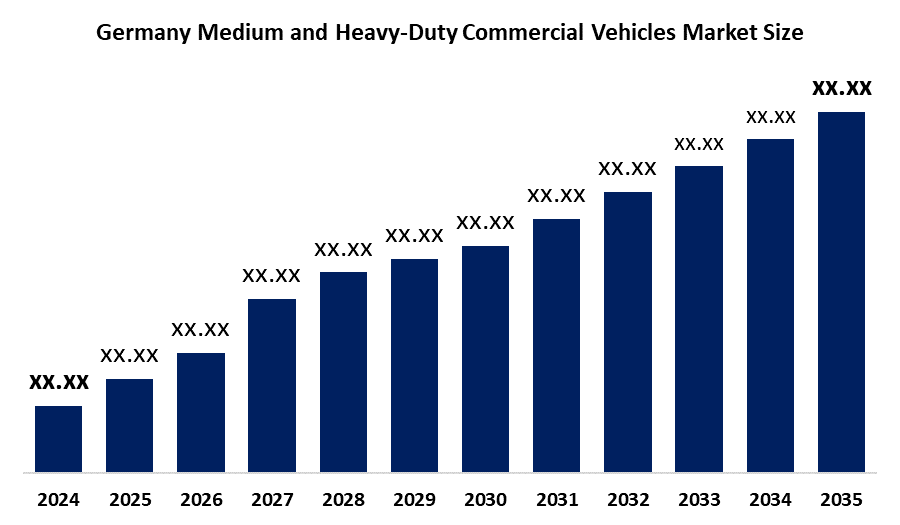
- Germany Medium and Heavy-Duty Commercial Vehicles Market CAGR 2024: 3.1%
- Germany Medium and Heavy-Duty Commercial Vehicles Market Segments: Tonnage, Propulsion Type, Vehicle Type, and End User Industry.
Get more details on this report -
The Germany Medium and Heavy-Duty Commercial Vehicles Market Size includes trucks as well as various commercial transport vehicles which carry out freight operations in construction work industrial supply chains and long-distance shipping. The regional distribution requires medium-duty vehicles whereas heavy-duty trucks serve as the primary solution for transporting freight and construction materials and conducting industrial operations throughout extended distances. The supply chains in Germany which support manufacturing facilities and automotive production and retail businesses and e-commerce operations heavily depend on these vehicles. The market expands because of increased freight transportation requirements and growing e-commerce logistics and rising infrastructure development and construction work activities.
The commercial vehicle industry experiences changes because of technological advancements which include electric and hydrogen-powered trucks and advanced telematics and fleet management systems and autonomous driving technologies. The government policies which promote low-emission transportation together with new emission regulations compel the commercial vehicle industry to adopt cleaner vehicle technologies. The development of electric heavy-duty trucks for long-haul logistics together with hydrogen fuel-cell commercial vehicles and smart fleet management and telematics platforms and autonomous trucking technologies will create new business opportunities which will enhance operational efficiency and decrease emissions while enabling sustainable freight transportation throughout Germany.
Germany Medium and Heavy-Duty Commercial Vehicles Market Report Coverage
| Report Coverage | Details |
|---|---|
| Base Year: | 2024 |
| Forecast Period: | 2024-2035 |
| Forecast Period CAGR 2024-2035 : | 3.1% |
| Historical Data for: | 2020-2023 |
| No. of Pages: | 180 |
| Tables, Charts & Figures: | 105 |
| Segments covered: | By Tonnage ,By Propulsion Type |
| Companies covered:: | Daimler Truck AG, MAN Truck & Bus SE, Scania AB, Volvo Group, Iveco Group N.V., DAF Trucks N.V., and Other Key Players |
| Pitfalls & Challenges: | Covid 19 Impact Challanges, Future, Growth and Analysis |
Get more details on this report -
Market Dynamics of the Germany Medium and Heavy-Duty Commercial Vehicles Market:
The Germany Medium and Heavy-Duty Commercial Vehicles Market Size is driven by regulatory pressure to reduce CO2 emissions, prompting adoption of electric, hybrid, and alternative-fuel trucks. Fleet operators are increasingly investing in connected vehicle technologies and telematics solutions to improve operational efficiency, driver safety, and route optimization.
Restraints include high upfront costs for advanced propulsion systems, limited charging and hydrogen refueling infrastructure, and long replacement cycles for commercial fleets. Additionally, stringent certification processes for new vehicle technologies slow adoption and increase total cost of ownership for operators.
Future opportunities lie in the expansion of electric and hydrogen-powered truck fleets, integration of AI-enabled predictive maintenance, and smart logistics platforms. Investments in digital fleet management, autonomous driving capabilities, and green mobility incentives from government programs are expected to enhance vehicle utilization, reduce emissions, and strengthen Germany’s position in sustainable commercial transport.
Market Segmentation
The Germany Medium and Heavy-Duty Commercial Vehicles Market share is classified into tonnage, propulsion type, vehicle type, and end user industry.
By Tonnage:
The Germany Medium and Heavy-Duty Commercial Vehicles Market Size is divided by tonnage into 3.5 to 7.5 t, 7.5 to 16 t, and above 16 t. Among these, the above 16 t segment dominated the share in 2024 and is anticipated to grow at a remarkable CAGR during the forecast period. The above 16 t segment dominates due to its extensive use in long-distance freight transportation, heavy industrial logistics, and large cargo movement across national and cross-border supply chains. These vehicles support high payload capacity, efficient bulk transportation, and operational efficiency for large-scale logistics networks.
By Propulsion Type:
The Germany Medium and Heavy-Duty Commercial Vehicles Market Size is divided by propulsion type into internal-combustion engine (diesel & gasoline), battery electric, plug-in hybrid electric, fuel-cell electric, and alternative fuels (CNG, LNG, bio-fuel, LPG). Among these, the internal-combustion engine segment dominated the share in 2024 and is anticipated to grow at a remarkable CAGR during the forecast period. The internal-combustion engine segment dominates due to its established infrastructure, high engine reliability, strong torque performance, and widespread availability of diesel fueling networks. Logistics operators continue relying on diesel-powered heavy trucks for long-haul transport, high payload requirements, and consistent operational performance.
By Vehicle Type:
The Germany Medium and Heavy-Duty Commercial Vehicles Market Size is divided by vehicle type into rigid truck, tractor-trailer, tipper / dump truck, and specialized & vocational trucks. Among these, the tractor-trailer segment dominated the share in 2024 and is anticipated to grow at a remarkable CAGR during the forecast period. The tractor-trailer segment dominates due to its critical role in long-distance freight movement and containerized cargo transportation across highways and logistics corridors. These vehicles support high cargo capacity, flexible trailer configurations, and efficient freight distribution for large-scale logistics operations.
By End-User Industry:
The Germany Medium and Heavy-Duty Commercial Vehicles Market Size is divided by end-user industry into logistics & transportation, construction & mining, agriculture & forestry, and utilities & municipal services. Among these, the logistics & transportation segment dominated the share in 2024 and is anticipated to grow at a remarkable CAGR during the forecast period. The logistics & transportation segment dominates due to the continuous expansion of freight distribution networks, e-commerce deliveries, and cross-border trade operations. Medium and heavy-duty trucks are widely deployed for long-haul cargo transport, supply chain distribution, and large-volume goods movement across industrial sectors.
Competitive Analysis:
The report offers the appropriate analysis of the key organisations/companies involved within the Germany Medium and Heavy-Duty Commercial Vehicles Market Size, along with a comparative evaluation primarily based on their product offering, business overviews, geographic presence, enterprise strategies, segment market share, and SWOT analysis. The report also provides an elaborative analysis focusing on the current news and developments of the companies, which includes product development, innovations, joint ventures, partnerships, mergers & acquisitions, strategic alliances, and others. This allows for the evaluation of the overall competition within the market.
Top Key Companies in Germany Medium and Heavy-Duty Commercial Vehicles Market:
- Daimler Truck AG
- MAN Truck & Bus SE
- Scania AB
- Volvo Group
- Iveco Group N.V.
- DAF Trucks N.V.
- Others
Recent Developments in Germany Medium and Heavy-Duty Commercial Vehicles Market:
In June 2025, IVECO launched the S-eWay Artic electric heavy-duty truck, designed specifically for long-haul and regional transport operations, with extended range and advanced battery technology supporting the decarbonization of freight transport.
Key Target Audience
- Market Players
- Investors
- End-users
- Government Authorities
- Consulting and Research Firm
- Venture capitalists
- Value-Added Resellers (VARs)
Market Segment
This study forecasts revenue at the Japan, regional, and country levels from 2020 to 2035. Spherical Insights has segmented the Germany Medium and Heavy-Duty Commercial Vehicles Market Size based on the below-mentioned segments:
Germany Medium and Heavy-Duty Commercial Vehicles Market, By Tonnage
- 3.5 to 7.5 t
- 7.5 to 16 t
- Above 16 t
Germany Medium and Heavy-Duty Commercial Vehicles Market, By Propulsion Type
- Internal-Combustion Engine (Diesel & Gasoline)
- Battery Electric
- Plug-in Hybrid Electric
- Fuel-cell Electric
- Alternative Fuels (CNG, LNG, Bio-fuel, LPG)
Germany Medium and Heavy-Duty Commercial Vehicles Market, By Vehicle Type
- Rigid Truck
- Tractor-Trailer
- Tipper / Dump Truck
- Specialized & Vocational Trucks
Germany Medium and Heavy-Duty Commercial Vehicles Market, By End-User Industry
- Logistics & Transportation
- Construction & Mining
- Agriculture & Forestry
- Utilities & Municipal Services
Frequently Asked Questions (FAQ)
-
Q: What is the Germany medium and heavy-duty commercial vehicles market size?A: Germany medium and heavy-duty commercial vehicles market is expected to grow at a CAGR of 3.1% during the forecast period 2025-2035.
-
Q: What are the key growth drivers of the market?A: Market growth is driven by increasing freight transportation demand, expansion of e-commerce logistics, growing infrastructure development, and government policies promoting low-emission and sustainable commercial vehicle technologies. Adoption of electric and hydrogen-powered trucks and advanced fleet management solutions also supports market growth.
-
Q: What factors restrain the Germany medium and heavy-duty commercial vehicles market?A: Market restraints include high upfront costs of advanced propulsion systems, limited charging and hydrogen refueling infrastructure, long fleet replacement cycles, and stringent certification processes for new vehicle technologies, all of which increase the total cost of ownership and slow adoption.
-
Q: Who are the key players in the Germany medium and heavy-duty commercial vehicles market?A: Key companies include Daimler Truck AG, MAN Truck & Bus SE, Scania AB, Volvo Group, Iveco Group N.V., DAF Trucks N.V., and others.
-
Q: Who are the target audiences for this market report?A: Target audiences include market players, investors, end-users, government authorities, consulting and research firms, venture capitalists, and value-added resellers (VARs).
Need help to buy this report?