Germany Confectionery Market Size, Share, and COVID-19 Impact Analysis, By Product Type (Hard-boiled Sweets, Mints, Gums and Jellies, Chocolate, Caramels and Toffees, Medicated Confectionery, Fine Bakery Wares, and Others), By Age Group (Children, Adult, and Geriatric), By Price Point (Economy, Mid-range, Luxury), By Distribution Channel (Supermarkets and Hypermarkets, Convenience Stores, Pharmaceutical and Drug Stores, Online Stores, and Others) and Germany Confectionery Market Size Insights, Industry Trend, Forecasts to 2035
Industry: Food & Beverages
Germany Confectionery Market Size Insights Forecasts to 2035
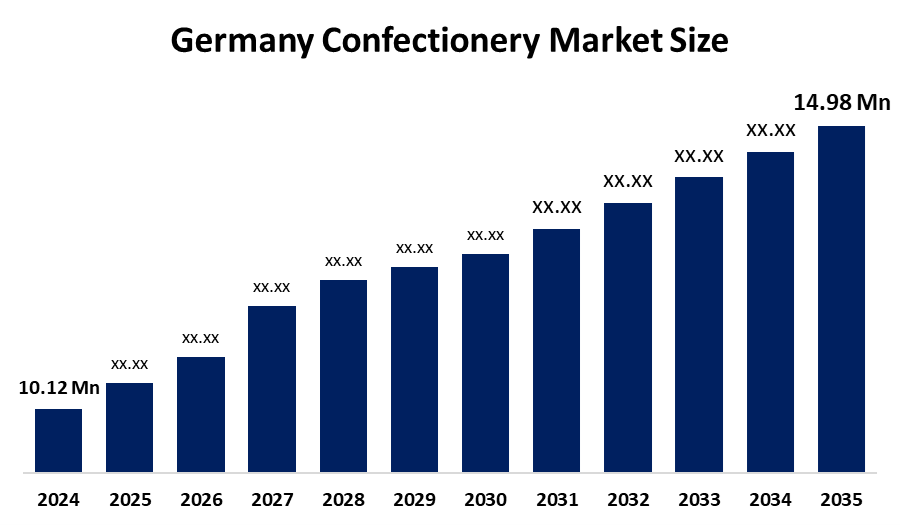
- The Germany Confectionery Market Size Was Estimated at USD 10.12 Billion in 2024
- The Market Size is Expected to Grow at a CAGR of Around 3.63% from 2025 to 2035
- The Germany Confectionery Market Size is Expected to Reach USD 14.98 Billion by 2035
Get more details on this report -
According to a Research Report Published by Spherical Insights & Consulting, The Germany Confectionery Market Size is Anticipated to Reach USD 14.98 Billion by 2035, Growing at a CAGR of 3.63% from 2025 to 2035. The confectionery market in Germany is driven by consumer preferences for high-end goods, healthier substitutes, and festive sweets. Strong retail networks, growing e-commerce penetration, and a surge in demand for utilitarian and artisan sweets all boost the sector.
Market Overview
The market for confections includes foods that have a comparatively high amount of sugar. The variety of flavors, colors, and other substances that go into making candy gives it its distinct flavor, texture, and look. The four subdivisions that comprise this sector are ice cream, cakes and preserved pastries, chocolate confections, and sugar confections. Development is often encouraged by varying consumer preferences, eating patterns, and degrees of health awareness and understanding. In particular, confections are popular as gifts and pleasures. The Germany confectionery markets are growing steadily as a result of shifting consumer preferences for upscale products, healthier options, and a wide variety of both classic and modern candies. Additionally, there is an increasing market demand for wellness-focused and organic products.
Report Coverage
This research report categorizes the market for the Germany Confectionery Market Size based on various segments and regions, and forecasts revenue growth and analyses trends in each submarket. The report analyses the key growth drivers, opportunities, and challenges influencing the Germany confectionery market. Recent market developments and competitive strategies, such as expansion, product launch, development, partnership, merger, and acquisition have been included to draw the competitive landscape in the market. The report strategically identifies and profiles the key market players and analyses their core competencies in each sub-segment of the Germany confectionery market.
Germany Confectionery Market Report Coverage
| Report Coverage | Details |
|---|---|
| Base Year: | 2024 |
| Market Size in 2024: | USD 10.12 Billion in 2024 |
| Forecast Period: | 2025-2035 |
| Forecast Period CAGR 2025-2035 : | CAGR of 3.63% |
| 2035 Value Projection: | USD 14.98 Billion |
| Historical Data for: | 2020-2023 |
| No. of Pages: | 240 |
| Tables, Charts & Figures: | 110 |
| Segments covered: | By Product Type, By Age Group |
| Companies covered:: | Ferrero, Mondelez, Mars, Lindt, August Storck KG, Haribo (gummies)and others key players |
| Pitfalls & Challenges: | and COVID-19 Impact Analysis |
Get more details on this report -
Driving Factors
The confectionery markets in Germany are driven by due to shifting consumer preferences for upscale products, more nutritious alternatives, and a wide variety of classic and modern confections. Additionally, the market is witnessing a surge of patronage for organic and wellness-focused products. increased demand for non-GMO, gluten-free, and healthy cookies and snacks. Additionally, as ethical and ecologically conscious consuming practices become more significant, there is an increasing desire for sweets that are made locally and responsibly.
Restraining Factors
The confectionery market in Germany is mostly restrained by heightened consumer knowledge of the harmful consequences of excessive sugar intake. People are consuming fewer sugary foods as concerns about diabetes, dental decay, obesity, and other lifestyle-related diseases have increased. The average yearly price of the raw materials varies from low to high, as a result, which causes an excess or understock to be produced and sold as sugar and chocolate products. Consequently, it is expected that shifts in raw material prices will lower demand generally during the coming years.
Market Segmentation
The Germany confectionery market Size share is classified into product type, age group, price point, and distribution channel.
- The chocolate segment accounted for the largest revenue market share in 2024 and is expected to grow at a significant CAGR during the forecast period.
The Germany confectionery market Size is segmented by product type into Hard-boiled sweets, mints, gums and jellies, chocolate, caramels and toffees, medicated confectionery, fine bakery wares, and Others. Among these, the chocolate segment accounted for the largest revenue market share in 2024 and is expected to grow at a significant CAGR during the forecast period. The industry is being driven by increasing people's knowledge of chocolate's health benefits, including the antioxidants and potential cardiovascular advantages. Additionally, the market is enlarged due to the rising demand for artisanal and premium dark chocolates among wealthy consumers seeking pleasure and sophistication.
- The adult segment dominated the market in 2024 and is projected to grow at a substantial CAGR during the forecast period.
The Germany confectionery market is segmented by age group into children, adults, and geriatric. Among these, the adult segment accounted for the largest revenue share in 2024 and is expected to grow at a significant CAGR during the forecast period. The market for adult confections is fueled by richer and more complex flavor profiles that appeal to discerning consumers looking for new flavors, as demand for these flavors grows. Exquisite goods like artisanal nuts or cocoa beans from a single origin, as well as complicated and delicious tastes like dark chocolate with hints of exotic fruit or spice, are frequently appealing to buyers in this market.
- The economy segment accounted for the largest share in 2024 and is anticipated to grow at a significant CAGR during the forecast period.
Based on price point, the Germany confectionery market is segmented into economy, mid-range, and luxury. Among these, the economy segment accounted for the largest share in 2024 and is anticipated to grow at a significant CAGR during the forecast. Numerous important elements that affect both production and customer behavior are the main drivers of the confectionery market's economic sector. First and foremost, customers' price sensitivity is important, particularly in emerging countries and among cost-conscious groups. Second, the price and accessibility of raw materials have a direct effect on candy production costs.
- The supermarket and hypermarket segment accounted for the largest revenue market share in 2024 and is expected to grow at a significant CAGR during the forecast period.
The Germany confectionery market is segmented by distribution channel into supermarkets and hypermarkets, convenience stores, pharmaceutical and drug stores, online stores, and others. Among these, the supermarket and hypermarket segment accounted for the largest revenue market share in 2024 and is expected to grow at a significant CAGR during the forecast period. Due to the growth in the online delivery channel, the industry's supremacy is ascribed to the rise in pandemic-induced purchasing patterns. Customers shifted their eating habits from food service to supermarkets as a result of café and restaurant closures and an increase in remote working, although stricter safety restrictions strengthened the market for both online and local shopping.
Competitive Analysis:
The report offers the appropriate analysis of the key organizations/companies involved within the Germany confectionery market, along with a comparative evaluation primarily based on their product offering, business overviews, geographic presence, enterprise strategies, segment market share, and SWOT analysis. The report also provides an elaborate analysis focusing on the current news and developments of the companies, which includes product development, innovations, joint ventures, partnerships, mergers & acquisitions, strategic alliances, and others. This allows for the evaluation of the overall competition within the market.
List of Key Companies
Ferrero
Mondelez
Mars
Lindt
August Storck KG
Haribo (gummies)
Others
Key Target Audience
- Market Players
- Investors
- End-users
- Government Authorities
- Consulting and Research Firm
- Venture capitalists
- Value-Added Resellers (VARs)
Market Segment
This study forecasts revenue at the Germany, regional, and country levels from 2020 to 2035. Spherical Insights has segmented the Germany Confectionery Market based on the below-mentioned segments:
Germany Confectionery Market, By Product Type
- Hard-boiled Sweets
- Mints
- Gums and Jellies
- Chocolate
- Caramels and Toffees
- Medicated Confectionery
- Fine Bakery Wares
- Others
Germany Confectionery Market, By Age Group
- Children
- Adult
- Geriatric
Germany Confectionery Market, By Price Point
- Economy
- Mid-range
- Luxury
Germany Confectionery Market, By Distribution Channel
- Supermarkets and Hypermarkets
- Convenience Stores
- Pharmaceutical and Drug Stores
- Online Stores
- Others
Frequently Asked Questions (FAQ)
-
What is the Germany confectionery market size?The Germany Confectionery market was estimated at USD 10.12 billion in 2024 in 2024 and is projected to reach USD 14.98 billion by 2035, growing at a CAGR of 3.63% during 2025–2035.
-
What is the confectionery market and its primary use?The confectionery market is a segment of the food industry that involves the production, distribution, and sale of sweet, high-sugar foods. Its primary use is to provide moments of indulgence, celebration, and joy for consumers, while also serving as a strategic tool for marketing and retail.
-
What are the key growth drivers of the market?Market growth is driven by the shifting consumer preferences for upscale products, more nutritious alternatives, and a wide variety of classic and modern confections. An increase in demand for wellness-oriented and natural goods
-
What factors restrain the Germany confectionery market?Constraints include increased awareness among consumers of the negative effects of consuming too much sugar. The average yearly price of the raw materials varies from low to high, as a result, which causes an excess or understock to be produced and sold as sugar and chocolate products.
-
How is the market segmented by product type?The market is segmented into Hard-boiled Sweets, Mints, Gums and Jellies, Chocolate, Caramels and Toffees, Medicated Confectionery, and Fine Bakery Wares.
-
Who are the key players in the Germany confectionery market?Key companies include Karma Candy Inc., Purdys Chocolatier, Candy Ville, Germany Cotton Candy, Regal Confections, Exclusive brands, Splendid Chocolates, The Maple Treat Corporation, Scholtens Inc., Euro-Excellence, and Original Foods Limited.
-
Who are the target audiences for this market report?The report targets market players, investors, end-users, government authorities, consulting and research firms, venture capitalists, and value-added resellers (VARs).
Need help to buy this report?