Global Garbage Collection Vehicle Market Size, Share, By Loader Type (Front Loader, Rear Loader, and Others), By Technology (Manual and Semi-Automatic), By Vehicle Type (Light, Medium, and Heavy Duty), and By Region (North America, Europe, Asia-Pacific, Latin America, Middle East, and Africa), Analysis and Forecast 2025 - 2035
Industry: Automotive & Transportation
Global Garbage Collection Vehicle Market Size Insights Forecasts to 2035
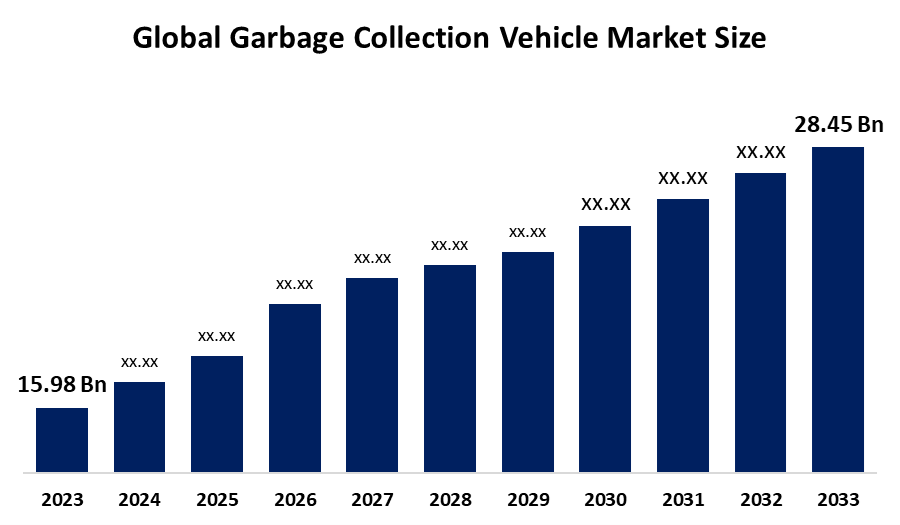
- The Global Garbage Collection Vehicle Market Size Was Estimated at USD 15.98 billion in 2024
- The Market Size is Expected to Grow at a CAGR of around 5.38 % from 2025 to 2035
- The Worldwide Garbage Collection Vehicle Market Size is Expected to Reach USD 28.45 billion by 2035
- North America region is expected to grow the fastest during the forecast period.
Get more details on this report -
According to a research report published by Spherical Insights, The Global Garbage Collection Vehicle Market Size was worth around USD 15.98 Billion in 2024 and is predicted to grow to around USD 28.45 Billion by 2035 with a compound annual growth rate (CAGR) of 5.38% from 2025 to 2035. The Global Garbage Collection Vehicle Market is expanding as governments and municipalities worldwide invest in modern, efficient, and environmentally friendly waste collection fleets, driven by rising urban populations, increasing municipal waste, and stricter sanitation regulations.
Market Overview
The global garbage collection vehicle market includes vehicles designed to collect, transport, and manage municipal waste, supporting efficient waste management, urban sanitation, and environmental sustainability worldwide. The growth factor for this market is the rising volume of municipal waste driven by rapid urbanization and population growth, increasing demand for efficient waste collection vehicles.
The global garbage collection vehicle market is significantly shaped by government initiatives aimed at improving urban sanitation and sustainable waste management. By December 31, 2025, at least 65% of packaging waste in the EU must be recycled, rising to 70% by 2030. From January 1, 2030, specific single-use plastics are banned, and by 2029, 90% of single-use plastic and metal beverage containers must be separately collected, advancing regional waste reduction and sustainability.
Technological development in this market focuses on electric and hybrid vehicles, automated and robotic loading systems, GPS and IoT-enabled route optimization, and real-time fleet monitoring, enhancing efficiency, reducing emissions, and modernizing urban waste collection operations
The market presents opportunities through rising urban waste, stricter recycling targets, adoption of electric and automated trucks, smart waste management systems, and government incentives, driving demand for modern, efficient, and sustainable garbage collection vehicles worldwide.
Report Coverage
This research report categorizes the global garbage collection vehicle market based on various segments and regions, forecasts revenue growth, and analyzes trends in each submarket. The report analyses the key growth drivers, opportunities, and challenges influencing the global garbage collection vehicle market. Recent market developments and competitive strategies, such as expansion, product launch, development, partnership, merger, and acquisition, have been included to draw the competitive landscape in the market. The report strategically identifies and profiles the key market players and analyzes their core competencies in each sub-segment of the global garbage collection vehicle market.
Garbage Collection Vehicle Market Report Coverage
| Report Coverage | Details |
|---|---|
| Base Year: | 2024 |
| Market Size in 2024: | USD 15.98 Billion |
| Forecast Period: | 2025-2035 |
| Forecast Period CAGR 2025-2035 : | CAGR of 5.38% |
| 2035 Value Projection: | USD 28.45 Billion |
| Historical Data for: | 2020-2023 |
| No. of Pages: | 235 |
| Tables, Charts & Figures: | 120 |
| Segments covered: | By Loader Type, By Vehicle Type |
| Companies covered:: | Volvo Group, Daimler AG, Scania AB, MAN Truck & Bus SE, Mack Trucks Inc, Peterbilt Motors Company, Isuzu Motors Ltd, Hino Motors Ltd, Ashok Leyland Limited, Heil Environmental Industries, McNeilus Truck and Manufacturing Inc, FAUN Umwelttechnik GmbH & Co. KG, Autocar LLC, Curbtender Inc, Bridgeport Manufacturing, and other key players |
| Pitfalls & Challenges: | COVID-19 Empact, Challenge, Future, Growth, & Analysis |
Get more details on this report -
Driving Factors
The global garbage collection vehicle market is driven by rapid urbanization, increasing municipal solid waste, government regulations on sanitation, rising environmental awareness, and the shift toward electric and automated waste collection vehicles, boosting demand for efficient and sustainable solutions. For instance, in March 2021, China’s 14th Five-Year Plan set a target to increase urban household waste recycling to 60% by 2025, up from 50%, driving demand for modern garbage collection vehicles and improved municipal waste management systems.
Restraining Factors
Global garbage collection vehicle market is restrained by high procurement and maintenance costs, limited technical expertise, and competition from conventional waste collection methods, which can slow adoption of modern, electric, and automated garbage collection vehicles, especially in developing regions.
Market Segmentation
The global garbage collection vehicle market share is classified into loader type, technology, and vehicle type.
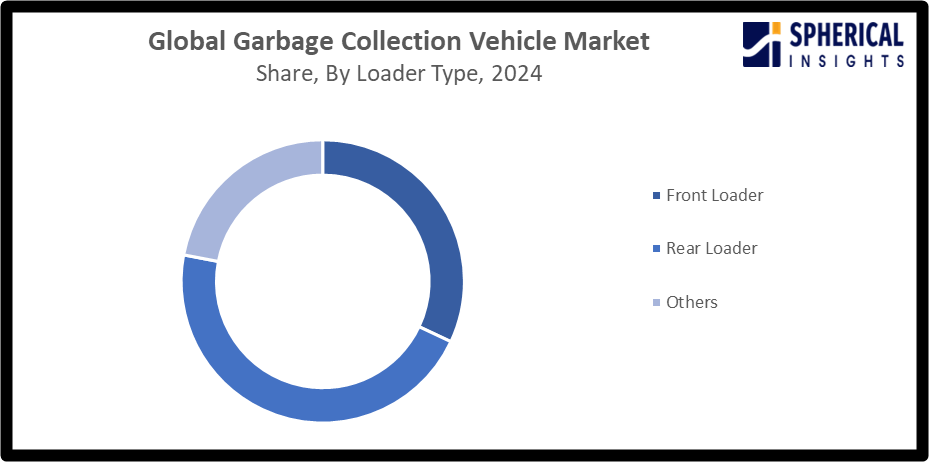
- The rear loader segment accounted for the largest share in 2024, approximately 46%, and is anticipated to grow at a significant CAGR during the forecast period.
Based on the loader type, the global garbage collection vehicle market is divided into front loader, rear loader, and others. Among these, the rear loader segment accounted for the largest share in 2024, approximately 46%, and is anticipated to grow at a significant CAGR during the forecast period. This is because rear loader garbage collection vehicles are versatile, cost-effective, and suitable for both residential and commercial waste collection, allowing easy operation in narrow streets and dense urban areas, which drives their high adoption and market dominance.
Get more details on this report -
- The semi-automatic segment accounted for the highest market revenue in 2024, approximately 57%, and is anticipated to grow at a significant CAGR during the forecast period.
Based on the technology, the global garbage collection vehicle market is divided into manual and semi-automatic. Among these, the semi-automatic segment accounted for the highest market revenue in 2024, approximately 57%, and is anticipated to grow at a significant CAGR during the forecast period. This is because semi-automatic garbage collection vehicles reduce labour requirements, improve collection efficiency, and offer faster loading and unloading compared to manual systems, making them more cost-effective and appealing for municipalities and private waste management companies.
- The heavy-duty segment dominated the market in 2024, approximately 50%, and is projected to grow at a substantial CAGR during the forecast period.
Based on the vehicle type, the global garbage collection vehicle market is divided into light, medium, and heavy-duty. Among these, the heavy-duty segment dominated the market in 2024, approximately 50%, and is projected to grow at a substantial CAGR during the forecast period. The market dominates due to high waste carrying capacity, strong durability, and efficiency in handling large volumes of municipal waste, making heavy-duty vehicles ideal for large-scale urban waste collection operations.
Regional Segment Analysis of the Global Garbage Collection Vehicle Market
- North America (U.S., Canada, Mexico)
- Europe (Germany, France, U.K., Italy, Spain, Rest of Europe)
- Asia-Pacific (China, Japan, India, Rest of APAC)
- South America (Brazil and the Rest of South America)
- The Middle East and Africa (UAE, South Africa, Rest of MEA)
Asia-Pacific is anticipated to hold the largest share of the global garbage collection vehicle market over the predicted timeframe.
Asia Pacific is anticipated to hold the largest share of the global garbage collection vehicle market over the predicted timeframe. This is mainly due to rapid urbanization, increasing municipal solid waste generation, expanding city infrastructure, and strong government spending on waste management systems in countries such as China and India. China is leading the Asia Pacific garbage collection vehicle market, due to its massive urban population and strategic partnerships for promoting innovation.
The North America region is expected to grow at the fastest rate during the forecast period, driven by advanced waste management practices, rising adoption of automated garbage collection vehicles, and increasing investments in smart and sustainable municipal infrastructure, especially in the United States and Canada. The United States is the dominant country in the North America market, driven by increased need for automated side loaders, R&D, and stringent sanitation regulations.
Competitive Analysis:
The report offers the appropriate analysis of the key organizations/companies involved within the global garbage collection vehicle market, along with a comparative evaluation primarily based on their product offering, business overviews, geographic presence, enterprise strategies, segment market share, and SWOT analysis. The report also provides an elaborative analysis focusing on the current news and developments of the companies, which includes product development, innovations, joint ventures, partnerships, mergers & acquisitions, strategic alliances, and others. This allows for the evaluation of the overall competition within the market.
List of Key Companies
- Volvo Group
- Daimler AG
- Scania AB
- MAN Truck & Bus SE
- Mack Trucks Inc
- Peterbilt Motors Company
- Isuzu Motors Ltd
- Hino Motors Ltd
- Ashok Leyland Limited
- Heil Environmental Industries
- McNeilus Truck and Manufacturing Inc
- FAUN Umwelttechnik GmbH & Co. KG
- Autocar LLC
- Curbtender Inc
- Bridgeport Manufacturing
- Others
Key Target Audience
- Market Players
- Investors
- End-users
- Government Authorities
- Consulting and Research Firm
- Venture capitalists
- Value-Added Resellers (VARs)
Recent Development
- In May 2023, Abu Dhabi Waste Management (Tadweer) launched the UAE’s first fully electric waste truck, marking the Middle East’s introduction of a 100% electric heavy-duty vehicle. Tadweer deployed the inaugural Renault electric truck to collect household waste throughout the emirate.
Market Segment
This study forecasts revenue at global, regional, and country levels from 2020 to 2035. Spherical Insights has segmented the global garbage collection vehicle market based on the below-mentioned segments:
Global Garbage Collection Vehicle Market, By Loader Type
- Front Loader
- Rear Loader
- Others
Global Garbage Collection Vehicle Market, By Technology
- Manual
- Semi-Automatic
Global Garbage Collection Vehicle Market, By Vehicle Type
- Light
- Medium
- Heavy Duty
Global Garbage Collection Vehicle Market, By Regional Analysis
- North America
- US
- Canada
- Mexico
- Europe
- Germany
- UK
- France
- Italy
- Spain
- Russia
- Rest of Europe
- Asia Pacific
- China
- Japan
- India
- South Korea
- Australia
- Rest of Asia Pacific
- South America
- Brazil
- Argentina
- Rest of South America
- Middle East & Africa
- UAE
- Saudi Arabia
- Qatar
- South Africa
- Rest of the Middle East & Africa
Frequently Asked Questions (FAQ)
-
1. What are the main technologies used in the global garbage collection vehicle market?Key technologies include manual, semi-automatic, and fully automatic loading systems, as well as electric and hybrid drivetrains, GPS and IoT-enabled route optimization, and real-time fleet monitoring to enhance efficiency and reduce operational costs.
-
2. What opportunities exist in the market during the forecast period?Opportunities include rising adoption of electric and hybrid garbage collection vehicles, integration of smart technologies like IoT and GPS, increasing urban waste volumes, government incentives for sustainable waste management, and growing demand for automated and high-capacity collection solutions.
-
3. Which regions are currently leading in adopting modern waste collection vehicles?Asia-Pacific holds the largest market share, while North America is adopting advanced automated and electric vehicles rapidly due to smart city initiatives and strict sanitation policies.
-
4. How are electric and hybrid garbage trucks changing the waste management industry?Electric and hybrid vehicles reduce emissions, noise, and fuel costs, supporting environmental sustainability and enabling municipalities to meet stricter emission regulations.
-
5. What role do government regulations play in promoting modern garbage collection fleets?Governments implement regulations and recycling targets that encourage municipalities and private operators to adopt automated, electric, and eco-friendly collection vehicles.
-
6. What challenges do municipalities face when upgrading to automated waste collection systems?High vehicle costs, technical training requirements, and infrastructure limitations can slow adoption, particularly in developing cities or rural areas.
-
1. What are the main technologies used in the global garbage collection vehicle market?Key technologies include manual, semi-automatic, and fully automatic loading systems, as well as electric and hybrid drivetrains, GPS and IoT-enabled route optimization, and real-time fleet monitoring to enhance efficiency and reduce operational costs.
-
2. What opportunities exist in the market during the forecast period?Opportunities include rising adoption of electric and hybrid garbage collection vehicles, integration of smart technologies like IoT and GPS, increasing urban waste volumes, government incentives for sustainable waste management, and growing demand for automated and high-capacity collection solutions.
-
3. Which regions are currently leading in adopting modern waste collection vehicles?Asia-Pacific holds the largest market share, while North America is adopting advanced automated and electric vehicles rapidly due to smart city initiatives and strict sanitation policies.
-
4. How are electric and hybrid garbage trucks changing the waste management industry?Electric and hybrid vehicles reduce emissions, noise, and fuel costs, supporting environmental sustainability and enabling municipalities to meet stricter emission regulations.
-
5. What role do government regulations play in promoting modern garbage collection fleets?Governments implement regulations and recycling targets that encourage municipalities and private operators to adopt automated, electric, and eco-friendly collection vehicles.
-
6. What challenges do municipalities face when upgrading to automated waste collection systems?High vehicle costs, technical training requirements, and infrastructure limitations can slow adoption, particularly in developing cities or rural areas.
Need help to buy this report?