Europe Anti-Aging Supplements Market Size, Share, and COVID-19 Impact Analysis, By Ingredient (Collagen, Resveratrol, Nicotinamide Mononucleotide, Vitamins, Hyaluronic Acid, Minerals, and Others), By Application (Hair, Skin & Nail Care, Energy & Stamina, Bone & Joint Health and Others), By Formulation (Capsule, Powder, Tablet, and Others), By Distribution Channel (Pharmacies & Drug Stores, Hypermarkets/Supermarkets, Online Marketplaces, and Others), and Europe Anti-Aging Supplements Market Insights, Industry Trend, Forecasts to 2035
Industry: Healthcare
Europe Anti-Aging Supplements Market Size Insights Forecasts to 2035
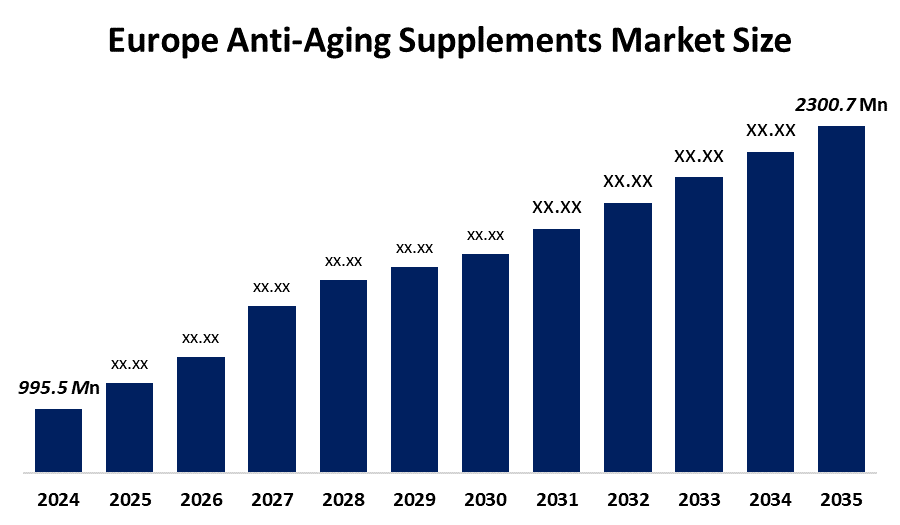
- The Europe Anti-Aging Supplements Market Size Was Estimated at USD 995.5 Million in 2024
- The Market Size is Expected to Grow at a CAGR of Around 7.92% from 2025 to 2035
- The Europe Anti-Aging Supplements Market Size is Expected to Reach USD 2300.7 Million by 2035
Get more details on this report -
According to a research report published by Spherical Insights & Consulting, The Europe Anti-aging Supplements Market Size Is Anticipated To Reach USD 2300.7 Million By 2035, Growing At A CAGR of 7.92% From 2025 to 2035. The anti-aging market in Europe is driven by aging population, increasing demand for minimally invasive anti-aging techniques, and incentives from the European governments to promote innovation in biotechnology.
Market Overview
The Europe Anti-Aging Supplements Market Size is a high-growth market encompassing advanced skincare, aesthetic treatments, and regenerative biotechnology aimed at delaying physiological aging and enhancing skin longevity. This market is fundamentally fuelled by a greying demographic.
According to Eurostat, as of January 2025, individuals aged 65 and over represent 22.0% of the EU population, with the median age reaching a new high of 44.9 years.
Innovation has shifted toward smart treatments, including AI-driven personalized diagnostics and clean biotechnology like mRNA-based tissue repair. To maintain economic resilience, the European Commission provides significant incentives through the USD 112.5 billion Horizon Europe program, which funds health research into age-related diseases and longevity. Additionally, the proposed 2025 EU Biotech Act offers strategic support through fast-tracked permitting and patent extensions for health-related biotech breakthroughs. Beyond demographics, driving factors include a rising demand for minimally invasive procedures such as Botox and dermal fillers. and a surge in the male grooming segment, as consumers increasingly view anti-aging as a proactive component of holistic wellness.
Report Coverage
This research report categorizes the Europe anti-aging supplements market based on various segments and regions, and forecasts revenue growth and analyses trends in each submarket. The report analyses the key growth drivers, opportunities, and challenges influencing the Europe anti-aging supplements market. Recent market developments and competitive strategies, such as expansion, product launch, development, partnership, merger, and acquisition, have been included to draw the competitive landscape in the market. The report strategically identifies and profiles the key market players and analyses their core competencies in each sub-segment of the Europe anti-aging supplements market.
Europe Anti-Aging Supplements Market Report Coverage
| Report Coverage | Details |
|---|---|
| Base Year: | 2024 |
| Market Size in 2024: | USD 995.5 Million |
| Forecast Period: | 2025-2035 |
| Forecast Period CAGR 2025-2035 : | 7.92% |
| 2035 Value Projection: | USD 2300.7 Million |
| Historical Data for: | 2020-2023 |
| No. of Pages: | 195 |
| Tables, Charts & Figures: | 110 |
| Segments covered: | By Ingredient, By Application |
| Companies covered:: | Haleon, Sanofi, Vitabiotics, Arkopharma Laboratories, Biogena, Nutri & Co, Cuure, Dynveo, Avea Life, Life Extension Europe, Genflow Biosciences, Evonik Industries, Others |
| Pitfalls & Challenges: | COVID-19 Empact, Challenge, Future, Growth, & Analysis |
Get more details on this report -
Driving Factors
The Europe Anti-Aging Supplements Market Size in Europe is driven by a demographic transition toward an older populace. As the median age across the European Union continues to climb, there is a sustained demand for products that mitigate the visible and physiological markers of aging. Beyond simple biology, the market is driven by a psychological shift toward where younger demographics, specifically Gen Z and Millennials, proactively integrate medical-grade skincare and non-invasive aesthetic procedures into their daily routines. This trend is amplified by the effect of social media and remote work, which has heightened self-awareness regarding facial aesthetics. On the technological front, breakthroughs in biotechnology, such as personalised mRNA-based serums and AI-powered diagnostic tools, are transforming generic products into precision-targeted solutions. and the stringent safety standards established by the EU’s Cosmetic Regulation foster high levels of consumer trust, encouraging consistent investment in premium, efficacious brands.
Restraining Factors
The Europe Anti-Aging Supplements Market Size is mostly constrained by rigorous regulatory barriers and shifting economic pressures. Persistent inflation in the EU in late 2025 has led to budget fragmentation, where consumers increasingly pivot from premium luxury brands to more affordable alternatives. Furthermore, the market suffers from high saturation in Western Europe and a growing scepticism gap, as the European Commission ramps up scrutiny on anti-aging marketing claims to prevent misleading consumers about biological reversal.
Market Segmentation
The Europe anti-aging supplements market share is classified into ingredient, application, formulation, and distribution channel.
- The collagen segment accounted for the largest revenue market share in 2024 and is expected to grow at a significant CAGR during the forecast period.
The Europe Anti-Aging Supplements Market Size is segmented by ingredient into collagen, resveratrol, nicotinamide mononucleotide, vitamins, hyaluronic acid, minerals, and others. Among these, the collagen segment accounted for the largest revenue market share in 2024 and is expected to grow at a significant CAGR during the forecast period. This is due to high consumer trust in its ability to restore skin elasticity and support joint health, particularly among Europe's growing geriatric population. The segment is further strengthened by the rising popularity of beauty-from-within trends and the introduction of high-bioavailability marine collagen peptides.
- The hair, skin & nail care segment dominated the share in 2024 and is anticipated to grow at a remarkable CAGR during the forecast period.
Based on application, the Europe anti-aging supplements market is segmented into hair, skin & nail care, energy & stamina, bone & joint health, and others. Among these, the hair, skin & nail care segment dominated the share in 2024 and is anticipated to grow at a remarkable CAGR during the forecast period. Because European consumers prioritise visible aesthetic results alongside biological longevity, the desire to mitigate external signs of aging, such as wrinkles and brittle nails, makes this a primary entry point for supplement users due to heavy social media influence.
- The capsule segment accounted for the largest revenue market share in 2024 and is expected to grow at a significant CAGR during the forecast period.
The Europe Anti-Aging Supplements Market Size is segmented by formulation into capsule, powder, tablet, and others. Among these, the capsule segment accounted for the largest revenue market share in 2024 and is expected to grow at a significant CAGR during the forecast period. This is due to their convenience, precise dosing, and superior protection of sensitive active ingredients like NMN or Resveratrol from oxidation. Capsules remain the gold standard for consumers seeking a clinical and professional-grade supplement experience.
- The pharmacies & drug stores segment dominated the share in 2024 and is anticipated to grow at a remarkable CAGR during the forecast period.
Based on distribution channel, the Europe anti-aging supplements market is segmented into pharmacies & drug stores, hypermarkets/supermarkets, online marketplaces, and others. Among these, the pharmacies & drug stores segment dominated the share in 2024 and is anticipated to grow at a remarkable CAGR during the forecast period. Because in Europe, particularly in Germany, France, and Italy. European consumers exhibit a high level of trust in healthcare professionals, such as pharmacists, who often seek professional consultations before purchasing anti-aging products. This physical presence allows brands to establish medical credibility, which is vital for high-cost longevity supplements.
Competitive Analysis:
The report offers the appropriate analysis of the key organisations/companies involved within the Europe anti-aging supplements market, along with a comparative evaluation primarily based on their product offering, business overviews, geographic presence, enterprise strategies, segment market share, and SWOT analysis. The report also provides an elaborate analysis focusing on the current news and developments of the companies, which includes product development, innovations, joint ventures, partnerships, mergers & acquisitions, strategic alliances, and others. This allows for the evaluation of the overall competition within the market.
List of Key Companies
- Haleon
- Sanofi
- Vitabiotics
- Arkopharma Laboratories
- Biogena
- Nutri & Co
- Cuure
- Dynveo
- Avea Life
- Life Extension Europe
- Genflow Biosciences
- Evonik Industries
- Others
Key Target Audience
- Market Players
- Investors
- End-users
- Government Authorities
- Consulting and Research Firm
- Venture capitalists
- Value-Added Resellers (VARs)
Recent Developments:
- In March 2026, Evonik Industries launched PhytoSquene, the first pharmaceutical-grade, plant-derived squalene. This innovation in anti-aging cosmetics and vaccine adjuvants aligns with the EU’s 2026 sustainability mandates for Green Beauty.
- In February 2026, Biogena launched Solu Drops Astaxanthin, a high-bioavailability liquid formula using pipette delivery to avoid the pill fatigue common in older consumers.
- In December 2024, Avea Life officially launched the Lemon Flavour of the Collagen Activator as a secondary option based on high customer demand for citrus profiles. Unlike traditional collagen, it aims to stimulate the body's own production pathways, catering to the growing pre-juvenation trend among European Millennials.
Market Segment
This study forecasts revenue at the Europe regional and country levels from 2020 to 2035. Spherical Insights has segmented the Europe anti-aging supplements market based on the below-mentioned segments:
Europe Anti-Aging Supplements Market, By Ingredient
- Collagen
- Resveratrol
- Nicotinamide Mononucleotide
- Vitamins
- Hyaluronic Acid
- Minerals
- Others
Europe Anti-Aging Supplements Market, By Application
- Hair, Skin & Nail Care
- Energy & Stamina
- Bone & Joint Health
- Others
Europe Anti-Aging Supplements Market, By Formulation
- Capsule
- Powder
- Tablet
- Others
Europe Anti-Aging Supplements Market, By Distribution Channel
- Pharmacies & Drug Stores
- Hypermarkets/Supermarkets
- Online Marketplaces
- Others
Frequently Asked Questions (FAQ)
-
Q: What is the Europe anti-aging supplements market size?A: Europe anti-aging Supplements market size is expected to grow from USD 995.5 million in 2024 to USD 2300.7 million by 2035, growing at a CAGR of 7.92% during the forecast period 2025-2035.
-
Q: What are the primary factors driving the growth of this market in Europe?A: Growth is primarily fuelled by an aging demographic (with 22% of the EU population aged 65+), increased interest in pre-juvenation among younger generations (Gen Z and Millennials), and significant government support, such as the USD 112.5 billion Horizon Europe program and the 2025 EU Biotech Act.
-
Q: Which ingredient currently holds the largest market share?A: The Collagen segment accounted for the largest revenue share in 2024. Its dominance is attributed to high consumer confidence in its efficacy for skin elasticity and joint health, coupled with the innovation of high-bioavailability marine collagen peptides.
-
Q: What are the main challenges or restraints facing the market?A: The market is restrained by rigorous regulatory barriers, such as strict EU scrutiny on marketing claims, and economic pressures like the 2.4% inflation rate recorded in late 2025, which has caused some consumers to shift toward more affordable brands.
-
Q: Why do Pharmacies and Drug Stores remain the leading distribution channel?A: European consumers, particularly in France, Germany, and Italy, place a high level of trust in healthcare professionals. The ability to receive a professional consultation before purchasing high-cost longevity supplements gives physical pharmacies a competitive edge over online marketplace.
-
Q: What recent innovations have been recorded in the industry?A: Notable developments include Evonik’s launch of plant-derived squalene (PhytoSquene) in March 2026, Biogena’s introduction of liquid Astaxanthin to combat pill fatigue, and Avea Life’s expansion of its Colgevity blend to stimulate natural collagen production.
Need help to buy this report?