Global Cognitive Behavioral Therapy Market Size, Share, and COVID-19 Impact Analysis, By Type (Cognitive Therapy, Dialectical Behavior Therapy, Multimodal Therapy, and Rational Emotive Behavior Therapy (REBT)), By Age Group (Children, Adults, and Geriatric), By Indications (Addiction, Anger Issues, Depression, Anxiety, Panic Attacks, and Phobias), and By Region (North America, Europe, Asia-Pacific, Latin America, Middle East, and Africa), Analysis and Forecast 2025 - 2035
Industry: Healthcare
Global Cognitive Behavioral Therapy Market Insights Forecasts to 2035
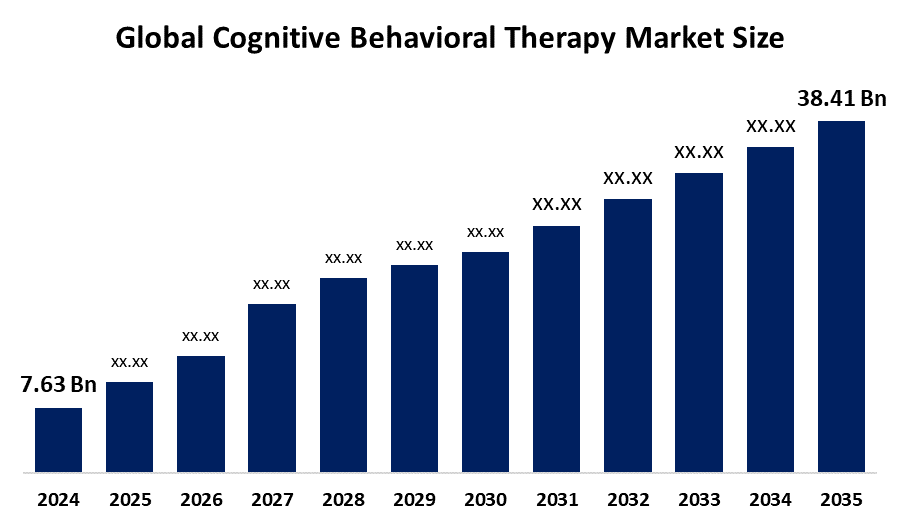
- The Global Cognitive Behavioral Therapy Market Size Was Estimated at USD 7.63 Billion in 2024
- The Market Size is Expected to Grow at a CAGR of around 15.83% from 2025 to 2035
- The Worldwide Cognitive Behavioral Therapy Market Size is Expected to Reach USD 38.41 Billion by 2035
- Asia Pacific is expected to grow the fastest during the forecast period.
Get more details on this report -
According to a research report published by Spherical Insights and Consulting, the global cognitive behavioral therapy market size was worth around USD 7.63 billion in 2024 and is predicted to grow to around USD 38.41 billion by 2035 with a compound annual growth rate (CAGR) of 15.83% from 2025 to 2035. The growth of the cognitive behavioral therapy market includes increasing awareness about mental health issues, rising prevalence of anxiety and depression disorders, the expansion of teletherapy networks, and increased acceptance of evidence-based treatments for effective, accessible, and cost-efficient solutions for a wide range of patient populations worldwide.
Market Overview
Cognitive Behavioral Therapy (CBT) Market Size is a specific, evidence-based psychotherapy that helps individuals recognize and change negative thought patterns and behaviors. It is widely used for treating various mental health conditions such as depression, anxiety disorders, phobias, post-traumatic stress disorder, and substance use disorders. Growing awareness of mental health, increasing prevalence of psychological disorders, and rising demand for non-pharmacological treatment options have fostered the rapid growth of the global CBT market. Increasing recognition of mental health as a public health priority has made CBT more accessible through teletherapy and digital platforms, and strong clinical evidence supports its effectiveness. Innovation is playing a huge role, and new advances in digital health technologies are transforming traditional models of therapy through mobile CBT applications, virtual reality, assisted therapy, and AI-powered personalized treatment plans. Such innovations have made CBT treatments more accessible, affordable, and convenient to patients across the world.
Opportunities for market expansion are found in integrating CBT into primary healthcare systems, developing culturally adapted therapy modules, and expanding services in emerging economies with burgeoning mental health infrastructure. Major players in the market, including BetterHelp, Talkspace, Amwell, MindBeacon, and Online Therapy.com, already lead the digital transformation in CBT delivery, supported by healthcare organizations and technology companies. Guiding nations in the reform of their mental health policies and systems, the World Health Organization (WHO) issued a guideline in March 2025. The guidance focuses on person-centred care, prevention, and alignment with human rights standards. Therefore, it promotes broader access to evidence-based interventions, including talking therapies such as Cognitive Behavioral Therapy (CBT), aiming at improving the quality and access to mental health services globally.
Report Coverage
This research report categorizes the cognitive behavioral therapy market size based on various segments and regions, forecasts revenue growth, and analyzes trends in each submarket. The report analyses the key growth drivers, opportunities, and challenges influencing the cognitive behavioral therapy market. Recent market developments and competitive strategies such as expansion, type launch, development, partnership, merger, and acquisition, have been included to draw the competitive landscape in the market. The report strategically identifies and profiles the key market players and analyses their core competencies in each sub-segment of the cognitive behavioral therapy market.
Global Cognitive Behavioral Therapy Market Report Coverage
| Report Coverage | Details |
|---|---|
| Base Year: | 2024 |
| Market Size in 2024: | USD 7.63 Billion |
| Forecast Period: | 2025-2035 |
| Forecast Period CAGR 2025-2035 : | CAGR of 15.83% |
| 2035 Value Projection: | USD 38.41 Billion |
| Historical Data for: | 2020-2023 |
| No. of Pages: | 240 |
| Tables, Charts & Figures: | 120 |
| Segments covered: | By Type , By Age Group |
| Companies covered:: | Lyra Health Headspace Spring Health Talkspace Pear Therapeutics BetterHelp MindBeacon Woebot Health Acadia Healthcare Company Iris Telehealth SilverCloud Health Amwell Magellan Health Inc. Universal Health Services Inc. and other, key players |
| Pitfalls & Challenges: | COVID-19 Empact, Challenge, Future, Growth, & Analysis |
Get more details on this report -
Driving Factors
The Cognitive Behavioral Therapy Market Size is propelled by the increase in the prevalence of mental health disorders such as anxiety, depression, and PTSD. The improvement in awareness related to mental health, increased acceptance regarding psychotherapy, and expansion in the availability of digital health options such as online therapy platforms and mobile CBT apps are driving the growth of the market. The supportive government initiatives, employer mental health programs, and enhanced healthcare infrastructure add to demand. Furthermore, development in telemedicine, affordable virtual counselling alternatives, and integration of AI for personalized delivery of CBT accelerates the adoption of these therapies among diverse demographics and in various healthcare settings globally.
Restraining Factors
Some of the major restraints on the cognitive behavioral therapy market size include a shortage of trained therapists, high treatment costs, and a lack of sufficient insurance coverage. Due to a prevailing stigma against mental health, especially in developing regions, adoption is also slowed. Further, inadequate standardized treatment protocols, inconsistent therapy outcomes, and patient non-compliance hinder market growth and accessibility even more.
Market Segmentation
The cognitive behavioral therapy market share is classified into type, age group, and indications.
- The cognitive therapy segment dominated the market in 2024, approximately 35% and is projected to grow at a substantial CAGR during the forecast period.
Based on the type, the cognitive behavioral therapy market is divided into cognitive therapy, dialectical behavior therapy, multimodal therapy, and rational emotive behavior therapy (REBT). Among these, the cognitive therapy segment dominated the market in 2024 and is projected to grow at a substantial CAGR during the forecast period. The cognitive therapy segment dominated in the global market due to the growing prevalence of mental health disorders, including anxiety, depression, and PTSD, together with the greater awareness about non-pharmacological treatment options and the proven efficacy of cognitive therapies. Moreover, this is backed by the rise in the expansion of digital platforms for therapy, telehealth services, and AI-based integration of personalized interventions, accelerating their adoption worldwide.
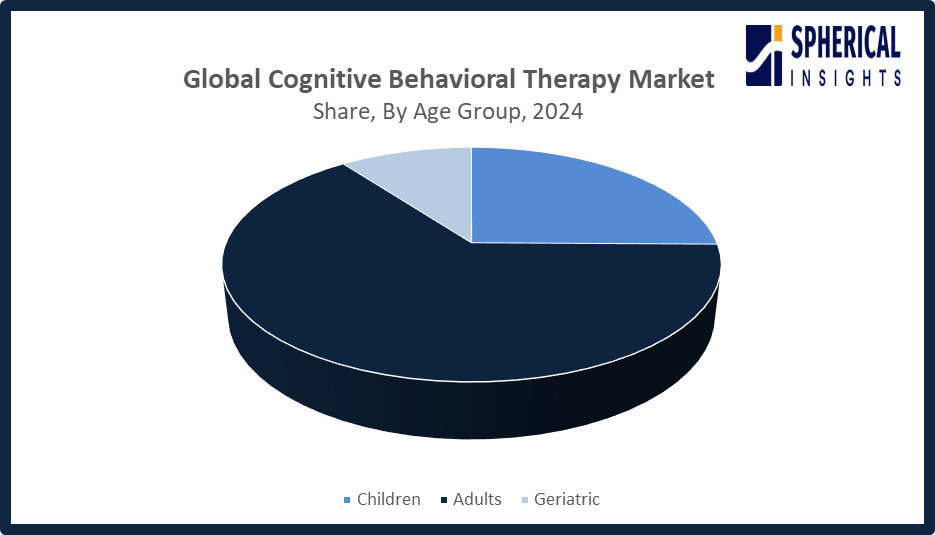
- The adults segment accounted for the largest share in 2024, approximately 65% and is anticipated to grow at a significant CAGR during the forecast period.
Based on the age group, the cognitive behavioral therapy market is divided into children, adults, and geriatric. Among these, the adults segment accounted for the largest share in 2024 and is anticipated to grow at a significant CAGR during the forecast period. Growth in this segment can be attributed to the rise in the prevalence of mental health disorders, including depression, anxiety, and stress, among adults; increasing awareness of the benefits of psychotherapy, and increased adoption of digital and telehealth CBT platforms. Also, workplace stress management programs and supportive government initiatives contribute to market growth.
Get more details on this report -
- The depression segment accounted for the highest market revenue in 2024, approximately 40% and is anticipated to grow at a significant CAGR during the forecast period.
Based on the indications, the cognitive behavioral therapy market is divided into addiction, anger issues, depression, anxiety, panic attacks, and phobias. Among these, the depression segment accounted for the highest market revenue in 2024 and is anticipated to grow at a significant CAGR during the forecast period. The growth in the depression segment is driven by the rising prevalence of depression globally, increased awareness about mental health, and the established efficacy of CBT for managing the symptoms of depression. Besides, the increasing adoption of digital therapy platforms, telehealth services, and government initiatives supports the further growth of this segment.
Regional Segment Analysis of the Cognitive Behavioral Therapy Market
- North America (U.S., Canada, Mexico)
- Europe (Germany, France, U.K., Italy, Spain, Rest of Europe)
- Asia-Pacific (China, Japan, India, Rest of APAC)
- South America (Brazil and the Rest of South America)
- The Middle East and Africa (UAE, South Africa, Rest of MEA)
North America is anticipated to hold the largest share of the cognitive behavioral therapy market over the predicted timeframe.
North America is anticipated to hold the largest share of the cognitive behavioral therapy market over the predicted timeframe. North America is expected to represent a 33% share in the CBT market during the forecast period, owing to its high prevalence of mental health disorders, good infrastructure with respect to healthcare, and increasing awareness related to psychological well-being. The United States and Canada represent the major contributors, supported by government initiatives, reimbursement coverage for mental health services, and a wide adoption of evidence-based therapies. Besides this, with the integration of digital health solutions, which involve online CBT platforms and teletherapy, accessibility and convenience have improved. Strong research and development activities and culturally growing acceptance of mental health treatments further reinforce the region's market dominance.

Get more details on this report -
Asia Pacific is expected to grow at a rapid CAGR in the cognitive behavioral therapy market during the forecast period. The market for cognitive behavioral therapy is expected to witness rapid growth in the Asia Pacific region, with an approximate 25% market share, due to growing awareness of mental health, the increasing prevalence of disorders such as depression and anxiety, and improving infrastructure for healthcare. Major country markets driving this growth include China, India, Japan, and Australia, governments of which have initiated programs targeting mental wellness, further accelerating the adoption of digital therapy platforms. A greater acceptance of psychological treatments among urban populations, coupled with access to technological solutions for teletherapy and CBT apps, has increased the penetration of mental health care and supported the growth of this market.
Europe is anticipated to show significant growth in the CBT market, with growing awareness about mental health, rising cases of anxiety and depression, and supportive government initiatives. Major countries contributing to this growth include the UK, Germany, and France, which owe their growth to the presence of a well-established healthcare infrastructure coupled with widespread adoption of psychological therapies. In addition, accessibility has been further improved through digital CBT platforms and teletherapy, along with increased cultural acceptance of treatments related to mental health, thus driving market growth across the region.
Competitive Analysis:
The report offers the appropriate analysis of the key organizations/companies involved within the cognitive behavioral therapy market, along with a comparative evaluation primarily based on their type of offering, business overviews, geographic presence, enterprise strategies, segment market share, and SWOT analysis. The report also provides an elaborative analysis focusing on the current news and developments of the companies, which includes type development, innovations, joint ventures, partnerships, mergers & acquisitions, strategic alliances, and others. This allows for the evaluation of the overall competition within the market.
List of Key Companies
- Lyra Health
- Headspace
- Spring Health
- Talkspace
- Pear Therapeutics
- BetterHelp
- MindBeacon
- Woebot Health
- Acadia Healthcare Company
- Iris Telehealth
- SilverCloud Health
- Amwell
- Magellan Health Inc.
- Universal Health Services Inc.
- Others
Key Target Audience
- Market Players
- Investors
- End-users
- Government Authorities
- Consulting and Research Firm
- Venture capitalists
- Value-Added Resellers (VARs)
Recent Development
- In October 2025, Lyra Health launched Lyra AI, the first clinical-grade AI for mental health care. Drawing on over a decade of experience serving 20 million people, it combines proven clinical outcomes, trained providers, and strict safety protocols, offering members 24/7 access to mental health support through a global provider network.
- In June 2025, Headspace launched Therapy by Headspace, a direct-to-consumer therapy service offering affordable, evidence-based mental health care to over 90 million Americans across all 50 states. After a decade of providing therapy via employers and health plans, Headspace now makes its services widely accessible to consumers nationwide.
- In May 2025, Talkspace announced a collaboration with Amazon Pharmacy to simplify the pharmacy experience for its members. The partnership streamlines medication management and adherence support for providers, enhancing convenience and ensuring more effective, coordinated care for Talkspace users across its behavioral health platform.
- In September 2024, Iris Telehealth launched its Virtual Clinic and Iris Insights platforms. This suite enables health systems and community organizations to integrate behavioral healthcare into patient journeys, improving access to quality mental health services and addressing the growing demand for comprehensive, transformative behavioral health solutions.
- In July 2024, Talkspace announced its AI Innovation Group to advance provider efficiency, clinical quality, and operational excellence through ethical AI use. Developed with Clinical Quality and Security teams, the initiative represents a key milestone in Talkspace’s commitment to innovation and high-performance in behavioral health care.
- In September 2024, Iris Telehealth launched two technology-driven solutions: a Virtual Clinic and AI assistant, Iris Insights. The company partners with healthcare providers to enhance behavioral health services across clinics of all sizes, from large health systems to community mental health centers, improving care delivery and operational efficiency.
Market Segment
This study forecasts revenue at global, regional, and country levels from 2020 to 2035. Spherical Insights has segmented the cognitive behavioral therapy market based on the below-mentioned segments:
Global Cognitive Behavioral Therapy Market, By Type
- Cognitive Therapy
- Dialectical Behavior Therapy
- Multimodal Therapy
- Rational Emotive Behavior Therapy (REBT)
Global Cognitive Behavioral Therapy Market, By Age Group
- Children
- Adults
- Geriatric
Global Cognitive Behavioral Therapy Market, By Indications
- Addiction
- Anger Issues
- Depression
- Anxiety
- Panic Attacks
- Phobias
Global Cognitive Behavioral Therapy Market, By Regional Analysis
- North America
- US
- Canada
- Mexico
- Europe
- Germany
- UK
- France
- Italy
- Spain
- Russia
- Rest of Europe
- Asia Pacific
- China
- Japan
- India
- South Korea
- Australia
- Rest of Asia Pacific
- South America
- Brazil
- Argentina
- Rest of South America
- Middle East & Africa
- UAE
- Saudi Arabia
- Qatar
- South Africa
- Rest of the Middle East & Africa
Frequently Asked Questions (FAQ)
-
1.What is the CAGR of the cognitive behavioral therapy market over the forecast period?The global cognitive behavioral therapy market is projected to expand at a CAGR of 15.83% during the forecast period.
-
2.What is the cognitive behavioral therapy market?The cognitive behavioral therapy (CBT) market is the global market for the mental health treatment that helps people identify and change negative thought patterns and behaviors.
-
3.What is the market size of the cognitive behavioral therapy market?The global cognitive behavioral therapy market size is expected to grow from USD 7.63 billion in 2024 to USD 38.41 billion by 2035, at a CAGR of 15.83% during the forecast period 2025-2035.
-
4.Which region holds the largest share of the cognitive behavioral therapy market?North America is anticipated to hold the largest share of the cognitive behavioral therapy market over the predicted timeframe.
-
5.Who are the top 10 companies operating in the global cognitive behavioral therapy market?Lyra Health, Headspace, Spring Health, Talkspace, Pear Therapeutics, BetterHelp, MindBeacon, Woebot Health, Acadia Healthcare Company, Iris Telehealth, SilverCloud Health, Amwell, Magellan Health Inc., Universal Health Services Inc., and Others.
-
6.What factors are driving the growth of the cognitive behavioral therapy market?The growth of the cognitive behavioral therapy (CBT) market is driven by the rising prevalence of mental health disorders, increased public awareness and stigmatization, and the growing accessibility of CBT through digital platforms and teletherapy.
-
7.What are the market trends in the cognitive behavioral therapy market?Key trends in the cognitive behavioral therapy (CBT) market include the increased use of telehealth and digital platforms for remote delivery, driven by rising mental health awareness and the growing prevalence of disorders like depression and anxiety.
-
8.What are the main challenges restricting wider adoption of the cognitive behavioral therapy market?The main challenges restricting the wider adoption of the cognitive behavioral therapy (CBT) market involve a combination of systemic, provider-level, and patient-level barriers.
Need help to buy this report?