Global Cholestatic Pruritus Market Size, Share, and COVID-19 Impact Analysis, By Therapeutic Class (Biologics, Small Molecule Inhibitors, Topical Agents, Systemic Corticosteroids, and Others), By Indication (Chronic Kidney Disease-Associated Pruritus (CKD-aP), Atopic Dermatitis, Psoriasis, Cholestatic Pruritus, and Other Dermatological Conditions), By Route of Administration (Injectable, Oral, Topical, and Others), and By Region (North America, Europe, Asia-Pacific, Latin America, Middle East, and Africa), Analysis and Forecast 2025 - 2035
Industry: Healthcare
Global Cholestatic Pruritus Market Insights Forecasts to 2035
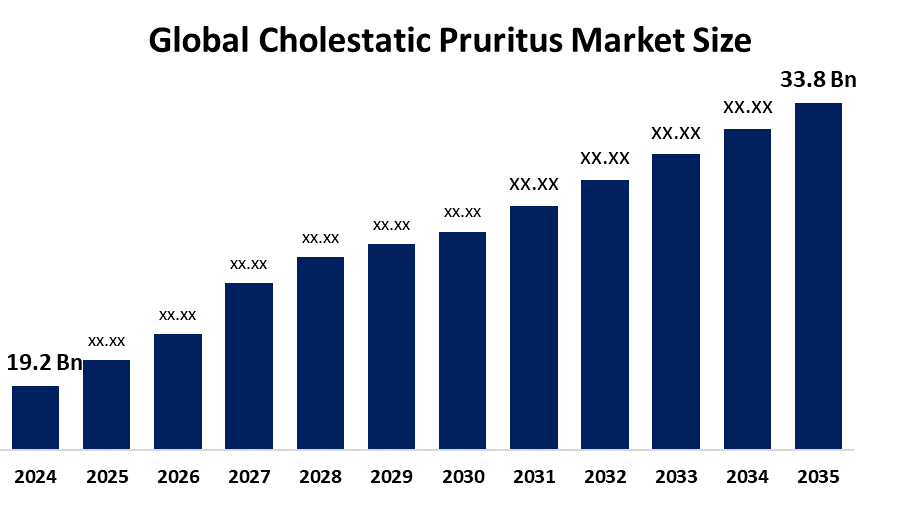
- The Global Cholestatic Pruritus Market Size Was Estimated at USD 19.2 Billion in 2024
- The Market Size is Expected to Grow at a CAGR of around 5.28% from 2025 to 2035
- The Worldwide Cholestatic Pruritus Market Size is Expected to Reach USD 33.8 Billion by 2035
Get more details on this report -
According to Spherical Insights, the Global Cholestatic Pruritus Market Size is expected to grow from USD 19.2 Billion in 2024 to USD 33.8 Billion by 2035, at a CAGR of 5.28% during the forecast period 2025-2035.
Major Players
GlaxoSmithKline plc, Takeda Pharmaceutical Company Limited, Merck KGaA, Incyte Corporation, Ipsen Pharma, CANbridge Pharmaceuticals Inc., Escient Pharmaceuticals Inc., Mirum Pharmaceuticals Inc., Albireo Pharma Inc., Cara Therapeutics Inc., CymaBay Therapeutics Inc., Gilead Sciences Inc., Zydus Lifesciences, Genfit SA, and NGM Biopharmaceuticals Inc.
Market Overview
The global cholestatic pruritus market is the industry encompassing treatments for severe, chronic itching caused by bile acid buildup from liver diseases such as Primary Biliary Cholangitis PBC and Intrahepatic Cholestasis of Pregnancy ICP Cholestatic pruritus is characterized by typical intense itch on the palms and soles, worsening at night, and is treated with medications such as cholestyramine, rifampicin, or opiate antagonists. The market is primarily driven by factors including the rising prevalence of liver diseases, increased condition awareness, and advancements in both pharmacological and non pharmacological therapies.
Innovation and market expansion are anticipated as a result of major players growing R&D expenditures and expanding partnerships. For instance, in March 2026, GSK plc and Alfasigma S.p.A. announced a licence agreement under which Alfasigma would acquire worldwide exclusive rights to develop, manufacture and commercialise linerixibat, an investigational ileal bile acid transporter IBAT inhibitor being developed for cholestatic pruritus in primary biliary cholangitis PBC
Report Coverage
This research report categorizes the cholestatic pruritus market based on various segments and regions, forecasts revenue growth, and analyzes trends in each submarket. The report analyses the key growth drivers, opportunities, and challenges influencing the cholestatic pruritus market. Recent market developments and competitive strategies such as expansion, type launch, development, partnership, merger, and acquisition have been included to draw the competitive landscape in the market. The report strategically identifies and profiles the key market players and analyses their core competencies in each sub-segment of the cholestatic pruritus market.
Global Cholestatic Pruritus Market Report Coverage
| Report Coverage | Details |
|---|---|
| Base Year: | 2024 |
| Market Size in 2024: | USD 19.2 Billion |
| Forecast Period: | 2025-2035 |
| Forecast Period CAGR 2025-2035 : | CAGR of 5.28% |
| 2035 Value Projection: | USD 33.8 Billion |
| Historical Data for: | 2020-2023 |
| No. of Pages: | 240 |
| Tables, Charts & Figures: | 90 |
| Segments covered: | By Indication,By Therapeutic Class |
| Companies covered:: | Glaxo,Takeda,Merc,Incyte,Ipsen,Mirum And Others Players |
| Pitfalls & Challenges: | COVID-19 Empact, Challenges, Future, Growth, & Analysis |
Get more details on this report -
Driving Factors
Growing prevalence of chronic liver diseases
Cholestatic pruritus is commonly reported in primary biliary cholangitis PBC and primary sclerosing cholangitis PSC. Pruritus of any severity is estimated to affect 55 89 of patients with PBC, with approximately 25 53 of patients with PBC reporting moderate to severe pruritus or clinically significant pruritus.
Growth of hepatology specialty care
Specialized hepatology care is crucial as cholestatic pruritus is often under-recorded and needs a proactive, stepwise, and often multidisciplinary management approach. Further, in case of refractory cases, patients resistant to medical therapy, specialists offering experimental therapies, specialized treatments like nasobiliary drainage, UVB phototherapy, or molecular adsorbent recirculating systems. While in some cases, severe pruritus, specialized centers consider liver transplantation, even in the absence of liver failure.
Rising emphasis on targeted therapies and expanding clinical pipeline
Targeted first line therapies include bile acid sequestrants, while Ileal bile acid transport IBAT inhibitors as emerging therapy that acts by inhibiting the absorption of bile acids in the distal ileum, reducing systemic bile acid levels. Further, an increasing demand for better treatment options for chronic liver diseases such as PBC and PSC is anticipated to drive the cholestatic pruritus market.
Restraining Factors
Diagnostic challenges and increased treatment costs
The lack of standard diagnostic criteria leads to misdiagnosis of cholestatic pruritus, ultimately delaying the appropriate treatment. Further, the increased expense of novel therapies, as well as reimbursement and accessibility issues, are challenging the market growth.
Significant side effects of current therapies
Treatments like bile sequestrants have a significant amount of side effects, such as severe constipation and poor GI tolerance, which hampers the adoption, thereby restraining the market demand.
Market Segment Insights
By Therapeutic Class: Biologics (Dominant) versus Small molecule inhibitors (Fastest Growing)
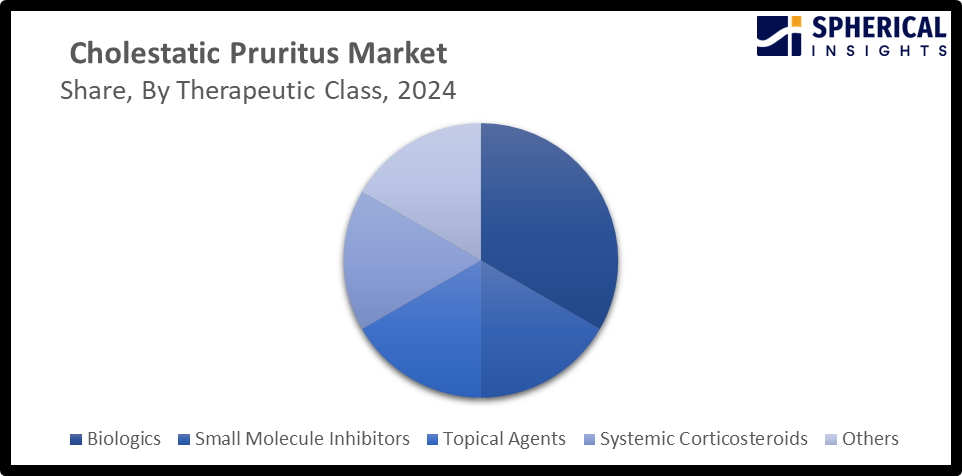
The biologics segment held the dominant market share of over 50.0% in 2024, owing to its increased efficacy in chronic immune-driven pruritus. Biologics for treating cholestatic pruritus include monoclonal antibodies and novel targeted agents for reducing debilitating itch. While the small molecule inhibitors segment is the fastest-growing therapeutic class, with convenient oral delivery. Small molecule inhibitors like Ileal Bile Acid Transporter (IBAT) inhibitors work by reducing the reabsorption of bile acids in the intestine, lowering the systemic bile acid pool, and relieving itch.
Get more details on this report -
By Indication: Chronic Kidney Disease-Associated Pruritus (CKD-aP) (Dominant) versus Atopic Dermatitis (Fastest Growing)
The CKD segment held the dominant share in the cholestatic pruritus market, due to the increased prevalence of ESRD. It is estimated that CKD associated Pruritus impacts 67 of haemodialysis patients, with 37 of patients reportedly being moderately to extremely bothered by CKD The atopic dermatitis segment is growing at the fastest rate, due to the increased prevalence and emergence of new therapies. Atopic dermatitis is a chronic, non contagious skin condition causing itchy, inflamed, and dry rashes, which can be managed with creams and medications.
By Route of Administration: Injectables (Dominant) versus Oral (Fastest Growing)
The injectables segment dominated the cholestatic pruritus market, due to extensive demand for parenteral delivery of biologic drugs. For instance, naloxone is administered via intravenous infusion to provide rapid, temporary relief, reducing opioidergic tone that contributes to the itching. Further, oral therapies for cholestatic pruritus (itching due to liver disease) follow a stepped approach, starting with bile acid sequestrants like cholestyramine first line Second-line options include rifampin, followed by opioid antagonists like naltrexone, and SSRIs such as sertraline. New treatments like PPAR agonists are also emerging.
Regional Segment Analysis of the Cholestatic Pruritus Market
- North America U.S., Canada, Mexico
- Europe Germany, France, U.K., Italy, Spain, Rest of Europe
- Asia-Pacific China, Japan, India, Rest of APAC
- South America Brazil and the Rest of South America
- The Middle East and Africa UAE, South Africa, Rest of MEA
North America is anticipated to hold the largest share of the cholestatic pruritus market over the predicted timeframe.

Get more details on this report -
North America is anticipated to hold the largest share of around 40.0% in the cholestatic pruritus market over the predicted timeframe. The market ecosystem in North America is strong, due to the increased prevalence of conditions like PBC, PSC, and PFIC. Further, the market growth is driven by the increasing number of drug approvals for treating cholestatic pruritus. For instance, in September 2025, Bylvay, the first and only medication approved in Canada for the treatment of both Alagille Syndrome and Progressive Familial Intrahepatic Cholestasis. The United States is the dominant country in the North America cholestatic pruritus market, owing to an increasing ageing population, improved diagnostic rates, and the emergence of novel therapies.
Asia Pacific is expected to grow at a rapid CAGR of about 13.9% in the cholestatic pruritus market during the forecast period. The Asia Pacific area has a thriving market due toits increasing clinical research activities and an increasing need related to advanced nephropathy cases. Their governments support for drug development also contributes to enhancing market growth. China is the leading country in the Asia Pacific market, holding the dominant share, owing to the government investments and emphasis on advanced membrane technologies and municipal infrastructure upgrades.
Competitive Analysis:
The report offers the appropriate analysis of the key organizations/companies involved within the cholestatic pruritus market, along with a comparative evaluation primarily based on their type of offering, business overviews, geographic presence, enterprise strategies, segment market share, and SWOT analysis. The report also provides an elaborative analysis focusing on the current news and developments of the companies, which includes type development, innovations, joint ventures, partnerships, mergers & acquisitions, strategic alliances, and others. This allows for the evaluation of the overall competition within the market.
List of Key Companies
- Glaxo
- Takeda
- Merck
- Incyte
- Ipsen Pharma
- CANbridge
- Escient
- Mirum
- Albireo
- Cara
- CymaBay
- Gilead
- Zydus
- Genfit
- NGM
- Others
Key Target Audience
- Market Players
- Investors
- End-users
- Government Authorities
- Consulting And Research Firm
- Venture capitalists
- Value-Added Resellers (VARs)
Industry Development
- In March 2025, Mirum Pharmaceuticals, Inc. announced that its partner, Takeda Pharmaceutical Company Limited, had received approval from the Japanese Ministry of Health, Labour, and Welfare for LIVMARLI maralixibat oral solution for the treatment of cholestatic pruritus in patients with Alagille syndrome ALGS and Progressive Familial Intrahepatic Cholestasis PFIC in Japan.
- In March 2024, the Food and Drug Administration (FDA) approved Livmarli (maralixibat) for the treatment of cholestatic pruritus in patients 5 years of age and older with progressive familial intrahepatic cholestasis (PFIC).
- In September 2023, Travere Therapeutics, Inc. and Mirum Pharmaceuticals, Inc. announced the completion of the previously announced sale of Travere’s bile acid product portfolio that includes Cholbam (cholic acid) and Chenodal (chenodiol), two medications addressing rare diseases in high-need settings.
Market Segment
This study forecasts revenue at global, regional, and country levels from 2020 to 2035. Spherical Insights has segmented the Cholestatic Pruritus Market based on the below-mentioned segments:
Global Cholestatic Pruritus Market, By Therapeutic Class
- Biologics
- Small Molecule Inhibitors
- Topical Agents
- Systemic Corticosteroids
- Others
Global Cholestatic Pruritus Market, By Indication
- Chronic Kidney Disease-Associated Pruritus (CKD-aP)
- Atopic Dermatitis
- Psoriasis
- Cholestatic Pruritus
- Other Dermatological Conditions
Global Cholestatic Pruritus Market, By Route of Administration
- Injectable
- Oral
- Topical
- Others
Global Cholestatic Pruritus Market, By Regional Analysis
- North America
- US
- Canada
- Mexico
- Europe
- Germany
- UK
- France
- Italy
- Spain
- Russia
- Rest of Europe
- Asia Pacific
- China
- Japan
- India
- South Korea
- Australia
- Rest of Asia Pacific
- South America
- Brazil
- Argentina
- Rest of South America
- Middle East & Africa
- UAE
- Saudi Arabia
- Qatar
- South Africa
- Rest of the Middle East & Africa
Frequently Asked Questions (FAQ)
-
1. What is the market size of the Cholestatic Pruritus Market?The global Cholestatic Pruritus Market size is expected to grow from USD 19.2 Billion in 2024 to USD 33.8 Billion by 2035, at a CAGR of 5.28% during the forecast period 2025-2035.
-
2. Which region holds the largest share of the Cholestatic Pruritus Market?North America is anticipated to hold the largest share of the Cholestatic Pruritus Market over the predicted timeframe.
-
3. What is the forecasted CAGR of the Global Cholestatic Pruritus Market from 2024 to 2035?The market is expected to grow at a CAGR of around 5.28% during the period 2024–2035.
-
4. Who are the top companies that are involved in the Global Cholestatic Pruritus Market?Key players include GlaxoSmithKline plc, Takeda Pharmaceutical Company Limited, Merck KGaA, Incyte Corporation, Ipsen Pharma, CANbridge Pharmaceuticals Inc., Escient Pharmaceuticals Inc., Mirum Pharmaceuticals Inc., Albireo Pharma Inc., Cara Therapeutics Inc., CymaBay Therapeutics Inc., Gilead Sciences Inc., Zydus Lifesciences, Genfit SA, and NGM Biopharmaceuticals Inc.
-
5. What are the main drivers in the Cholestatic Pruritus Market?An increasing prevalence of chronic liver diseases, rising hepatology care, and rising emphasis on targeted therapies and expanding clinical pipeline, are major market growth drivers of the Cholestatic Pruritus Market.
-
6 What challenges are limiting the adoption of Cholestasis?Factors like increased treatment costs and significant side effects of current therapies remain key restraints in the Cholestatic Pruritus Market.
-
7. What are the key trends in the Cholestatic Pruritus Market?The shift towards bile acid modulators (IBAT inhibitors), emphasis on improving patient quality of life, emerging pipeline candidates, and an increasing disease awareness & diagnosis, are major key trends in the Cholestatic Pruritus Market.
Need help to buy this report?