China Luxury Leather Goods Market Size, Share, By Type (Genuine Leather, Vegan Leather, and Synthetic Leather), By Product (Home Decor and Furnishing, Hanging Storage, Toys, Pet Accessories, Wallets, Phone Covers, Card Holders, Handbags, and Others), and China Luxury Leather Goods Market Insights, Industry Trend, Forecasts to 2035
Industry: Consumer Goods
China Luxury Leather Goods Market Insights Forecasts to 2035
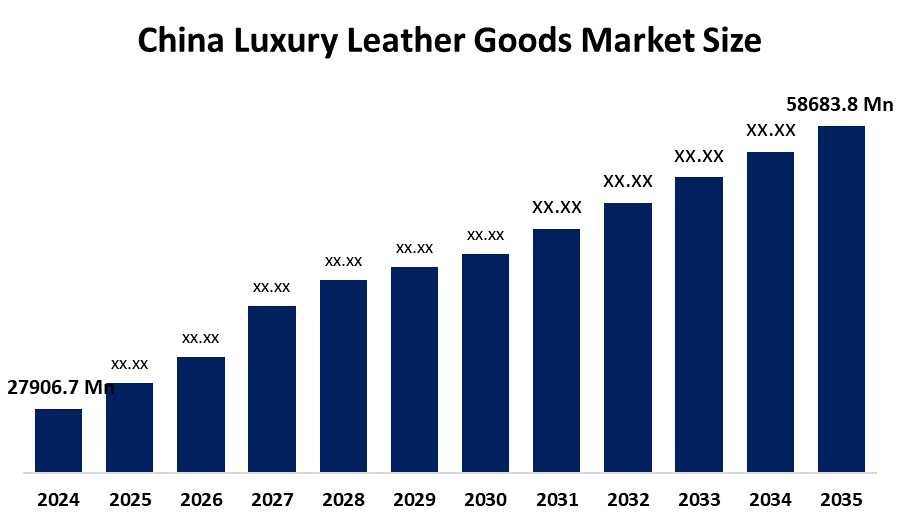
- China Luxury Leather Goods Market Size 2024: USD 27906.7 Mn
- China Luxury Leather Goods Market Size 2035: USD 58683.8 Mn
- China Luxury Leather Goods Market CAGR: 7.72%
- China Luxury Leather Goods Market Segments: Type and Product
Get more details on this report -
The China luxury leather goods comprise high-end items that represent status, quality, and craftsmanship, like handbags, wallets, belts, shoes, and accessories. Driven by rising disposable incomes, changing consumer preferences, especially among millennials and gen Z, and a growing middle class that appreciates both foreign brands and up and coming local luxury labels with culturally relevant designs, this segment is a fundamental component of Chinas larger luxury goods landscape. Due to their perceived investment value and significant role in fashion and personal expression, leather goods are one of the strongest sectors within the luxury sector.
The growth of luxury retail channels in China has been aided by government measures to boost domestic consumption, such as laws that encourage urbanization, digital commerce infrastructure, and lower import tariffs. By promoting both domestic spending and retail innovation, these policy initiatives assist luxury companies in expanding their reach to affluent consumers across the country and improve their presence in both first tier and lower tier cities.
By incorporating digital and AI-driven technologies for individualized consumer experiences, virtual try-ons, and immersive retail engagement across online and offline platforms, technological breakthroughs are transforming the luxury leather goods business. To customize services, improve personalization, and engage with younger, tech-savvy customers, luxury brands are increasingly utilizing e-commerce, social media, augmented reality (AR), and artificial intelligence (AI). This results in seamless omnichannel shopping experiences that boost sales and foster brand loyalty.
Market Dynamics of the China Luxury Leather Goods Market:
The growing middle-class and affluent population, which has more disposable income and a strong need for high end, status oriented goods, continues to be a major market driver. Luxury leather goods continue to be embraced by urban customers, particularly younger Millennial and Gen Z generations, as markers of individual achievement and flair. Access to luxury brands has increased thanks to the growth of e-commerce and digital retail channels, particularly through platforms like Tmall Luxury Pavilion and social commerce. This has improved omnichannel shopping experiences and allowed for individualized digital engagement.
Nonetheless, there are significant limitations that slow expansion. Demand instability, high price points, and economic uncertainty have reduced discretionary expenditure, causing some aspirational purchasers to put off purchases or switch to less expensive options.
Despite these difficulties, opportunities abound. As local middle-class consumers boost their spending outside of conventional first tier markets, second-tier cities are becoming significant growth hubs for luxury leather goods. Customization, cultural storytelling, localization tactics, and sustainability programs give brands ways to connect with Chinese consumers on a deeper level. As the luxury industry stabilizes and develops, market potential is anticipated to be unlocked through sustained digital innovation, increased emphasis on omnichannel integration, and customized product offerings in line with regional preferences.
China Luxury Leather Goods Market Report Coverage
| Report Coverage | Details |
|---|---|
| Base Year: | 2024 |
| Market Size in 2024: | USD 27906.7 Million |
| Forecast Period: | 2025-2035 |
| Forecast Period CAGR 2025-2035 : | CAGR of 7.72% |
| 2035 Value Projection: | USD 58683.8 Million |
| Historical Data for: | 2020-2023 |
| No. of Pages: | 210 |
| Tables, Charts & Figures: | 90 |
| Segments covered: | By Type, By Product |
| Companies covered:: | LVMH Moet Hennessy Louis Vuitton,Chanel,Hermes International,Gucci,Prada,Dior,Burberry,Coach,Secoo And Others Players |
| Pitfalls & Challenges: | COVID-19 Empact, Challenge, Future, Growth, & Analysis |
Get more details on this report -
Market Segmentation
The China luxury leather goods market share is classified into type and product
By Type:
Based on type, the China luxury leather goods market is categorized into genuine leather, vegan leather, and synthetic leather. Among these, the segment held the majority market share in 2024 and is predicted to grow at a remarkable rate during the predicted period. Genuine leather's superior quality, longevity, and strong associations with luxury and craftsmanship, all of which appeal to wealthy Chinese consumers, are what propel its supremacy. Furthermore, authentic leather is mostly used in high-end products by top domestic and international luxury companies, which increases its demand and reputation.
By Product:
The China luxury leather goods market is classified by product into home decor and furnishing, hanging storage, toys, pet accessories, wallets, phone covers, card holders, handbags, and others. Among these, the handbags segment dominated the market share in 2024 and is anticipated to grow at a remarkable CAGR during the forecast period. The enormous appeal of handbags as status symbols and fashion statements among Chinese consumers, especially in urban and affluent classes, is the reason for their domination. Luxury handbags are generally seen as investment pieces with great resale potential, further fuelling demand.
Competitive Analysis:
The report offers the appropriate analysis of the key organisations/companies involved within the China luxury leather goods market, along with a comparative evaluation primarily based on their product offering, business overviews, geographic presence, enterprise strategies, segment market share, and SWOT analysis. The report also provides an elaborative analysis focusing on the current news and developments of the companies, which includes product development, innovations, joint ventures, partnerships, mergers & acquisitions, strategic alliances, and others. This allows for the evaluation of the overall competition within the market.
Top Key Companies in the China Luxury Leather Goods Market:
- LVMH Moët Hennessy Louis Vuitton
- Chanel
- Hermès International
- Gucci
- Prada
- Dior
- Burberry
- Coach
- Secoo
- Others
Key Target Audience
- Market Players
- Investors
- End-users
- Government Authorities
- Consulting and Research Firm
- Venture capitalists
- Value-Added Resellers (VARs)
Market Segment
This study forecasts revenue at the China, regional, and country levels from 2020 to 2035. Spherical Insights has segmented the China luxury leather goods market based on the following segments:
China Luxury Leather Goods Market, By Type
- Genuine Leather
- Vegan Leather
- Synthetic Leather
China Luxury Leather Goods Market, By Product
- Home Decor and Furnishing
- Hanging Storage
- Toys, Pet Accessories
- Wallets
- Phone Covers
- Card Holders
- Handbags
Frequently Asked Questions (FAQ)
-
1. What is the market size of the China luxury leather goods market?The market was valued at USD 27,906.7 million in 2024 and is projected to reach USD 58,683.8 million by 2035.
-
2. What is the expected growth rate of the China luxury leather goods market?The China luxury leather goods market is expected to grow at a CAGR of 7.72% during the forecast period from 2025 to 2035.
-
3. What are the key factors driving China luxury leather goods market growth?Growth is driven by rising disposable incomes, a growing middle-class and affluent population, and strong demand for premium and status-oriented products. Increasing influence of Millennials and Gen Z, along with expanding digital and omnichannel retail platforms, further supports market growth.
-
4. How do government initiatives support this China luxury leather goods market?Government policies promoting domestic consumption, urbanization, digital commerce infrastructure, and reduced import tariffs have strengthened luxury retail expansion across both first-tier and emerging cities in China.
-
5. What role does technology play in the China luxury leather goods market?Technological advancements such as AI, AR-based virtual try-ons, social commerce, and personalized digital marketing are transforming customer engagement and enabling seamless omnichannel luxury shopping experiences.
Need help to buy this report?