China Foodservice Market Size, Share, By Service Type (Full-Service Restaurants, Quick Service Restaurants, Cafes & Bars, Cloud Kitchens), By Ownership (Independent Outlets, Chain Outlets), By Distribution Channel (Dine-In, Takeaway, Online Delivery), By Cuisine Type (Chinese Cuisine, Western Cuisine, Other International Cuisines), By End Use (Commercial, Institutional), China Foodservice Market Insights, Industry Trend, Forecasts to 2035.
Industry: Food & Beverages
China Foodservice Market Insights Forecasts to 2035
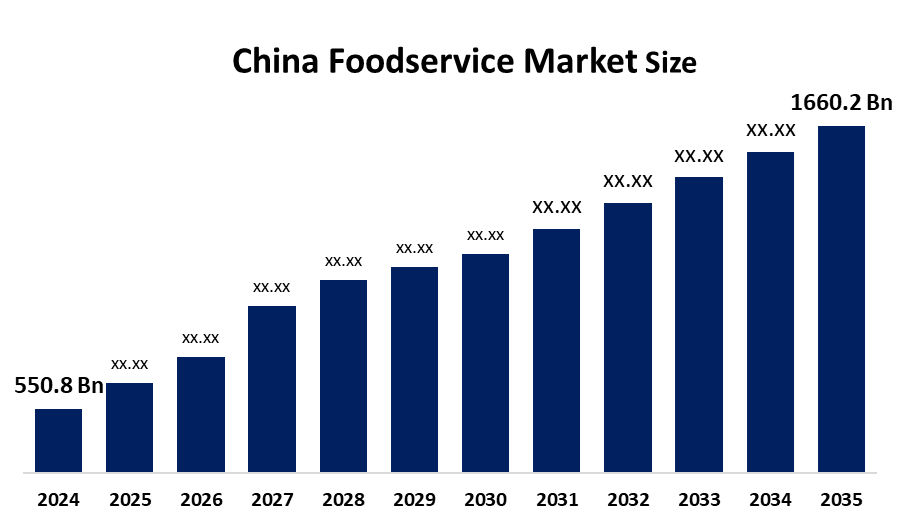
- China Foodservice Market Size 2024: USD 550.8 Mn
- China Foodservice Market Size 2035: USD 1660.2 Mn
- China Foodservice Market CAGR 2024: 10.55%
- China Foodservice Market Segments: Service Type, Ownership, Distribution Channel, Cuisine Type, and End Use.
Get more details on this report -
The China foodservice market comprises restaurants, cafes, quick-service outlets, catering services, and food delivery platforms that provide prepared food and beverages to consumers across the country. These services operate in different ways, such as including dine-in restaurants, takeaway outlets, and digital food delivery systems supported by mobile applications and online platforms. The market serves various consumer needs, which include daily dining, convenience meals, social gatherings, and corporate catering. The foodservice industry in China is experiencing major changes because of three factors includes rapid urbanization, digital ordering platforms, and changing eating habits of consumers.
Presently, the government implements initiatives that support domestic consumption and develop digital commerce infrastructure, and these initiatives have led to growth in the foodservice industry. People spend more money on dining out and ready-to-eat meals because their disposable income increases along with urban population growth. The future will develop through three key elements, which include expanding online food delivery systems, developing new restaurant ideas, and funding for food technology and supply chain improvements.
China Foodservice Market Report Coverage
| Report Coverage | Details |
|---|---|
| Base Year: | 2024 |
| Market Size in 2024: | USD 550.8 Billion |
| Forecast Period: | 2025-2035 |
| Forecast Period CAGR 2025-2035 : | 10.55% |
| 2035 Value Projection: | USD 1660.2 Billion |
| Historical Data for: | 2020-2023 |
| No. of Pages: | 215 |
| Tables, Charts & Figures: | 117 |
| Segments covered: | By Service Type , By Distribution Channel |
| Companies covered:: | Yum China Holdings, Inc., Haidilao International Holding Ltd., Xiabu Xiabu Catering Management Co., Ltd., Jiumaojiu International Holdings Limited, Starbucks Corporation, McDonald Corporation, Luckin Coffee Inc., Ajisen Holdings Limited, Domino’s Pizza China, Dicos, Meituan, Ele.me, and |
| Pitfalls & Challenges: | COVID-19 Empact, Challenge, Future, Growth, & Analysis |
Get more details on this report -
Market Dynamics of the China Foodservice Market:
The driving forces behind this market include urban population growth and increased disposable income, together with changing consumer dining habits. The market experiences substantial growth because people demand convenience foods, online food delivery services grow, and quick service restaurants become more popular. Digital payment systems, mobile ordering platforms and automated kitchen technologies enable foodservice businesses to enhance their operational processes and customer interaction.
The challenges faced by the market include higher operational expenses and interruptions in supply chain operations, as well as mandatory food safety compliance requirements. Restaurant businesses face two main challenges, which are staff shortages and rising costs for renting dining space in metropolitan locations. The foodservice industry experiences two main difficulties which arise from high market competition and shifting consumer tastes that businesses must handle in order to achieve sustainable development.
The future prospects for China's foodservice industry are positive, and these include more digital ordering systems and additional cloud kitchen facilities, fresh restaurant concepts and greater interest in foreign food. This is attributed to middle-class citizens continuing to grow, and more tourists visiting and companies spending money on modern food delivery systems and intelligent dining establishment technologies, among others.
Market Segmentation
The China foodservice market share is classified into service type, ownership, distribution channel, cuisine type, and end use.
By Service Type:
The China foodservice market is divided by service type into full-service restaurants, quick service restaurants, cafes & bars, and cloud kitchens. Among these, the quick service restaurants segment dominated the share in 2024 and is anticipated to grow at a remarkable CAGR during the forecast period. Quick service restaurants lead the market due to their fast service, affordable pricing, and convenient meal options for busy urban consumers. The increasing demand for on-the-go food, strong brand expansion strategies, and integration with online delivery platforms are supporting the growth of quick service restaurants across major Chinese cities.
By Ownership:
The China foodservice market is divided by ownership into independent outlets and chain outlets. Among these, the chain outlets segment dominated in 2024 and is anticipated to grow at a remarkable CAGR during the forecast period. Chain outlets benefit from strong brand recognition, standardized service quality, and efficient supply chain management. Large restaurant chains are expanding rapidly across China through franchising and corporate-owned stores. Their ability to leverage technology, marketing campaigns, and centralized procurement systems enables them to attract a large customer base and maintain consistent operational efficiency across multiple locations.
By Distribution Channel:
The China foodservice market is divided by distribution channel into dine-in, takeaway, and online delivery. Among these, the online delivery segment dominated in 2024 and is anticipated to grow at a remarkable CAGR during the forecast period. The rapid adoption of mobile applications and digital food delivery platforms has significantly transformed consumer dining behavior in China. Online ordering provides convenience, wider menu choices, and quick delivery services, making it highly popular among urban consumers. Partnerships between restaurants and major delivery platforms continue to drive the expansion of this segment.
By Cuisine Type:
The China foodservice market is divided by cuisine type into Chinese cuisine, Western cuisine, and other international cuisines. Among these, Chinese cuisine dominated the share in 2024 and is anticipated to grow at a remarkable CAGR during the forecast period. Traditional Chinese cuisine remains highly popular due to its cultural significance, regional diversity, and widespread availability across restaurants and street food outlets. Local dishes, regional specialties, and traditional cooking techniques continue to attract domestic consumers while also appealing to international visitors exploring authentic culinary experiences in China.
By End Use:
The market is divided by end use into commercial and institutional. Among these, the commercial segment dominated the share in 2024 and is anticipated to grow at a remarkable CAGR during the forecast period. Commercial establishments such as restaurants, cafes, hotels, and quick service outlets represent the largest demand for foodservice operations in China. The growing hospitality industry, increasing tourism activities, and rising consumer spending on dining experiences are significantly contributing to the expansion of commercial foodservice operations across urban and suburban areas.
Competitive Analysis:
The report offers the appropriate analysis of the key organisations/companies involved within the China foodservice market, along with a comparative evaluation primarily based on their product offering, business overviews, geographic presence, enterprise strategies, segment market share, and SWOT analysis. The report also provides an elaborative analysis focusing on the current news and developments of the companies, which includes product development, innovations, joint ventures, partnerships, mergers & acquisitions, strategic alliances, and others. This allows for the evaluation of the overall competition within the market.
Top Key Companies in China Foodservice Market:
- Yum China Holdings, Inc.
- Haidilao International Holding Ltd.
- Xiabu Xiabu Catering Management Co., Ltd.
- Jiumaojiu International Holdings Limited
- Starbucks Corporation
- McDonald s Corporation
- Luckin Coffee Inc.
- Ajisen Holdings Limited
- Domino’s Pizza China
- Dicos
- Meituan
- Ele.me
Recent Developments in China Foodservice Market:
In November 2025, Restaurant Brands International Inc. announced a strategic collaboration with Chinese private equity firm CPE to expand Burger King operations across China. The partnership focuses on accelerating restaurant expansion, improving supply chain capabilities, and strengthening Burger King presence in China’s competitive quick-service restaurant sector.
In July 2025, Luckin Coffee Inc. launched a new range of seasonal flavored coffee beverages and innovative drink offerings across its outlets in China. The product launch aims to strengthen customer engagement, attract younger consumers, and expand the company’s competitive position in the rapidly growing cafe segment of the China foodservice market.
Key Target Audience
- Market Players
- Investors
- End-users
- Government Authorities
- Consulting and Research Firm
- Venture capitalists
- Value-Added Resellers (VARs)
Market Segment
This study forecasts revenue at the China, regional, and country levels from 2020 to 2035. Decisions Advisors has segmented the China foodservice market based on the below-mentioned segments:
China Foodservice Market, By Service Type
- Full-Service Restaurants
- Quick Service Restaurants
- Cafes & Bars
- Cloud Kitchens
China Foodservice Market, By Ownership
- Independent Outlets
- Chain Outlets
China Foodservice Market, By Distribution Channel
- Dine-In
- Takeaway
- Online Delivery
China Foodservice Market, By Cuisine Type
- Chinese Cuisine
- Western Cuisine
- Other International Cuisines
China Foodservice Market, End Use
- Commercial
- Institutional
Frequently Asked Questions (FAQ)
-
1. What is the size of the China foodservice market in 2024?The China foodservice market was valued at USD 550.8 billion in 2024. The market includes restaurants, cafés, catering services, and digital food delivery platforms that provide prepared food and beverages to consumers across China.
-
2. What is the projected size of the China foodservice market by 2035?The China foodservice market is projected to reach USD 1660.2 billion by 2035, expanding significantly due to increasing consumer spending on dining, the expansion of food delivery platforms, and rising urbanization across China.
-
3. What is the CAGR of the China foodservice market during the forecast period?The China foodservice market is expected to grow at a compound annual growth rate (CAGR) of 10.55% from 2025 to 2035, driven by digital ordering platforms, quick-service restaurant expansion, and growing consumer demand for convenient food options.
-
4. What factors are driving the growth of the China foodservice market?Key growth drivers include rapid urbanization, increasing disposable income, expanding online food delivery platforms, and changing consumer dining preferences. Technological advancements such as mobile ordering systems, digital payments, and automated kitchen technologies are also contributing to market expansion.
-
5. What are the major challenges in the China foodservice market?Major challenges include rising operational costs, strict food safety regulations, supply chain disruptions, labor shortages, and high rental costs for restaurant spaces in urban areas. Additionally, intense market competition and changing consumer tastes create operational challenges for foodservice providers.
Need help to buy this report?