Canada Bunker Fuel Market Size, Share, and COVID-19 Impact Analysis, By Fuel Type (High Sulfur Fuel Oil, Very Low Sulfur Fuel Oil, Marine Gas Oil, Liquefied Natural Gas, and Other), By Vessel Type (Containers, Tankers, General Cargo, Bulk Carriers, and Other), and Canada Bunker Fuel Market Insights, Industry Trend, Forecasts to 2035
Industry: Energy & Power
Canada Bunker Fuel Market Insights Forecasts to 2035
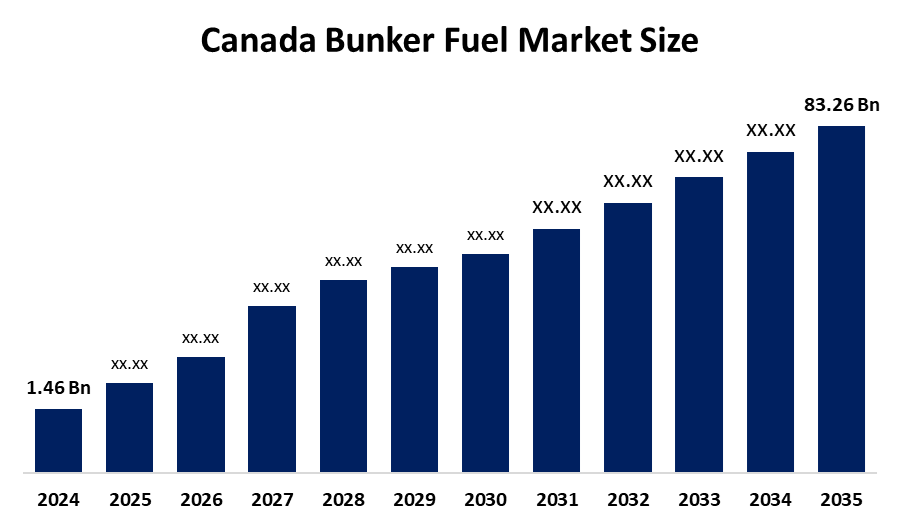
- The Canada Bunker Fuel Market Size Was Estimated at USD 1.46 Billion in 2024
- The Market Size is Expected to Grow at a CAGR of Around 2.74% from 2025 to 2035
- The Canada Bunker Fuel Market Size is Expected to Reach USD 1.965 Billion by 2035
Get more details on this report -
According to a research report published by Spherical Insights & Consulting, The Canada Bunker Fuel Market Size is anticipated to reach USD 1.965 Billion by 2035, Growing at a CAGR of 2.74% from 2025 to 2035. The Canada bunker fuel market is driven by growth in maritime trade, rising shipping activity, strong port infrastructure, growing demand for fuel in logistics and transportation, and the adoption of cleaner, low-sulfur fuels to comply with international environmental regulations.
Market Overview
The Canada bunker fuel market refers to the production, distribution, and consumption of marine fuel oil used to power ships and marine vessels operating in Canadian waters. Bunker fuel consists of heavy fuel oils together with refined distillates, which marine propulsion systems and onboard power generation systems use as their specific fuel. The market uses four primary fuel types, which include high sulfur fuel oil (hsfo), very low sulfur fuel oil (vlsfo), marine gas oil (mgo), and liquefied natural gas (lng), which operators choose according to their regulatory needs, vessel specifications, and operational requirements. Major Canadian ports, including the port of vancouver and the port of montreal, control more than half of the country's bunker fuel demand because they handle both international and domestic shipping traffic, leading to continuous marine fuel use.
The Canada bunker fuel industry shows several important trends. The movement towards low-sulfur fuels received its first boost through IMO 2020 regulations, which Canada has used to fulfil its environmental obligations. The trend towards alternative fuels such as LNG has become more common because of capital investments in LNG bunkers, which specially develop the West Coast of Canada. The development of digital fuel management technologies enables major Canadian ports to achieve greater operational efficiency.
The Canadian government supports the bunker fuel industry through environmental regulations and sustainability measures, and its investments in port modernization projects that comply with international maritime regulations. The country supports low-emission marine fuels because of these initiatives. The government-backed infrastructure projects improved both fuel storage capabilities and bunkering facilities while enhancing logistics operations. The company produces and sells technological solutions, which include automated fuel delivery systems that provide better accuracy and traceability, emission monitoring technologies that enable precise measurement of vessel emissions, and digital fuel management platforms that optimize operations through regulatory compliance and administrative document reduction.
Report Coverage
This research report categorizes the market for the Canada bunker fuel market based on various segments and regions, and forecasts revenue growth and analyses trends in each submarket. The report analyses the key growth drivers, opportunities, and challenges influencing the Canada bunker fuel market. Recent market developments and competitive strategies, such as expansion, product launch, development, partnership, merger, and acquisition have been included to draw the competitive landscape in the market. The report strategically identifies and profiles the key market players and analyses their core competencies in each sub-segment of the Canada bunker fuel market.
Canada Bunker Fuel Market Report Coverage
| Report Coverage | Details |
|---|---|
| Base Year: | 2024 |
| Market Size in 2024: | USD 1.46 Billion |
| Forecast Period: | 2025-2035 |
| Forecast Period CAGR 2025-2035 : | CAGR of 2.74% |
| 2035 Value Projection: | USD 1.965 Billion |
| Historical Data for: | 2020-2023 |
| No. of Pages: | 210 |
| Tables, Charts & Figures: | 90 |
| Segments covered: | By Fuel Type |
| Companies covered:: | Marine Petrobulk LP, Dan-Bunkering (Canada operations), Sterling Fuels, Clipper Oil Marine Fuels, Seaspan Energy, Glander International Bunkering (Montreal), Cargill & Hafnia, and Other key players |
| Pitfalls & Challenges: | and COVID-19 Impact Analysis |
Get more details on this report -
Driving Factors
The Canada bunker fuel market is mainly driven by a number of key factors that include the rising maritime traffic, and hence, the demand for bunker fuel is rising. The development of port infrastructure is enhancing the handling capacity of fuel. The stricter environmental policies, such as those of the international maritime organization, are encouraging the use of cleaner fuels such as very low sulfur fuel oil and liquefied natural gas. The rising global trade and maritime activities via Canadian ports. The trade agreements, such as CETA, are increasing transatlantic trade. Additionally, increasing investments in marine transportation and fleet modernization are further supporting the growth of the bunker fuel market in Canada.
Restraining Factors
The bunker fuel market faces challenges due to the volatility of crude oil prices, which affects the operating costs of the shipping companies indirectly. The strict environmental policies and the high costs involved in meeting these policies hamper the growth of the market. In addition, the lack of proper infrastructure for the distribution of fuel and the delay in adopting advanced fuelling methods hamper the market.
Market Segmentation
The Canada bunker fuel market share is classified into fuel type and vessel type.
- The low sulfur fuel oil segment accounted for the largest revenue market in 2024 and is expected to grow at a significant CAGR during the forecast period.
The Canada bunker fuel market is segmented by fuel type into high sulfur fuel oil, very low sulfur fuel oil, marine gas oil, liquefied natural gas, and other. Among these, the low sulfur fuel oil segment accounted for the largest revenue market in 2024 and is expected to grow at a significant CAGR during the forecast period. The major factor that contributes to the dominance of VLSFO is the sulfur emission regulation imposed by the international maritime organization under the IMO 2020 mandate, which restricts the sulfur content of marine fuels to. This has led to the majority of the ships operating in Canadian waters switching from high-sulfur fuel oil to VLSFO to meet the environmental norms without investing in scrubber systems. Moreover, the high marine trade volumes at the Port of Vancouver and the Port of Montreal have also contributed to the increased revenue share of VLSFO.
- The containers vessels segment accounted for the largest share in 2024 and is expected to grow at a significant CAGR during the forecast period.
The Canada bunker fuel market is segmented by vessel type into containers, tankers, general cargo, bulk carriers, and other. Among these, the containers segment accounted for the largest revenue share in 2024 and is expected to grow at a significant CAGR during the forecast period. The market dominance of containers can be attributed to their high fuel-burning rate, frequent port calls, and significant engagement in international trade routes that connect Canada to Asia, Europe, and the United States. The ever-growing international trade and e-commerce business has led to an increase in the number of container ship movements, thus resulting in a higher demand for bunker fuel. The fixed schedule and high fuel-burning rate of container ships result in a significant contribution to bunker fuel revenue in Canada.
Competitive Analysis:
The report offers the appropriate analysis of the key organizations/companies involved within the Canada bunker fuel market, along with a comparative evaluation primarily based on their product offering, business overviews, geographic presence, enterprise strategies, segment market share, and SWOT analysis. The report also provides an elaborate analysis focusing on the current news and developments of the companies, which includes product development, innovations, joint ventures, partnerships, mergers & acquisitions, strategic alliances, and others. This allows for the evaluation of the overall competition within the market.
List of Key Companies
- Marine Petrobulk LP
- Dan-Bunkering (Canada operations)
- Sterling Fuels
- Clipper Oil Marine Fuels
- Seaspan Energy
- Glander International Bunkering (Montreal)
- Cargill & Hafnia
- Others
Key Target Audience
- Market Players
- Investors
- End-users
- Government Authorities
- Consulting and Research Firm
- Venture capitalists
- Value-Added Resellers (VARs)
Recent Developments:
In May 2025, Cargill & Hafnia launched Seascale Energy, a marine fuels joint venture to enhance bunker fuel procurement and supply (not specific to Canada but important for the North America sector).
In Jan 2025, Seaspan Launched West Coast LNG bunker supply business, deploying new LNG bunker vessels for marine fuel supply along the West Coast (including Vancouver).
Market Segment
This study forecasts revenue at the Canada, regional, and country levels from 2020 to 2035. Spherical Insights has segmented the Canada bunker fuel market based on the below-mentioned segments:
Canada Bunker Fuel Market, By Fuel Type
- High Sulfur Fuel Oil
- Very Low Sulfur Fuel Oil
- Marine Gas Oil
- Liquefied Natural Gas
- Other
Canada Bunker Fuel Market, By Vessel Type
- Containers
- Tankers
- General Cargo
- Bulk Carriers
- Other
Frequently Asked Questions (FAQ)
-
What is the Canada bunker fuel market?The Canada bunker fuel market refers to the industry involved in the production, supply, and distribution of marine fuels used by ships and vessels in Canadian waters.
-
What is the Canada bunker fuel market size?Canada Bunker Fuel market size is expected to grow from USD 1.46 billion in 2024 to USD 1.965 billion by 2035, growing at a CAGR of 2.74% during the forecast period 2025-2035.
-
What are the key drivers of the Canada bunker fuel market?The market is driven by maritime trade growth, rising shipping activities, port infrastructure development, and regulatory compliance with IMO sulfur limits.
-
Which fuel types dominate the Canada bunker fuel market?Low sulfur fuel oil (LSFO) currently dominates, though High sulfur fuel oil (VLSFO), marine gas oil, and LNG are gaining adoption.
-
How is the Canada bunker fuel market segmented by vessel type?The market is segmented into tankers, containers, bulk carriers, general cargo, and other vessels, with container vessels being the largest consumers.
-
What are the major trends in the Canada bunker fuel market?Key trends include a shift to low-sulfur fuels, adoption of alternative fuels like LNG and biofuels, and digitalization of fuel management and port operations.
-
Who are the key companies operating in the Canada bunker fuel market?Major players include Marine Petrobulk LP, Dan-Bunkering (Canada operations), Sterling Fuels, Clipper Oil Marine Fuels, Seaspan Energy, Glander International Bunkering (Montreal), Cargill & Hafnia.
-
What are the restraints affecting the Canada bunker fuel market?High compliance costs for low-sulfur fuels, fluctuating crude oil prices, and infrastructure limitations in some ports restrain market growth.
-
How is technology influencing the Canada bunker fuel market?Technology is significantly influencing the Canada bunker fuel market by enhancing the efficiency and sustainability of fuel supply chains, Digital Platform, Bunkering Infrastructure, and Sustainability focus
-
What is the future outlook for the Canada bunker fuel market?The market is expected to grow steadily, driven by increasing maritime trade, environmental regulations, the adoption of cleaner fuels, and technological advancements in fuel management
Need help to buy this report?