Brazil Handicrafts Market Size, Share, and COVID-19 Impact Analysis, By Product Type (Textiles and Fabrics, Pottery and Ceramics, Jewelry, Woodcraft, Metalcraft, Leathercraft, Paper and Print, Glassware, Basketry and Weaving, Candles and Soaps) By Material (Natural Fibers, Recycled and Upcycled, Precious and Semi-Precious Stones, Bamboo and Rattan) By Artistic Style (Traditional and Folk Art, Contemporary and Modern Art), and Brazil Handicrafts Market Insights, Industry Trend, Forecasts to 2035
Industry: Consumer Goods
Brazil Handicrafts Market Insights Forecasts to 2035
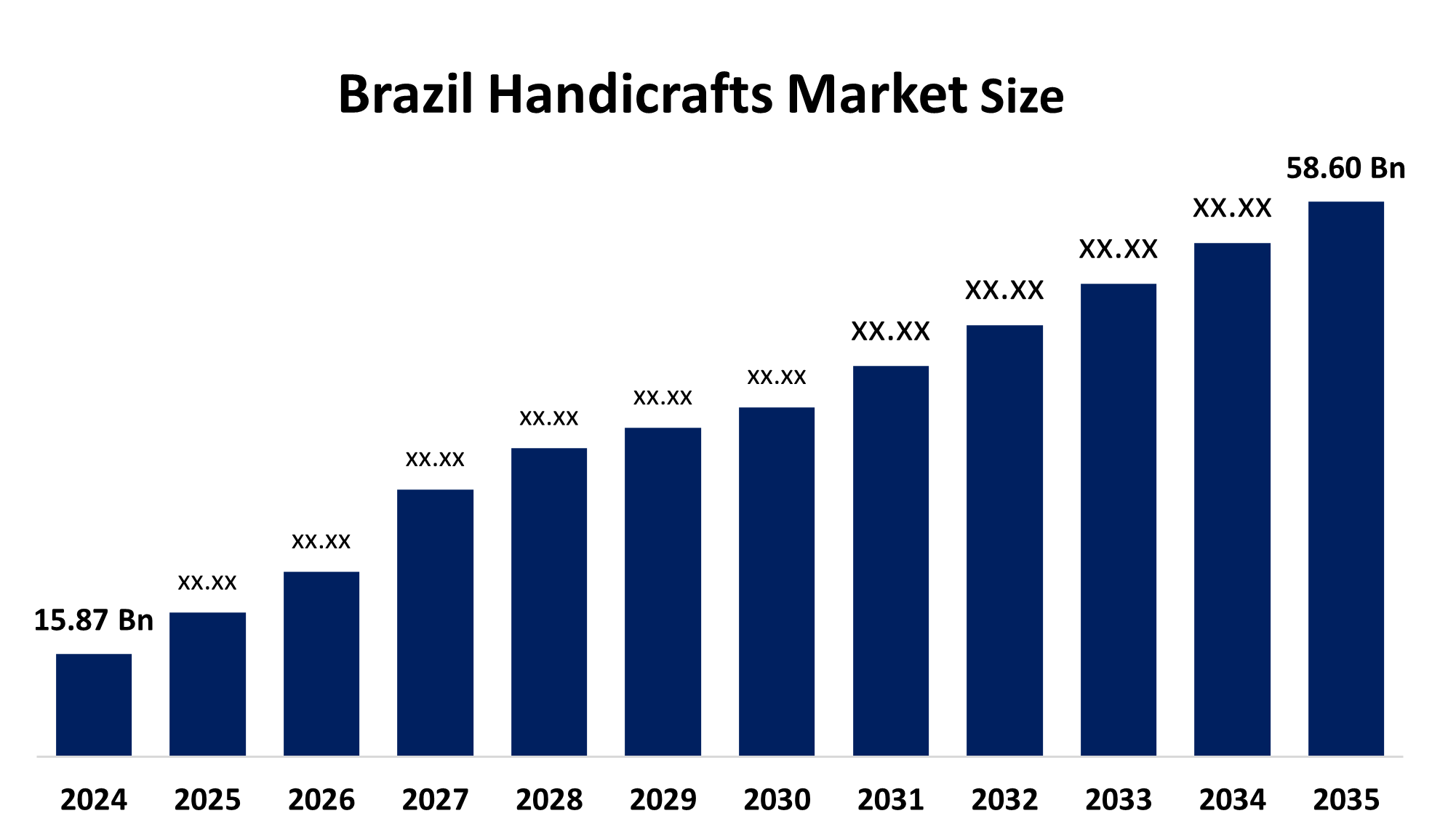
- The Brazil Handicrafts Market Size Was Estimated at USD 15.87 Billion in 2024
- The Market Size is Expected to Grow at a CAGR of Around 9.1% from 2025 to 2035
- The Brazil Handicrafts Market Size is Expected to Reach USD 58.60 Billion by 2035
Get more details on this report -
According to a research report published by Spherical Insights & Consulting, The Brazil Handicrafts Market Size is anticipated to reach USD 58.60 Billion by 2035, growing at a CAGR of 9.1% from 2025 to 2035. The Brazilian handicrafts market is driven by a rich cultural heritage, strong tourism demand, an increasing appreciation for handmade and sustainable products, government and NGO support for artisans, rising exports, and the growth of online platforms connecting local craftsmen with global consumers.
Market Overview
Handicrafts are items made by hand by skilled artisans using basic tools and techniques passed down through generations. Unlike products manufactured in factories with the use of machines, Handicrafts hold significance for their unique cultural identity within a region. There is a growing demand for unique handmade and sustainable items due to an increase in the number of tourists visiting our country to see the craft industry, increased access to creating an online presence to sell to consumers around the world, increased Global Exports from Brazil, Government Support, and Government Initiatives and Programs supporting Artisan Training and Development. Artisans today are creating handicrafts using organic and recycled materials to meet the demands of the more environmentally conscious consumer and to create additional value and appeal to both domestic and global consumers. Thus, this trend towards sustainability and eco-conscious product manufacturing has enabled artisans to position themselves favorably in both the Domestic and Global Craft Marketplace. An example of this effort includes Health in Harmony partnering with the Terra do Meio Network to provide support to Indigenous artisans in the Xingu River Basin, starting in 2020.
Brazil's handicrafts market is heavily reliant on cultural tourism. The demand for handicrafts has increased as a result of tourists seeking genuine, locally produced goods as mementos, as the tourism sector grows. Both domestic and foreign consumers place a great value on traditional Brazilian craftsmanship, including wood carvings, textiles, and pottery. Artists frequently exhibit their creations at regional marketplaces and popular tourist locations, drawing in a wide range of clients. For instance, in August 2024, Brazil launched a National Creative Economy Policy aimed at boosting the country’s creative sector, including audio-visual, copyright, and handicrafts. The policy, comprising 15 guidelines, focuses on training, investment expansion, and productive inclusion. The initiative aims to strengthen the sector, which contributes significantly to Brazil's GDP, driving cultural and economic progress.
Report Coverage
This research report categorizes the market for the Brazil handicrafts market based on various segments and regions, and forecasts revenue growth and analyses trends in each submarket. The report analyses the key growth drivers, opportunities, and challenges influencing the Brazil handicrafts market. Recent market developments and competitive strategies, such as expansion, product launch, development, partnership, merger, and acquisition, have been included to draw the competitive landscape in the market. The report strategically identifies and profiles the key market players and analyses their core competencies in each sub-segment of the Brazil handicrafts market.
Brazil Handicrafts Market Report Coverage
| Report Coverage | Details |
|---|---|
| Base Year: | 2024 |
| Market Size in 2024: | USD 15.87 Billion |
| Forecast Period: | 2025-2035 |
| Forecast Period CAGR 2025-2035 : | CAGR of 9.1% |
| 2035 Value Projection: | USD 58.60 Billion |
| Historical Data for: | 2020-2023 |
| No. of Pages: | 210 |
| Tables, Charts & Figures: | 90 |
| Segments covered: | By Product Type, By Material |
| Companies covered:: | Atacado Artesanato, Catex Tecidos, Brazil Arts and Presents, Artesanato do Brasil, Círculo, Elo7, Mercado Livre, Amazon Handmade, Westwing Brasil, Loja do Artesanato, and other key players |
| Pitfalls & Challenges: | COVID-19 Empact, Challenge, Future, Growth, & Analysis |
Get more details on this report -
Driving Factors
The Brazil handicrafts market is driven by the country’s rich cultural heritage and strong tradition of handmade products. Growing tourism boosts demand for authentic souvenirs and decorative items. Rising consumer preference for sustainable, eco-friendly, and artisanal products further supports growth. Government initiatives and NGO programs promote artisan livelihoods and skill development. Additionally, expanding e-commerce platforms and social media help artisans reach wider domestic and international markets, increasing product visibility, exports, and overall market expansion.
Restraining Factors
The Brazil handicrafts market faces restraints such as competition from low-cost, machine-made products, which reduces demand for handmade items. Limited access to finance, raw materials, and modern marketing affects small artisans. Inconsistent quality, lack of standardization, and dependence on seasonal tourism also hinder steady market growth.
Market Segmentation
The Brazil handicrafts market share is categorized by product type, material, and artistic style.
- The textiles and fabrics segment accounted for the largest revenue market share in 2024 and is expected to grow at a significant CAGR during the forecast period.
The Brazil handicrafts market is segmented by product type into textiles and fabrics, pottery and ceramics, jewelry, woodcraft, metalcraft, leathercraft, paper and print, glassware, basketry and weaving, candles, and soaps. Among these, the textiles and fabrics segment accounted for the largest revenue market share in 2024 and is expected to grow at a significant CAGR during the forecast period. The segmental growth is driven by Brazil’s rich tradition of weaving, embroidery, and lace-making across regions. These products are widely used in clothing, home décor, and accessories, ensuring steady domestic demand. Tourists strongly prefer textile handicrafts as authentic cultural souvenirs. Additionally, textiles are lightweight, affordable, and easier to transport and export compared to fragile items, making them more popular among retailers and international buyers.
- The natural fibers segment dominated the market in 2024 and is projected to grow at a substantial CAGR during the forecast period.
The Brazil handicrafts market is segmented by material into natural fibers, recycled and upcycled, precious and semi-precious stones, bamboo, and rattan. Among these, the natural fibers segment accounted for the largest revenue share in 2024 and is expected to grow at a significant CAGR during the forecast period. The growth of the segment is due to the wide availability of materials such as cotton, jute, sisal, and palm fibers across the country. These materials are traditionally used in textiles, basketry, weaving, and home décor products. Growing consumer preference for eco-friendly, biodegradable, and sustainable products further supports demand. Natural fiber handicrafts are lightweight, affordable, and versatile, making them popular among tourists, domestic buyers, and export markets, contributing significantly to overall market growth.
- The traditional and folk art segment dominated the market in 2024 and is projected to grow at a substantial CAGR during the forecast period.
The Brazil handicrafts market is segmented by artistic style into traditional and folk art, contemporary and modern art. Among these, the traditional and folk art segment accounted for the largest revenue share in 2024 and is expected to grow at a significant CAGR during the forecast period. The growth of the segment is due to Brazil’s strong cultural heritage and regional craftsmanship. These products reflect local traditions, history, and indigenous influences, making them highly attractive to tourists and collectors. Government and NGO programs often focus on preserving traditional crafts and supporting artisan communities. Additionally, domestic consumers prefer folk art items for cultural and decorative value, ensuring consistent demand compared to contemporary or modern handicraft styles.
Competitive Analysis:
The report offers the appropriate analysis of the key organizations/companies involved within the Brazil handicrafts market, along with a comparative evaluation primarily based on their product offering, business overviews, geographic presence, enterprise strategies, segment market share, and SWOT analysis. The report also provides an elaborate analysis focusing on the current news and developments of the companies, which includes product development, innovations, joint ventures, partnerships, mergers & acquisitions, strategic alliances, and others. This allows for the evaluation of the overall competition within the market.
List of Key Companies
- Atacado Artesanato
- Catex Tecidos
- Brazil Arts and Presents
- Artesanato do Brasil
- Círculo
- Elo7
- Mercado Livre
- Amazon Handmade
- Westwing Brasil
- Loja do Artesanato
- Ohers
Key Target Audience
- Market Players
- Investors
- End-users
- Government Authorities
- Consulting and Research Firm
- Venture capitalists
- Value-Added Resellers (VARs)
Recent News
In May 2025, the 19th edition of Brazil's largest craft fair, Salão do Artesanato, took place in São Paulo at the Ibirapuera Biennial Pavilion. The event featured hundreds of handmade products from artisans across Brazil, including items like bags, jewelry, and paintings. Visitors enjoyed free admission, cultural workshops, fashion shows, and performances. The fair also supported small producers, including Indigenous, sertanejo, and quilombola artisans.
Market Segment
This study forecasts revenue at the Brazil, regional, and country levels from 2020 to 2035. Spherical Insights has segmented the Brazil handicrafts market based on the below-mentioned segments:
Brazil Handicrafts Market, By Product Type
- Textiles and Fabrics
- Pottery and Ceramics
- Jewelry, Woodcraft
- Metalcraft
- Leathercraft
- Paper and Print
- Glassware
- Basketry and Weaving
- Candles and Soaps
Brazil Handicrafts Market, By Material
- Natural Fibers
- Recycled and Upcycled
- Precious and Semi-Precious Stones
- Bamboo and Rattan
Brazil Handicrafts Market, By Artistic Style
- Traditional and Folk Art
- Contemporary and Modern Art
Frequently Asked Questions (FAQ)
-
What are handicrafts? Handicrafts are products made by hand using traditional skills and tools, often reflecting local culture, art, and heritage
-
Which products dominate the Brazil handicrafts market? Textiles and fabrics dominate due to their widespread use, affordability, and cultural significance.
-
What materials are most used in Brazilian handicrafts? Natural fibers like cotton, jute, and sisal are most commonly used
-
What drives the Brazil handicrafts market? Cultural heritage, tourism, demand for eco-friendly products, government support, and online marketplaces drive growth.
-
What restrains the market? Competition from machine-made products, limited access to finance, inconsistent quality, and seasonal demand are major restraints.
-
Which artistic style is most popular? Traditional and folk art dominate due to cultural and regional significance.
-
Where can Brazilian handicrafts be purchased? Handicrafts are sold in local markets, fairs, online platforms, and retail stores.
Need help to buy this report?