Brazil Fruit Tea Market Size, Share, By Product (Herbal Tea, Green Tea, Black Tea, and White Tea), By Distribution Channel (Supermarkets, Online Retail, Specialty Stores, and Convenience Stores), Brazil Fruit Tea Market Insights, Industry Trend, Forecasts to 2035.
Industry: Food & Beverages
Brazil Fruit Tea Market Insights Forecasts to 2035
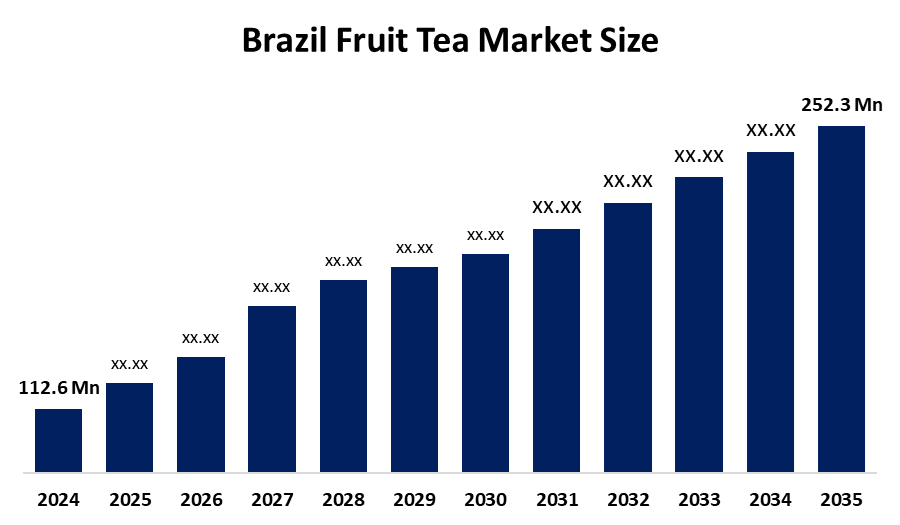
- Brazil Fruit Tea Market Size 2024: USD 112.6 Million
- Brazil Fruit Tea Market Size 2035: USD 252.3 Million
- Brazil Fruit Tea Market CAGR 2024: 7.61%
- Brazil Fruit Tea Market Segments: Product and Distribution Channel
Get more details on this report -
Brazil fruit tea market refers to the industry producing and selling fruit-infused tea beverages in Brazil, used for refreshment, health benefits, hydration, and flavored alternatives to traditional tea and soft drinks.
Leao’s broader product innovation push: introduced 11 new tea products, including fruit-inspired infusions, Erva-mate variants like pineapple & mint Terre, and a Matte Guarana blend, enriching the fruit tea category.
Plano Safra agricultural credit support: The Brazilian government’s Plano Safra 2025-26 provides extensive credit funding (BRL 516.2 billion) emphasizing irrigation and sustainable farming, aiding fruit production that supplies fruit tea ingredients.
Future opportunities in the Brazil fruit tea market include premium RTD fruit teas, health-oriented functional blends, sustainable packaging, e-commerce expansion, and increased exports of tropical fruit-based beverages.
Market Dynamics of the Brazil Fruit Tea Market:
The Brazil fruit tea market is driven by rising health awareness, increasing demand for natural and low-sugar beverages, the abundance of tropical fruits in Brazil, growing ready-to-drink consumption, expanding retail distribution, and a strong preference for refreshing flavoured alternatives among young urban consumers.
The Brazil fruit tea market is restrained by fluctuating raw fruit prices, seasonal supply challenges, competition from carbonated drinks and juices, regulatory compliance costs, and limited consumer awareness in rural areas.
The future of the Brazil fruit tea market is bright and promising with innovation in functional blends, sustainable packaging adoption, expanding e-commerce channels, export growth opportunities, and increasing demand for premium, organic, and wellness-focused beverage options.
Brazil Fruit Tea Market Report Coverage
| Report Coverage | Details |
|---|---|
| Base Year: | 2024 |
| Market Size in 2024: | USD 112.6 Million |
| Forecast Period: | 2025-2035 |
| Forecast Period CAGR 2025-2035 : | CAGR of 7.61% |
| 2035 Value Projection: | USD 252.3 Million |
| Historical Data for: | 2020-2023 |
| No. of Pages: | 210 |
| Tables, Charts & Figures: | 90 |
| Segments covered: | By Product |
| Companies covered:: | Unilever PLC (Lipton), Nestle S.A., Associated British Foods plc, JDE Peet’s, Tata Consumer Products Limited, The Republic of Tea Inc., Dilmah Ceylon Tea Company PLC, Bigelow Tea Company, and other key palyers |
| Pitfalls & Challenges: | and COVID-19 Impact Analysis |
Get more details on this report -
Market Segmentation
The Brazil fruit tea market share is classified into products and distribution channels.
By Product:
The Brazil fruit tea market is divided by product into herbal tea, green tea, black tea, and white tea. Among these, the herbal tea segment dominated the share in 2024 and is anticipated to grow at a remarkable CAGR during the forecast period. Due to strong consumer preference for caffeine-free, natural, and health-focused beverages, aligning with wellness trends and demand for functional fruit-infused drinks in Brazil.
By Distribution Channel:
The Brazil fruit tea market is divided by distribution channel into supermarkets, online retail, specialty stores, and convenience stores. Among these, the supermarkets segment accounted for the largest market share in 2024 and is anticipated to grow at a remarkable CAGR during the forecast period. Because of wide product availability, competitive pricing, strong brand visibility, and high consumer footfall across urban and semi-urban regions.
Competitive Analysis:
The report offers the appropriate analysis of the key organisations/companies involved within the Brazil fruit tea market, along with a comparative evaluation primarily based on their product offering, business overviews, geographic presence, enterprise strategies, segment market share, and SWOT analysis. The report also provides an elaborative analysis focusing on the current news and developments of the companies, which includes product development, innovations, joint ventures, partnerships, mergers & acquisitions, strategic alliances, and others. This allows for the evaluation of the overall competition within the market.
Top Key Companies in Brazil Fruit Tea Market:
- Unilever PLC (Lipton)
- Nestle S.A.
- Associated British Foods plc
- JDE Peet's
- Tata Consumer Products Limited
- The Republic of Tea Inc.
- Dilmah Ceylon Tea Company PLC
- Bigelow Tea Company
- Others
Key Target Audience
- Market Players
- Investors
- Distribution channelrs
- Government Authorities
- Consulting and Research Firm
- Venture capitalists
- Value-Added Resellers (VARs)
Market Segment
This study forecasts revenue at the Brazil, regional, and country levels from 2020 to 2035. Spherical Insights has segmented the Brazil fruit tea market based on the below-mentioned segments:
Brazil Fruit Tea Market, By Product
- Herbal Tea
- Green Tea
- Black Tea
- White Tea
Brazil Fruit Tea Market, By Distribution Channel
- Supermarkets
- Online Retail
- Specialty Stores
- Convenience Stores
Frequently Asked Questions (FAQ)
-
What is the Brazil fruit tea market size?Brazil fruit tea market is expected to grow from USD 112.6 million in 2024 to USD 252.3 million by 2035, growing at a CAGR of 7.61% during the forecast period 2025-2035.
-
What are the key growth drivers of the market?rising health awareness, increasing demand for natural and low-sugar beverages, the abundance of tropical fruits in Brazil, growing ready-to-drink consumption, expanding retail distribution, and a strong preference for refreshing flavoured alternatives among young urban consumers.
-
What factors restrain the Brazil fruit tea market?Constraints include fluctuating raw fruit prices, seasonal supply challenges, competition from carbonated drinks and juices, regulatory compliance costs, and limited consumer awareness in rural areas.
-
How is the market segmented by product?The market is segmented into herbal tea, green tea, black tea, and white tea.
-
Who are the key players in the Brazil fruit tea market?Key companies include Unilever PLC (Lipton), Nestlé S.A., Associated British Foods plc, JDE Peet's, Tata Consumer Products Limited, The Republic of Tea Inc., Dilmah Ceylon Tea Company PLC, Bigelow Tea Company, Others.
-
Who are the target audiences for this market report?The report targets market players, investors, distribution channels, government authorities, consulting and research firms, venture capitalists, and value-added resellers (VARs).
Need help to buy this report?