Global Blue Light Skincare Products Market Size, Share, and COVID-19 Impact Analysis, By Form Type (Solid/Semi-Solid and Liquid), By Nature (Organic and Conventional), By Application (Facial Skincare, Body Care Products, and Cosmetic Products), By Distribution Channel (B2B, B2C, and Online Retail), and By Region (North America, Europe, Asia-Pacific, Latin America, Middle East, and Africa), Analysis and Forecast 2025 - 2035
Industry: Consumer Goods
Global Blue Light Skincare Products Market Insights Forecasts to 2035
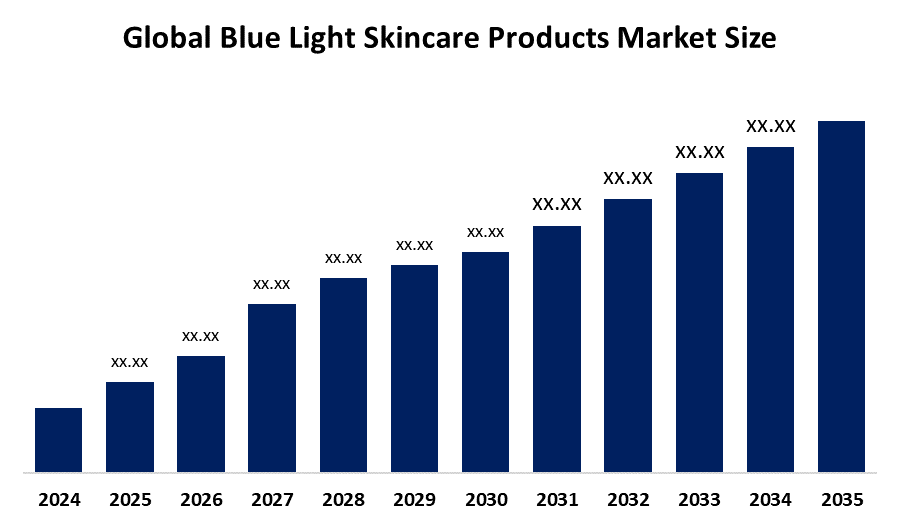
- The Market Size is Expected to Grow at a CAGR of around 7.9% from 2025 to 2035
- The Worldwide Blue Light Skincare Products Market Size is expected to hold a significant share by 2035
- Asia Pacific is expected to grow the fastest during the forecast period.
Get more details on this report -
According to a research report published by Spherical Insights and Consulting, the global blue light skincare products market size is expected to hold a significant share by 2035, at a CAGR of 7.9% during the forecast period 2025-2035. A rise in digital device usage, increasing awareness of blue light's harmful effects on skin, health-conscious consumers, and innovation in protective formulations with antioxidants and vitamins are driving the growth of the blue light skincare products market.
Market Overview
The global blue light skincare products market refers to skincare solutions that help protect the skin from the harmful effects of blue light, also referred to as high-energy visible light, which is emitted by digital devices, LED lights, and sunlight. These products are primarily used to prevent premature skin ageing, hyperpigmentation, oxidative stress, and other skin concerns resulting from prolonged exposure to blue light. Increasing screen time among consumers due to remote work, digital entertainment, and widespread smartphone usage has suddenly accelerated the growth in screen time, propelling demand for blue light skincare. Increasing awareness about skin health and preventive skincare routines further drives the growth in demand, especially among health-conscious and younger populations. Innovation plays a crucial role in the market, as brands develop formulations enriched with antioxidants, vitamins, peptides, and plant-based ingredients targeting blue light-induced skin damage. Multifunctional products that combine blue light protection with UV defence and anti-ageing benefits are gaining traction.
The market is also witnessing expanding opportunities due to increasing consumer adoption of preventive skincare routines, easy access to specialty products through e-commerce platforms, growing demand in emerging markets, rising disposable incomes, and urbanization. The industry receives strong support from well-known global skincare brands such as L’Oréal, Shiseido, Estée Lauder, Neutrogena, and Kiehl’s, which are investing in extensive research and marketing activities, including product innovation, to build customer trust. Collaborations with dermatologists and cosmetic scientists further enhance their product credibility. Overall, the rise in consumer awareness, advancements in technology, and the growth of the digital lifestyle are expected to continue driving the global blue light skincare products market. In response to the increasing number of unauthorized skincare products in the country, including those claiming protection against blue light, Indonesia’s BPOM inaugurated the “Regulating Non-Compliant Blue-Labelled Skincare” forum on May 6, 2024.in light of the increasing number of unauthorized skincare products in the country. Such products include those claiming protection against blue light.
Report Coverage
This research report categorizes the blue light skincare products market based on various segments and regions, forecasts revenue growth, and analyzes trends in each submarket. The report analyses the key growth drivers, opportunities, and challenges influencing the blue light skincare products market. Recent market developments and competitive strategies such as expansion, type launch, development, partnership, merger, and acquisition, have been included to draw the competitive landscape in the market. The report strategically identifies and profiles the key market players and analyses their core competencies in each sub-segment of the blue light skincare products market.
Global Blue Light Skincare Products Market Report Coverage
| Report Coverage | Details |
|---|---|
| Base Year: | 2024 |
| Forecast Period: | 2024 – 2035 |
| Forecast Period CAGR 2024 – 2035 : | CAGR of 7.9% |
| Historical Data for: | 2020-2023 |
| No. of Pages: | 171 |
| Tables, Charts & Figures: | 100 |
| Segments covered: | By Type, By Application |
| Companies covered:: | Beiersdorf AG, Unilever PLC, L’Oreal SA, Johnson & Johnson Services, Inc, Procter & Gamble, Shiseido Company, Coty Inc., Kao Corporation, Revlon, Inc, Murad LLC, Colgate-Palmolive Company, Kobo Products Inc., Amorepacific Corporation, The Estee Lauder Companies, And Others Players |
| Pitfalls & Challenges: | COVID-19 Empact, Challenge, Future, Growth, & Analysis |
Get more details on this report -
Driving Factors
Key factors driving the growth of the global blue light skincare products market include increased awareness of the adverse impacts of blue light emitted from digital devices due to skin ageing, hyperpigmentation, and oxidative stress. Growing screen time for remote work, digital entertainment, and use of smartphones has raised consumers' demand for protective skincare solutions. The growth is further influenced by increasing health and beauty awareness and the adoption of precautionary skincare routines. Innovations in formulations incorporating antioxidants, vitamins, and plant-based ingredients to counteract blue light damage enhance product appeal. In addition, rising disposable incomes, expanding e-commerce channels, and aggressive marketing strategies by key brands facilitate the market's growth worldwide.
Restraining Factors
The high pricing of products and relatively lower consumer awareness in emerging regions lead to restraints in the blue light skincare products market. Additionally, lack of standardized regulations, skepticism about the efficacy of blue light protection, and competition from traditional anti-ageing and UV-protection skincare products hinder widespread adoption, restricting overall market growth.
Market Segmentation
The blue light skincare products market share is classified into form type, nature, application, and distribution channel.
- The solid/semi-solid segment dominated the market in 2024, approximately 52% and is projected to grow at a substantial CAGR during the forecast period.
Based on the form type, the blue light skincare products market is divided into solid/semi-solid and liquid. Among these, the solid/semi-solid segment dominated the market in 2024 and is projected to grow at a substantial CAGR during the forecast period. The solid/semi-solid segment dominated the market due to its widespread use in creams, lotions, and balms that offer effective blue-light protection. Ease of application, longevity, and convenience-related factors related to formulation drive consumer demand. Besides, textural innovations, improved absorption, and multifunctional benefits are adding to the growth of the segment, along with increased awareness about the effects of blue light on skin.
- The organic segment accounted for the largest share in 2024, approximately 62% and is anticipated to grow at a significant CAGR during the forecast period.
Based on the nature, the blue light skincare products market is divided into organic and conventional. Among these, the organic segment accounted for the largest share in 2024 and is anticipated to grow at a significant CAGR during the forecast period. The organic segment, fueled by increasing consumer preference for natural and chemical-free skincare products, rising awareness about the harmful effects of synthetic ingredients, combined with demand for clean and sustainable, eco-friendly formulations, is fueling market expansion. Besides, the innovations in organic blue-light protection ingredients and increasing e-commerce penetration are seen as supportive of global growth.
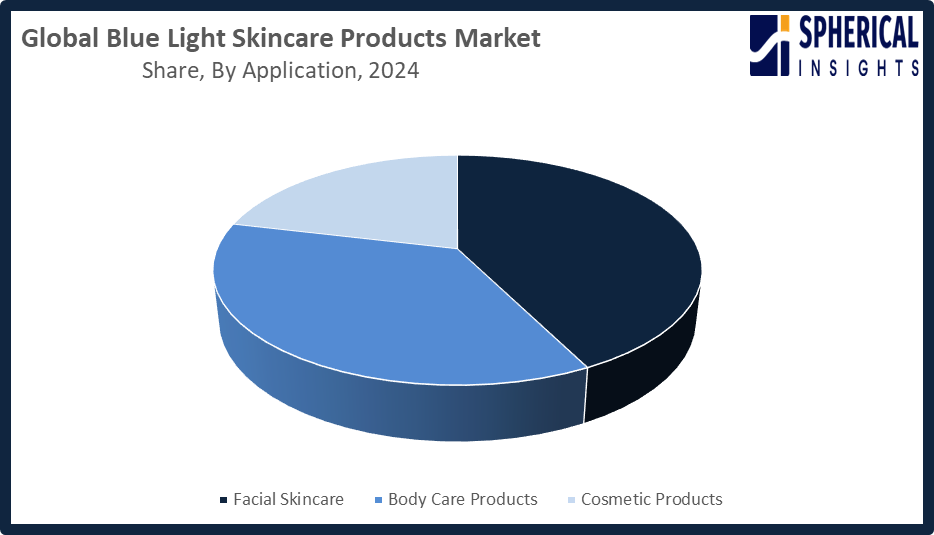
- The facial skincare segment accounted for the largest share in 2024, approximately 43% and is anticipated to grow at a significant CAGR during the forecast period.
Based on the application, the blue light skincare products market is divided into facial skincare, body care products, and cosmetic products. Among these, the facial skincare segment accounted for the largest share in 2024 and is anticipated to grow at a significant CAGR during the forecast period. Segmentation of facial skincare is prompted by increased consumer awareness of facial skin damage due to blue light exposure. The increasing demand for anti-ageing, protective, multifunctional facial products, the popularity of creams, serums, and moisturizers, drives the growth of the segment. Moreover, innovation in product development, combined with the growth of online retail channels, is accelerating the segment's growth further.
Get more details on this report -
- The online retail segment accounted for the highest market revenue in 2024, approximately 60% and is anticipated to grow at a significant CAGR during the forecast period.
Based on the distribution channel, the blue light skincare products market is divided into B2B, B2C, and online retail. Among these, the online retail segment accounted for the highest market revenue in 2024 and is anticipated to grow at a significant CAGR during the forecast period. The growth of the online retail segment is driven by increasing consumer preference for convenience and contactless shopping. Due to increased adoption of e-commerce, easy access to various types of blue-light skincare products, lucrative online offers, and the influence of digital marketing/social media reviews, sales are accelerating, thereby making online retail the dominant distribution channel across the world.
Regional Segment Analysis of the Blue Light Skincare Products Market
- North America (U.S., Canada, Mexico)
- Europe (Germany, France, U.K., Italy, Spain, Rest of Europe)
- Asia-Pacific (China, Japan, India, Rest of APAC)
- South America (Brazil and the Rest of South America)
- The Middle East and Africa (UAE, South Africa, Rest of MEA)
North America is anticipated to hold the largest share of the blue light skincare products market over the predicted timeframe.
North America is anticipated to hold the largest share of the blue light skincare products market over the predicted timeframe. North America is expected to hold a 38% share in the forecast period for the global blue light skincare products market, driven largely by the U.S., which accounts for the majority share of the regional demand. Growth is fueled by increasing awareness of the harmful effects of digital blue light on skin, rising adoption of advanced skincare routines, and high disposable income levels. Additionally, the strong presence of major skincare and cosmetics brands, continuous product innovation, and robust e-commerce infrastructure further contribute to market expansion. The trend of clean, organic, and functional skincare products also supports sustained regional growth.
Asia Pacific is expected to grow at a rapid CAGR in the blue light skincare products market during the forecast period. The blue light skincare products market is expected to grow rapidly in the Asia Pacific region, with an approximate 24% market share, particularly driven by China and India. This is due to increasing urbanization, rising use of digital screens, and growing awareness about the harmful effects of blue light on skin. A higher middle-class population with increased disposable incomes, along with strong demand for innovative, organic, and premium skincare products, further accelerates market growth. Besides, increasing e-commerce platforms and social media influence in these countries are accelerating the awareness and sales of these products.
The European region is expected to record a steady growth in the blue light skincare products market, with Germany and France leading regional demand. Such growth is caused by increasing consumer awareness of blue light's impact on skin, a rise in preference for anti-ageing and protective skincare products, and strong demand for organic and clean beauty formulations. High disposable incomes, wide penetration of digital devices, and the presence of established brands that promote innovative blue-light protection products support market expansion in the region.
Competitive Analysis:
The report offers the appropriate analysis of the key organizations/companies involved within the blue light skincare products market, along with a comparative evaluation primarily based on their type of offering, business overviews, geographic presence, enterprise strategies, segment market share, and SWOT analysis. The report also provides an elaborative analysis focusing on the current news and developments of the companies, which includes type development, innovations, joint ventures, partnerships, mergers & acquisitions, strategic alliances, and others. This allows for the evaluation of the overall competition within the market.
List of Key Companies
- Beiersdorf AG
- Unilever PLC
- L'Oreal SA
- Johnson & Johnson Services, Inc
- Procter & Gamble
- Shiseido Company
- Coty Inc.
- Kao Corporation
- Revlon, Inc
- Murad LLC
- Colgate-Palmolive Company
- Kobo Products Inc.
- Amorepacific Corporation
- The Estee Lauder Companies
- Others
Key Target Audience
- Market Players
- Investors
- End-users
- Government Authorities
- Consulting and Research Firm
- Venture capitalists
- Value-Added Resellers (VARs)
Recent Development
- In September 2025, Amorepacific will debut at IFA 2025 in Berlin, showcasing its AI-powered beauty device brand makeON. At the Beauty Hub (Hall 17), the company will unveil ONFACE, a premium micro-LED mask, highlighting innovations in tech-driven skincare solutions.
- In August 2025, Beiersdorf launched the NIVEA Cellular Epigenetics Rejuvenating Serum, its first mass market age reversing product. Featuring EPICELLINE, an innovative ingredient powered by epigenetic science, the serum helps reverse visible skin ageing and promote long-term skin vitality and longevity.
- In May 2022, Modicare Limited launched Blue Light Shield, a gender-neutral skincare range addressing harmful blue light effects. Rising screen time from work-from-home culture has increased skin damage risks, including premature ageing and hyperpigmentation, as blue light penetrates deeper, highlighting the need for protective skincare solutions.
- In September 2020, Amorepacific studied blue light’s impact on skin, publishing research and clinical methods to evaluate blue light blockers. While screen-induced light disrupts circadian cycles and accelerates ageing, recent studies increasingly clarify mechanisms and effective strategies to protect skin from such damage.
- In September 2019, Shiseido launched the SHISEIDO BLUE PROJECT through its global SHISEIDO brand to promote ocean protection through sun care and beach cleanups. Partnering with the World Surf League, WSL PURE, and professional surfers, the initiative emphasizes Respect for Oceans worldwide.
Market Segment
This study forecasts revenue at global, regional, and country levels from 2020 to 2035. Spherical Insights has segmented the blue light skincare products market based on the below-mentioned segments:
Global Blue Light Skincare Products Market, By Form Type
- Solid/Semi-Solid
- Liquid
Global Blue Light Skincare Products Market, By Nature
- Organic
- Conventional
Global Blue Light Skincare Products Market, By Application
- Facial Skincare
- Body Care Products
- Cosmetic Products
Global Blue Light Skincare Products Market, By Distribution Channel
- B2B
- B2C
- Online Retail
Global Blue Light Skincare Products Market, By Regional Analysis
- North America
- US
- Canada
- Mexico
- Europe
- Germany
- UK
- France
- Italy
- Spain
- Russia
- Rest of Europe
- Asia Pacific
- China
- Japan
- India
- South Korea
- Australia
- Rest of Asia Pacific
- South America
- Brazil
- Argentina
- Rest of South America
- Middle East & Africa
- UAE
- Saudi Arabia
- Qatar
- South Africa
- Rest of the Middle East & Africa
Frequently Asked Questions (FAQ)
-
1. What is the CAGR of the blue light skincare products market over the forecast period?The global blue light skincare products market is projected to expand at a CAGR of 7.9% during the forecast period.
-
2. Which region holds the largest share of the blue light skincare products market?North America is anticipated to hold the largest share of the blue light skincare products market over the predicted timeframe.
-
3. What is the blue light skincare products market?The blue light skincare products market includes skincare solutions that protect skin from digital blue light-induced damage and premature ageing.
-
4. Who are the top 10 companies operating in the global blue light skincare products market?Beiersdorf AG, Unilever PLC, L'Oreal SA, Johnson & Johnson Services, Inc., Procter & Gamble, Shiseido Company, Coty Inc., Kao Corporation, Revlon, Inc., Murad LLC, Colgate-Palmolive Company, and Others.
-
5. What factors are driving the growth of the blue light skincare products market?The blue light skincare products market is driven by rising screen time, growing awareness of blue light’s skin effects, demand for preventive skincare, and innovations in protective, natural formulations.
-
6. What are the market trends in the blue light skincare products market?Key trends include growing demand for natural and organic formulations, multifunctional products combining UV and blue light protection, rising e-commerce sales, and increased adoption of antioxidant-rich, eco-friendly skincare innovations.
-
7. What are the main challenges restricting the wider adoption of the blue light skincare products market?Major challenges include limited consumer awareness, high product costs, lack of standardized regulations, skepticism about product efficacy, and competition from conventional skincare products offering UV and anti-ageing benefits.
Need help to buy this report?