Global Blockchain in Telecom Market Size, Share, By Application (Fraud Management, Smart Contracts, Identity Management, Revenue Assurance, Connectivity Provisioning, and Others), By Technology (Public Blockchain, Private Blockchain, and Consortium Blockchain), By End Use (Telecom Operators, Equipment Manufacturers, Content Providers, and Service Providers), and By Region (North America, Europe, Asia-Pacific, Latin America, Middle East, and Africa), Analysis and Forecast 2025 - 2035
Industry: Electronics, ICT & Media
Global Blockchain in Telecom Market Insights and Forecasts to 2035
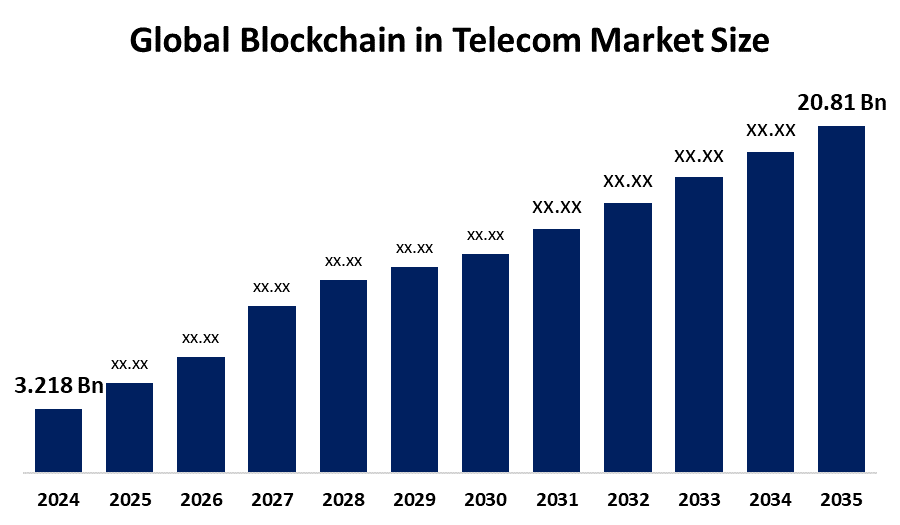
- The Global Blockchain in Telecom Market Size Was Estimated at USD 3.218 Billion in 2024
- The Market Size is Expected to Grow at a CAGR of around 18.49% from 2025 to 2035
- The Worldwide Blockchain in Telecom Market Size is Expected to Reach USD 20.81 Billion by 2035
- Asia Pacific is expected to grow the fastest during the forecast period.
Get more details on this report -
According to a research report published by Spherical Insights, The Global Blockchain In Telecom Market Size Was Worth Around USD 3.218 Billion In 2024 And Is Predicted To Grow To Around USD 20.81 Billion By 2035 With A Compound Annual Growth Rate (CAGR) Of 18.49% From 2025 To 2035. The global blockchain in telecom market is driven by rising telecom fraud, growing data traffic, demand for secure transactions, increasing 5G and IoT adoption, and need for transparent billing systems.
Market Overview
The global blockchain in telecom market refers to the use of decentralized ledger technology by telecom operators to enhance security transparency and efficiency in functions such as billing identity management roaming settlements and data exchange The increasing telecom fraud and rising data traffic and the need for secure real time transactions drive growth because blockchain technology decreases operational costs by eliminating intermediaries In March 2025 the US government emphasized the use of blockchain technology to enhance security in 5G infrastructure protect data privacy and manage digital identities Federal and state level initiatives including pilot programs and legislative proposals like the Improving Digital Identity Act support modernization through public private partnerships Digital transformation strategies regulatory frameworks and secure data sharing initiatives enable governments to support adoption through their digital transformation strategies In September 2024 the Government of India launched the National Blockchain Framework NBF with a budget of Rupees 64.76 crore to provide a unified blockchain based infrastructure for secure and transparent digital governance including the Vishvasya Blockchain Stack for Blockchain as a Service BaaS The development of 5G technology IoT integration and smart contracts will create network systems that operate automatically and expand their capacity while improving their operational speed In April 2025 the European Data Protection Board EDPB adopted guidelines to help organizations process personal data through blockchain technologies in compliance with GDPR emphasizing data protection by design and limiting on chain storage of personal data to align with privacy rights The main market trends show blockchain based roaming agreements decentralized identity management and infrastructure sharing The telecom sector can create new revenue streams and improve service efficiency through dedicated fraud prevention systems cross border payment solutions secure data monetization methods and decentralized telecom ecosystem development
Report Coverage
This research report categorizes the global blockchain in telecom market based on various segments and regions, forecasts revenue growth, and analyzes trends in each submarket. The report analyses the key growth drivers, opportunities, and challenges influencing the global blockchain in telecom market. Recent market developments and competitive strategies, such as expansion, product launch, development, partnership, merger, and acquisition, have been included to draw the competitive landscape in the market. The report strategically identifies and profiles the key market players and analyzes their core competencies in each sub-segment of the blockchain in the telecom market.
Global Blockchain in Telecom Market Report Coverage
| Report Coverage | Details |
|---|---|
| Base Year: | 2024 |
| Market Size in 2024: | USD 3.218 Billion |
| Forecast Period: | 2025-2035 |
| Forecast Period CAGR 2025-2035 : | 18.49% |
| 2035 Value Projection: | USD 20.81 Billion |
| Historical Data for: | 2020-2023 |
| No. of Pages: | 250 |
| Tables, Charts & Figures: | 100 |
| Segments covered: | By Application, By Technology, By End Use and By Region |
| Companies covered:: | IBM Corporation, Huawei Technologies Co Ltd, Microsoft Corporation, Nokia Corporation, Telefonica S.A., Deutsche Telekom AG, Vodafone Group Plc, Orange S.A., BT Group plc, Verizon Communications Inc., Oracle Corporation, SAP SE, Amazon Web Services, Blockchain Foundry Inc, Guardtime, Others |
| Pitfalls & Challenges: | Covid 19 Impact Challenges, Future, Growth and Analysis |
Get more details on this report -
Driving Factors
Driving factors of the blockchain in the telecom market include the rising incidence of telecom fraud, such as SIM swap and identity theft, which increases the demand for secure and tamper-proof systems. The increasing volume of data traffic, together with the requirement for transparent real-time billing and roaming settlement systems, drives the implementation of these systems. Blockchain enables cost reduction by eliminating intermediaries and automating processes through smart contracts. Telecom operators need to implement decentralized solutions for secure device management because 5G and IoT networks are experiencing rapid growth. The rising demand for data privacy protection, together with the need for organizations to comply with regulations, drives telecom companies to adopt blockchain technology.
Restraining Factors
The global blockchain in telecom market is restricted by high implementation costs and the difficulties that telecom companies face when they try to implement blockchain systems in their existing legacy infrastructure. The operators need to understand how their investments will generate returns before they start using the new technology. The systems face two major problems, which are their inability to scale and their reduced speed of processing transactions, which prevents them from being used in large operations. The absence of established regulatory standards, together with problems of system compatibility, which exist in the industry, creates obstacles that prevent telecom providers from developing their services to a larger market.
Market Segmentation
The global blockchain in telecom market share is classified into application, technology, and end use.
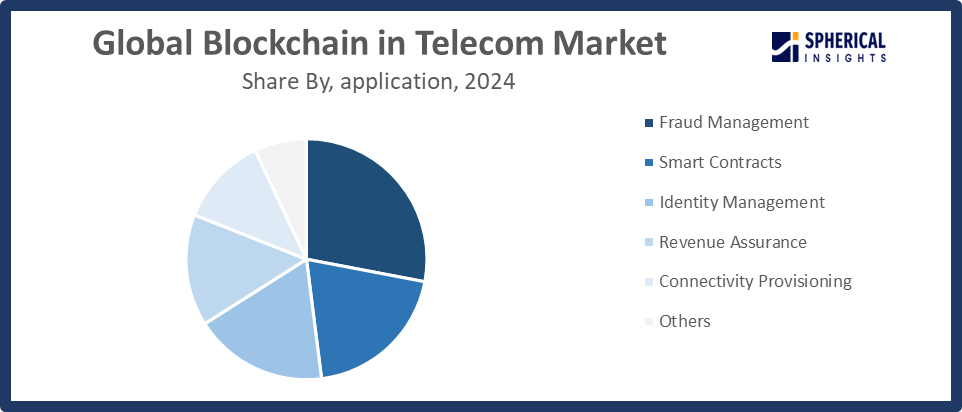
- The fraud management segment accounted for the largest share in 2024, approximately 28%, and is anticipated to grow at a significant CAGR during the forecast period.
Based on the application, the global blockchain in telecom market is divided into fraud management, smart contracts, identity management, revenue assurance, connectivity provisioning, and others. Among these, the fraud management segment accounted for the largest share in 2024, approximately 28%, and is anticipated to grow at a significant CAGR during the forecast period. This is because telecom operators face rising threats such as SIM swap fraud, identity theft, and billing manipulation. Blockchain provides a secure, tamper-proof system that enables real-time monitoring, transparent verification, and automated processes, helping operators minimize losses, reduce intermediaries, and enhance overall network security and trust.
Get more details on this report -
- The consortium blockchain segment accounted for the highest market revenue in 2024, approximately 35%, and is anticipated to grow at a significant CAGR during the forecast period.
Based on the technology, the global blockchain in telecom market is divided into public blockchain, private blockchain, and consortium blockchain. Among these, the consortium blockchain segment accounted for the highest market revenue in 2024, approximately 35%, and is anticipated to grow at a significant CAGR during the forecast period. This is because consortium blockchains offer controlled access, enhanced security, and collaboration among multiple telecom operators, enabling efficient inter-operator settlements, fraud prevention, and secure data sharing while maintaining privacy and reducing operational costs.
- The telecom operators segment dominated the market in 2024, approximately 40%, and is projected to grow at a substantial CAGR during the forecast period.
Based on the end use, the global blockchain in telecom market is divided into telecom operators, equipment manufacturers, content providers, and service providers. Among these, the telecom operators segment dominated the market in 2024, approximately 40%, and is projected to grow at a substantial CAGR during the forecast period. The dominance is driven by telecom operators adopting blockchain to tackle fraud, improve billing and settlement processes, and ensure secure identity management. By using blockchain, they can enhance transparency, reduce intermediaries, and strengthen overall network security. These benefits help operators optimize operations, lower costs, and deliver more reliable and efficient services to customers, driving market leadership.
Regional Segment Analysis of the Global Blockchain in Telecom Market
- North America (U.S., Canada, Mexico)
- Europe (Germany, France, U.K., Italy, Spain, Rest of Europe)
- Asia-Pacific (China, Japan, India, Rest of APAC)
- South America (Brazil and the Rest of South America)
- The Middle East and Africa (UAE, South Africa, Rest of MEA)
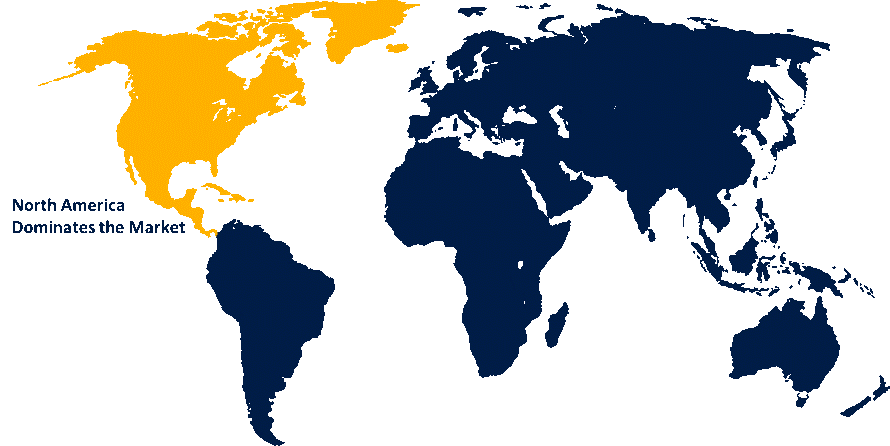
North America is anticipated to hold the largest share of the global blockchain in telecom market over the predicted timeframe.
Get more details on this report -
North America is anticipated to hold the largest share of the global blockchain in telecom market over the predicted timeframe, approximately 40% market share. The growth is driven by the presence of major telecom operators who are early adopters of advanced technologies. Strong regulatory support, coupled with substantial investments in secure and efficient network infrastructure, enables widespread deployment of blockchain solutions. These factors help operators prevent fraud, streamline billing and settlements, manage identities, and enhance overall network security, making it the largest market for blockchain in telecom during the forecast period.
The Asia Pacific region is expected to grow at the fastest rate during the forecast period, with approximately 29% market share. The market growth is fueled by rapid digitalization, with the rising 5G and IoT adoption driving demand for secure and efficient telecom solutions. Increasing telecom subscriptions and proactive investments in blockchain by operators support automated settlements, fraud prevention, and secure data management. These developments position it as the fastest-growing market for blockchain in telecom over the forecast period.
Competitive Analysis:
The report offers the appropriate analysis of the key organizations/companies involved within the global blockchain in telecom market, along with a comparative evaluation primarily based on their product offering, business overviews, geographic presence, enterprise strategies, segment market share, and SWOT analysis. The report also provides an elaborative analysis focusing on the current news and developments of the companies, which includes product development, innovations, joint ventures, partnerships, mergers & acquisitions, strategic alliances, and others. This allows for the evaluation of the overall competition within the market.
List of Key Companies
- IBM Corporation
- Huawei Technologies Co Ltd
- Microsoft Corporation
- Nokia Corporation
- Telefonica S.A.
- Deutsche Telekom AG
- Vodafone Group Plc
- Orange S.A.
- BT Group plc
- Verizon Communications Inc.
- Oracle Corporation
- SAP SE
- Amazon Web Services
- Blockchain Foundry Inc
- Guardtime
- Others
Key Target Audience
- Market Players
- Investors
- End-users
- Government Authorities
- Consulting and Research Firm
- Venture capitalists
- Value-Added Resellers (VARs)
Market Segment
This study forecasts revenue at global, regional, and country levels from 2020 to 2035. Spherical Insights has segmented the global blockchain in the telecom market based on the below-mentioned segments:
Global Blockchain in Telecom Market, By Application
- Fraud Management
- Smart Contracts
- Identity Management
- Revenue Assurance
- Connectivity Provisioning
- Others
Global Blockchain in Telecom Market, By Technology
- Public Blockchain
- Private Blockchain
- Consortium Blockchain
Global Blockchain in Telecom Market, By End Use
- Telecom Operators
- Equipment Manufacturers
- Content Providers
- Service Providers
Global Blockchain in Telecom Market, By Regional Analysis
- North America
- US
- Canada
- Mexico
- Europe
- Germany
- UK
- France
- Italy
- Spain
- Russia
- Rest of Europe
- Asia Pacific
- China
- Japan
- India
- South Korea
- Australia
- Rest of Asia Pacific
- South America
- Brazil
- Argentina
- Rest of South America
- Middle East & Africa
- UAE
- Saudi Arabia
- Qatar
- South Africa
- Rest of the Middle East & Africa
Frequently Asked Questions (FAQ)
-
1. What is the global blockchain in telecom market?A: It refers to the adoption of blockchain technology by telecom service providers and related businesses to improve security, transparency, efficiency, and trust in operations such as billing, identity management, roaming settlements, and data exchange.
-
2. What are the key drivers of the blockchain in the telecom market?A: Major drivers include rising telecom fraud, demand for secure real‑time transactions, growth in data traffic, need for transparent billing and settlements, and increasing adoption of 5G and IoT networks.
-
3. Which applications are blockchain technologies used for in telecom?A: Common applications include fraud management, smart contracts, identity management, revenue assurance, connectivity provisioning, and other administrative and operational functions.
-
4. How does blockchain benefit telecom operators?A: Blockchain enhances fraud prevention, automates settlement and billing, improves identity verification, reduces intermediaries, lowers operational costs, and strengthens overall network security.
-
5. What are the major challenges in the blockchain in telecom market?A: Challenges include high implementation and integration costs, scalability limitations, lack of standardized regulations, interoperability issues, and limited technical expertise.
-
1. What is the global blockchain in telecom market?A: It refers to the adoption of blockchain technology by telecom service providers and related businesses to improve security, transparency, efficiency, and trust in operations such as billing, identity management, roaming settlements, and data exchange.
-
2. What are the key drivers of the blockchain in the telecom market?A: Major drivers include rising telecom fraud, demand for secure real‑time transactions, growth in data traffic, need for transparent billing and settlements, and increasing adoption of 5G and IoT networks.
-
3. Which applications are blockchain technologies used for in telecom?A: Common applications include fraud management, smart contracts, identity management, revenue assurance, connectivity provisioning, and other administrative and operational functions.
-
4. How does blockchain benefit telecom operators?A: Blockchain enhances fraud prevention, automates settlement and billing, improves identity verification, reduces intermediaries, lowers operational costs, and strengthens overall network security.
-
5. What are the major challenges in the blockchain in telecom market?A: Challenges include high implementation and integration costs, scalability limitations, lack of standardized regulations, interoperability issues, and limited technical expertise.
Need help to buy this report?