Global Bleeding Control Kit Market Size, Share, By Kit Type (Basic, Intermediate, and Advanced), By Container Material (Plastic, Metal, and Others), By Application (Catastrophic Injury, Gunshot Wounds, Stab Wounds, and Others), and By Region (North America, Europe, Asia-Pacific, Latin America, Middle East, and Africa), Analysis and Forecast 2025 - 2035
Industry: Healthcare
Global Bleeding Control Kit Market Insights Forecasts to 2035
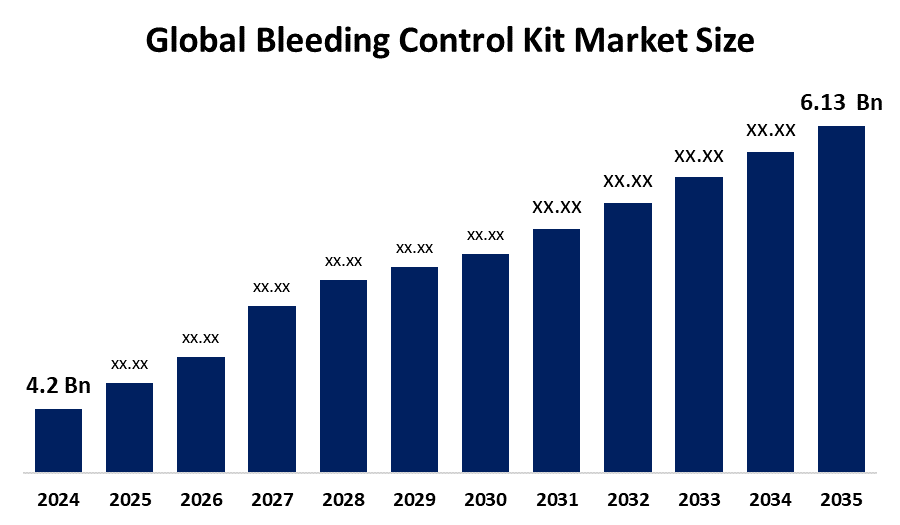
- The Global Bleeding Control Kit Market Size Was Estimated at USD 4.2 Billion in 2024
- The Market Size is Expected to Grow at a CAGR of around 3.5% from 2025 to 2035
- The Worldwide Bleeding Control Kits Market Size is Expected to Reach USD 6.13 Billion by 2035
- North America is expected to grow the fastest during the forecast period.
Get more details on this report -
According to a research report published by Spherical Insights and Consulting, The Global Bleeding Control Kits Market Size Was Worth Around USD 4.2 Billion In 2024 And Is Predicted To Grow To Around USD 6.13 Billion By 2035 With A Compound Annual Growth Rate (CAGR) Of 3.5% From 2025 To 2035. Global market expansion is fuelled by rising trauma incidences, demand for efficient emergency preparedness, and increased focus and support from the government and hospitals.
Market Overview
The worldwide market for bleeding control kits includes all activities related to making and distributing special emergency medical kits, which doctors use to treat severe external bleeding that occurs during traumatic incidents. The product scope includes kits containing tourniquets, haemostatic dressings, compression bandages, gauze, gloves, and trauma tools, along with basic, intermediate, and advanced trauma kits used across healthcare and non-healthcare settings. The market sustains its growth because emergency preparedness systems require its products, while public facilities continue to adopt the technology and Stop the Bleed Campaign training programs create educational resources which enable people to use the system. The public shows a clear preference for portable medical kits, which people can use easily, while public areas such as schools, offices, and transport stations receive more medical kit installations because of new haemostatic technologies and user-friendly designs, which make it easier for people to use the products. Furthermore, bleeding control kits and programs have gained recognition as essential tools that governments and private organisations need to use for preventing avoidable trauma deaths. The American College of Surgeons (ACS) reports that the STOP THE BLEED program has trained over 5 million people throughout the world who come from all 50 U.S. states and more than 141 countries, while multiple states have passed laws to increase access to bleeding control training and kits.
Report Coverage
This research report categorises the bleeding control kits market based on various segments and regions, forecasts revenue growth, and analyses trends in each submarket. The report analyses the key growth in drivers, opportunities, and challenges influencing the bleeding control kits market. Recent market developments and competitive strategies, such as expansion, product launch, development, partnership, merger, and acquisition, have been included to draw the competitive landscape in the market. The report strategically identifies and profiles the key market players and analyses their core competencies in each sub-segment of the Bleeding control kits market.
Global Bleeding Control Kit Market Report Coverage
| Report Coverage | Details |
|---|---|
| Base Year: | 2024 |
| Market Size in 2024: | USD 4.2 Billion |
| Forecast Period: | 2025-2035 |
| Forecast Period CAGR 2025-2035 : | 3.5% |
| 2035 Value Projection: | USD 6.13 Billion |
| Historical Data for: | 2020-2023 |
| No. of Pages: | 268 |
| Tables, Charts & Figures: | 110 |
| Segments covered: | By Kit Type, By Container Material, By Application |
| Pitfalls & Challenges: | Covid-19 Impact, Challenge, Future,Growth and Analysis |
Get more details on this report -
Driving Factors
The data from public health records, together with clinical studies, show that road accidents, workplace injuries, violent events and natural disasters create a major need for emergency treatment of trauma cases, which require immediate bleeding control, accounting for 40% of preventable trauma deaths in the pre-hospital setting due to blood loss. The need for rapid-response kits increases because severe haemorrhage stands as the primary reason that leads to pre-hospital fatalities. The rising need for bleeding control kits happens because countries spend money to build new healthcare facilities and emergency response systems, and more than 5 million people worldwide complete training programs such as STOP THE BLEED. The healthcare infrastructure creates better access to medical services because it enables emergency kits to become part of standard medical protocols, which improve emergency response to bleeding situations. The combination of regulatory requirements and workplace safety regulations, together with healthcare and NGO-led awareness initiatives, creates a framework that promotes equipment usage, while the development of portable user-friendly kits brings better access to emergency response systems.
Restraining Factors
The global bleeding control kit market faces several restraints that can slow its widespread adoption. The product becomes inaccessible for low-resource regions because its availability remains restricted to high-resource areas. The general public and emergency responders in particular areas face difficulties because they lack essential training and awareness to operate these emergency tools. The U.S. survey found that only half of citizens reported first-aid training, while only 13% had received training within the last year, which hinders their capacity to use emergency kits.
Market Segmentation
The bleeding control kits market share is classified into Kit type, container material, and application.
- The basic segment dominated the market in 2024 and is projected to grow at a substantial CAGR of approximately 5.1 % during the forecast period.
Based on the kit type, the bleeding control kits market is divided into basic, intermediate, and advanced. Among these, the basic segment dominated the market in 2024 and is projected to grow at a substantial CAGR of approximately 5.1 % during the forecast period. It is because of their wide adoption for rapid emergency response at public places, schools, and workplaces for the treatment of persons and blood control. Moreover, their lower cost and easy procedure make them highly affordable and convenient for use.
Get more details on this report -
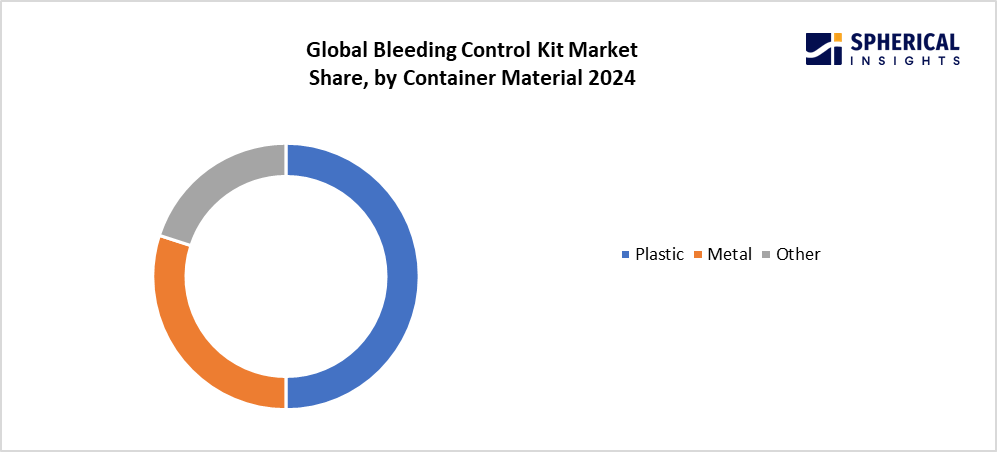
- The plastic segment accounted for the largest share in 2024 and is anticipated to grow at a significant CAGR of approximately 4.5% during the forecast period.
Based on the container material, the bleeding control kits market is divided into plastic, metal, and others. Among these, the off-trade segment accounted for the largest share in 2024 and is anticipated to grow at a significant CAGR of approximately 4.5% during the forecast period. The reason for this is that such material is very lightweight and durable, making it easy for storage and a preferred choice for healthcare centres and workplaces.
- The catastrophic segment accounted for the highest market revenue in 2024 and is anticipated to grow at a significant CAGR during the forecast period.
Based on the application, the bleeding control kits market is divided into catastrophic injury, gunshot wounds, stab wounds, and others. Among these, the segment accounted for the highest market revenue in 2024 and is anticipated to grow at a significant CAGR during the forecast period. Emergencies such as major accidents, large-scale trauma events and natural disasters lead to situations where medical professionals must perform immediate haemorrhage control procedures because patients experience severe bleeding. This situation has resulted in organisations needing to obtain more bleeding control kits, which they use for emergency medical procedures.
Regional Segment Analysis of the Bleeding Control Kits Market
- North America (U.S., Canada, Mexico)
- Europe (Germany, France, U.K., Italy, Spain, Rest of Europe)
- Asia-Pacific (China, Japan, India, Rest of APAC)
- South America (Brazil and the Rest of South America)
- The Middle East and Africa (UAE, South Africa, Rest of MEA)
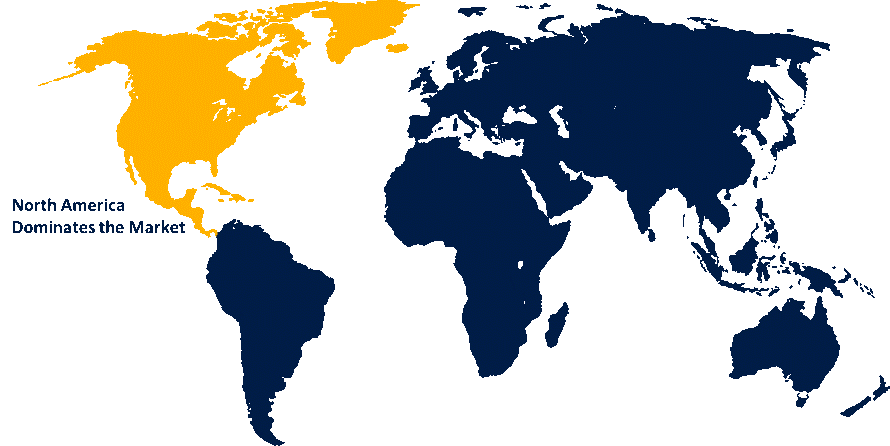
North America is anticipated to hold the largest share of the bleeding control kits market over the predicted timeframe.
North America is anticipated to hold the largest share of the bleeding control kits market over the predicted timeframe. This is largely due to a strong public health focus on trauma care and haemorrhage control. The United States has implemented emergency preparedness measures and training programs because uncontrolled bleeding serves as a major cause that leads to preventable trauma deaths. The government requires safety measures, which they establish through laws like the Tactical Response to Traumatic Injuries Act, which mandates new public and private buildings with 200 or more occupants to install six trauma kits, which must be located near AEDs. The process establishes better emergency response systems, which become more accessible to people.
Get more details on this report -
Asia-Pacific is expected to grow at a rapid CAGR in the bleeding control kits market during the forecast period. The growth of the region is attributed to the increasing rate of workplace and accidental injuries. The region will require bleeding control kits as patients often experience life-threatening injuries that lead to excessive blood loss. Additionally, the region is projected to witness significant growth in the coming years. According to the OECD/WHO Health at a Glance: Asia/Pacific 2024 report, injuries caused approximately 2.1 million deaths in the Western Pacific and Southeast Asia in 2021, with road traffic accidents being a major contributor to trauma-related mortality and disability.
Competitive Analysis:
The report offers the appropriate analysis of the key organisations/companies involved within the bleeding control kits market, along with a comparative evaluation primarily based on their product of offering, business overviews, geographic presence, enterprise strategies, segment market share, and SWOT analysis. The report also provides an elaborate analysis focusing on the current news and developments of the companies, which includes product development, innovations, joint ventures, partnerships, mergers & acquisitions, strategic alliances, and others. This allows for the evaluation of the overall competition within the market.
List of Key Companies
• Teleflex Incorporated
• Z Medica (brand of Teleflex)
• SAM Medical
• Safeguard Medical
• Medline Industries
• TyTek Medical
• Bound Tree Medical
• H&H Medical Corporation
• PerSys Medical
• North American Rescue
• Cardinal Health
• Zimmer Biomet
• Friedrich Bosch Medizintechnik
• Rudolf Riester
• Dynarex Corporation
Key Target Audience
- Market Players
- Investors
- End-users
- Government Authorities
- Consulting and Research Firm
- Venture capitalists
- Value-Added Resellers (VARs)
Recent Developments
• In September 2025, the acquisition of TyTek Medical by SAM Medical represents a strategic move that enables the company to expand its emergency medical product line through the introduction of new bleeding control solutions and advanced trauma care products.
• In January 2025, Cresilon announced the U.S. nationwide launch of TRAUMAGEL, an innovative hemostatic gel for trauma care that aids in bleeding control and is now available to EMS agencies, first responders, emergency departments, and trauma centers across the United States.
• In May 2024, Tri-Tech Forensics, Inc. expanded its emergency medical product offerings through the acquisition of SAM Medical, a leading global supplier of trauma care products, including tourniquets, hemostatics, and splints. This acquisition enables the company to strengthen its market position in the bleeding control and trauma care market.
Market Segment
This study forecasts revenue at global, regional, and country levels from 2020 to 2035. Spherical Insights has segmented the bleeding control kits market based on the below-mentioned segments:
Global Bleeding Control Kit Market, By Kit Type
- Basic
- Intermediate
- Advanced
Global Bleeding Control Kit Market, By Container Material
- Plastic
- Metal
- Others
Global Bleeding Control Kit Market, By Application
- Catastrophic Injury
- Gunshot wounds
- Stab Wounds
- Others
Global Bleeding Control Kit Market, By Regional Analysis
- North America
- US
- Canada
- Mexico
- Europe
- Germany
- UK
- France
- Italy
- Spain
- Russia
- Rest of Europe
- Asia Pacific
- China
- Japan
- India
- South Korea
- Australia
- Rest of Asia Pacific
- South America
- Brazil
- Argentina
- Rest of South America
- Middle East & Africa
- UAE
- Saudi Arabia
- Qatar
- South Africa
- Rest of the Middle East & Africa
Frequently Asked Questions (FAQ)
-
Q. What are the key commercial channels for bleeding control kits?A: The primary commercial distribution channels for bleeding control kits include medical distributors, e-commerce websites, hospitals, government procurement contracts and workplace safety equipment stores.
-
Q. Who are the key players in the global bleeding control kit market?A: The global bleeding control market has four main companies, which include Medline Industries, North American Rescue, RevMedx and Hartwell Medical. They provide basic to advanced bleeding control kits.
-
Q. What market trends are contributing to the commercialisation of bleeding control kits?A: The market trends contributing to the commercialisation of bleeding control kits are increasing demand from public access programs, corporate safety programs, and government-funded emergency preparedness programs.
-
Q. Are bleeding control kits commercially profitable?A: Yes, the bleeding control market is commercially profitable. This is due to the increasing awareness of bleeding control among the public and the mandatory training programs.
Need help to buy this report?