Global BioSignal Serums Market Size, Share, and COVID-19 Impact Analysis, By Product Type (Anti-Aging Serums, Skin Brightening Serums, Hydrating Serums, Anti-Acne Serums, Peptide and Active BioSignal Serums, and Others), By Ingredient Type (Peptides, Hyaluronic Acid, Vitamin C and Derivatives, Retinol (Vitamin A), Alpha Hydroxy Acids (AHAs), Botanical Bioactives & Plant Extracts, and Other Bioactive Molecules), By Application (Anti-Aging and Wrinkle Reduction, Daily Skincare and Hydration, Pigmentation Treatment, Acne Treatment, and Professional Dermatology Use), By End User (E-Commerce Retailers, Individual Consumers, Dermatology Clinics & Spas, Beauty and Personal Care Specialists, and Brick-and-Mortar Retailers & Pharmacies), and By Region (North America, Europe, Asia-Pacific, Latin America, Middle East, and Africa), Analysis and Forecast 2025 - 2035
Industry: Healthcare
Global BioSignal Serums Market Size Insights Forecasts to 2035
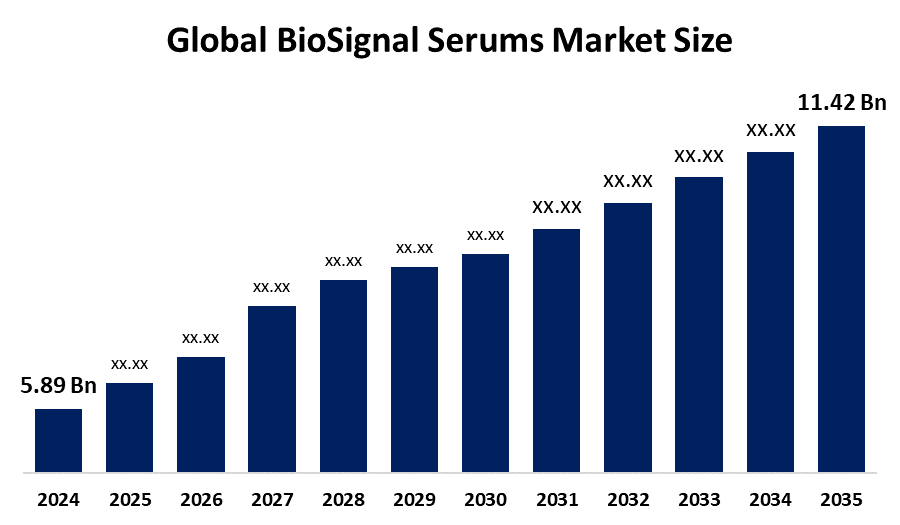
- The Global BioSignal Serums Market Size Was Estimated at USD 5.89 Billion in 2024
- The Market Size is Expected to Grow at a CAGR of around 6.2% from 2025 to 2035
- The Worldwide BioSignal Serums Market Size is Expected to Reach USD 11.42 Billion by 2035
- Europe is expected to Grow the fastest during the forecast period.
Get more details on this report -
According to a Research Report Published by Spherical Insights and Consulting, The Global Biosignal Serums Market Size was worth around USD 5.89 Billion in 2024 and is predicted to Grow to around USD 11.42 Billion by 2035 with a compound annual growth rate (CAGR) of 6.2% from 2025 to 2035. The global biosignal serums market is growing due to rising demand for science-backed, anti-aging skincare, advancements in biotechnology enabling improved skin penetration (liposomal technology), increased consumer disposable income, and the influence of social media promoting personalized, high-efficacy bioactive ingredients.
BioSignal Serums Market Key Takeaways
- Asia-Pacific dominated the global biosignal serums market in 2024, with an approximate 37% market share.
- Europe is expected to grow at the fastest CAGR in the market during the forecast period.
- By product type, the anti-aging serums segment held a dominant position in the market in 2024, with 38% market share.
- By product type, the peptide and active biosignal serums segment is expected to grow at the fastest CAGR in the market between 2024 and 2035.
- By ingredient type, the hyaluronic acid segment led the global market in 2024, with an approximate 30% market share.
- By ingredient type, the peptides segment is expected to grow with the highest CAGR in the market during the studied years.
- By application, the anti-aging and wrinkle reduction segment held the 36% market share in 2024.
- By application, the pigmentation treatment segment is expected to expand rapidly in the market in the coming years.
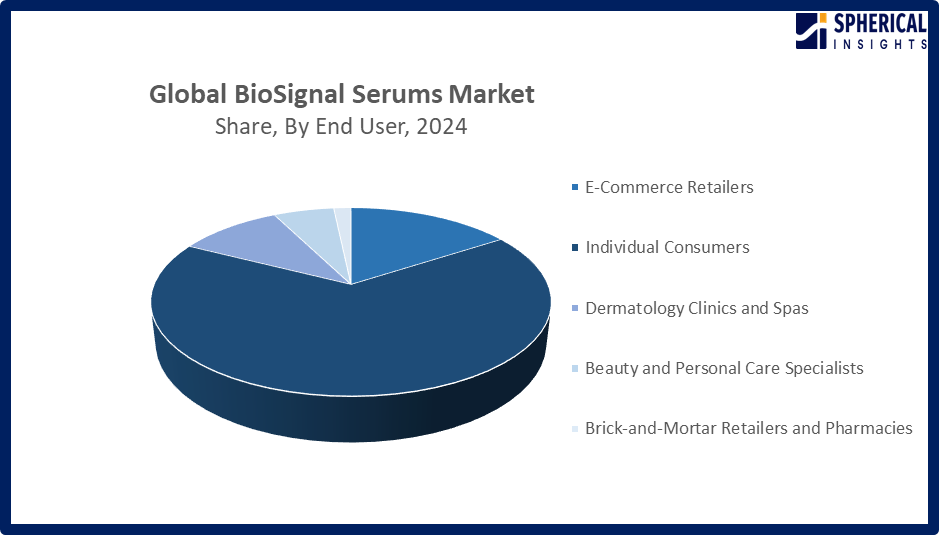
- By end-user, the individual consumers segment registered its dominance in the market in 2024, with an approximate 67% market share.
- By end-user, the e-commerce retailers segment is expected to witness the fastest growth in the market over the forecast period.
Market Overview
The global biosignal serums market refers to skincare products that use bioactive peptides and signaling molecules to create skin communication systems that enable the skin to repair itself and produce collagen while fighting aging signs. The skin treatments in this category help to reduce wrinkles while restoring skin health and increasing skin moisture and skin elasticity. The market expansion happens because consumers want advanced skincare products, which science supports, because more than 65% of consumers select products with proven clinical ingredients. People are becoming more aware of anti-aging products while premium skincare market segments continue to grow, which drives their adoption. The global skincare market will reach a value above $200 billion by 2030, which will increase the demand for biosignal serums.
Biosignal serums present a major innovation opportunity through three areas, which include biomarker-guided personalization and AI-driven diagnostics and the growing e-commerce market in emerging regions. The European Commission introduced new cosmetic regulations in April 2024, which establish ingredient restrictions for retinol and kojic acid (EU 2024/996). The new regulations establish safety and sustainability requirements that create a major effect on advanced skincare products that include biosignal serums and peptide-based products throughout the European cosmetics industry.
What is the Role of AI in BioSignal Serums?
AI plays a crucial role in biosignal serums by analyzing individual biomarkers to enable hyper-personalization. It processes real-time data from biosensors that measure skin signals like hydration and aging patterns. This allows AI to predict future skin conditions and formulate serums with targeted active ingredients, shifting skincare from reactive to predictive and precision-based regimens
BioSignal Serums Market Trends
- Personalized skincare solutions: Growing consumer demand for individualized treatments is driving the development of AI and data-driven biosignal serums, enabling formulations tailored to skin type, age, and specific concerns, enhancing efficacy and user satisfaction.
- Advanced bioactive ingredients: The market is increasingly adopting peptides, growth factors, and other bioactive compounds that mimic cellular signaling, supporting anti-aging, skin regeneration, and pigmentation correction, reflecting a shift toward clinically backed, high-performance skincare.
- Sustainability and clean beauty focus: Consumers and regulators are prioritizing environmentally friendly, ethically sourced ingredients and transparent formulations, prompting manufacturers to innovate sustainable biosignal serums that comply with evolving cosmetic regulations while maintaining efficacy and premium positioning.
Report Coverage
This research report categorizes the biosignal serums market based on various segments and regions, forecasts revenue growth, and analyzes trends in each submarket. The report analyses the key growth drivers, opportunities, and challenges influencing the biosignal serums market. Recent market developments and competitive strategies, such as expansion, type launch, development, partnership, merger, and acquisition, have been included to draw the competitive landscape in the market. The report strategically identifies and profiles the key market players and analyses their core competencies in each sub-segment of the biosignal serums market.
Global BioSignal Serums Market Report Coverage
| Report Coverage | Details |
|---|---|
| Base Year: | 2024 |
| Market Size in 2024 : | USD 5.89 Billion |
| Forecast Period: | 2025-2035 |
| Forecast Period CAGR 2025-2035 : | 6.2% |
| 2035 Value Projection: | USD 11.42 Billion |
| Historical Data for: | 2020-2023 |
| No. of Pages: | 257 |
| Tables, Charts & Figures: | 91 |
| Segments covered: | By Product Type, By Ingredient Type and COVID-19 Impact Analysis |
| Companies covered:: | L’Oreal S.A., Kao Corporation, Estee Lauder Companies Inc, Oriflame Cosmetics AG, Shiseido Company Limited, Coty Inc., Procter & Gamble Co., Beiersdorf AG, Natura & Co Group, Amorepacific Corporation, Galderma S.A., DECIEM Beauty Group, Himalaya Wellness Company, Johnson & Johnson Services, Inc., and Others |
| Pitfalls & Challenges: | Covid-19 Empact, Challenges, Growth, Analysis. |
Get more details on this report -
Driving Factors
The global biosignal serums market is driven by the rising demand for personalized skincare, with 65% of consumers preferring biomarker-based products over traditional options. Technological advancements in peptide delivery systems have improved efficacy by 40%, fueling adoption. Increasing skin health awareness post-pandemic has boosted demand, with anti-aging serums capturing 50% market share. The geriatric population, projected to reach 1.5 billion by 2050, further accelerates growth. Additionally, 47% of product launches now feature peptide-based formulations, reflecting innovation trends.
Restraining Factors
Key restraints in the global biosignal serums market include high product costs, with premium serums priced 30-50% higher than conventional skincare, limiting mass adoption. Limited consumer awareness in emerging markets and regulatory challenges slow growth. Additionally, nearly 40% of consumers remain skeptical about peptide efficacy, restraining widespread acceptance.
Market Segmentation
Product Type Insights
Why did the anti-aging serums segment dominate the biosignal serums market?
The anti-aging serums segment dominated the market in 2024, due to rising consumer demand for anti-aging products, which drives the biosignal serums market. Formulations combining peptides, antioxidants, and regenerative biomarkers stimulate collagen and skin renewal. Preventive skincare interest among middle-aged and older users sustains demand, while premium brands launch scientifically advanced serums, making anti-aging serums the most popular category for long-term youthful skin.
The peptide and active biosignal serums segment is expected to show the fastest growth over the forecast period, as rising demand for targeted, science-backed skincare, leveraging bioactive peptides and regenerative ingredients to enhance collagen production, skin repair, and anti-aging effects, driving strong consumer adoption.
Ingredient Type Insights
How did the hyaluronic acid segment dominate the biosignal serums market?
The hyaluronic acid segment held the largest market share in 2024, attributed to its superior hydration and moisture-retention properties. Lightweight and compatible with all skin types, it reduces fine lines, improves skin elasticity, and supports anti-aging. Its natural presence in the body, combined with growing demand for effective and gentle skincare, has made it a key ingredient in serums and moisturizers.
The peptides segment is expected to gain the fastest market share in 2024. The growth in the biosignal serums market is due to rising demand for targeted, science-backed skincare. Bioactive peptides enhance collagen synthesis, skin regeneration, and elasticity, driving adoption in anti-aging and advanced serum formulations.
Application Insights
How the anti-aging and wrinkle reduction segment lead the biosignal serums market?
The anti-aging and wrinkle reduction segment led the market in 2024, owing to strong consumer demand for youthful, healthy skin. These serums combine bioactive peptides, antioxidants, and regenerative biomarkers to stimulate collagen, improve elasticity, and reduce fine lines and wrinkles. Growing preventive skincare awareness and the launch of scientifically advanced formulations by premium brands sustain this segment’s dominance.
The pigmentation treatment segment is expected to witness the fastest growth in the market over the forecast period. Rising demand for even skin tone solutions, increasing prevalence of hyperpigmentation, and the adoption of bioactive and peptide-based formulations for effective, targeted results.
End User Insights
Which end user segment dominated the biosignal serums market?
The individual consumers segment contributed the biggest market share in 2024, due to rising consumer awareness of skincare and anti-aging has driven strong demand for advanced serums as daily skincare essentials. Influenced by social media, beauty influencers, and dermatologists, consumers are increasingly willing to invest in high-quality products. Growing emphasis on skin health continues to sustain robust demand in this segment globally.
The e-commerce retailers segment is expected to expand rapidly in the market in the coming years, owing to growing online shopping trends, increased digital engagement, convenience, and wider access to premium and niche skincare products, boosting sales and market penetration globally.
Get more details on this report -
Regional Segment Analysis of the BioSignal Serums Market
- North America (U.S., Canada, Mexico)
- Europe (Germany, France, U.K., Italy, Spain, Rest of Europe)
- Asia-Pacific (China, Japan, India, Rest of APAC)
- South America (Brazil and the Rest of South America)
- The Middle East and Africa (UAE, South Africa, Rest of MEA)
Why has Asia Pacific dominated the biosignal serums market?

Get more details on this report -
Asia-Pacific held a major market share in 2024, due to rapidly growing beauty and skincare awareness, increasing disposable incomes, and a large, skincare-conscious population. Rising demand for anti-aging and advanced serums, coupled with expanding e-commerce channels, social media influence, and the presence of both international and local premium brands, has fueled adoption. Additionally, cultural emphasis on youthful, healthy skin supports sustained market growth across the region. In August 2024, India’s Central Drugs Standard Control Organization announced revisions to cosmetic registration via the SUGAM portal. Effective August 16, applications are limited to 50 products each, though multiple submissions are allowed, ensuring timely processing under the Cosmetic Regulations of 2020.
China BioSignal Serums Market Trends
China’s biosignal serums market is growing rapidly due to increasing consumer awareness of anti-aging and skincare, rising disposable incomes, and strong demand for premium, science-backed formulations. E-commerce expansion, social media influence, and adoption of peptide- and bioactive-based serums are driving significant market growth across urban and emerging regions. In July 2024, China’s National Medical Products Administration announced that from April 1, 2026, non-ablative radio-frequency therapeutic devices without registration certificates cannot be manufactured, imported, or sold, ensuring safety, compliance, and orderly industry development.
Why is Europe the fastest-growing region in the biosignal serums market?
Europe is expected to experience the fastest growth during the predicted timeframe, attributed to strict cosmetic regulations emphasizing safety and sustainability, rising consumer preference for scientifically backed and premium skincare, and increasing adoption of peptide- and bioactive-based formulations. Growing awareness of anti-aging, personalized skincare trends, and e-commerce penetration further accelerate market expansion across Western and Northern European countries.
Germany BioSignal Serums Market Trends
Germany’s biosignal serums market is expanding due to strong demand for advanced anti-aging and hydration products, high consumer awareness of skin health, and preference for scientifically validated formulations. Growth is supported by regulatory compliance with EU standards, rising e-commerce adoption, and increasing popularity of peptide- and bioactive-based serums among premium skincare users.
Competitive Analysis:
The report offers the appropriate analysis of the key organizations/companies involved within the biosignal serums market, along with a comparative evaluation primarily based on their type of offering, business overviews, geographic presence, enterprise strategies, segment market share, and SWOT analysis. The report also provides an elaborative analysis focusing on the current news and developments of the companies, which includes type development, innovations, joint ventures, partnerships, mergers & acquisitions, strategic alliances, and others. This allows for the evaluation of the overall competition within the market.
List of Key Companies
- L'Oreal S.A.
- Kao Corporation
- Estee Lauder Companies Inc
- Oriflame Cosmetics AG
- Shiseido Company Limited
- Coty Inc.
- Procter & Gamble Co.
- Beiersdorf AG
- Natura & Co Group
- Amorepacific Corporation
- Galderma S.A.
- DECIEM Beauty Group
- Himalaya Wellness Company
- Johnson & Johnson Services, Inc.
- Others
Key Target Audience
- Market Players
- Investors
- End-users
- Government Authorities
- Consulting and Research Firm
- Venture capitalists
- Value-Added Resellers (VARs)
Recent Development
- In December 2025, Oriflame unveiled new scientific findings on Oripeptide-3, its patented bioactivating technology in the NovAge+ range. Research shows it supports five key skin-aging drivers at the cellular level, reinforcing Oriflame’s focus on long-term skin health as it marks 30 years in India.
- In September 2025, L’Oréal Paris launched Age Perfect Serum Le Duo at Walmart. This 2-in-1 luxury serum, featuring collagen peptides and vitamins B3 and C, targets 10 signs of aging, including fine lines, firmness, radiance, and hydration, offering dermatologist-tested, visible anti-aging results.
- In August 2025, Beiersdorf launched NIVEA Cellular Epigenetics Rejuvenating Serum, featuring EPICELLINE for skin age reversal and longevity. Following its Eucerin debut in 2024, the mass-market launch extends Beiersdorf’s epigenetic innovations, emphasizing scientifically proven, consumer-driven skincare solutions.
- In January 2025, Shiseido launched Ultimune Power Infusing Serum, a refillable anti-aging serum featuring Power Fermented Camellia+, a bio-fermented extract from Gotoh Island camellia. The formula enhances skin regeneration, protects against dryness, and strengthens Shiseido’s Ultimune line within its strategic skincare portfolio.
- In September 2024, Kao Corporation launched KANEBO FUSION-ING SOLUTION in Japan. Priced at ¥13,000, the serum locks in moisture, delivers functional ingredients, and enhances skin radiance. The launch, aligned with the I HOPE brand concept, aims to expand KANEBO’s market share across Asia.
Market Segment
This study forecasts revenue at global, regional, and country levels from 2020 to 2035. Spherical Insights has segmented the biosignal serums market based on the below-mentioned segments:
Global BioSignal Serums Market, By Product Type
- Anti-Aging Serums
- Skin Brightening Serums
- Hydrating Serums
- Anti-Acne Serums
- Peptide and Active BioSignal Serums
- Others
Global BioSignal Serums Market, By Ingredient Type
- Peptides
- Hyaluronic Acid
- Vitamin C and Derivatives
- Retinol (Vitamin A)
- Alpha Hydroxy Acids (AHAs)
- Botanical Bioactives & Plant Extracts
- Other Bioactive Molecules
Global BioSignal Serums Market, By Application
- Anti-Aging and Wrinkle Reduction
- Daily Skincare and Hydration
- Pigmentation Treatment
- Acne Treatment
- Professional Dermatology Use
Global BioSignal Serums Market, By End User
- E-Commerce Retailers
- Individual Consumers
- Dermatology Clinics and Spas
- Beauty & Personal Care Specialists
- Brick-and-Mortar Retailers & Pharmacies
Global BioSignal Serums Market, By Regional Analysis
- North America
- US
- Canada
- Mexico
- Europe
- Germany
- UK
- France
- Italy
- Spain
- Russia
- Rest of Europe
- Asia Pacific
- China
- Japan
- India
- South Korea
- Australia
- Rest of Asia Pacific
- South America
- Brazil
- Argentina
- Rest of South America
- Middle East & Africa
- UAE
- Saudi Arabia
- Qatar
- South Africa
- Rest of the Middle East & Africa
Frequently Asked Questions (FAQ)
-
1. How are peptide-based and bioactive innovations shaping product development in this market?Peptide-based innovations dominate, capturing 47% of the ingredient market by driving cellular repair and anti-aging efficacy. This shift toward bioactive formulations enables targeted regeneration, moving product development from traditional cosmetics to clinically validated, signal-responsive skincare solutions.
-
2. What are the latest technological trends in biosignal serum formulations?Latest technological trends include AI-driven biomarker diagnostics enabling personalized formulations and the rise of exosome-based serums for cellular regeneration. Peptides lead ingredient innovation with 47% market share, focusing on targeted skin signaling and repair mechanisms.
-
3. How does consumer preference for personalized skincare influence market dynamics?Consumer preference for personalized skincare is reshaping market dynamics, with over 45% of global beauty buyers seeking customized formulations, driving higher demand for tailored biosignal serums and boosting related market growth.
-
4. What economic factors are driving investment in the biosignal serums sector?Economic factors driving investment in the biosignal serums sector include rising disposable incomes and premiumization, with global beauty and personal care spending growing (e.g., India’s market set to reach USD 39 billion by 2030), and expanded e‑commerce access increasing consumer purchases of advanced skincare. These shifts encourage R&D and market expansion.
-
5. How is e-commerce affecting the distribution and sales of biosignal serums?E‑commerce is significantly boosting biosignal serums distribution, with online beauty and personal care sales now accounting for around 25-30% of total global beauty sales and rapidly increasing, reshaping purchase behavior, expanding reach, and driving higher online serum sales year‑on‑year.
-
6. How are premium and luxury skincare brands impacting competitive trends?Premium and luxury skincare brands are intensifying competition by driving innovation and commanding significant market influence, with premium cosmetics valued at about USD 205 billion in 2025 and 44 % of consumers seeking skincare benefits, pushing advanced formulations and personalized solutions to stand out.
-
7. How is the integration of AI and biomarker diagnostics shaping market trends?AI and biomarker diagnostics are reshaping skincare trends by enabling highly personalized, data‑driven biosignal serums; the global AI in skincare market is projected to reach about USD 1.7 billion by 2027, and over 65 % of brands plan to adopt AI personalization in product development.
Need help to buy this report?