Global Biofortification Market Size, Share, By Crop Type (Cereals, Legumes, Roots & Tubers, Fruits & Vegetables, and Others), By Nutrient (Zinc, Iron, Vitamins, and Others), By End Use (Food Industry, Feed Industry, Healthcare & Nutraceuticals, and Others), and By Region (North America, Europe, Asia-Pacific, Latin America, Middle East, and Africa), Analysis and Forecast 2026 - 2035.
Industry: Agriculture
Global Biofortification Market Insights Forecasts to 2035
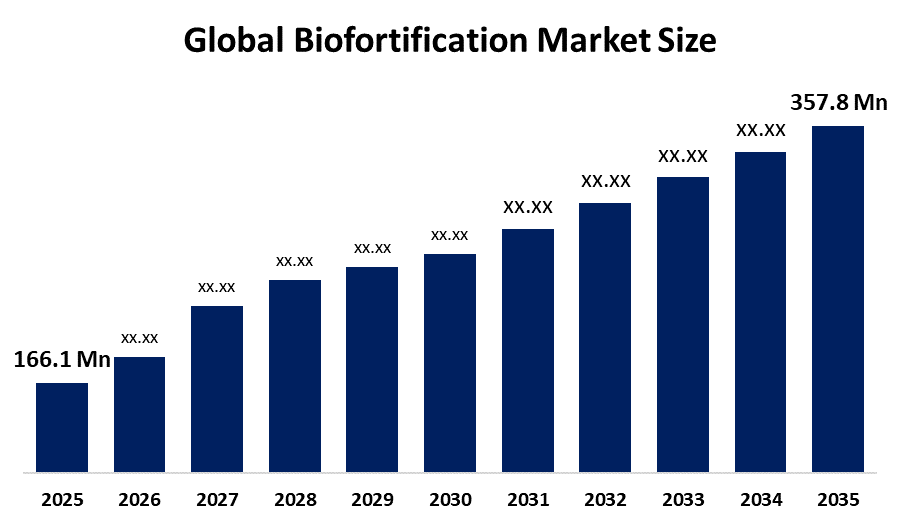
- The Global Biofortification Market Size Was Estimated at USD 166.1 Million in 2025
- The Market Size is Expected to Grow at a CAGR of around 7.98% from 2026 to 2035
- The Worldwide Biofortification Market Size is Expected to Reach USD 357.8 Million by 2035
- North America is expected to grow the fastest during the forecast period.
Get more details on this report -
According to a research report published by Spherical Insights and Consulting, the global biofortification market size was worth around USD 166.1 million in 2025 and is predicted to grow to around USD 357.8 million by 2035 with a compound annual growth rate (CAGR) of 7.98% from 2026 to 2035. Global innovations in genetic engineering, molecular biology, and CRISPR gene editing, advances in agricultural biotechnology, and rising modern breeding techniques such as marker-assisted selection and genomic selection are all driving opportunities in the biofortification market.
Market Overview
The biofortification market refers to the global sector focused on the development, production, and distribution of nutrient-enriched crops designed to improve public health by addressing micronutrient deficiencies. Scientists use agricultural biotechnology, plant breeding, and genetic engineering methods to develop new biofortification technologies that enhance the essential nutrient content of rice, wheat, maize, and cassava. The market includes biofortified seeds, grains, and food products developed through conventional breeding and modern biotechnological methods. The need to combat malnutrition, rising interest in functional foods, and the demand for affordable and sustainable nutrition solutions together create business opportunities, particularly benefiting developing countries.
Government support functions as a primary market driver through research funding, farmer subsidies, and the integration of biofortified crops into national nutrition and food security programs. Policy backing accelerates adoption through partnerships, awareness campaigns, and distribution efforts that increase market size. For instance, in 2026, the USDA, through agencies like NIFA, supports biofortification research via programs such as the Agriculture and Food Research Initiative, which had a USD 445.2 million budget in 2026, funding projects on crop nutrition, genetics, and human health.
In October 2020, under ICAR, the Prime Minister of India dedicated 17 biofortified crop varieties (rice, wheat, maize, millets, etc.) to the nation as part of national efforts to fight malnutrition, indicating formal government backing of biofortification efforts.
Report Coverage
This research report categorizes the biofortification market based on various segments and regions, forecasts revenue growth, and analyzes trends in each submarket. The report analyses the key growth drivers, opportunities, and challenges influencing the biofortification market. Recent market developments and competitive strategies, such as expansion, product launch, development, partnership, merger, and acquisition, have been included to draw the competitive landscape in the market. The report strategically identifies and profiles the key market players and analyses their core competencies in each sub-segment of the biofortification market.
Global Biofortification Market Report Coverage
| Report Coverage | Details |
|---|---|
| Base Year: | 2024 |
| Market Size in 2024: | USD 166.1 Million |
| Forecast Period: | 2026-2035 |
| Forecast Period CAGR 2026-2035 : | 7.98% |
| 2035 Value Projection: | USD 357.8 Million |
| Historical Data for: | 2020-2024 |
| No. of Pages: | 220 |
| Tables, Charts & Figures: | 83 |
| Segments covered: | By Crop Type, By End Use |
| Companies covered:: | Bayer AG, Syngenta Group, Corteva Agriscience, BASF SE, HarvestPlus, Nutrient Ltd., KWS Group, Rijk Zwaan, Groupe Limagrain, UPL Ltd., Mahyco Seeds, Seed Co Limited, East-West Seed Group, Novozymes, Arcadia Biosciences, Others |
| Pitfalls & Challenges: | COVID-19 Empact, Challenge, Future, Growth, & Analysis |
Get more details on this report -
Driving Factors
Rapid technological innovation is one of the main drivers of the biofortification market's growth. Rising global prevalence of micronutrient deficiencies, increasing health awareness, and growing demand for nutrient-rich and functional foods, which is the main factor driving the market for biofortification. Technological advancements in agricultural biotechnology and genetic engineering enable development of high-yield crops which contain essential nutrients. The implementation of government policies together with subsidies and national nutrition program participation creates an environment which supports higher adoption rates. The organization expands its research activities through partnerships with HarvestPlus and other organizations to drive innovation and product distribution. Additionally, increasing population, food security concerns, and the need for sustainable agricultural practices contribute significantly to market growth worldwide.
In December 2020, the Federal Government of Nigeria launched the Commercialization of Biofortified Crops Program with assistance from HarvestPlus and the Global Alliance for Improved Nutrition to enhance production and distribution of vitamin A cassava and maize through commercial channels. The launch included participation by the Senate Committee on Agriculture, federal ministries, and value chain stakeholders to scale biofortified crops nationwide.
Restraining Factors
High initial research and development costs, limited awareness among farmers and consumers, regulatory challenges and approval delays, acceptance issues related to taste, appearance, and misconceptions about agricultural biotechnology, limited distribution infrastructure, and weak supply chains in rural areas are the main factors restricting the biofortification market.
Market Segmentation
The biofortification market share is classified into crop type, nutrient, and end user.
- The cereals segment dominated the market in 2025, approximately 50%, and is projected to grow at a substantial CAGR during the forecast period.
Based on the crop type, the biofortification market is divided into cereals, legumes, roots & tubers, fruits & vegetables, and others. Among these, the cereals segment dominated the market in 2025, approximately 50%, and is projected to grow at a substantial CAGR during the forecast period. The growing need for plant breeding and agricultural biotechnology method to deliver essential nutrients at scale, high consumption volume in developing countries, established supply chains, and ease of fortification is driving the cereals industry.
- The iron segment accounted for the largest share in 2025, approximately 45%, and is anticipated to grow at a significant CAGR during the forecast period.
Based on the nutrient, the biofortification market is divided into zinc, iron, vitamins, and others. Among these, the iron segment accounted for the largest share in 2025, approximately 45%, and is anticipated to grow at a significant CAGR during the forecast period. High global prevalence of iron deficiency anemia, strong focus on reducing anemia, widely promoted using approaches from plant breeding and agricultural biotechnology, along with government and organizational initiatives is driving the iron industry.
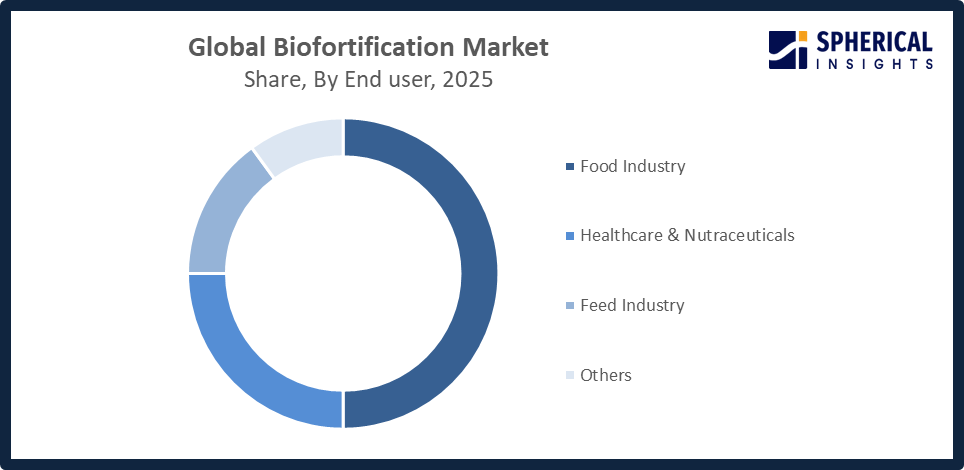
- The food industry segment accounted for the highest market revenue in 2025, approximately 50%, and is anticipated to grow at a significant CAGR during the forecast period.
Based on the end user, the biofortification market is divided into food industry, feed industry, healthcare & nutraceuticals, and others. Among these, the food industry segment accounted for the highest market revenue in 2025, approximately 50%, and is anticipated to grow at a significant CAGR during the forecast period. Increased demand for healthier and nutrient-rich food products, rising awareness of malnutrition, and food manufacturers widely incorporate biofortified ingredients developed through agricultural biotechnology and plant breeding is bolstering food industry market.
Get more details on this report -
Regional Segment Analysis of the Biofortification Market
- North America (U.S., Canada, Mexico)
- Europe (Germany, France, U.K., Italy, Spain, Rest of Europe)
- Asia-Pacific (China, Japan, India, Rest of APAC)
- South America (Brazil and the Rest of South America)
- The Middle East and Africa (UAE, South Africa, Rest of MEA)
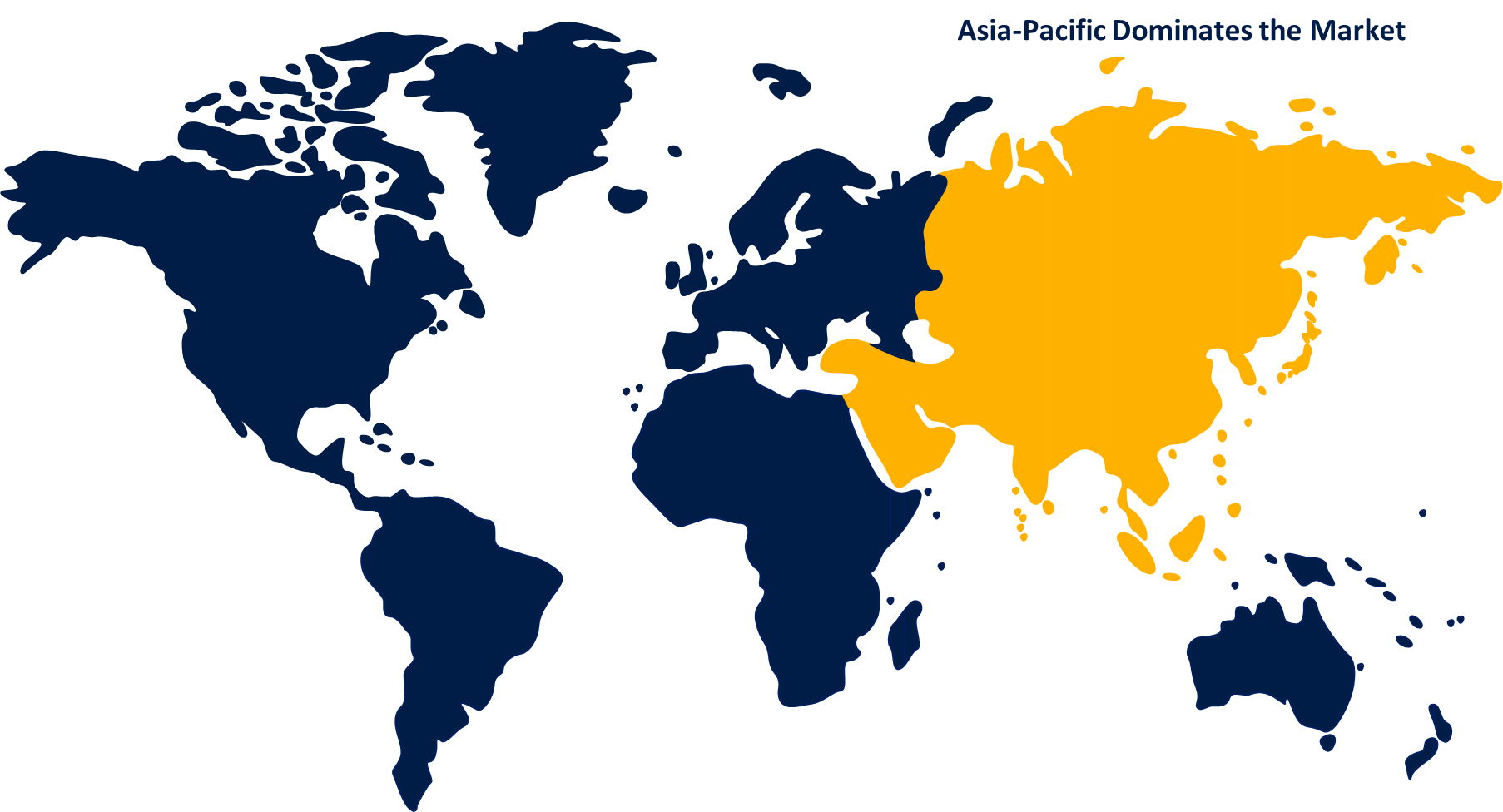
Asia Pacific is anticipated to hold the largest share of the biofortification market over the predicted timeframe.
Get more details on this report -
Asia Pacific is anticipated to hold the largest share of the biofortification market over the predicted timeframe. Advanced agricultural research facilities, growing nutritional health awareness, and biofortified crop programs which states use to secure food supply and improve public nutrition are what propel Asia Pacific. Countries such as India, Indonesia, and Bangladesh face serious malnutrition problems which create a strong need for nutrient-rich staple foods that include rice, wheat, and maize. The region implement biofortification at large scale as it possesses extensive agricultural resources together with its existing distribution systems. The combination of these factors and the rising consumer demand for healthier diets makes Asia-Pacific the leading region for both biofortified crop production and consumption.
Government initiatives include India’s ICAR releasing over 100 high-yielding, climate-resilient biofortified varieties of staple crops to improve micronutrient intake. The Government of Indonesia included biofortification in national policy through Law No. 59, 2024, establishing a 20-year framework in November 2024 that prioritizes biofortification and food diversification. In the Philippines, the DOA officially approved GR2E Golden Rice in December 2019 for direct use as food, feed, or processing, a government regulatory approval that enabled biofortified vitamin A rice to enter the food system.
North America is expected to grow at a rapid CAGR in the biofortification market during the forecast period. The United States and Canada invest heavily in new breeding methods while developing sustainable nutrition solutions through agricultural biotechnology research efforts and programs that create iron-, zinc-, and vitamin A-enriched staple foods, including maize, beans, and cassava. The increasing desire of health-conscious consumers to obtain functional foods and fortified products drives market expansion. The growing processing capacity of food companies, combined with improved supply chain systems, enables biofortified crops to become part of regular diets in North America.
Government initiatives include the U.S. FDA officially concluding its safety review of GR2E Golden Rice and determining that it is safe for human and animal consumption, as well as Canada-funded HarvestPlus programs to scale biofortified crops under an Integrated Food Systems Approach to Build Nutrition.Security.
Competitive Analysis:
The report offers the appropriate analysis of the key organizations/companies involved within the biofortification market, along with a comparative evaluation primarily based on their product offerings, business overviews, geographic presence, enterprise strategies, segment market share, and SWOT analysis. The report also provides an elaborative analysis focusing on the current news and developments of the companies, which includes product development, innovations, joint ventures, partnerships, mergers & acquisitions, strategic alliances, and others. This allows for the evaluation of the overall competition within the market.
List of Key Companies
- Bayer AG
- Syngenta Group
- Corteva Agriscience
- BASF SE
- HarvestPlus
- Nutrient Ltd.
- KWS Group
- Rijk Zwaan
- Groupe Limagrain
- UPL Ltd.
- Mahyco Seeds
- Seed Co Limited
- East-West Seed Group
- Novozymes
- Arcadia Biosciences
- Others
Key Target Audience
- Market Players
- Investors
- End-users
- Government Authorities
- Consulting and Research Firm
- Venture capitalists
- Value-Added Resellers (VARs)
Recent Development
- In March 2026, BASF SE is investing in advanced breeding capabilities that can support traits like stress tolerance and quality improvements, foundational for nutrient-focused breeding in future biofortified crops.
- In August 2025, HarvestPlus Solutions officially introduced a first-of-its-kind Neutral Mark to certify and identify authentic biofortified seeds and foods in the market, helping consumers and businesses trust nutrient-rich products and boosting commercial adoption of biofortified foods.
- In April 2024, HarvestPlus publicly announced multiple biofortification initiatives, including new projects in Bangladesh and Uganda and promotion of zinc biofortified rice in Nigeria, reflecting ongoing organizational rollouts of crop innovations.
Market Segment
This study forecasts revenue at global, regional, and country levels from 2020 to 2035. Spherical Insights has segmented the biofortification market based on the below-mentioned segments:
Global Biofortification Market, By Crop Type
- Cereals
- Legumes
- Roots & Tubers
- Fruits & Vegetables
- Others
Global Biofortification Market, By Nutrient
- Zinc
- Iron
- Vitamins
- Others
Global Biofortification Market, By End User
- Food Industry
- Feed Industry
- Healthcare & Nutraceuticals
Global Biofortification Market, By Regional Analysis
- North America
- US
- Canada
- Mexico
- Europe
- Germany
- UK
- France
- Italy
- Spain
- Russia
- Rest of Europe
- Asia Pacific
- China
- Japan
- India
- South Korea
- Australia
- Rest of Asia Pacific
- South America
- Brazil
- Argentina
- Rest of South America
- Middle East & Africa
- UAE
- Saudi Arabia
- Qatar
- South Africa
- Rest of the Middle East & Africa
Frequently Asked Questions (FAQ)
-
1. What technologies support biofortification?Biofortification leverages conventional breeding, molecular breeding, genetic engineering, gene-editing, and advanced seed technology to enhance nutrient content in crops such as iron, zinc, vitamin A, and protein.
-
2. What crops are primarily targeted for biofortification?Key crops include cereals (rice, wheat, maize), legumes (beans, lentils), roots & tubers (cassava, sweet potato), and vegetables. Cereals dominate due to their role as staple foods globally and their potential to address widespread micronutrient deficiencies.
-
3. What is the role of regulatory and certification frameworks in biofortification?Government and institutional regulations ensure safety, efficacy, and nutritional claims. Certifications like HarvestPlus’s Neutral Mark help validate and standardize biofortified seeds and foods for farmers, manufacturers, and consumers.
-
4. What is the role of seed distribution and commercialization?Seed distribution networks, partnerships with private companies, and public-private initiatives enable biofortified crop adoption at scale, making nutrient-rich staples accessible to farmers and end-users.
-
5. Which industries or sectors benefit from biofortification?The food industry, healthcare & nutraceuticals, animal feed, and government nutrition programs benefit by integrating biofortified crops into processed foods, supplements, fortified meals, and public feeding programs.
-
6. What is the expected market growth and commercialization timeline?The biofortification market is expected to expand steadily through the 2020s, driven by rising health consciousness, government programs, and private sector adoption. Major commercialization and scaling of biofortified crops are ongoing now, with significant market penetration projected by 2030.
Need help to buy this report?